
Finding the right mountain bike size is more important than most people think. A bike that fits you well makes every ride more enjoyable. You can ride longer, faster, and with more control. But the wrong size can cause pain, reduce your performance, and even make riding unsafe.
Many beginners guess their size, but this often leads to mistakes. Measuring for mountain bike size is not difficult, but it requires attention to detail. This guide will help you choose the perfect size step by step, using simple language and clear examples.
You will also learn about common measurement errors, how to use sizing charts, and what to do if you fall between sizes. By the end, you’ll feel confident to pick the best mountain bike for your body.
Why Mountain Bike Size Matters
The size of your mountain bike affects nearly everything about your ride. A bike that is too small can make you feel cramped and lead to knee pain. A bike that is too big can make it hard to control, especially on technical trails. The right size helps you:
- Stay comfortable for hours
- Pedal efficiently
- Handle rough terrain with confidence
- Avoid injury
Manufacturers often use different sizing systems—some use inches, others use “Small,” “Medium,” “Large,” and so on. Each brand has its own sizing chart. It’s important to measure yourself and compare your numbers with their charts.
Core Measurements For Mountain Bike Sizing
Before you look at bikes or charts, you need to measure yourself. These numbers will guide your choice. The most important measurements are:
- Height
- Inseam
- Arm length (sometimes helpful)
- Torso length (for advanced fitting)
Let’s break down each one.
Measuring Your Height
Stand straight, without shoes, against a wall. Use a tape measure or ruler. Record your height in centimeters and inches, since some charts use both.
- Stand on a flat floor.
- Heels, back, and head touching the wall.
- Mark the top of your head with a pencil.
- Measure from the floor to the mark.
Measuring Your Inseam
Your inseam is the distance from your crotch to the floor. This is the most important number for bike sizing.
- Wear thin pants or shorts.
- Stand with feet 6–8 inches apart.
- Place a book between your legs, up to your crotch, simulating a bike seat.
- Measure from the top of the book to the floor.
Write down this number in both centimeters and inches.
Arm And Torso Length
These are less critical for basic sizing but useful if you want a perfect fit.
- Arm length: Measure from the shoulder to the wrist.
- Torso length: Measure from the base of your neck (top of sternum) to your crotch.
If you have unusually long arms or a short torso, mention this when buying. Some shops offer custom fitting.
Understanding Mountain Bike Sizing Charts
Most mountain bikes are sized by frame size. This usually means the length of the seat tube, measured in inches or centimeters. There are three main sizing systems:
- Inches/centimeters: Traditional method, refers to seat tube length.
- Letter sizes: S, M, L, XL—more common now.
- Wheel size: 27.5” or 29” bikes, but wheel size is not a direct sizing method.
Here’s how sizing charts look:
| Rider Height (in) | Rider Height (cm) | Frame Size (in) | Frame Size (cm) | Letter Size |
|---|---|---|---|---|
| 4’10″–5’2″ | 148–158 | 13–14 | 33–36 | XS |
| 5’2″–5’6″ | 158–168 | 15–16 | 38–41 | S |
| 5’6″–5’10” | 168–178 | 17–18 | 43–46 | M |
| 5’10″–6’1″ | 178–185 | 19–20 | 48–51 | L |
| 6’1″–6’4″ | 185–193 | 21–22 | 53–56 | XL |
| 6’4″+ | 193+ | 23+ | 58+ | XXL |
Always check the brand’s official chart. Some brands use slightly different numbers. If you are between sizes, consider your riding style and body proportions.
How To Apply Your Measurements
Now that you have your height and inseam, compare them to the chart. Most riders focus on height, but inseam is often more accurate for mountain bikes.
Inseam-to-frame Calculation
A common formula for mountain bikes is:
- Inseam (cm) x 0.66 = frame size (cm)
For example, if your inseam is 80 cm:
- 80 x 0.66 = 52.8 cm
Check if this matches the chart. If your number is between two sizes, you may need to decide based on other factors.
Example: Finding Your Size
Let’s say you are 5’8” (173 cm) with an inseam of 78 cm.
- Chart suggests Medium (17–18” or 43–46 cm)
- Formula: 78 x 0.66 = 51.5 cm
This falls in the Medium range. You can now check bikes with this frame size.
Comparing Sizing Systems
Some brands use letter sizes, others use numbers. Here’s a quick comparison:
| Letter Size | Frame Size (in) | Frame Size (cm) | Typical Height Range (cm) |
|---|---|---|---|
| XS | 13–14 | 33–36 | 148–158 |
| S | 15–16 | 38–41 | 158–168 |
| M | 17–18 | 43–46 | 168–178 |
| L | 19–20 | 48–51 | 178–185 |
| XL | 21–22 | 53–56 | 185–193 |
If you see both systems, use your measurements to find the best match.

Credit: tellingindustries.com
What To Do If You Are Between Sizes
Many riders fall between two sizes. For example, your height might fit a Medium, but your inseam matches a Large. Here’s how to choose:
- Choose smaller: If you prefer a bike that is easier to handle, especially on technical trails.
- Choose larger: If you want more stability and plan to ride fast on open trails.
You can also adjust seat height and stem length to fine-tune the fit. Most experts recommend picking the smaller size if you are unsure. You can make a smaller bike bigger, but a large bike is hard to shrink.
Important Geometry Terms
Bike size is not just about seat tube length. Modern mountain bikes use other geometry terms that affect how the bike feels.
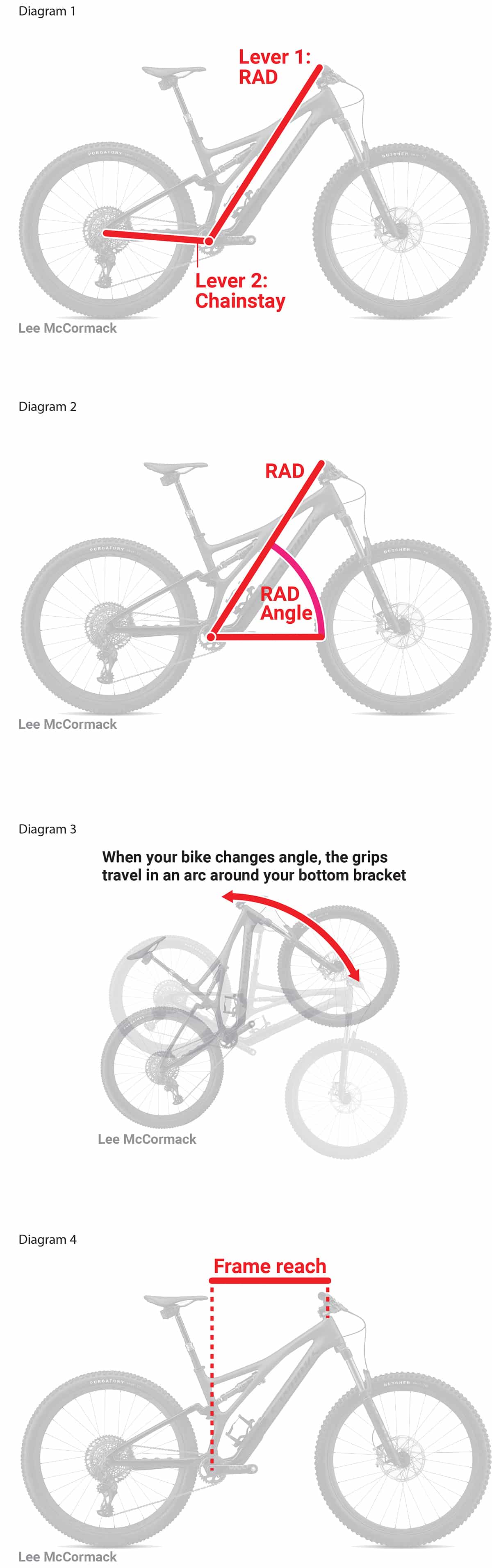
- Reach: The horizontal distance from the bottom bracket to the head tube. Longer reach gives more room in the cockpit.
- Stack: Vertical distance from the bottom bracket to the top of the head tube. Higher stack means a more upright position.
- Top tube length: The length from the seat to the handlebar. Affects how stretched out you feel.
These numbers are important if you want to compare bikes beyond basic sizing. For example, two Medium bikes can feel very different because of reach and stack.
Here’s a sample geometry comparison:
| Bike Model | Frame Size | Reach (mm) | Stack (mm) | Top Tube (mm) |
|---|---|---|---|---|
| Brand A Trail | M | 435 | 605 | 590 |
| Brand B Enduro | M | 450 | 610 | 600 |
| Brand C XC | M | 420 | 600 | 580 |
Notice how each bike feels different even though they’re all “Medium. ” If you test ride, pay attention to these numbers.
Stand-over Height: Why It Matters
One key measurement for mountain bikes is stand-over height. This is the distance from the ground to the top tube of the bike. When you stand over the bike, there should be a gap between your crotch and the tube.
- Minimum gap: 2 inches (5 cm) for mountain bikes
- If the gap is less, the bike may be too big
- Too much gap means the bike could be too small
Stand-over height is important for safety. If you need to jump off the bike quickly, you don’t want the tube to hit you.
Using Sizing Calculators
Many bike brands offer online sizing calculators. You enter your height, inseam, and sometimes arm/torso length. The calculator recommends a frame size.
- Helpful for beginners
- Use as a starting point, not a final answer
- Always test ride if possible
These calculators are good for narrowing your options, but they can’t account for all body types.
Credit: mbaction.com
Common Mistakes When Measuring For Mountain Bike Size
Some mistakes are easy to avoid if you know what to look for:
- Guessing your height or inseam: Always measure. Don’t rely on memory.
- Ignoring brand differences: Each brand’s Medium can be slightly different.
- Buying based on wheel size: Wheel size is not a sizing method.
- Not considering stand-over height: Safety comes first.
- Forgetting about riding style: Aggressive riders often prefer smaller bikes.
Another mistake is focusing only on seat tube length. Modern bikes are designed with new geometry. Reach and stack matter as much as seat tube.
Adjusting Your Bike After Choosing The Size
Even after you pick the right frame size, you can make adjustments for a perfect fit.
- Seat height: Set so your leg is almost straight at the bottom of the pedal stroke.
- Stem length: Shorter stems give quicker handling; longer stems stretch your position.
- Handlebar height: Higher bars for comfort, lower for aggressive riding.
- Seat position: Move forward or back for comfort.
Most shops will help adjust these for you. If you buy online, use guides and videos to make changes.

Credit: employerschoicescreening.com
Test Riding: The Final Step
If possible, always test ride before buying. Even if the numbers say a bike is right, the feel can be different.
- Try several sizes if you are between sizes
- Check comfort, handling, and control
- Stand over the bike to check clearance
- Ride on similar terrain to your usual trails
Some shops let you rent bikes or try demo models. This is the best way to confirm your size.
Sizing For Kids And Women
Mountain bike sizing is slightly different for kids and women.
- Kids: Focus on stand-over height and reach. Kids grow fast, so don’t buy a bike that is too big hoping they’ll “grow into it.” It can make riding unsafe.
- Women: Some brands offer “women’s-specific” bikes with shorter top tubes and different geometry. Always measure and compare, but don’t assume you need a women’s bike unless it feels more comfortable.
Advanced Fitting: Beyond Basic Measurements
If you want maximum comfort, consider a professional bike fit. Fitters use tools to measure your body and adjust every part of the bike.
- Useful for riders with injuries or unusual proportions
- Can improve performance and reduce pain
Some shops offer this service for free with a new bike. It’s also possible to find fitters who specialize in mountain bikes.
Real-world Examples
Let’s look at two examples:
Example 1: Maria is 5’4” (163 cm) with a 75 cm inseam. She checks the chart and finds she fits a Small (15–16” frame). She test rides both Small and Medium bikes. The Small feels more comfortable, with good stand-over clearance.
Example 2: John is 6’2” (188 cm) with an 85 cm inseam. The chart suggests an XL (21–22” frame). He prefers a longer reach, so he looks for bikes with higher reach numbers. After testing, he chooses the XL model with a longer top tube for his long arms.
Buying Online: Extra Steps
If you buy a mountain bike online, be extra careful:
- Double-check all measurements
- Read reviews about sizing accuracy
- Look for brands with easy returns
- Watch for geometry charts, not just basic size charts
Ask the seller for detailed measurements if needed. Don’t hesitate to contact customer service.
Useful Resources
For more details on mountain bike geometry and sizing, visit BikeRadar. This site offers deep guides and expert advice.
Frequently Asked Questions
How Accurate Are Mountain Bike Sizing Charts?
Sizing charts are helpful, but they are only a starting point. Charts can’t account for all body types and riding styles. Always measure yourself and test ride if possible.
What If My Height And Inseam Suggest Different Sizes?
If your measurements fall between two sizes, consider your riding style. Choose the smaller size for more control and the larger for more stability. Adjust seat and stem as needed.
Can I Use My Road Bike Size For Mountain Bike Sizing?
No, road bikes and mountain bikes use different geometry. Mountain bikes usually have shorter top tubes and higher stack. Always use mountain bike-specific charts.
Does Wheel Size Affect Mountain Bike Sizing?
Wheel size (27. 5” or 29”) affects handling and ride feel, but not frame size. Always measure your body and compare to frame sizing charts.
Should I Get A Professional Bike Fit?
A professional bike fit is useful if you have pain, unusual proportions, or want maximum comfort and performance. Fitters can make precise adjustments that basic sizing can’t.
Getting the right mountain bike size takes a bit of work, but the benefits are huge. You’ll ride more comfortably, handle trails better, and avoid injuries. Start by measuring your height and inseam carefully, check the brand’s sizing chart, and remember to test ride if possible.
Pay attention to geometry numbers, not just seat tube length. If you’re buying online, double-check everything and ask for help if needed. With these steps, you’ll find a mountain bike that fits perfectly and keeps you happy on every ride.

Hello Guys! I am John Reese, a professional biker and my hobby is biking! I have been biking for last 12 years and I love using bikes while outing as well. Based on my experiences with the different type of bikes (mountain bikes, road bikes and hybrid bikes); I am sharing my opinion about various bikes so that a beginner can get started right away. Happy reading!