
Choosing the right mountain bike can feel overwhelming. You want a bike that fits your style, your budget, and the trails you plan to conquer.
But with so many options out there, how do you pick the perfect one? This guide will help you cut through the noise and make a smart choice. By the end, you’ll know exactly what to look for, so you can enjoy every ride with confidence and control.
Ready to find your ideal mountain bike? Let’s dive in.
Types Of Mountain Bikes
Choosing the right mountain bike starts with understanding the different types available. Each type suits specific riding styles and terrains. Knowing the main categories helps match a bike to your needs and skill level. Mountain bikes vary in frame design, suspension, tires, and purpose. Below are five common types to consider before making a decision.
Cross Country Bikes
Cross country (XC) bikes focus on speed and efficiency over long distances. They have lightweight frames and smooth tires to help riders cover more ground with less effort. XC bikes are ideal for riders who enjoy climbing hills and riding on packed trails.
- Frame: Light and stiff for fast pedaling
- Suspension: Usually front suspension only (hardtail) or minimal rear suspension
- Tires: Narrow with low tread for less rolling resistance
- Use: Racing, long rides, and moderate terrain
These bikes provide good efficiency but offer less comfort on rough trails. Riders who want to improve endurance and speed often choose XC bikes.
Trail Bikes
Trail bikes offer a balance between climbing ability and descending control. They handle rougher terrain better than XC bikes. Trail bikes have more suspension travel and wider tires to provide extra grip and comfort.
- Frame: Durable and slightly heavier than XC bikes
- Suspension: Full suspension with 120-150mm travel
- Tires: Wider with knobby tread for grip on varied surfaces
- Use: General all-mountain riding and technical trails
Trail bikes suit riders who want versatility. They perform well on climbs and provide control on descents. These bikes are perfect for most mountain bikers.
Enduro Bikes
Enduro bikes focus on fast downhill speed combined with strong climbing ability. They have heavy-duty frames and advanced suspension systems. Enduro bikes are built to handle aggressive riding on rough trails.
- Frame: Strong and heavier for impact resistance
- Suspension: Full suspension with 150-170mm travel
- Tires: Wide, aggressive tread for maximum traction
- Use: Steep, technical descents and long climbs
Riders who enjoy challenging downhill sections and technical climbs benefit from enduro bikes. These bikes give confidence on tough terrain but require more effort to pedal uphill.
Downhill Bikes
Downhill bikes are built for speed and control on steep, rough descents. They have very strong frames and large suspension travel to absorb big impacts. These bikes are heavy and not meant for climbing.
| Feature | Description |
|---|---|
| Frame | Reinforced, heavy-duty for durability |
| Suspension | 200mm or more travel, full suspension |
| Tires | Extra wide and knobby for grip |
| Use | Downhill racing and steep trails only |
These bikes excel at absorbing shocks and maintaining control at high speeds. Downhill bikes are best for riders who focus only on descending and have access to lift-assisted trails.
Fat Bikes
Fat bikes have very wide tires designed for soft, unstable surfaces like snow, sand, or mud. The extra tire width increases stability and traction in these conditions. Fat bikes have a unique look and feel compared to other mountain bikes.
- Frame: Wide to fit large tires
- Tires: 3.8 inches or wider, low pressure for better float
- Suspension: Usually rigid or minimal suspension
- Use: Snow, sand, and rough terrain with poor traction
Fat bikes are slower on hard surfaces but excellent for off-road adventures in soft terrain. They offer comfort and control when other bikes would struggle to move forward.

Credit: www.rudyprojectna.com
Frame Materials
Choosing the right frame material is key to finding the best mountain bike. The frame supports the bike and affects its weight, strength, and ride feel. Different materials suit different riders and trails. Understanding the main frame materials helps make a smart choice. This guide covers Aluminum, Carbon Fiber, Steel, and Titanium frames.
Aluminum Frames
Aluminum frames are popular for mountain bikes. They offer a good balance of weight, strength, and cost. Aluminum is lighter than steel but heavier than carbon fiber. It resists rust, which means less maintenance. Many beginner and intermediate riders prefer aluminum because it is affordable and durable.
- Lightweight: Easier to handle on tough trails.
- Strong: Can take rough riding without damage.
- Stiff: Transfers power well but may feel less comfortable on rough terrain.
- Cost-effective: Usually cheaper than carbon fiber or titanium.
Here is a quick comparison table for aluminum frames:
| Feature | Aluminum Frames |
|---|---|
| Weight | Light |
| Durability | High |
| Comfort | Moderate |
| Cost | Affordable |
Carbon Fiber Frames
Carbon fiber frames are the lightest and most advanced option. They are made by layering carbon sheets, which makes them strong and stiff. Carbon fiber frames absorb shocks better than aluminum, giving a smoother ride. This material suits riders who want speed and performance on the trail.
- Ultra-light: Easier to climb and accelerate.
- Strong but flexible: Reduces vibrations and bumps.
- Customizable shapes: Designers can shape frames for better aerodynamics and comfort.
- Expensive: Costs much more than aluminum or steel.
Carbon fiber needs careful handling. It can crack under sharp impacts. Repairs can be costly. Riders who want the best ride quality and weight often choose carbon fiber despite the price.
Steel Frames
Steel frames have been used for decades and remain popular for their toughness. Steel is heavier than aluminum and carbon fiber but offers a smooth ride. It flexes slightly, absorbing trail bumps well. Steel frames are usually affordable and easy to repair.
- Heavy: Adds weight but feels stable on trails.
- Strong and durable: Can last many years.
- Comfortable: Natural flex absorbs shocks.
- Rust-prone: Needs regular care to avoid corrosion.
Steel suits riders who want a solid, comfortable bike and don’t mind extra weight. It is common in budget and classic-style mountain bikes.
Titanium Frames
Titanium frames combine the best features of steel and aluminum. They are strong, light, and resist rust. Titanium offers a smooth, comfortable ride similar to steel but weighs less. These frames last a very long time and resist dents and cracks well.
- Lightweight and strong: Good for serious riders.
- Comfortable ride: Absorbs trail vibrations.
- Corrosion-resistant: No rust worries.
- Very expensive: High cost limits availability.
Titanium is for riders who want top quality and durability. The price can be high, but the frame’s lifespan and performance justify it for many.
Suspension Options
Choosing the right suspension option is key when selecting a mountain bike. Suspension helps absorb shocks from rough trails and improves control and comfort. Different types of suspension suit different riding styles and terrains. Understanding these options can guide you to the best bike for your needs. Below are the main types of suspension and what to expect from each.
Hardtail Bikes
Hardtail bikes have a suspension fork in the front but no rear suspension. This design makes them lighter and simpler to maintain. Hardtails work well on smoother trails and cross-country rides.
Benefits of hardtail bikes include:
- Lighter weight: Easier to pedal uphill and faster on flat terrain.
- Lower cost: More affordable than full suspension bikes.
- Less maintenance: Fewer moving parts reduce repairs and adjustments.
Hardtails are great for riders who:
- Prefer faster, less technical trails.
- Want a bike for fitness and endurance.
- Seek a budget-friendly option.
| Feature | Hardtail Bikes |
|---|---|
| Suspension | Front fork only |
| Weight | Lighter |
| Maintenance | Low |
| Cost | Lower |
| Best for | Smooth trails, cross-country |
Full Suspension Bikes
Full suspension bikes have both front and rear suspension. The rear shock helps absorb bumps from behind, making rides smoother and more controlled on rough terrain.
Advantages of full suspension bikes include:
- Better control: Rear suspension improves traction and stability.
- More comfort: Absorbs impacts from roots, rocks, and drops.
- Improved handling: Allows faster riding on technical trails.
Drawbacks to consider:
- Heavier weight compared to hardtails.
- Higher price due to complex design.
- More maintenance needed for rear shock and linkage.
Full suspension suits riders who:
- Ride aggressive, rocky, or technical trails.
- Want maximum comfort and control.
- Are ready to invest in a higher-end bike.
| Feature | Full Suspension Bikes |
|---|---|
| Suspension | Front and rear |
| Weight | Heavier |
| Maintenance | High |
| Cost | Higher |
| Best for | Technical, rough trails |
Suspension Travel
Suspension travel is the distance the suspension moves to absorb bumps. It is measured in millimeters. Travel affects how the bike handles different terrains and obstacles.
Common travel ranges include:
- Short travel (80-120mm): Best for cross-country riding and smoother trails.
- Medium travel (120-160mm): Suitable for trail and all-mountain riding with mixed terrain.
- Long travel (160-200mm+): Designed for downhill and aggressive riding on very rough trails.
Choosing the right travel depends on:
- Trail difficulty and terrain type.
- Riding style and speed.
- Bike weight and climbing ability.
| Travel Range | Recommended Use | Pros | Cons |
|---|---|---|---|
| 80-120mm | Cross-country, smoother trails | Lighter, efficient pedaling | Less cushion on rough terrain |
| 120-160mm | Trail, all-mountain | Balanced comfort and control | Heavier than short travel |
| 160-200mm+ | Downhill, aggressive trails | Maximum shock absorption | Heaviest, less efficient climbing |
Wheel Size Choices
Choosing the right wheel size is crucial when selecting a mountain bike. The wheel size affects how the bike handles, its speed, and the type of trails it suits best. Mountain bikes commonly come with 26-inch, 27.5-inch, or 29-inch wheels. Each size offers unique advantages and may fit different riding styles and terrain preferences. Understanding these options helps pick a bike that matches your needs and riding comfort.
26-inch Wheels
26-inch wheels were the standard for many years and remain popular for certain riders. These wheels are smaller and lighter, which makes the bike more agile and easier to control on tight trails.
- Better maneuverability: Smaller wheels turn quickly, great for technical trails.
- Lighter weight: Easier to accelerate and handle.
- Stronger wheels: More durable for rough terrain due to shorter spokes.
These wheels work well for riders who want a nimble bike for fast, twisty trails. They also suit shorter riders because the bike frame can be smaller without losing balance.
| Feature | 26-Inch Wheels |
|---|---|
| Weight | Light |
| Speed | Moderate |
| Control | High agility |
| Best for | Technical and tight trails |
27.5-inch Wheels
27.5-inch wheels, also called 650B, offer a middle ground between 26-inch and 29-inch sizes. They combine some agility with better rolling ability.
- Balanced speed and control: Roll over obstacles easier than 26-inch wheels.
- Good for all-around riding: Suitable for cross-country and trail rides.
- Comfortable ride: Absorbs bumps better due to larger diameter.
This size suits riders who want a versatile bike that performs well on many terrains. It fits various rider heights and styles.
| Feature | 27.5-Inch Wheels |
|---|---|
| Weight | Moderate |
| Speed | Good |
| Control | Balanced |
| Best for | All-around trail riding |
29-inch Wheels
29-inch wheels, also called 29ers, are the largest common size. They roll over obstacles smoothly and keep momentum well.
- Higher speed: Larger wheels cover more ground with each pedal.
- Better traction: Larger contact patch improves grip on loose terrain.
- Smoother ride: Easy to roll over rocks and roots.
These wheels suit riders who want to cover long distances efficiently. They work well on cross-country and smoother trail rides. Larger wheels can feel less agile on tight turns.
| Feature | 29-Inch Wheels |
|---|---|
| Weight | Heavier |
| Speed | Fast |
| Control | Stable but less nimble |
| Best for | Long rides and rough terrain |
Brake Systems
Brake systems are a crucial part of choosing a mountain bike. They control your speed and help you stop safely on rough trails. Picking the right brake system affects your bike’s performance and your confidence while riding. Different brakes offer unique benefits and challenges. Understanding these options helps you find the best fit for your riding style and budget.
Mechanical Disc Brakes
Mechanical disc brakes use a cable to pull brake pads against a disc attached to the wheel. They are simple and easy to maintain. This system works well for beginners and casual riders. Mechanical disc brakes provide good stopping power in dry and muddy conditions.
- Advantages: Low cost, easy to repair, consistent performance.
- Disadvantages: Less powerful than hydraulic brakes, cable can stretch over time.
- Maintenance: Requires cable adjustments and pad replacement.
| Feature | Mechanical Disc Brakes |
|---|---|
| Cost | Affordable |
| Stopping Power | Moderate |
| Maintenance | Easy |
| Weight | Heavier than hydraulic |
Mechanical disc brakes suit riders who want reliable brakes without high costs or complex upkeep. They perform well on most trails but may lack power for steep descents.
Hydraulic Disc Brakes
Hydraulic disc brakes use fluid to transfer force from the lever to the brake pads. This system provides strong and smooth braking with less effort. It adapts well to different weather conditions, offering excellent control on steep or technical trails.
- Advantages: Powerful braking, smooth modulation, less hand fatigue.
- Disadvantages: Higher cost, requires special tools for maintenance.
- Maintenance: Occasional bleeding to remove air, pad replacement.
| Feature | Hydraulic Disc Brakes |
|---|---|
| Cost | More expensive |
| Stopping Power | Strong |
| Maintenance | Moderate to complex |
| Weight | Lighter than mechanical |
Hydraulic brakes suit serious mountain bikers who want the best braking performance. They help control speed precisely, especially on challenging terrain.
Rim Brakes
Rim brakes press brake pads against the wheel rim to slow down. They are the oldest type of brakes and are common on older or budget bikes. Rim brakes are lighter and simpler but less effective in wet or muddy conditions.
- Advantages: Lightweight, low cost, easy to fix.
- Disadvantages: Less stopping power, rim wear over time.
- Maintenance: Pad replacement, rim cleaning.
| Feature | Rim Brakes |
|---|---|
| Cost | Lowest |
| Stopping Power | Lowest |
| Maintenance | Easy |
| Weight | Lightest |
Rim brakes work best for riders on smooth trails or those who want to save money. They may struggle in tough weather or steep descents.
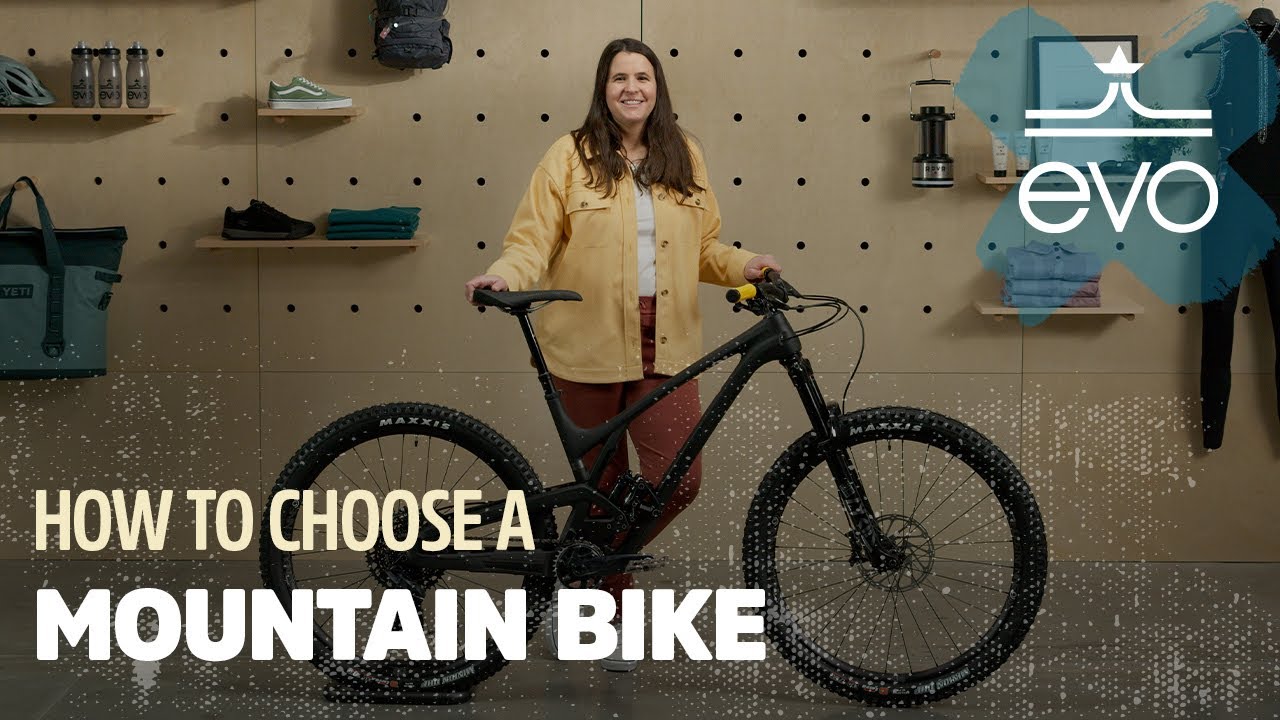
Credit: www.evo.com
Gearing Systems
Choosing the right gearing system is key when selecting a mountain bike. Gearing controls how easily you pedal up hills or speed up on flat trails. Different systems suit different riders and terrains. Understanding these options helps match your bike to your riding style and skill level.
Single-speed Bikes
Single-speed bikes have just one gear. They are simple and light, with fewer parts to maintain. These bikes work well on flat or smooth trails.
- Advantages: Low maintenance, lighter weight, fewer mechanical problems.
- Disadvantages: Hard to climb steep hills, limited speed range.
Single-speed bikes suit beginners or riders who prefer easy trails. They also appeal to those who want a quiet, straightforward ride.
| Feature | Benefit |
|---|---|
| One gear | Simple pedaling, less to break |
| Light frame | Easier to carry and maneuver |
| Low cost | Good for budget buyers |
For mountain biking on rugged hills, a single-speed can be tiring. Consider the trail type before choosing this gearing system.
Multi-speed Bikes
Multi-speed bikes offer many gears, usually between 18 and 30. This lets riders adjust their pedaling effort to different terrains.
- Advantages: Easier climbing, faster on flats, more control.
- Disadvantages: More parts to maintain, slightly heavier.
These bikes fit riders who face mixed trails or steep hills. They provide a flexible, comfortable ride for long distances.
| Type | Number of Gears | Best For |
|---|---|---|
| Mountain Bikes | 18-30 | Hilly, rough trails |
| Hybrid Bikes | 21-27 | Mixed road and trail |
Multi-speed bikes require some knowledge to shift gears properly. Learning gear use improves efficiency and reduces fatigue.
1x Vs 2x Drivetrains
Drivetrains refer to the number of front chainrings on a bike. A 1x drivetrain has one chainring; a 2x has two.
1x Drivetrains are popular for mountain biking. They simplify shifting and reduce weight. Riders only shift gears in the back, making it easier to focus on the trail.
- Fewer parts mean less chance of dropped chains.
- Cleaner look and easier maintenance.
- Good gear range for most trails.
2x Drivetrains provide a wider gear range. They help riders tackle very steep climbs and fast descents with more precision.
- More gears allow finer adjustments.
- Heavier and more complex than 1x.
- Requires shifting front and rear gears.
| Drivetrain | Pros | Cons |
|---|---|---|
| 1x | Simple, lightweight, low maintenance | Limited gear range |
| 2x | Wider gear range, better for varied terrain | More complex, heavier |
Choose 1x for simplicity and ease, or 2x for maximum gear options. Consider the trail difficulty and your comfort with gear shifting.
Fit And Sizing
Choosing the right fit and sizing for a mountain bike is key to enjoying your rides and staying safe. A bike that fits well helps you control it better and reduces fatigue. Poor fit can cause discomfort, pain, or even injury. Focus on the bike’s frame size, standover height, and adjustments to the handlebar and seat. Each part affects your comfort and performance.
Frame Size
The frame size is the starting point for a good bike fit. It determines how comfortable and stable you feel while riding. Frames come in sizes like small, medium, large, or by inches and centimeters. Choose a frame size based on your height and leg length.
Here is a simple chart to help match your height to the right frame size:
| Your Height | Recommended Frame Size (inches) | Recommended Frame Size (cm) |
|---|---|---|
| 4’10” – 5’2″ | 13″ – 15″ | 33 – 38 cm |
| 5’3″ – 5’7″ | 15″ – 17″ | 38 – 43 cm |
| 5’8″ – 6’0″ | 17″ – 19″ | 43 – 48 cm |
| 6’1″ – 6’4″ | 19″ – 21″ | 48 – 53 cm |
Keep in mind:
- A smaller frame offers more control on technical trails.
- A larger frame gives more speed and stability.
- Test ride different sizes to find what feels best.
Standover Height
Standover height is the distance from the ground to the top tube of the bike frame. It affects how easily you can get on and off the bike. You want enough clearance between your body and the frame to avoid injury.
Check the standover height by standing over the bike with your feet flat on the ground. There should be at least 1 to 2 inches of space between your crotch and the top tube.
Benefits of proper standover height:
- Improved safety when stopping suddenly or riding on rough terrain.
- Easier mounting and dismounting the bike.
- Better balance and control during slow rides.
Too little clearance can cause discomfort or injury. Too much clearance might mean the frame size is too small, affecting your riding position.
Handlebar And Seat Adjustments
Adjusting the handlebar and seat ensures a personalized fit and better comfort. Even the right frame size needs fine-tuning in these areas. Correct adjustments help reduce strain on your back, wrists, and knees.
Handlebar adjustments:
- Height: Raise or lower the handlebar to suit your riding style. Higher bars offer comfort; lower bars help with speed and control.
- Width: Wider bars provide better control, especially on rough trails. Narrow bars are better for tight spaces.
- Angle: Rotate the bars or grips to a position that feels natural and reduces wrist strain.
Seat adjustments:
- Height: Set the seat so your leg is almost fully extended when the pedal is at its lowest point.
- Angle: Keep the seat level or slightly tilted for comfort and stability.
- Fore-aft position: Move the seat forward or backward to align your knee over the pedal spindle.
Take time to test different settings. Small changes can make a big difference in your riding experience.
Budget Considerations
Choosing a mountain bike often depends on your budget. Setting a clear budget helps narrow down your options and focuses on what features matter most. Bikes come in various price ranges, each offering different parts and quality levels. Understanding what each budget tier offers ensures you get the best bike for your money.
Entry-level Bikes
Entry-level mountain bikes usually cost between $300 and $700. These bikes are perfect for beginners or riders who want a simple, reliable bike for light trails or casual rides. Expect basic components and heavier frames, often made of steel or aluminum. The focus is on durability and ease of use rather than advanced features.
- Frame: Aluminum or steel, heavier but tough
- Suspension: Usually a front suspension fork (hardtail)
- Gears: Simple drivetrain with fewer gears
- Brakes: Mechanical disc or rim brakes
Entry-level bikes are ideal if you want to try mountain biking without a big investment. They may need upgrades if you start riding more difficult trails. Use the table below to compare typical features:
| Feature | Entry-Level |
|---|---|
| Frame Material | Steel or aluminum |
| Suspension | Front fork only |
| Gears | 7-21 speeds |
| Brakes | Mechanical disc or rim |
Mid-range Bikes
Mid-range mountain bikes usually cost between $700 and $1500. These bikes offer better components and lighter frames, often made from higher-grade aluminum or carbon blends. They provide smoother rides and improved control on moderate trails.
- Frame: Lightweight aluminum or carbon composite
- Suspension: Front suspension or full suspension
- Gears: Wider gear range for varied terrain
- Brakes: Hydraulic disc brakes for stronger stopping power
Mid-range bikes are suitable for regular riders who want better performance without spending too much. These bikes often come with more adjustable features and better tires, making trail riding easier and more fun.
| Feature | Mid-Range |
|---|---|
| Frame Material | High-grade aluminum or carbon blend |
| Suspension | Front or full suspension |
| Gears | 18-30 speeds |
| Brakes | Hydraulic disc brakes |
High-end Bikes
High-end mountain bikes cost more than $1500, sometimes reaching $5000 or more. These bikes use the best materials, such as full carbon fiber frames, and top-tier components. They are built for serious riders who demand high performance on tough trails.
- Frame: Full carbon fiber for light weight and strength
- Suspension: Advanced full suspension systems with adjustable settings
- Gears: Wide range and premium drivetrains
- Brakes: High-quality hydraulic disc brakes with excellent stopping power
- Extras: Tubeless tires, dropper posts, and other advanced features
These bikes offer the best ride quality, durability, and speed. They are designed to handle rough terrain and long rides with ease. Investing in a high-end bike can improve your performance and comfort on the trails.
| Feature | High-End |
|---|---|
| Frame Material | Full carbon fiber |
| Suspension | Advanced full suspension |
| Gears | 20-30 speeds, premium groupsets |
| Brakes | Top-tier hydraulic disc brakes |
| Extras | Tubeless tires, dropper posts |
Additional Features
Choosing a mountain bike involves more than just frame size and suspension. Additional features can enhance comfort, control, and performance on the trail. These extras help tailor the bike to specific riding styles and terrains. Understanding these features helps pick the best bike for your needs. Focus on practical benefits and ease of use to make a smart choice.
Dropper Posts
A dropper post allows the rider to lower or raise the seat quickly while riding. This feature improves control on steep descents and technical sections. Riders can drop the seat out of the way for better maneuverability and raise it for efficient pedaling on flat or uphill terrain.
- Quick adjustment: Use a handlebar lever to move the seat post up or down instantly.
- Improved safety: Lowering the seat helps keep your center of gravity low on tricky trails.
- Comfort: Easier to shift body position without stopping or getting off the bike.
Dropper posts come in various travel lengths, usually between 100 mm and 170 mm. Choose a travel length that matches your trail riding style:
| Travel Length | Best For |
|---|---|
| 100-125 mm | Cross-country and light trail riding |
| 130-150 mm | All-mountain and trail riding |
| 160-170 mm | Enduro and aggressive downhill riding |
Most modern mountain bikes come with dropper post compatibility or include one. Check the bike’s specifications to confirm. Adding a dropper post later is possible but may require frame compatibility.
Tubeless Tires
Tubeless tires are popular in mountain biking for their performance benefits. These tires do not use an inner tube but seal directly to the rim. This setup reduces the risk of punctures and allows riders to run lower air pressure for better grip.
- Lower flats risk: Tubeless tires seal small punctures automatically with sealant inside.
- Better traction: Running lower tire pressure increases surface contact with the trail.
- Smoother ride: More comfort and control on rough terrain due to tire flexibility.
Switching to tubeless tires requires:
- Tubeless-ready rims and tires
- Sealant to fill gaps and seal punctures
- A valve stem designed for tubeless setups
Many new mountain bikes come tubeless-ready. This means the rims and tires are designed to hold air without tubes. Adding sealant is necessary to prevent leaks.
Consider these pros and cons:
| Pros | Cons |
|---|---|
| Less chance of flats | More complex setup |
| Better grip and control | Sealant requires regular maintenance |
| Smoother ride quality | Initial cost higher |
Accessory Compatibility
Accessory compatibility ensures your mountain bike can handle extra gear and upgrades. This includes racks, lights, water bottle cages, and fenders. Choose a bike with enough mounting points and space for accessories you need.
Common accessory mounts include:
- Frame mounts for water bottles (usually 2 sets)
- Rack mounts on the rear triangle or seat stays
- Fender mounts near the fork and rear stays
- Handlebar mounts for lights and GPS devices
Check the frame and fork for threaded eyelets or bosses. These allow easy installation of racks or fenders. Bikes without these mounts may limit your ability to carry gear.
Consider accessory compatibility based on your riding style:
| Riding Style | Recommended Accessories |
|---|---|
| Commuting | Racks, fenders, lights |
| Trail Riding | Water bottle cages, GPS mounts |
| Bikepacking | Multiple racks, frame bags, extra mounts |
Ensuring your bike supports the accessories you want adds convenience and improves your riding experience. It also helps customize the bike to your personal needs.

Credit: cripplecreekbc.com
Test Riding Tips
Test riding a mountain bike helps you find the best fit and feel before buying. This step gives a real sense of how the bike performs on trails. Pay close attention to different aspects of the ride. Focus on comfort, control, and the bike’s response. These tips ensure a practical experience and a smart choice.
What To Look For
Start by checking the bike’s size and frame. The right size helps avoid pain and injury. Stand over the bike and check clearance between your body and the frame. You want enough room for safe handling.
- Frame material: Aluminum is light and strong, steel is durable, carbon is light but costly.
- Suspension type: Hardtail has front suspension only, full suspension has front and rear, better for rough trails.
- Brakes: Hydraulic disc brakes offer strong stopping power and better control.
- Tires: Wider tires provide better grip and shock absorption.
Use this table to compare key features during your test ride:
| Feature | What to Check | Why It Matters |
|---|---|---|
| Frame Size | Comfortable stand-over height | Prevents injury and improves control |
| Suspension | Smooth absorption of bumps | Reduces fatigue and improves ride |
| Brakes | Responsive and easy to use | Ensures safety and confidence |
| Tires | Grip and stability on different surfaces | Better traction on trails |
Assessing Comfort
Comfort is key for long rides. Start by adjusting the seat height. Your leg should be almost fully extended at the bottom pedal stroke. Check the seat’s shape and padding. It should feel supportive without pressure points.
Next, look at the handlebars. They should be at a height that does not strain your back or shoulders. Grip the handlebars and test the position. Your wrists should feel relaxed, not bent or twisted.
- Wear your usual riding clothes during the test ride.
- Ride for at least 10 minutes on various surfaces.
- Notice if you feel any pain in your hands, back, or knees.
- Stop and adjust seat or handlebar positions if possible.
Comfort affects your control and endurance. A bike that fits well helps you ride longer and avoid injuries. Take time to find a bike that feels right, not just looks good.
Handling And Control
Test how the bike handles turns and rough terrain. Take it on a trail or a test track with bumps and curves. The bike should respond smoothly to your movements.
Check the steering. It should feel light but stable. Avoid bikes that feel twitchy or too heavy. Try braking hard to test stopping power and control.
- Make sharp turns to feel the bike’s agility.
- Ride over rocks or roots to test suspension and tire grip.
- Practice quick speed changes to assess gear shifting.
- Notice if the bike feels balanced or if it pulls to one side.
Good handling lets you ride safely and confidently. It reduces fatigue and improves your overall experience. Focus on bikes that give you control without extra effort.
Frequently Asked Questions
What Factors Should I Consider When Choosing A Mountain Bike?
Consider frame size, suspension type, wheel size, and terrain. Choose a bike that fits your riding style and budget. Proper fit ensures comfort and control. Suspension affects shock absorption on rough trails. Wheel size impacts speed and maneuverability.
How Do I Know The Right Mountain Bike Size?
Measure your height and inseam to find the right frame size. A correctly sized bike improves comfort and handling. Test ride if possible to confirm fit. Most brands provide sizing charts to guide your choice.
Which Type Of Suspension Is Best For Beginners?
Hardtail bikes with front suspension are ideal for beginners. They are lighter, simpler, and cost-effective. Full suspension bikes offer more comfort but are pricier and heavier. Beginners benefit from easier maintenance and efficient pedaling.
What Wheel Size Is Best For Mountain Biking?
27. 5-inch wheels balance speed and maneuverability well. They handle rough terrain better than 26-inch wheels. Larger 29-inch wheels roll over obstacles easier but can be less nimble. Choose based on trail type and riding preference.
Conclusion
Choosing the right mountain bike takes time and thought. Think about your riding style and where you will go. Check the frame size for comfort and control. Pick the right suspension for your trail type. Consider the bike’s weight and gear options.
Test ride a few models to feel the difference. A good bike fits your needs and budget. Take your time and enjoy the process. Soon, you will find the perfect bike to explore the outdoors. Ready to hit the trails?

Hello Guys! I am John Reese, a professional biker and my hobby is biking! I have been biking for last 12 years and I love using bikes while outing as well. Based on my experiences with the different type of bikes (mountain bikes, road bikes and hybrid bikes); I am sharing my opinion about various bikes so that a beginner can get started right away. Happy reading!