
Choosing the right width for your mountain bike handlebars is not just about comfort—it can change how you ride, steer, and handle tough terrain. Many riders think wider bars are always better, but that’s not always true. The perfect handlebar width depends on your body, riding style, and even the trails you ride.
If your bars are too wide or too narrow, you may feel awkward or lose control. This article will help you find the ideal width, backed with data, expert tips, and real-life examples. Whether you’re new to mountain biking or want to improve your setup, you’ll learn how to measure, compare, and decide what works best for you.
Why Handlebar Width Matters
Handlebar width is one of the most important parts of your bike’s setup. It affects how you control the bike, your comfort, and even your safety. Wider bars give you more control and stability, especially downhill. Narrower bars make it easier to steer through tight spaces and can feel more comfortable for some riders.
Key effects of handlebar width:
- Steering control: Wider bars give more leverage, making it easier to turn and control the bike.
- Stability: Wider bars help keep the bike steady, especially at high speeds or on rough trails.
- Comfort: The right width reduces shoulder and wrist strain. Too wide, and you might feel stretched; too narrow, and you might feel cramped.
Most experts agree that handlebar width is not “one size fits all. ” Your height, shoulder width, and riding style play a big role.
Common Handlebar Widths And Trends
Mountain bike handlebars have changed a lot in the past 20 years. In the early 2000s, most bars were around 600–660 mm wide. Today, it’s common to see bars 740–800 mm wide, especially on modern trail and enduro bikes.
| Year | Common Width (mm) | Typical Use |
|---|---|---|
| 2000 | 600–660 | XC Racing |
| 2010 | 680–720 | Trail/All-Mountain |
| 2024 | 740–800 | Trail/Enduro/Downhill |
Why did bars get wider?
- Modern bikes are faster and need more control.
- Trails are rougher and more technical.
- Riders want more stability and leverage.
But wider is not always better. There is a limit where bars become too wide for your body and riding style.
How To Measure Handlebar Width
Handlebar width is measured from the outside edge of one grip to the other. Always measure with grips installed. For most mountain bikes, the width is in millimeters (mm).
Steps to measure:
- Place the bike on a flat surface.
- Stand above the handlebars.
- Use a tape measure, starting at the outside edge of one grip.
- Measure straight across to the other outside edge.
Tip: Don’t measure from the inside of the grips, as this gives a smaller number.
Choosing The Right Width For Your Body
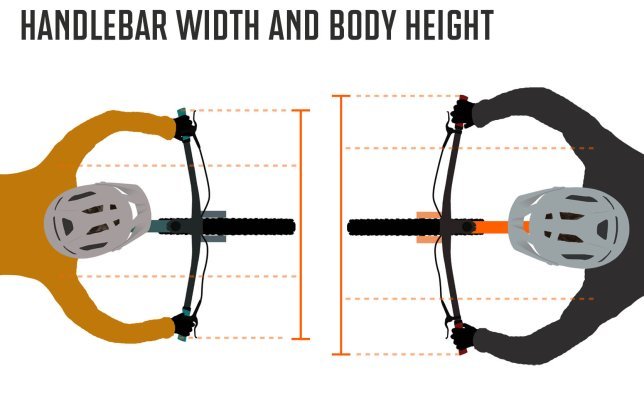
The best handlebar width depends on your shoulder width, height, and arm length. Many bike shops use a simple test: have the rider stand and hold their arms out, as if grabbing handlebars. Measure from the outside of one hand to the other. This gives a starting point.
Example: If your shoulder width (from outside to outside) is 44 cm (440 mm), you might start with a handlebar close to 740 mm wide.
But your body is only one part. Comfort and control matter more than numbers.
Height And Handlebar Width
Taller riders usually prefer wider bars. Shorter riders often feel better with narrower bars.
| Rider Height | Suggested Width (mm) |
|---|---|
| Under 5’6″ (168 cm) | 680–720 |
| 5’6″–6’0″ (168–183 cm) | 720–760 |
| Over 6’0″ (183 cm) | 760–800 |
Non-obvious insight: Many riders ignore their shoulder width and only focus on height. Shoulder width is usually a better starting point. If your shoulders are broad, you may need wider bars, even if you’re not tall.
Credit: www.bike-components.de
Riding Style And Terrain
Your riding style affects the ideal handlebar width. Think about where you ride most.
Cross-country (XC):
- Bars are usually 680–720 mm wide.
- Narrower bars help with tight corners and long climbs.
Trail/All-Mountain:
- Bars are 720–760 mm wide.
- Balance between control and comfort.
Enduro/Downhill:
- Bars are 760–800 mm wide.
- Maximum control and stability on rough, fast descents.
Urban/Commuting:
- Bars are often 660–700 mm wide.
- Narrow enough for city traffic and tight spaces.
Example: If you ride tight forest trails, wide bars may hit trees. If you ride open, fast trails, wider bars give more control.
Non-obvious insight: Don’t just copy pro riders. Pros use extra-wide bars for speed and control, but their trails are different from yours. Choose based on your local terrain.
Pros And Cons Of Wider Vs. Narrower Bars
Each width has benefits and drawbacks. Knowing these helps you make a smart choice.
Wider bars:
- Pros: Better control, more leverage, improved stability.
- Cons: Harder to fit through tight trails, can cause shoulder/wrist pain if too wide, harder to transport.
Narrower bars:
- Pros: Easier steering in tight spaces, more comfortable for smaller riders, easier to carry.
- Cons: Less leverage, less stability at high speed, may feel twitchy on rough terrain.
Adjustable And Customizable Options
Most modern handlebars can be cut to size. Many brands sell bars that are 800 mm wide, so riders can trim them down. Always check the manufacturer’s marks—they usually show safe cut points.
Steps to cut handlebars:
- Remove grips and accessories.
- Use a proper cutting tool (pipe cutter or hacksaw).
- Measure and mark your desired width.
- Cut carefully, making sure the edge is smooth.
- Reinstall grips and accessories.
Tip: Always cut a little at a time—once you cut, you can’t go back.
Handlebar Diameter And Shape
Handlebar diameter is separate from width. Most mountain bike bars are 31.8 mm at the center (clamp area). Some are 35 mm—these are stiffer but can feel harsh.
Shape: Bars may have rise (vertical curve), sweep (backward curve), and upsweep (upward angle). These affect comfort and hand position, but width is the most important for control.
Comparison of bar shapes:
| Type | Rise (mm) | Sweep (degrees) | Use |
|---|---|---|---|
| Flat | 0 | 5–7 | XC, Climbing |
| Riser | 20–40 | 7–9 | Trail, Downhill |
Tip: Shape affects hand comfort, but doesn’t change width. Pick shape based on riding style.
Credit: www.youtube.com
Test And Fine-tune Your Setup
It’s best to try different widths before making a final choice. Bike shops may let you test bars, or you can borrow from friends. Many riders start wide, then cut down after a few rides.
How to test handlebar width:
- Try riding with hands closer together or farther apart (before cutting).
- Notice how your shoulders, wrists, and back feel.
- Test on your usual trails.
Common mistake: Cutting bars too short too quickly. Ride a few times before trimming.
Real-world Examples
Let’s look at some real cases:
Case 1: Sarah is 5’4″ with narrow shoulders. She started with 760 mm bars, but felt stretched and tired. She cut to 700 mm. Now, she feels comfortable and can steer easily on her local wooded trails.
Case 2: Mike is 6’2″ with broad shoulders. He tried 720 mm bars but felt cramped. He switched to 780 mm, and his control improved—especially on fast descents.
Case 3: Alex rides in urban settings. He uses 680 mm bars to fit through traffic and tight spaces. He tried wider bars but kept hitting obstacles.
The Science Behind Handlebar Width
Studies show that wider handlebars can reduce steering force and improve control. One research found that bars over 760 mm gave riders more leverage, but after 800 mm, benefits became less clear.
Statistic: A study by the International Journal of Sports Science found that riders with bars over 780 mm had better downhill control, but those with bars wider than their shoulder span felt more arm fatigue and wrist pain.
Non-obvious insight: Wider bars can change your breathing. If your arms are stretched, your chest is more open, which can help on climbs. But too wide, and you lose efficiency.
How Handlebar Width Affects Bike Fit
Handlebar width is part of your overall bike fit. If you change your bars, you may need to adjust your stem or seat. Wider bars change your reach, which affects comfort.
Example: If you move from 700 mm to 780 mm bars, your hands are farther from the center. You may need a shorter stem to keep your posture comfortable.
Tip: After changing bars, check your bike fit. Adjust stem length, seat position, and bar angle.
Comparing Handlebar Widths
Here’s how different widths affect riding:
| Width (mm) | Stability | Control | Comfort | Best Use |
|---|---|---|---|---|
| 660 | Low | Medium | High for small riders | Urban, XC |
| 700 | Medium | Medium | Medium | XC, Trail |
| 760 | High | High | Medium | Trail, Enduro |
| 800 | Very High | Very High | Low for small riders | Downhill |
Handlebar Materials And Weight
Bars are made from aluminum, carbon fiber, or steel. Weight and stiffness affect handling.
- Aluminum: Strong, affordable, slightly heavier.
- Carbon fiber: Light, absorbs vibration, expensive, can be brittle if cut wrong.
- Steel: Rare, heavy, used on budget bikes.
Tip: Material doesn’t change width, but affects how bars feel and how easy they are to cut.
Women And Handlebar Width
Many women riders have narrower shoulders and prefer bars around 680–720 mm. Some women’s bikes come with bars sized for smaller riders. But there’s no rule—choose based on comfort.
Example: Specialized and Liv (women’s bike brands) often use 700 mm bars on small frames.
Non-obvious insight: Women should check not just width, but also bar shape and diameter for smaller hands.
Kids And Handlebar Width
Kids’ bikes usually have narrower bars—580–660 mm. This fits their smaller bodies and helps control.
Tip: If your child grows, you can upgrade to wider bars for more control.
Common Mistakes When Choosing Width
- Copying pro riders: Pros use wide bars for speed, but their trails and bodies are different.
- Ignoring shoulder width: Height is not everything.
- Cutting too much: Trim slowly and test often.
- Forgetting bike fit: Changing bars may need other adjustments.
- Not checking trail types: Wide bars can be a problem on tight trails.
How To Find Your Perfect Width
Follow these steps:
- Measure your shoulder width.
- Try bars close to your shoulder width plus 20–30 cm.
- Test different widths on your regular trails.
- Adjust your stem and seat after changing bars.
- Cut bars slowly, test after each cut.
Tip: Comfort and control are more important than numbers. If your bars feel too wide or too narrow, adjust.
Resources For Further Learning
You can find more data and expert advice at BikeRadar. This guide covers bar types, materials, and how to choose.
Frequently Asked Questions
How Do I Know If My Handlebars Are Too Wide?
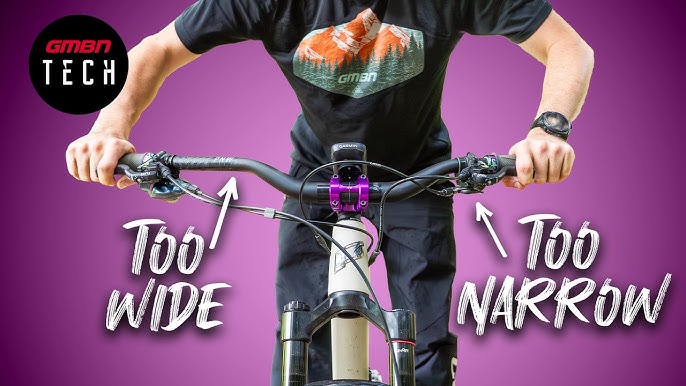
If your shoulders and wrists hurt, or you feel stretched and lose control in tight turns, your bars may be too wide. Test by moving your hands closer together on the bars. If you feel better, consider cutting them down.
Can I Cut My Handlebars At Home?
Yes, most aluminum and carbon bars can be cut. Use a proper cutting tool and follow the manufacturer’s marks. Always cut a little at a time and make sure the edge is smooth.
Does Handlebar Width Affect Bike Handling?
Yes. Wider bars give more control and stability, especially downhill. Narrower bars make steering quicker and are better for tight trails. The wrong width can make your bike feel twitchy or sluggish.
What Width Do Professional Riders Use?
Many pros use 780–800 mm bars for downhill and enduro. Cross-country pros often use 700–720 mm. But pros choose based on their body and terrain, not just trends.
Should I Choose Width Based On My Shoulder Width Or Height?
Shoulder width is usually a better starting point. Height matters, but shoulder width affects comfort and control. Start with bars close to your shoulder width, then test and adjust.
Finding the right mountain bike handlebar width is a mix of science, comfort, and personal preference. Start with your body, think about your riding style, and test until you find the sweet spot. Adjust slowly, check your fit, and remember—no two riders are the same.
The perfect width will help you ride better, longer, and with more confidence.
Credit: www.pinkbike.com

Hello Guys! I am John Reese, a professional biker and my hobby is biking! I have been biking for last 12 years and I love using bikes while outing as well. Based on my experiences with the different type of bikes (mountain bikes, road bikes and hybrid bikes); I am sharing my opinion about various bikes so that a beginner can get started right away. Happy reading!