
How Much Does A Trek Mountain Bike Weigh
Mountain biking is a sport filled with adventure, challenge, and fun. Choosing the right bike can make or break your experience, and one of the most important factors is weight. If you’re looking at Trek mountain bikes, you might wonder: how much do these bikes actually weigh, and why does it matter? Whether you’re a beginner or a seasoned rider, understanding bike weight will help you pick the best Trek model for your needs, ride smarter, and even save money.
Let’s explore the weights of Trek mountain bikes, what affects them, and how to make the right choice. You’ll discover real numbers, practical comparisons, and useful advice – all explained in clear, simple English.
Why Bike Weight Matters
When you ride a mountain bike, the weight affects almost everything. Lighter bikes are easier to handle, carry, and pedal uphill. Heavier bikes can feel more stable and strong, but they need more effort to move. For Trek mountain bikes, the weight range can be wide, depending on the model and features.
Here’s why weight is so important:
- Performance: Light bikes accelerate faster and climb hills with less effort.
- Handling: Lower weight means easier turning and maneuvering.
- Fatigue: Carrying extra pounds makes you tired faster, especially on long rides.
- Transport: If you travel with your bike, a lighter one is simpler to load and unload.
- Durability: Heavier bikes sometimes use tougher materials, which can be good for rough trails.
Most riders want a balance. You don’t always need the lightest bike, but knowing the weight helps you match your Trek bike to your riding style.
Typical Trek Mountain Bike Weights
Trek is one of the world’s leading mountain bike brands. They offer a wide range, from entry-level models to high-end racing machines. The weight depends on the bike type, frame material, size, and features.
Trek Bike Types And Their Average Weights
Trek makes several types of mountain bikes. Each serves a different purpose and comes with its own weight range.
- Hardtail Mountain Bikes: These have a front suspension fork but no rear suspension. They’re lighter and simpler.
- Average weight: 24–28 lbs (10.8–12.7 kg)
- Full Suspension Bikes: These have both front and rear suspension. They’re heavier but more comfortable on rough trails.
- Average weight: 27–33 lbs (12.2–15 kg)
- Electric Mountain Bikes (e-MTBs): Built with a motor and battery, these are much heavier.
- Average weight: 45–55 lbs (20–25 kg)
The exact weight varies with the model, size, and build. Let’s compare a few popular Trek bikes.
Example Trek Mountain Bike Weights
Below is a data table showing the weights of some popular Trek models:
| Bike Model | Type | Frame Material | Approx. Weight (M size) |
|---|---|---|---|
| Marlin 6 | Hardtail | Aluminum | 28 lbs (12.7 kg) |
| Roscoe 7 | Hardtail | Aluminum | 29 lbs (13.2 kg) |
| X-Caliber 9 | Hardtail | Aluminum | 26.5 lbs (12 kg) |
| Fuel EX 8 | Full Suspension | Aluminum | 31 lbs (14 kg) |
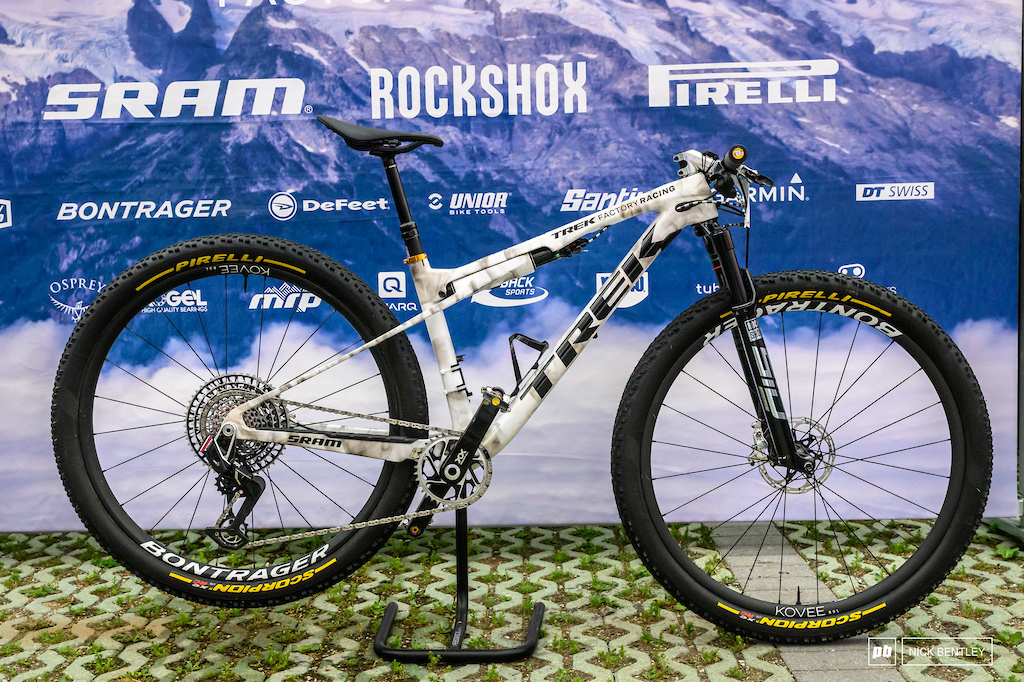
| Top Fuel 9.9 | Full Suspension | Carbon | 24.9 lbs (11.3 kg) |
| Supercaliber 9.8 | Full Suspension | Carbon | 22.7 lbs (10.3 kg) |
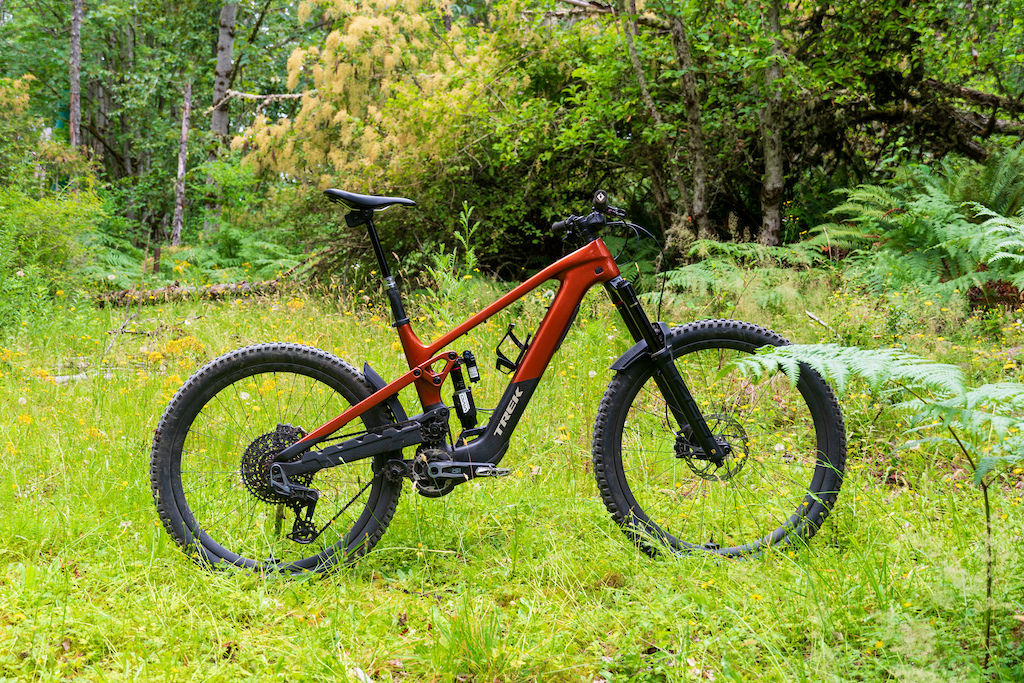
| Rail 7 | Electric MTB | Aluminum | 51 lbs (23.1 kg) |
| Powerfly FS 9 | Electric MTB | Aluminum | 53 lbs (24 kg) |
These numbers show how much Trek bikes can differ. A basic hardtail may weigh around 28 lbs, while a high-end carbon model can drop below 23 lbs. E-bikes are much heavier, often above 50 lbs.
What Affects Trek Mountain Bike Weight?
Several factors combine to decide the weight of a Trek mountain bike. Understanding them helps you choose wisely.
1. Frame Material
The frame is the backbone of your bike. Trek uses three main materials:
- Aluminum: Most common, strong, affordable, and fairly light.
- Carbon Fiber: Lighter and stiffer, but more expensive.
- Steel: Rare in modern Trek bikes, heavier but very durable.
Carbon frames can save 2–3 lbs compared to aluminum, but the price is much higher. Aluminum offers good value and durability.
2. Suspension Type
Suspension adds comfort, but also weight:
- Hardtail: Only front suspension, lighter and simpler.
- Full Suspension: Front and rear, adds 3–5 lbs more.
Choose hardtail if you ride mostly smooth trails. Full suspension is better for rough, rocky paths.
3. Wheel Size
Trek offers mountain bikes with 27.5-inch or 29-inch wheels. Bigger wheels are heavier but roll over obstacles better.
- 29-inch wheels can add about 0.5–1 lb compared to 27.5-inch wheels.
4. Components
Bikes with better components (gears, brakes, wheels) can weigh less or more, depending on the material and design. For example:
- High-end gears made of titanium or carbon are lighter.
- Stronger wheels and tires for rough terrain add weight.
5. Bike Size
Trek bikes come in different sizes (XS, S, M, L, XL). Larger sizes use more material and are slightly heavier.
- Each size jump adds roughly 0.3–0.7 lbs.
6. Accessories
Accessories like bottle cages, lights, racks, and mudguards add extra ounces or pounds. The listed weight is usually for the base bike without accessories.
7. Electric Motor And Battery
For Trek e-MTBs, the motor and battery make up most of the extra weight. These parts can add 15–20 lbs.
How Trek Bike Weight Compares To Other Brands
Trek is famous for quality and innovation, but how does their bike weight compare to competitors? Let’s look at a quick comparison table:
| Brand | Hardtail Avg. Weight | Full Suspension Avg. Weight | E-MTB Avg. Weight |
|---|---|---|---|
| Trek | 24–28 lbs | 27–33 lbs | 45–55 lbs |
| Specialized | 23–27 lbs | 26–32 lbs | 44–54 lbs |
| Giant | 25–29 lbs | 28–34 lbs | 46–56 lbs |
| Cannondale | 24–28 lbs | 27–33 lbs | 45–55 lbs |
Trek’s weights are very competitive. The lightest models are similar to Specialized and Cannondale. For e-bikes, Trek is also in the same range.
Credit: www.pinkbike.com
How To Find The Weight Of Your Trek Mountain Bike
Not every Trek bike lists its exact weight online. Here’s how you can find or estimate your bike’s weight:
- Check Trek’s official website. Some models have weight listed in the specs section.
- Ask your local Trek dealer. Dealers can give you real numbers, sometimes even weigh the bike for you.
- Look for reviews or forums. Many riders share the weight of their bikes online.
- Use a digital scale. If you own the bike, weigh it yourself without accessories.
Remember, published weights usually refer to a medium-sized bike, without pedals or extras.
How Weight Affects Mountain Biking Performance
Bike weight can change your ride in several ways. Here are some specific examples:
- Climbing: A lighter bike is easier to pedal uphill. Even 2 lbs less can make a big difference on long climbs.
- Descending: Heavier bikes are more stable at high speed, but can feel harder to control.
- Technical Trails: Lower weight helps you maneuver around rocks, roots, and tight turns.
- Jumping: Light bikes are easier to lift off the ground, but very light bikes may feel less stable.
Some experienced riders prefer a heavier bike for downhill and a lighter bike for cross-country (XC) rides. Think about your main riding style before choosing.
Weight Differences Between Trek’s Hardtail And Full Suspension Bikes
If you’re choosing between hardtail and full suspension Trek bikes, weight is a big factor. Let’s dig deeper:
Hardtail Pros
- Lower weight
- Lower price
- Less maintenance
Hardtails are great for beginners, smoother trails, and cross-country racing.
Full Suspension Pros
- More comfort
- Better control on rough trails
- Higher speed on downhill
Full suspension adds 3–5 lbs. For rough terrain, the extra weight is worth it.
Real World Example
A Trek X-Caliber 9 hardtail weighs about 26.5 lbs. A Trek Fuel EX 8 full suspension weighs around 31 lbs. That’s a 4.5 lb difference.
For short, fast rides, the hardtail wins. For rocky or long trails, the full suspension feels better.
Weight Differences Between Trek Aluminum And Carbon Bikes
The choice of frame material is one of the biggest factors in bike weight.
Aluminum
- Strong
- Affordable
- Heavier
Most entry-level and mid-range Trek bikes use aluminum. You get good durability for the price.
Carbon
- Very light
- Stiff
- Expensive
High-end Trek bikes use carbon fiber. You can save 2–3 lbs easily. But carbon bikes cost $500–$2000 more.
Example Comparison
A Trek Top Fuel 8 (aluminum) weighs 29 lbs. The Top Fuel 9.9 (carbon) weighs 24.9 lbs. That’s more than 4 lbs lighter.
But, the carbon model can cost double. Decide if the weight savings are worth the price.
Weight Of Trek Electric Mountain Bikes
Trek’s electric mountain bikes (e-MTBs) are much heavier because of the motor and battery.
Common Trek E-mtb Models
- Rail 5: ~50 lbs
- Rail 7: ~51 lbs
- Powerfly FS 9: ~53 lbs
These bikes offer power assist for hills, but the weight makes them harder to carry or transport. E-bikes are best for people who want help on climbs or longer rides.
Battery And Motor Weight
The battery and motor together add 15–20 lbs. Without them, the frame is similar to a regular mountain bike.
Practical Tip
If you buy a Trek e-MTB, test lifting it. Make sure you can handle the weight when loading onto a car or carrying up stairs.
Weight Of Trek Kids’ Mountain Bikes
Trek also makes mountain bikes for kids. These are much lighter, but the weight matters for young riders.
Popular Trek Kids’ Models
- Trek Precaliber 24: ~22 lbs (10 kg)
- Trek Wahoo 24: ~20 lbs (9.1 kg)
Kids’ bikes use smaller wheels and frames, so they’re easier to ride and carry. However, some cheaper kids’ bikes are heavier than expected due to basic parts.
Non-obvious Insight
Many parents buy a kids’ bike based only on size, not weight. But a lighter bike helps kids learn faster and enjoy riding more.
Credit: www.pinkbike.com
Does Bike Weight Affect Durability?
Heavier bikes can be more durable, but it’s not always true. Trek uses high-quality materials, so even lighter models are strong enough for rough trails.
Heavier = Stronger?
Some riders believe a heavier bike is always tougher. In reality, Trek’s carbon bikes are very strong because of advanced engineering.
Lighter = More Fragile?
Lighter bikes need careful handling. Avoid big drops or crashes, especially with carbon frames.
Practical Advice
Choose a bike weight that suits your needs. Don’t pick the lightest model just for weight savings – consider your riding style and terrain.
How To Make Your Trek Mountain Bike Lighter
If you already own a Trek bike and want to reduce its weight, you can make simple changes:
- Swap tires: Lighter tires can save up to 1 lb.
- Change wheels: High-end wheels are lighter and roll faster.
- Replace seatpost and handlebars: Carbon parts weigh less.
- Remove unnecessary accessories: Take off racks, heavy mudguards, and extra lights.
- Upgrade drivetrain: Light gears and cassettes can save ounces.
These upgrades cost money, but even small changes help. For big weight savings, changing the frame is best, but that’s expensive.
Is Weight The Most Important Factor When Choosing A Trek Mountain Bike?
Weight is important, but it’s not everything. Here are some other key factors:
- Fit: The bike must match your body size and riding style.
- Suspension: Choose the right amount for your trails.
- Components: Reliable gears and brakes matter more than a few ounces.
- Budget: Lighter bikes cost more.
A good Trek mountain bike feels right for you, not just light.
Common Mistake
Many beginners focus only on weight. They buy the lightest bike but later realize it’s uncomfortable or doesn’t fit their trails. Always test ride and check all features before buying.
Trek Mountain Bike Weight Over Time
Bike technology has improved a lot in the last 20 years. Trek has made their bikes lighter without losing strength.
- In 2000, most mountain bikes weighed over 32 lbs.
- Today, even full suspension models can be under 25 lbs.
This means you get better performance and easier rides than ever before.
Non-obvious Insight
Bike weight is only part of the story. Trek also improves geometry, suspension, and stiffness, so lighter bikes still handle tough trails well.
How To Choose The Right Weight For Your Trek Mountain Bike
Picking the best Trek bike weight depends on your riding style, body size, and goals.
1. Beginner Riders
Choose a hardtail, aluminum frame, and mid-range weight (26–29 lbs). This is easier to handle and affordable.
2. Cross-country Racers
Pick a carbon hardtail or light full suspension (22–25 lbs). Every pound matters for racing.
3. Trail Riders
Go for a full suspension model (27–33 lbs). Comfort and control are more important than weight.
4. Downhill Riders
Heavier bikes (30–35 lbs) are more stable. Don’t worry about a few extra pounds.
5. E-mtb Riders
Accept a higher weight (45–55 lbs) for motor assist. Focus on battery range and motor power.
Trek Mountain Bike Weight And Rider Weight
Your own body weight affects how the bike feels. For lighter riders, every pound matters more.
- A 120 lb rider on a 30 lb bike feels the weight more than a 200 lb rider.
- Small riders may prefer bikes under 27 lbs for easier handling.
How To Carry And Transport A Heavy Trek Mountain Bike
If your Trek bike is heavy (especially e-MTBs), carrying and transport can be tricky.
Tips For Moving Heavy Bikes
- Use a ramp for loading onto cars.
- Ask for help when lifting.
- Remove the battery on e-bikes to reduce weight.
- Buy a sturdy bike rack rated for heavy bikes.
Heavier bikes are less fun to carry, but safe transport is possible with planning.
Weight And Trek Bike Warranty
Trek offers strong warranties on their frames and parts. Even lighter carbon bikes get full coverage, as long as you use them correctly.
- Lifetime warranty on most Trek frames.
- 2–5 year warranty on parts.
Always check the warranty for your model before buying.

Credit: www.youtube.com
Are There Trek Mountain Bikes Under 20 Pounds?
It’s rare to find a Trek mountain bike under 20 lbs. Only some high-end carbon hardtails come close, and even then, they may need expensive upgrades.
- Trek Supercaliber 9.9: 22.7 lbs
- Custom builds (with special parts): 20–21 lbs
For most riders, bikes under 20 lbs are not practical or affordable. Focus on bikes in the 22–28 lbs range for good performance.
Trek Mountain Bike Weight And Price
The lighter the bike, the higher the price. Here’s how weight and price relate:
| Bike Model | Approx. Weight | Approx. Price |
|---|---|---|
| Marlin 6 | 28 lbs | $849 |
| X-Caliber 9 | 26.5 lbs | $1,599 |
| Top Fuel 9.9 | 24.9 lbs | $8,499 |
| Supercaliber 9.8 | 22.7 lbs | $6,499 |
| Rail 7 | 51 lbs | $6,499 |
If you want a lighter bike, expect to pay more. Decide your budget and weight goals before shopping.
Trek Bike Weight And Trail Type
Different trails require different bikes. Weight affects which Trek bike fits your needs.
Smooth Trails
- Hardtail, lighter weight (24–28 lbs)
- Faster, easier to pedal
Rocky Trails
- Full suspension, moderate weight (27–33 lbs)
- More comfort, better control
Steep Hills
- Light bike for climbing
- E-bike for motor assist
Downhill
- Heavy, strong bike (30–35 lbs)
- Safe and stable at high speed
Common Mistakes When Choosing A Trek Bike By Weight
Many riders make errors when picking a bike based on weight.
- Ignoring fit and comfort: Light bikes are not always the best for your body.
- Choosing carbon just for weight: Expensive, not always needed for beginners.
- Forgetting about accessories: Bike weight increases with extras.
- Not testing the bike: Try before you buy to feel the real weight.
Should You Upgrade To A Lighter Trek Mountain Bike?
Upgrading to a lighter Trek bike can improve performance, but only if your current bike feels too heavy or slow.
When To Upgrade
- You ride long climbs often.
- You race and need every advantage.
- Your current bike is over 33 lbs and feels sluggish.
When Not To Upgrade
- You ride mostly downhill or rough trails.
- Your bike feels comfortable and fits well.
- You don’t want to spend more money.
Trek Mountain Bike Weight And Speed
Lighter bikes are usually faster, especially uphill. But on flat or downhill, the difference is less.
- Reducing bike weight by 2 lbs can make climbing 5% easier.
- For downhill, heavier bikes may be 5–10% more stable.
How Trek Engineers Make Bikes Lighter
Trek uses advanced technology to reduce weight:
- Hydroformed aluminum: Strong and light
- OCLV carbon fiber: Unique Trek carbon for extra stiffness
- Integrated parts: Combine functions to save weight
These innovations mean you get a lighter bike without losing strength.
Real-world Trek Mountain Bike Weight Stories
Many riders share their experiences online. Here are two examples:
Rider A: Cross-country Racer
“I switched from a 30 lb Trek hardtail to a 24. 9 lb Top Fuel. The difference on climbs was huge. I felt less tired after races and improved my times. ”
Rider B: Trail Rider
“My Fuel EX weighs about 32 lbs. It’s not light, but it handles rocks and drops without problems. For technical trails, I prefer the extra weight. ”
Trek Mountain Bike Weight And Maintenance
Heavier bikes sometimes need more maintenance, especially if used for rough trails. Lighter bikes require careful handling.
- Carbon frames: Watch for cracks or chips.
- Aluminum frames: Check welds and joints.
- E-bikes: Maintain battery and motor.
Proper care keeps your Trek bike lasting longer, no matter the weight.
Final Thoughts: Finding Your Perfect Trek Mountain Bike Weight
Choosing the right Trek mountain bike weight is about balance. Consider your riding style, budget, and body size. Lighter bikes are easier to handle and faster uphill, but heavier bikes offer more comfort and stability.
Don’t get obsessed with weight alone. Look at the whole bike – frame, suspension, components, and fit. Try different models, ask questions, and learn from other riders.
If you want to compare more models or check detailed specs, visit the official Trek site or a trusted resource like Trek Bikes.
Frequently Asked Questions
How Much Does A Trek Mountain Bike Weigh?
The weight depends on the model and type. Hardtails usually weigh 24–28 lbs, full suspension bikes 27–33 lbs, and electric mountain bikes 45–55 lbs. High-end carbon models can be as light as 22.7 lbs.
Does A Lighter Trek Bike Make Me Faster?
Yes, a lighter bike helps with acceleration and climbing. You’ll notice the difference mostly on uphill sections and long rides. On flat or downhill trails, the effect is smaller.
Are Trek Carbon Bikes Worth The Price For Weight Savings?
If you race or ride long distances, carbon bikes can be worth it. They are lighter and stiffer, but cost more. For casual riders, aluminum bikes offer good value.
Can I Make My Trek Mountain Bike Lighter?
You can upgrade tires, wheels, seatpost, and handlebars to save weight. Removing accessories also helps. Changing the frame to carbon is the biggest step, but expensive.
Is Bike Weight The Most Important Factor In Choosing A Trek Mountain Bike?
Weight is important, but not everything. Fit, suspension, components, and price matter too. Choose a bike that feels comfortable and suits your trails, not just the lightest one.
If you follow this advice, you’ll find a Trek mountain bike that fits your needs and makes every ride enjoyable. Weight is only one part of the story – the real adventure starts when you hit the trail.

Hello Guys! I am John Reese, a professional biker and my hobby is biking! I have been biking for last 12 years and I love using bikes while outing as well. Based on my experiences with the different type of bikes (mountain bikes, road bikes and hybrid bikes); I am sharing my opinion about various bikes so that a beginner can get started right away. Happy reading!