
Adjusting Shimano gears on a mountain bike can transform your riding experience. Smooth shifting means better control, less chain wear, and fewer frustrations on the trail. Many riders think gear adjustment is complicated, but with the right approach, anyone can learn to do it well.
You don’t need expensive tools or advanced skills—just patience, observation, and a willingness to get your hands a little dirty.
This guide will show you, step by step, how to adjust Shimano gears on your mountain bike for reliable, precise shifting. Whether you’re a beginner or have some experience, you’ll pick up techniques and small details that make a big difference.
We’ll cover both front and rear derailleurs, common issues, fine-tuning, and how to keep your gears working perfectly. Let’s roll up our sleeves and make your Shimano gears work like new.
Understanding Shimano Gear Systems
Before making any adjustments, it helps to understand how Shimano gear systems function on a mountain bike. Most modern mountain bikes use a derailleur system. There are two main derailleurs: the front derailleur (moves the chain between chainrings) and the rear derailleur (moves the chain across the cassette on the rear wheel).
- The shifters on your handlebars control these derailleurs via cables.
- When you shift, the cable pulls or releases, moving the derailleur and changing the chain’s position.
- Shimano uses both mechanical (cable) and electronic (Di2) systems. This article focuses on the most common—mechanical cable systems found on most mountain bikes.
Why Proper Adjustment Matters
Badly adjusted gears can cause:
- Chain skipping under load
- Slow or missed shifts
- Chain dropping off the chainrings or cassette
- Unusual noises while pedaling
Well-adjusted Shimano gears give you:
- Smooth, reliable shifting
- Longer drivetrain life
- More enjoyable rides
Tools And Preparation
Gather these basic tools before starting:
- Phillips or JIS screwdriver (for limit screws)
- 5mm Allen key (for cable fixing bolts)
- Needle-nose pliers (for pulling cables)
- Bike stand (optional, but helpful)
- Chain lubricant
- Clean rag
A few things to check first:
- Your chain should be clean and lightly lubricated.
- The cassette and chainrings should not have worn or bent teeth.
- The derailleur hanger (the part that attaches the rear derailleur to the frame) must be straight. A bent hanger causes shifting problems even after adjustment.

Credit: www.infinibandta.org
Diagnosing Gear Problems
Before adjusting, diagnose what’s wrong. Shift through all gears and note:
- Does the chain hesitate or skip when shifting up (to a larger cog or ring) or down (to a smaller one)?
- Does the chain drop off the cassette or chainrings?
- Are there gears you can’t reach?
- Is the shifting noisy?
Knowing these symptoms helps you target your adjustments and avoid making things worse.
Adjusting The Rear Shimano Derailleur
The rear derailleur is where most shifting problems occur. Let’s break the process into clear steps.
1. Set The High And Low Limit Screws
Limit screws prevent the derailleur from moving the chain off the cassette. Shimano derailleurs have two screws, usually marked H (high) and L (low).
- The H screw stops the derailleur from shifting the chain past the smallest cog.
- The L screw stops it from going past the largest cog.
How To Adjust:
- Shift to the smallest cog (hardest gear) in the back and smallest chainring in the front.
- Find the H screw. Turn it so the derailleur jockey wheel lines up perfectly with the smallest cog.
- Shift to the largest cog (easiest gear) in the back and largest chainring in the front.
- Use the L screw to align the jockey wheel with the largest cog.
Pro tip: If you’re unsure which screw is which, turn each one a half-turn and watch which way the derailleur moves.
2. Adjust Cable Tension
Cable tension is crucial for accurate shifting. Too little tension and the derailleur won’t shift to larger cogs. Too much and it won’t reach the smaller ones.
Steps:
- Shift to the smallest cog.
- Use the barrel adjuster (usually where the cable enters the derailleur) to add or release tension.
- Turn counterclockwise to increase tension (helps shift up to larger cogs).
- Turn clockwise to decrease tension (helps shift down to smaller cogs).
- Shift up one gear at a time. Each click should move the chain smoothly to the next cog.
If the chain hesitates to climb to a larger cog, add tension. If it hesitates to drop to a smaller cog, reduce tension.
3. Fine-tune Indexing
Indexing means each shift corresponds to one gear move. Poor indexing causes the chain to ride between cogs or not move at all.
To Fine-tune:
- Pedal and shift through all gears.
- If shifting is slow going up, add a quarter-turn of tension using the barrel adjuster.
- If shifting is slow going down, release tension a quarter-turn.
- Repeat until every shift is crisp and accurate.
4. Set The B-tension Screw
The B-tension screw controls the gap between the top derailleur jockey wheel and the cassette. If the gap is too small, the chain may rub or skip. If it’s too large, shifting is sluggish.
Adjusting B-tension:
- Shift to the largest cog.
- Check the gap between the jockey wheel and the cog. Shimano recommends 5–6mm.
- Turn the B-tension screw to set the gap:
- Turn clockwise to move the derailleur away (increase gap).
- Turn counterclockwise to move it closer (decrease gap).
Rear Derailleur Adjustment Summary Table
Here’s a quick reference for common rear derailleur issues and their fixes:
| Problem | Likely Cause | Adjustment Needed |
|---|---|---|
| Chain skips gears | Poor indexing, cable tension off | Fine-tune barrel adjuster |
| Chain drops off cassette | Limit screws incorrect | Set H/L screws |
| Slow shifting to larger cogs | Cable tension too low | Increase tension |
| Slow shifting to smaller cogs | Cable tension too high | Decrease tension |
| Noisy in biggest cog | B-tension gap too small | Increase B-tension |
Adjusting The Front Shimano Derailleur
The front derailleur shifts the chain between chainrings. Many riders find it trickier than the rear, but with patience, you can set it up for smooth changes.
1. Check Alignment
The front derailleur cage should be parallel to the chainrings, and the gap between the outer cage and the largest chainring should be 1–3mm.
If the derailleur is angled or too high/low, loosen the clamp bolt with a 5mm Allen key, reposition, and retighten.
2. Set The Low Limit Screw
This screw prevents the chain from dropping inside, toward the frame.
- Shift to the smallest chainring and largest rear cog.
- Adjust the L screw so the inner cage plate is just clear of the chain—about 0.5mm of space, but no rubbing.
3. Set The High Limit Screw
Prevents the chain from overshooting the largest chainring.
- Shift to the largest chainring and smallest rear cog.
- Adjust the H screw so the outer cage plate clears the chain by 0.5mm.
4. Adjust Cable Tension
- Shift to the smallest chainring.
- Release and pull the derailleur cable tight, then secure the anchor bolt.
- Shift to the next largest chainring.
- If the shift is slow, increase tension using the barrel adjuster or by pulling the cable tighter.
- If the chain rubs or overshoots, decrease tension.
5. Fine-tune
Shift through all gears. Make sure the chain moves smoothly and doesn’t rub the cage in any gear combination.
Common Front Derailleur Problems And Solutions
| Problem | Cause | Solution |
|---|---|---|
| Chain drops inside | Low limit screw too loose | Tighten L screw |
| Chain overshoots largest ring | High limit screw too loose | Tighten H screw |
| Chain rubs derailleur in certain gears | Cage not parallel or limit screws off | Align cage, reset limits |
| Slow shift to larger ring | Cable tension too low | Increase tension |
Fine-tuning For Perfect Shifting
After basic adjustments, small changes make your Shimano gears work flawlessly.
Cross-chaining And Trim
On some Shimano systems, certain gear combinations—like big chainring + largest cassette cog—are not recommended. This is called cross-chaining and causes noise or chain rub.
- Use the trim function if your shifter has it. Slightly move the derailleur to reduce rub.
- Shift to a more central gear combination for smoother performance.
Lubrication And Cleanliness
Even perfect adjustment fails if your drivetrain is dirty or dry.
- Clean your chain and derailleurs regularly.
- Use a quality bike chain lubricant (not motor oil).
- Wipe off excess lube to avoid attracting dirt.
When To Seek Professional Help
If you’ve tried all the steps and shifting is still poor, possible causes include:
- Bent derailleur hanger
- Worn chain or cassette
- Stretched cables or housing
A bike shop has tools to check alignment and diagnose hidden problems.
Shimano Vs. Other Gear Brands
Shimano is the most popular gear system for mountain bikes, but how does it compare to others like SRAM or Campagnolo?
Here’s a quick comparison of major gear systems:
| Brand | Shifting Feel | Common on | Unique Features |
|---|---|---|---|
| Shimano | Smooth, light action | Mountain, road, hybrid bikes | Shadow technology, RapidFire shifters |
| SRAM | Crisp, positive click | Mountain bikes, some road bikes | 1x drivetrains, DoubleTap system |
| Campagnolo | Distinct, mechanical feel | High-end road bikes | Ergopower levers, unique shifting logic |
Shimano’s popularity means parts and support are easier to find, and their gear systems are known for reliability and ease of adjustment.
Common Mistakes And How To Avoid Them
New and experienced riders both make mistakes when adjusting Shimano gears. Avoid these common problems:
- Over-tightening limit screws – This can block your chain from reaching all gears.
- Ignoring cable stretch – New cables stretch in the first few rides, causing poor shifting. Re-check cable tension after 2–3 rides.
- Neglecting derailleur hanger alignment – Even a slightly bent hanger ruins shifting. Get it checked after crashes.
- Skipping regular cleaning – Dirt and old lube cause sluggish shifts.
- Adjusting everything at once – Change one thing at a time, test, then move to the next.
Non-obvious insight: Always shift through all gears after any adjustment, not just the ones that were giving trouble. Sometimes a fix in one gear creates a new problem in another.
Practical Tips For Long-term Performance
- Replace your gear cables and housing every 1–2 years, or if shifting becomes stiff.
- Use a light drop of lubricant on the derailleur pivot points.
- Check your cassette and chain for wear every few months (or after 1,000 miles).
- If you ride in mud or rain, clean and lube your drivetrain more often.
- Carry a mini tool with a Phillips screwdriver and 5mm Allen key on rides for trailside tweaks.
Pro tip: Shimano publishes service instructions for each derailleur model. Check the specific manual for your setup for extra details.
Why Shimano Gears Need Regular Adjustment
You might wonder why Shimano gears—known for reliability—need regular adjustment. The answer is simple: bikes face vibrations, mud, rain, crashes, and cable stretch. Even a small knock or a few months of riding can affect alignment and tension.
Regular checks:
- Prevent minor problems from becoming big ones
- Save money on worn parts
- Keep you riding longer without breakdowns
Many experienced riders make small adjustments every month. It only takes 10–15 minutes and keeps your bike feeling new.
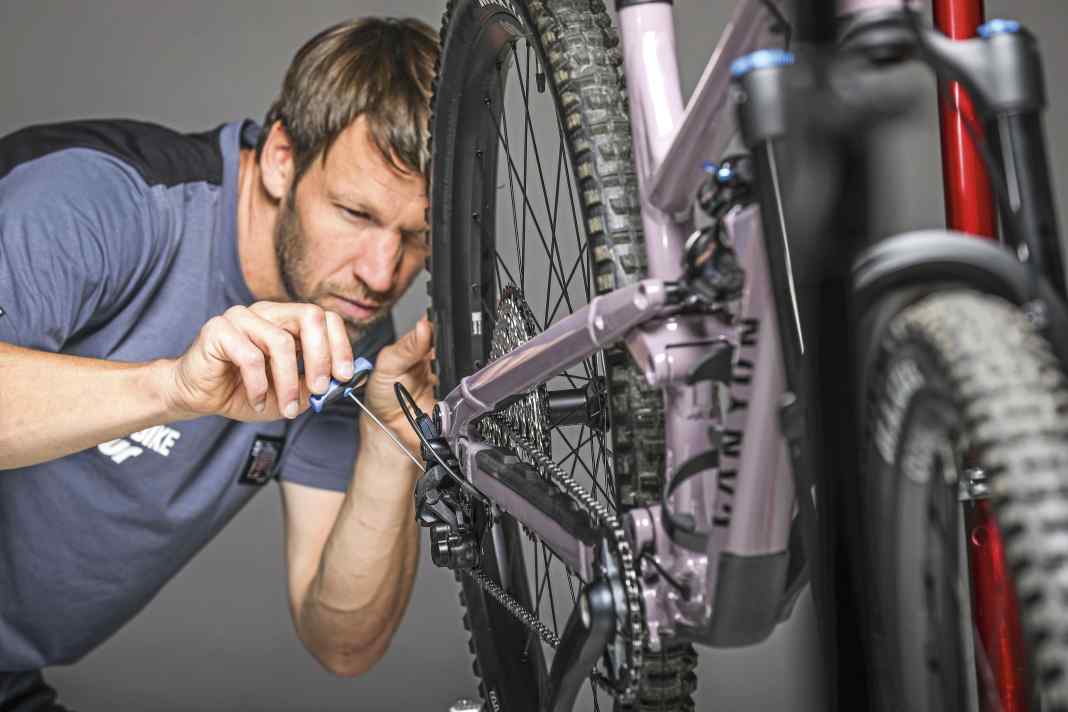
Credit: www.infinibandta.org
Helpful Resources
If you want to dive deeper, Shimano’s official tech documents are free online. You can also find video guides for your exact model. For more troubleshooting and advanced topics, check Park Tool’s Repair Help.
Frequently Asked Questions
How Often Should I Adjust Shimano Gears On My Mountain Bike?
For most riders, checking adjustment every few months or after any crash is enough. If you ride in harsh conditions, inspect your gears more often. New bikes need an adjustment after the first 100 miles as cables stretch.
What Are The Signs My Shimano Gears Need Adjusting?
Common signs include slow shifting, chain skipping, gears you can’t reach, or unusual noises while pedaling. If your drivetrain feels rough, check for dirt or damage before adjusting.
Do I Need Special Tools To Adjust Shimano Gears?
Most adjustments only require a Phillips screwdriver and a 5mm Allen key. Needle-nose pliers and a bike stand can make the job easier, but are not essential.
Can I Use Shimano Adjustment Steps For Other Brands?
The general process is similar for SRAM and Campagnolo, but some details (like shifter logic and cable routing) differ. Always check your specific brand’s manual before adjusting.
What Should I Do If My Gears Still Won’t Shift After Adjustment?
If shifting problems remain after following these steps, check for a bent derailleur hanger, a worn chain or cassette, or frayed cables. If unsure, visit a bike shop for a professional check.
Getting your Shimano gears to shift perfectly is satisfying and keeps your mountain bike ready for any adventure. With practice, these adjustments become second nature—and you’ll enjoy smoother, trouble-free rides every time.

Credit: www.youtube.com

Hello Guys! I am John Reese, a professional biker and my hobby is biking! I have been biking for last 12 years and I love using bikes while outing as well. Based on my experiences with the different type of bikes (mountain bikes, road bikes and hybrid bikes); I am sharing my opinion about various bikes so that a beginner can get started right away. Happy reading!