
Building your own mountain bike obstacles is an exciting way to level up your riding skills without always heading to a trail center. With the right approach, you can create safe, challenging features in your backyard or local space. But it’s not just about hammering some wood together—good obstacles require planning, smart design, and an understanding of what makes mountain biking fun and safe.
Let’s dive into how you can build mountain bike obstacles that suit your space, skill level, and ambitions.
Why Build Mountain Bike Obstacles?
Making your own obstacles can transform your riding. You control the difficulty, shape, and materials. Obstacles help you practice balance, timing, and control—skills that translate directly to real trails. Even small features like a bunny hop bar or a skinny can make a big difference in your confidence and technique.
Another reason is cost. Commercial bike parks and trail centers are fantastic, but regular visits add up. Building your own obstacles at home or in a community area is more affordable and means you can ride whenever you want.
Finally, there’s the creative aspect. Designing and building features is satisfying, and you’ll learn plenty about carpentry, problem solving, and even landscaping.
A less obvious benefit is the ability to focus on particular skills. For example, if you struggle with cornering, you can build a small berm and practice until it feels natural. If manuals are hard, a manual machine lets you try again and again in a safe spot. You also get instant feedback on your progress: adjusting the height or difficulty gives you a clear marker for improvement. This “custom training” helps you target weaknesses and turn them into strengths.
Key Principles For Safe And Fun Obstacles
Before you reach for the saw, keep some core principles in mind:
- Safety First: Every obstacle must be stable, strong, and free of sharp edges or protruding screws. If you’re not sure about a design, ask an experienced builder or search for trusted plans. It’s also wise to double-check every joint or support. A shaky feature can cause accidents, especially for younger or less experienced riders.
- Progression: Start simple and low. It’s better to have three small, easy obstacles than one big, dangerous one. This lets you build confidence gradually. It’s tempting to build taller ramps or skinnies right away, but even professional riders spend time on basic features.
- Weather Resistance: Outdoor obstacles face rain, sun, and snow. Use treated wood, weatherproof screws, and proper paint to extend their life. Rotting wood or rusted screws can make obstacles fail suddenly. For extra protection, consider raising wood off the ground using stones or bricks.
- Portability and Storage: If you have limited space, consider obstacles that are easy to move or disassemble. Folding ramps, stackable skinnies, or features that break down quickly are helpful if you share your yard or need to store obstacles in bad weather.
- Legal and Community Aspects: Always check local rules before building in public spaces. Get permission if needed, and involve your community. Never build on someone else’s land without consent. If you’re unsure, ask your local council or mountain bike club. Sometimes, you can get support or funding for community projects.
One more principle: try to build with future upgrades in mind. If you think you’ll want bigger features later, make your first obstacles modular or easy to modify. This saves time and money down the road.
Essential Tools And Materials
You don’t need a professional workshop, but some basic tools and materials are necessary:
- Saw: Circular saws are ideal, but a hand saw works for small cuts. If you’re cutting curves (for ramps), a jigsaw is helpful.
- Cordless Drill: For drilling pilot holes and driving screws. Pick one with good battery life if you’re building many features.
- Measuring Tape and Pencil: Accurate measurements prevent mistakes. For longer obstacles, a chalk line helps mark straight cuts.
- Level: Ensures your obstacles aren’t wonky. Even a small tilt can make riding harder or unsafe.
- Impact Driver: Useful for heavy screws. It saves your wrists and speeds up assembly.
- Clamps: For holding wood in place while you work. You can also use them to test fit before screwing pieces together.
- Safety Gear: Gloves, goggles, and ear protection. Protect yourself from splinters, dust, and loud tools.
Common materials include:
- Pressure-treated lumber (2x4s, 2x6s, plywood). This lasts longer outdoors and resists insects.
- Deck screws (3” and 4”). These hold wood firmly and resist rust.
- Exterior wood glue (optional for extra strength). Use it for joints where screws alone aren’t enough.
- Galvanized brackets (for added support). Especially useful for ramps or drop-offs.
- Paint or sealant (to weatherproof). Oil-based paints or stains are best for outdoor features.
Some builders use recycled pallets or old wood, but always check for nails, rot, or weak spots. Old wood can be slippery or break suddenly, so inspect carefully. If using pallets, remove all nails and sand rough spots.
For dirt features, you’ll need a shovel, rake, and possibly a wheelbarrow. Water is important for packing dirt—spray the area lightly to make it firm.
Planning Your Obstacle Course
Think about your goals and space before you build:
- What skills do you want to practice? (Jumping, balance, cornering, drops)
- How much space do you have?
- Will you ride alone or with friends?
- Do you want permanent features or moveable ones?
Sketch your ideas on paper. Measure the area and plan for run-up and landing zones—these are as important as the obstacle itself. Leave space to roll away safely if things go wrong.
Consider the flow of your course. Can you ride from one feature to the next without stopping? Good flow makes practice more fun and realistic. For example, placing a skinny after a small jump teaches you to control speed and balance quickly.
If your space is limited, prioritize the features you use most or build modular pieces you can rearrange.
Example: Planning A Basic Backyard Setup
Suppose you have a 20×20 ft (6×6 m) backyard. You might fit:
- A small kicker ramp
- One or two skinnies (balance beams)
- A manual machine
- A low drop-off
Each feature should have a clear approach and exit, with no sharp turns or objects nearby.
If you want to mix things up, add a portable bunny hop bar or a small rock garden on one side. For young riders, leave extra space around each obstacle for walking or spotting. If your yard is sloped, use the gradient to add variety—build a drop-off at the top or a berm at the bottom.
Beginner insight: Don’t try to cram too many features in a small area. It’s better to have room to practice safely than to risk collisions or falls.
The Most Popular Mountain Bike Obstacles
Let’s look at some classic obstacles, how they help your riding, and what you’ll need to build them.
1. Bunny Hop Bar
This simple obstacle helps you master the bunny hop—lifting both wheels to clear objects.
- Materials: PVC pipe (or broomstick), two buckets, sand or gravel
- Setup: Fill buckets with sand, insert the pipe so it sits about 8–12 inches (20–30 cm) off the ground. If you hit it, it falls—so it’s safe.
- Tip: Raise the bar as you improve. Mark your progress.
If you want a more advanced version, try using adjustable stands for the bar. This lets you set different heights easily. You can even use cones or bricks for a quick setup.
2. Skinny (balance Beam)
Skinny features develop your balance and precision. They can be just a few inches wide.
- Materials: 2×4 or 2×6 lumber, supports, screws
- Build: Lay the wood flat or on its edge for more challenge. Support with short legs or lay flat on grass.
- Dimensions: Start with 8 ft (2.4 m) length, 3.5 inches (9 cm) wide.
- Tip: Add wider “on ramps” to help you get started.
For extra challenge, add curves or slight rises to your skinny. Place two skinnies side by side—one wide, one narrow—and switch between them.
3. Manual Machine
This is a fixed frame that helps you practice manuals (wheelies without pedaling) safely.
- Materials: Two 2x4s (about 6 ft/1.8 m each), plywood sides, screws
- Build: Make a U-shaped trough. The front wheel sits in the trough, keeping the bike straight as you tip back.
- Tip: Attach foam or old towels to prevent damage to your frame.
Some riders add a strap or bar behind the bike to limit how far you can tip back. This prevents sudden falls and helps you find your balance point.
4. Kicker Ramp (small Jump)
A kicker ramp lets you practice small jumps.
- Materials: Plywood (3/4” thick), 2×4 frame, deck screws
- Build: Cut plywood to about 2 ft (60 cm) wide and 4 ft (120 cm) long. Curve the front edge for a smooth takeoff.
- Tip: Bracing the back prevents wobbling.
For extra fun, build two ramps—one for takeoff, one for landing. This helps you practice landing technique and reduces impact.
5. Drop-off
A low drop-off simulates a ledge on the trail.
- Materials: 2×6 or 2×8 lumber, plywood top, screws
- Build: Make a sturdy box about 12–18 inches (30–45 cm) high and 2–3 ft (60–90 cm) wide.
- Tip: Add a sloped “roll off” on one side if you want a safer exit.
Try adding a second, higher drop-off next to the first. This lets you progress gradually and test your confidence.
6. Rock Garden (simulated)
Not everyone has access to real rocks, but you can simulate a rock garden for technical practice.
- Materials: Large, flat stones or pavers, dirt for bedding
- Build: Lay stones unevenly to create a rough line. Secure so they don’t shift.
- Tip: Start with small gaps and increase as confidence grows.
If you have limited materials, use bricks or broken concrete. The key is to make the surface uneven and unpredictable.
7. Berm (banked Turn)
Building a small berm helps you practice cornering.
- Materials: Dirt, shovel, water, compactor (optional)
- Build: Pile up dirt in a curve, pack tightly, and water to set. Shape the top for smooth entry and exit.
- Tip: Berms need regular maintenance—pack after rain.
For extra grip, add small stones or grass to the surface. Berms can be part of a longer loop or stand alone for cornering practice.
Comparing Obstacle Types: Materials, Cost, And Complexity
To help you choose which features to build, here’s a comparison:
| Obstacle | Main Materials | Approx. Cost | Build Complexity | Skill Focus |
|---|---|---|---|---|
| Bunny Hop Bar | PVC pipe, buckets | $10–$20 | Very Easy | Jumping |
| Skinny | 2×4 lumber | $20–$40 | Easy | Balance |
| Manual Machine | 2x4s, plywood | $30–$50 | Medium | Wheel Control |
| Kicker Ramp | Plywood, 2x4s | $40–$80 | Medium | Jumping |
| Drop-Off | 2x6s, plywood | $30–$60 | Medium | Drops |
| Rock Garden | Stones, dirt | $0–$50 | Easy | Technical Skills |
| Berm | Dirt | $0 | Hard | Cornering |
Notice that dirt features like berms and rock gardens are cheapest, but need more labor and space. Wood obstacles cost more, but are easier to move and store.
Extra insight: Think about how much maintenance each feature needs. Dirt features need packing and reshaping after rain, while wood features need checking for rot or loose screws. If you’re short on time, start with low-maintenance options.
Step-by-step: Building A Classic Skinny
Let’s walk through building a basic skinny. Even if you plan to build other features, this will teach you the fundamentals.
Step 1: Gather Materials
- Two 2x4s (8 ft/2.4 m each)
- Four short 2×4 pieces (12 in/30 cm each) for legs
- Deck screws (2.5–3 in/6–7.5 cm)
- Drill/driver, saw, measuring tape, level
Step 2: Cut And Prep
Cut your legs to the same length. If you want a higher skinny, cut them longer. Sand any rough edges to avoid splinters. If you’re using old wood, check for cracks or nails.
Step 3: Assemble The Base
Lay one 2×4 flat on the ground. Attach legs near each end and in the middle, so the beam stands 3–6 in (8–15 cm) off the ground. Use two screws per joint. Make sure legs are spaced evenly to prevent tipping.
Step 4: Add The Top Beam
Screw the second 2×4 on top of the legs, forming a narrow “bridge. ” Make sure it’s level and stable. Check for wobble. Use a level to double-check both lengthwise and side-to-side.
Step 5: Test And Adjust
Stand on the skinny and shift your weight. If it feels weak, add extra screws or a diagonal brace under the middle. If the skinny moves on grass, add rubber feet or stakes.
Step 6: Ride!
Start slow, and practice riding straight. If you’re nervous, place soft grass or mats alongside.
Non-obvious tip: Paint the top with sand-infused paint for better grip, especially if it rains.
If you want to increase challenge, add a slight curve or change the height along the length. This forces you to adapt and improves your balance.
Advanced Obstacles: Building For More Challenge
When you’re ready, more advanced features add variety and skill-building.
Ladder Bridges
Ladder bridges mimic narrow trail features and are made from spaced planks on a frame.
- Build: Lay planks with gaps of 1–2 in (2.5–5 cm). Use thicker wood for the sides.
- Tip: Gaps help tires grip, but can trap small wheels—don’t use for kids’ bikes.
Try adding a gentle curve or slope. This teaches you to balance while turning or climbing.
Rollers
Rollers are a series of small humps, great for learning to pump and carry speed.
- Build: Use dirt or wood. Space each roller about 5–6 ft (1.5–1.8 m) apart.
- Tip: The smoother the curve, the better the experience.
If you build rollers from wood, use curved plywood for the top. Dirt rollers need regular watering and packing.
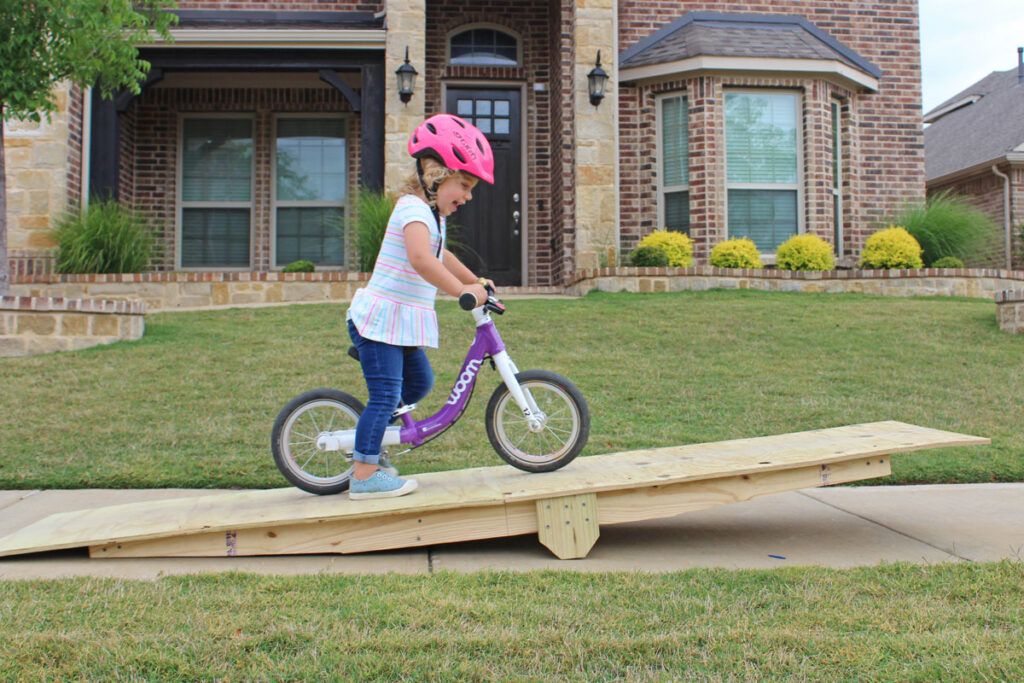
See-saw (teeter Totter)
Teeter totters test your timing and balance.
- Build: Plywood deck on a central pivot, supported by a strong frame.
- Tip: Keep it low (under 18 in/45 cm) and add a stop block so it doesn’t slam down.
For extra safety, pad the stop block with rubber or foam. Try making the deck wider at the ends for easier entry and exit.
Tabletop Jump
Tabletops are safer than gap jumps, as the “middle” is filled in.
- Build: Use a wood frame topped with plywood, or shape from dirt. Make the landing slightly longer than the takeoff.
- Tip: Angle the takeoff less steeply for beginners.
If building from dirt, use a shovel to pack the takeoff and landing firmly. For wood versions, check all joints regularly.

Credit: www.youtube.com
Making Obstacles Last: Maintenance And Weatherproofing
Your hard work can be ruined by rain, sun, or neglect. Here’s how to extend obstacle life:
- Seal all wood: Use exterior paint or stain before assembling. If you use colored paint, it also makes obstacles more visible.
- Check fasteners: Screws can loosen over time—tighten them monthly.
- Inspect for rot or cracks: Replace damaged parts quickly.
- Store small features: Bring them inside during winter if possible.
- Keep dirt features covered: Tarping berms and rollers after rain helps them stay firm.
Beginner insight: Don’t skip the “small” maintenance jobs—most injuries happen when features break due to neglect.
One extra tip: after heavy rain, check for slippery surfaces and clean mud or algae. This improves grip and safety.
Safety: Protecting Yourself And Others
Mountain bike features are fun, but they carry risk. Minimize danger with smart habits:
- Always wear a helmet (and gloves).
- Inspect obstacles before each ride.
- Progress slowly—don’t rush to bigger features.
- Ride with a buddy or let someone know you’re practicing.
- Keep the area clear of pets, children, and bystanders.
If you’re building for a group, post clear signs and age recommendations.
Another safety tip: keep a basic first aid kit nearby. Even small scrapes need cleaning. If you ride alone, have your phone within reach in case of emergency.
Credit: www.twowheelingtots.com
How To Build Obstacles That Fit Your Skill Level
Not all obstacles are for everyone. Here’s a quick guide:
| Rider Level | Recommended Obstacles | Height/Size | Main Focus |
|---|---|---|---|
| Beginner | Bunny hop bar, low skinny, manual machine | Under 8 in (20 cm) | Balance, control |
| Intermediate | Kicker ramp, drop-off, rollers | 12–18 in (30–45 cm) | Jumping, timing |
| Advanced | Ladder bridges, berms, tabletop jump | 24 in+ (60 cm+) | Speed, advanced handling |
Pro tip: You’ll learn more by mastering low features than by crashing on tall ones.
As you progress, adjust obstacles bit by bit. For example, raise the skinny by two inches each month or make the drop-off taller as you gain confidence.
Common Mistakes And How To Avoid Them
Even experienced builders make errors. Here are some to watch out for:
- Ignoring Runouts: Always leave space after the obstacle. Many crashes happen when riders run out of room to stop.
- Building Too High, Too Soon: Features over 18 in (45 cm) need careful bracing and strong wood.
- Poor Fastening: Nails work loose—use deck screws.
- Wrong Materials: Avoid untreated wood outside. It rots fast and can break suddenly.
- Slippery Surfaces: Wet plywood is dangerous. Add grip with sand-infused paint or rubber strips.
- Neglecting Maintenance: Small cracks grow quickly. Fix problems early.
- Forgetting Permission: Building without consent can lead to removal or fines—always ask.
Extra tip: Take photos during your build. This helps if you want to rebuild or adjust later.
Another mistake: skipping the test ride. Always test each obstacle at low speed before riding fast or jumping.
Adapting Obstacles For Different Spaces
Not everyone has a large yard. Here’s how to make the most of your space:
- Use folding or modular designs for easy storage.
- Build narrow, low skinnies for small patios.
- Try portable ramps you can take to a park.
- Use sandbags or rubber feet to protect grass or concrete.
- If indoors, use foam mats to avoid floor damage.
For public spaces, lightweight features are easier to move and less likely to annoy neighbors.
If you share your space with others, add signs or cones to mark obstacles. This helps everyone know where to ride or walk.
Involving Family, Friends, And Community
Building obstacles can be more fun—and safer—with others:
- Get kids involved with painting or sanding.
- Invite friends to help and share costs.
- Organize a build day for your local club.
- Ask for advice on mountain bike forums or social media.
If building in a shared space, post simple rules and keep the area tidy. This encourages respect and keeps the features open for everyone.
You can also use group builds to teach basic bike skills. For example, hold a “balance challenge” on the skinny or a “jump contest” on the kicker ramp.
Where To Learn More
There’s a wealth of guides, plans, and videos online. One excellent resource is the International Mountain Bicycling Association (IMBA Trail Building Resources), which offers detailed advice on sustainable and safe obstacle design.
Local mountain bike clubs are also great sources of knowledge. Many have build days where you can learn hands-on and get tips from experienced builders.
YouTube is full of build tutorials—search for “DIY mountain bike obstacle” for step-by-step videos. Look for creators who explain safety and materials, not just the fun parts.
Frequently Asked Questions
How High Should Beginner Obstacles Be?
Beginner obstacles should be no higher than 8 inches (20 cm). Focus on features you can ride confidently. Low skinnies, bunny hop bars, and manual machines are ideal. As your skills improve, you can raise the height, but always progress slowly.
If you’re unsure, start even lower and add height as you gain confidence. Remember, even pro riders practice on small features.
What Wood Is Best For Outdoor Obstacles?
The best choice is pressure-treated lumber (like treated 2x4s or 2x6s). This type resists rot and insects. For surfaces, use exterior-grade plywood. Avoid untreated pine or scrap wood unless you plan to use the obstacle indoors or for a short time.
If budget is tight, look for local suppliers or builders who sell offcuts. This can save money without sacrificing quality.
How Can I Make Obstacles Less Slippery?
To improve grip, paint surfaces with sand-infused paint (mix sand into exterior paint before applying). You can also use rubber strips or roofing shingles glued onto the surface. Check grip often, especially after rain.
If you ride in winter, brush off snow and ice before riding. Store portable obstacles indoors when not in use.
Can I Build Obstacles In A Public Park?
You must get permission before building in any public space. Some parks allow temporary features for events, while others ban all construction. Always check with local authorities or park managers, and consider involving a mountain bike club.
If allowed, follow guidelines for safety and clean-up. Sometimes, you can organize group builds and get support from your local community.
What Skills Improve Most From Obstacle Practice?
Practicing on obstacles boosts balance, bike control, and timing. Skinnies build slow-speed balance, bunny hop bars improve jumping, and ramps help with takeoff technique. The most important skill is learning to move your weight and adapt to changing surfaces—key for real trail riding.
Over time, you’ll notice your confidence increases not just on your own course, but also on real trails. This helps you tackle new lines and features with ease.

Credit: www.youtube.com
Bringing It All Together
Building your own mountain bike obstacles isn’t just about construction—it’s about creating a space to grow as a rider. Start small, focus on safety, and don’t rush your progression. With time, you’ll develop both your building and biking skills. Listen to your body, inspect your features, and always ride within your limits.
Remember, every obstacle—even a simple skinny—teaches valuable lessons. As you gain experience, you can add more advanced features, involve friends, and maybe inspire others to start building too. The satisfaction of clearing an obstacle you built yourself is hard to beat.
Enjoy the ride, stay safe, and keep progressing.
If you ever feel stuck, ask for help or search for new ideas. The mountain bike community is full of helpful advice and creative solutions. Building and riding your own features brings you closer to the sport and gives you endless ways to improve.
So grab your tools, plan your course, and start building your next challenge—your future skills are waiting.

Hello Guys! I am John Reese, a professional biker and my hobby is biking! I have been biking for last 12 years and I love using bikes while outing as well. Based on my experiences with the different type of bikes (mountain bikes, road bikes and hybrid bikes); I am sharing my opinion about various bikes so that a beginner can get started right away. Happy reading!