
Buying mountain bike tires can feel confusing, even for experienced riders. There are so many sizes, tread patterns, and rubber compounds to choose from. If you’re new to mountain biking or just want to upgrade your tires, you need to know what matters most.
This guide will help you understand every important detail, so you can buy the right mountain bike tires for your riding style, terrain, and budget.
Mountain bike tires affect everything: grip, speed, comfort, and safety. Picking the wrong tire can make your ride harder or even dangerous. But with the right tires, you’ll feel more confident, enjoy your ride, and get the best performance from your bike.
Understanding Mountain Bike Tire Basics
Before you start shopping, it’s important to understand the basic features of mountain bike tires. Every tire is made from a mix of materials and designed for a certain purpose. Let’s break down the key features so you know what you’re looking at.
Tire Size
Mountain bike tires are measured in inches. You’ll see numbers like 29 x 2.4 or 27.5 x 2.6. The first number is the wheel diameter. The second number is the tire width.
- Wheel diameter: Common sizes are 26”, 27.5” (also called 650B), and 29”.
- Tire width: Typical widths range from 1.9” to 2.6”, but some tires are wider for special uses.
Your bike frame and rims limit which sizes you can use. Using the wrong size can cause tires to rub or not fit at all.
Tread Pattern
The tread is the part of the tire that touches the ground. It controls grip, rolling speed, and how the tire handles in different conditions.
- Knobby tread: Lots of raised blocks for grip in mud, loose dirt, or rocks.
- Semi-slick: Small knobs and smooth sections for fast rolling on hard surfaces.
- Directional tread: Designed to roll one way for better traction.
Rubber Compound
Tires are made with different rubber compounds. This affects how they grip and how long they last.
- Soft compound: More grip, faster wear.
- Hard compound: Less grip, longer life.
- Many tires use a mix for balance.
Tubeless Vs. Tubed
You can run mountain bike tires with or without inner tubes.
- Tubed: Standard tires with an inner tube.
- Tubeless: Seals directly to the rim, can be run at lower pressure, less risk of flats.
Tubeless setup is popular for mountain biking because it reduces punctures and allows better traction.
Tire Casing
The casing is the layer inside the tire that gives it shape and strength.
- Single ply: Lighter, less protection.
- Dual ply: Heavier, more durable.
Some tires also have extra puncture protection layers.
Choosing The Right Tire For Your Riding Style
Mountain biking includes many styles, and each needs a different tire. Let’s look at the most common types and what works best.
Cross-country (xc)
Cross-country riders care about speed and efficiency. Trails are often dry, hard, and not too technical.
- Tire width: 1.9” to 2.25”
- Tread: Low-profile knobs for fast rolling.
- Weight: Lightweight tires are best.
Example: The Maxxis Ikon is a popular XC tire with a fast tread and good grip for dry trails.
Trail Riding
Trail riding mixes different terrain: dirt, rocks, roots, and sometimes mud.
- Tire width: 2.2” to 2.4”
- Tread: Medium-sized knobs for grip and speed.
- Durability: Strong casing helps prevent punctures.
The Schwalbe Nobby Nic is well-known for trail use, offering a balance of speed and grip.
Enduro
Enduro is aggressive riding with steep descents and rough trails.
- Tire width: 2.3” to 2.6”
- Tread: Large, deep knobs for maximum traction.
- Compound: Softer rubber for grip.
Example: The Michelin Wild Enduro uses a soft compound and big tread blocks.
Downhill
Downhill tires face rocky, steep, and sometimes wet trails. Riders need maximum grip and protection.
- Tire width: 2.4” to 2.8”
- Tread: Massive, closely packed knobs.
- Casing: Dual ply for strength.
A top choice is the Maxxis Minion DHR II, made for extreme conditions.
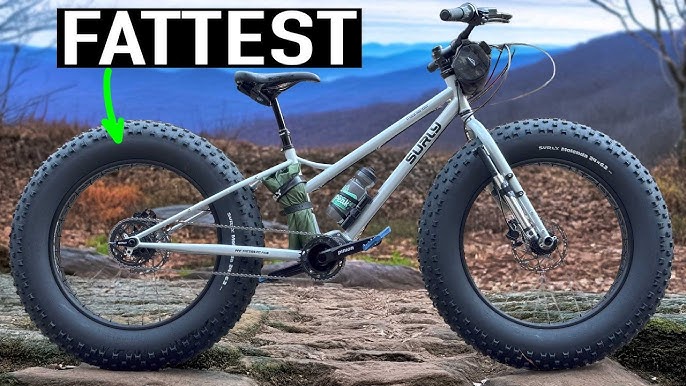
Fat Biking
Fat bikes use very wide tires to float over snow or sand.
- Tire width: 3.8” to 5”
- Tread: Depends on terrain, often large knobs.
Fat bike tires are a special category, and not all mountain bikes can use them.
How Terrain Affects Tire Choice
The ground you ride on changes which tire works best. Here are some examples:
- Hardpack: Smooth, compact dirt. Semi-slick or low-profile tread rolls fast.
- Loose dirt: Needs bigger knobs for grip.
- Mud: Tall, spaced knobs dig into soft ground.
- Rocks and roots: Strong casing and soft compound help grip and avoid damage.
- Sand and snow: Extra-wide tires or fat bike tires.
Many riders use different tires for summer and winter. If your trails change with the seasons, consider having two sets.
Tire Width: What’s Best For You?
Wider tires give more grip and comfort, but can slow you down and feel heavy. Narrower tires are faster, but less stable.
- Narrow tires (1.9”–2.25”): Good for speed, hardpack, and XC.
- Medium width (2.2”–2.4”): Best for all-around use.
- Wide tires (2.5”–2.8”): Great for rough terrain, downhill, or enduro.
Pro insight: Many beginners think wider tires are always better. But if you ride mostly on smooth trails, you may feel sluggish with wide tires. Try what fits your bike and riding needs.
Tire Pressure: Why It Matters
Tire pressure affects grip, comfort, and puncture risk. Most mountain bike tires run between 20–40 psi, but tubeless tires can go lower.
Lower pressure:
- More grip
- Softer ride
- Higher risk of “pinch flats” with tubes
Higher pressure:
- Faster rolling
- Less comfort
- Lower grip
Check your tire sidewall for recommended pressure. Experiment to find what feels best for you.
Decoding Tire Labels And Markings
Mountain bike tires are covered in numbers and letters. Knowing what they mean helps you buy the right tire.
- Size: Example: 29 x 2.4
- TPI (threads per inch): Higher TPI is lighter and more flexible. Lower TPI is stronger.
- Compound: May show “dual compound” or specific rubber types.
- Tubeless ready: Usually says “TR” or “Tubeless Ready.”
- Direction arrow: Shows which way to mount for best performance.
Some tires add special codes for extra protection or grip. Always check the label before buying.
Comparing Popular Mountain Bike Tire Brands
There are many tire brands, but a few stand out for quality and innovation. Here’s a look at the top options:
| Brand | Strengths | Popular Models |
|---|---|---|
| Maxxis | Wide range, reliable, good grip | Minion, Ardent, Ikon |
| Schwalbe | Advanced rubber, fast rolling | Nobby Nic, Racing Ralph |
| Michelin | Durable, strong casing | Wild Enduro, Force XC |
| Continental | Good value, solid performance | Mountain King, X-King |
| WTB | Innovative tread, tubeless options | Trail Boss, Vigilante |
Choosing a trusted brand helps ensure you get a tire that performs well and lasts.
Tubeless Vs. Tubed: Which Should You Choose?
Both tubeless and tubed tires have pros and cons. Here’s a comparison:
| Feature | Tubed | Tubeless |
|---|---|---|
| Setup | Easy, quick | More complex, needs sealant |
| Pressure | Higher (20–40 psi) | Lower (15–30 psi) |
| Puncture resistance | Average | Better (self-sealing) |
| Grip | Good | Excellent |
| Cost | Lower | Higher |
Expert tip: Many beginners worry tubeless is hard to set up. But most modern rims and tires are “tubeless ready.” It takes a bit more time, but you’ll get fewer flats and more grip.

Credit: bikerumor.com
Price And Value: What Should You Pay?
Mountain bike tires range from $25 to $120 per tire. Cheaper tires may seem tempting, but they often lack grip or wear out quickly. Higher-priced tires usually have better rubber, advanced tread, and stronger casing.
- $25–$40: Basic tires for casual use.
- $40–$70: Good quality for most riders.
- $70–$120: Top performance, advanced features.
If you ride often, spending a bit more can save money in the long run. Tires are one of the most important upgrades you can make.
How To Check Tire Compatibility
Not all tires fit all bikes. Before buying, check:
- Wheel diameter: Your rim size must match the tire.
- Width clearance: Your frame and fork must have space for the tire width.
- Rim width: Wider rims work best with wider tires.
- Tubeless compatibility: If you want tubeless, your rim must be “tubeless ready.”
Common mistake: Many riders buy tires without checking if their bike can handle them. Always measure your frame and rim before shopping.
Comparing Tire Tread Patterns For Different Terrain
Tread pattern is critical for grip and speed. Here’s a simple comparison:
| Tread Type | Best Terrain | Example Tire |
|---|---|---|
| Slick/Semi-slick | Hardpack, pavement | Maxxis Pace |
| Low-profile knobs | Dry trails, XC | Schwalbe Racing Ralph |
| Medium knobs | Mixed terrain, trail | WTB Trail Boss |
| Large, spaced knobs | Mud, loose dirt | Michelin Wild Mud |
| Heavy, packed knobs | Downhill, rocky | Maxxis Minion DHF |
Choose a tread pattern that matches where you ride most often.
Practical Steps For Buying Mountain Bike Tires
Now that you know the basics, here’s a step-by-step process to buy the right tires:
- Measure your wheels: Check your bike’s wheel diameter and rim width.
- Check frame clearance: Make sure your frame and fork fit the tire width.
- Know your riding style: Decide if you need XC, trail, enduro, or downhill tires.
- Consider terrain: Choose tread and compound for your local trails.
- Choose tubeless or tubed: Decide if you want the benefits of tubeless.
- Compare brands and models: Look for trusted brands and read reviews.
- Set your budget: Decide how much you want to spend.
- Check compatibility: Confirm that your rims and bike are ready for your chosen tires.
- Buy from reputable sellers: Avoid cheap, unknown brands.
Non-obvious tip: Many shops let you see tires in person. Feel the tread and sidewalls. Some tires are much stiffer or softer than they look online.
How To Install Mountain Bike Tires
Installing mountain bike tires is not hard, but you need some tools and patience.
For Tubed Tires
- Remove the wheel from your bike.
- Deflate the old tire and remove it from the rim.
- Check the rim for damage or debris.
- Place the new tire on one side of the rim.
- Insert the inner tube.
- Push the second side of the tire onto the rim.
- Inflate slowly, check for correct seating.
- Reinstall the wheel.
For Tubeless Tires
- Remove the wheel and old tire.
- Clean the rim thoroughly.
- Install tubeless rim tape if needed.
- Mount the new tire on the rim.
- Add tubeless sealant.
- Inflate with a high-volume pump or compressor.
- Spin the wheel to distribute sealant.
- Check for leaks and proper seating.
Beginner insight: Using a tire lever helps remove stubborn tires. For tubeless, a compressor often works better than a hand pump.
Common Mistakes When Buying Mountain Bike Tires
Many new riders make mistakes when buying tires. Here are some things to avoid:
- Ignoring compatibility: Not all tires fit all bikes.
- Picking the wrong tread: Slick tires for mud, or knobby tires for hardpack.
- Buying too wide: Wide tires may not fit your frame.
- Going too cheap: Cheap tires often lack grip and durability.
- Not checking reviews: Some tires have hidden problems.
- Skipping tubeless: If your bike can run tubeless, consider upgrading.
Advanced insight: Many riders overlook the importance of tire casing. Strong casing prevents punctures and gives more confidence on rough trails.

Credit: www.youtube.com
How To Maintain Mountain Bike Tires
Buying the right tire is just the start. Good maintenance keeps your tires safe and makes them last longer.
- Check pressure before every ride.
- Inspect for cuts or damage after each ride.
- Clean tires with water and a brush, especially after muddy rides.
- Rotate tires front to back for even wear.
- Replace worn tires before they cause problems.
If you ride in harsh conditions, check tires more often.
When To Replace Mountain Bike Tires
Tires wear out over time. Signs you need new tires:
- Tread is worn down: Less grip, more slips.
- Cracks or cuts: Can lead to blowouts.
- Bulges or deformities: Unsafe to ride.
- Frequent flats: Tire may be too thin.
Most mountain bike tires last 1,500–3,000 miles depending on terrain and riding style.
Real-world Examples And Data
Let’s look at how the right tire choice affects riders:
- XC racers often use low-profile tires like the Maxxis Ikon. They gain about 10% more speed on hardpack compared to knobby trail tires.
- Enduro riders using soft compound tires report 15% fewer crashes on steep descents.
- Tubeless setups reduce punctures by up to 80% according to recent studies.
These results show how much the right tire matters.
Sustainability And Environmental Impact
Tire manufacturing can affect the environment. Some brands now use recycled materials or eco-friendly processes. If sustainability matters to you, check for tires made with natural rubber or recycled content.
Brands like Schwalbe and Continental offer some eco-friendly options.
Where To Buy Mountain Bike Tires
You can buy mountain bike tires online or at local bike shops. Each has benefits:
- Online stores: More selection, better prices, easy comparison.
- Local shops: Expert advice, hands-on inspection, support for your community.
For help comparing prices and specs, check sites like BikeRadar, which offers detailed reviews.
Frequently Asked Questions
How Do I Know If My Bike Is Compatible With Tubeless Tires?
Check your rims. They must be labeled “Tubeless Ready” or “UST. ” If not, you may need special rim tape or new rims. Most modern mountain bikes support tubeless.
Can I Use Road Tires On My Mountain Bike?
No. Road tires are much narrower and not designed for rough terrain. Mountain bikes need wider tires with strong tread to handle dirt, rocks, and roots.
How Often Should I Check Tire Pressure?
Check before every ride. Tire pressure can change due to temperature, riding, and leaks. Riding with low pressure can cause flats or make your bike hard to control.
What’s The Best Tire Width For Beginners?
Medium widths (2. 2”–2. 4”) are best for most beginners. They offer a balance of grip, comfort, and speed. Make sure your bike frame and rims can fit the tire.
How Can I Tell If A Tire Is Worn Out?
Look for low tread, cracks, cuts, or bulges. If you slip more often or get frequent flats, it’s time to replace your tire.
Buying the right mountain bike tires makes a huge difference in your rides. It’s worth taking time to understand what works best for your style, terrain, and bike. With the knowledge from this guide, you can shop confidently and enjoy every mile on the trail.
Credit: www.youtube.com

Hello Guys! I am John Reese, a professional biker and my hobby is biking! I have been biking for last 12 years and I love using bikes while outing as well. Based on my experiences with the different type of bikes (mountain bikes, road bikes and hybrid bikes); I am sharing my opinion about various bikes so that a beginner can get started right away. Happy reading!