
Learning to tailwhip a mountain bike is an exciting step for any rider who wants to push their skills further. The tailwhip is a popular trick in BMX, but now more mountain bikers are bringing it to trails, skateparks, and dirt jumps. This move looks impressive: the rider jumps and spins the bike’s frame 360 degrees around the handlebars while keeping control and landing smoothly. It’s not just about style—it’s a test of timing, balance, and confidence.
Before you attempt a tailwhip, it’s important to understand what makes this trick challenging. Mountain bikes are heavier and larger than BMX bikes, and their geometry is different. This means you’ll need more strength and a slightly adapted technique. But with the right guidance, practice, and patience, you can master the tailwhip and add a showstopping move to your riding.
Let’s break down everything you need to know—from preparation and technique to common mistakes, safety, and advanced tips—so you can learn how to tailwhip a mountain bike safely and confidently.
Understanding The Tailwhip Trick
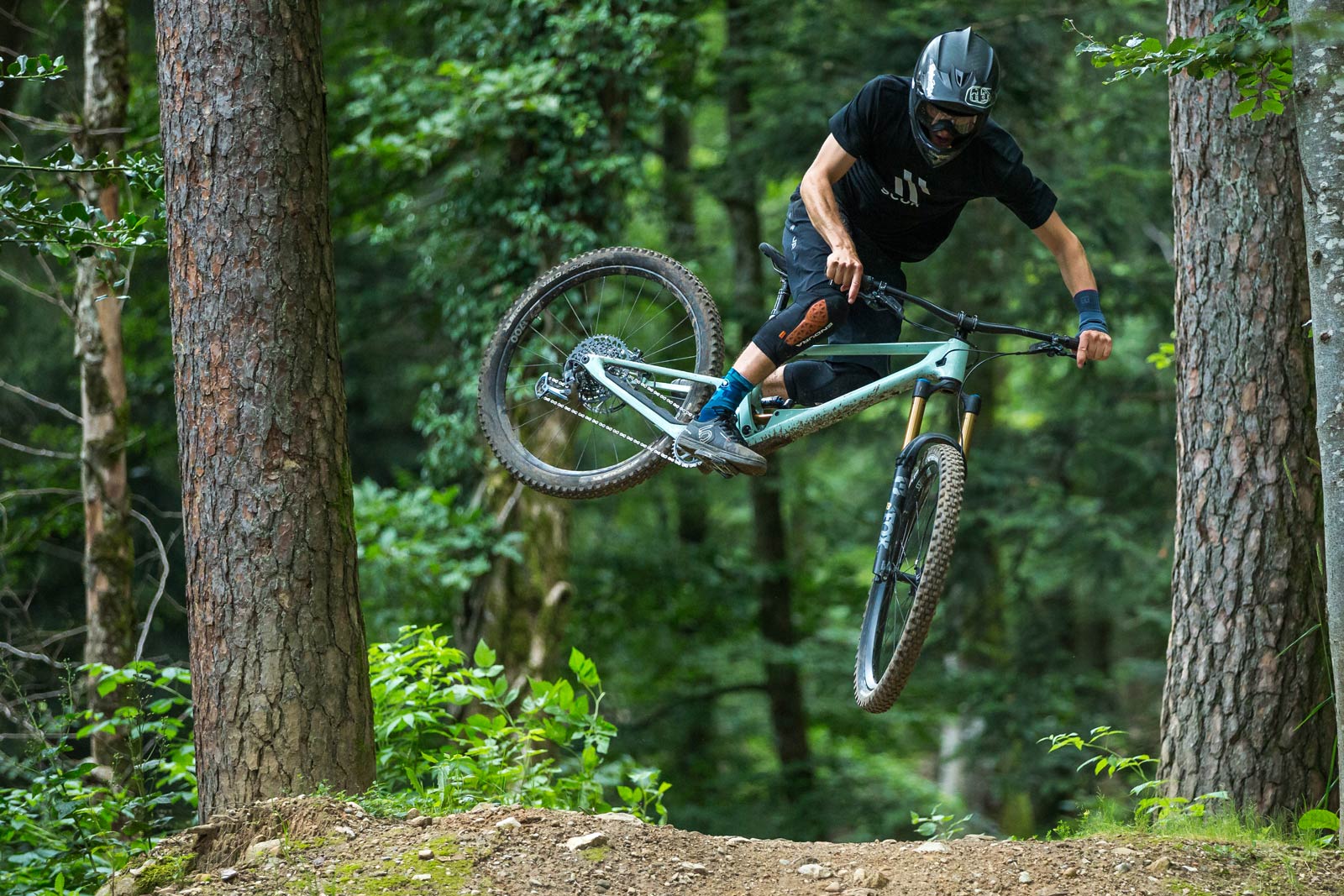
The tailwhip is a trick where the rider jumps, kicks the rear of the bike frame sideways, and spins the frame 360 degrees around the handlebars. The rider stays above the bike, keeping a firm grip on the bars, and catches the frame with their feet before landing.
Tailwhip Origins And Popularity
Originally, the tailwhip was a BMX trick. As mountain biking evolved, riders began to adapt BMX tricks to their bikes. The tailwhip became popular among slopestyle and dirt jump mountain bikers, and you’ll see it at competitions like Red Bull Rampage or Crankworx.
What Makes Tailwhips Difficult On Mountain Bikes?
Mountain bikes have:
- Heavier frames and wheels
- Longer wheelbase
- Suspension forks (which absorb some energy)
- Wide handlebars
These factors mean more effort is needed to spin the bike, and you must adjust your timing and strength.
Where Can You Tailwhip A Mountain Bike?
The best places to practice:
- Dirt jumps: Smooth, shaped ramps with soft landings
- Skateparks: Concrete bowls and ramps (be careful with mountain bike tires)
- Foam pits: Soft, forgiving practice spots
- Airbags: Large inflated landing pads
Always choose a location with enough space and a safe landing.
Preparing Yourself And Your Bike
Before you try a tailwhip, preparation is key. This includes physical readiness, mental focus, and proper bike setup.
Physical Preparation
The tailwhip needs strong core muscles and upper body strength. You’ll use your arms to pull the bike, your legs to kick, and your core to control movement.
- Warm up with stretches and basic jumps.
- Practice manuals (wheelies without pedaling) and bunny hops to build skill.
- Train your grip strength—you must hold the bars tightly.
Mental Preparation
Confidence and patience are crucial. Fear can lead to mistakes.
- Visualize the trick before you attempt it.
- Start with smaller jumps and progress slowly.
- Expect to fail many times; persistence pays off.
Bike Setup
Your bike should be suitable for tricks:
- Dirt jump bikes or slopestyle bikes are best.
- Remove unnecessary accessories (lights, racks, bottle cages).
- Check bolts and brakes for tightness.
- Lower your saddle for more clearance.
- Use flat pedals (not clipless) for easy foot movement.
Comparison: Bmx Vs. Mountain Bike For Tailwhips
Here’s a quick comparison of the two bikes for tailwhips:
| Feature | BMX Bike | Mountain Bike |
|---|---|---|
| Weight | Light (20-25 lbs) | Medium (25-35 lbs) |
| Wheelbase | Short | Long |
| Handlebars | Narrow | Wide |
| Suspension | None | Front (sometimes rear) |
| Pedals | Flat | Flat (recommended) |
Safety Gear
Always wear:
- Helmet (full-face for jumps)
- Gloves
- Knee and elbow pads
- Shin guards
Never attempt tailwhips without protection.

Credit: www.dreamstime.com
Step-by-step Guide To Tailwhipping A Mountain Bike
Mastering the tailwhip involves several steps. Each step builds on the previous one. Let’s break them down:
1. Approach And Jump
Ride at a comfortable speed toward the jump. Choose a jump with enough airtime but not too big for beginners. As you reach the lip:
- Compress your body (bend knees and arms).
- Push down and then explode upwards, pulling the handlebars.
- Keep your eyes forward.
2. Popping And Pulling Up
As you leave the jump, pull the bike up with your arms and tuck your knees. The goal is to get as much height and hang time as possible.
- Pull the bars upward and slightly toward your chest.
- Keep your upper body relaxed but firm.
3. Kicking The Frame
As soon as you’re airborne:
- Use your back foot to kick the frame sideways.
- Your front foot guides the direction.
- At the same time, twist your wrists to help the bike spin.
Most riders kick with their dominant foot. The kick should be quick and strong.
4. Spinning The Frame
The bike’s frame should rotate around the handlebars. You must keep your hands tight on the bars, using your wrists to help the spin.
- Keep your arms extended but flexible.
- Watch the frame as it spins.
- Use your knees to help control the movement.
5. Catching The Frame
As the frame completes its spin, prepare to catch it with your feet.
- Spot the pedals as they come around.
- Extend your legs to meet the pedals.
- Try to land both feet at the same time.
Timing is key. If you miss the pedals, you risk crashing.
6. Landing Smoothly
Once your feet are on the pedals, absorb the landing with your knees.
- Stay loose and balanced.
- Look ahead, not down.
- Prepare for possible slips or missed landings.
If you miss the pedals, try to land safely and roll away if possible.
Tailwhip Progression Table
Here’s a progression table for learning the tailwhip:
| Skill Level | Practice Area | Goal |
|---|---|---|
| Beginner | Foam Pit/Airbag | Spin bike, catch frame |
| Intermediate | Dirt Jump/Small Ramp | Land both feet |
| Advanced | Large Jump/Competition | Smooth landing, style |
Common Mistakes And How To Fix Them
Most riders struggle with tailwhips at first. Here are common mistakes and practical solutions:
- Not enough airtime: If you don’t get high enough, the bike won’t have time to spin. Practice jumping higher and using steeper ramps.
- Weak kick: A soft kick won’t spin the frame fully. Focus on snapping your back foot and twisting your wrists.
- Losing grip on handlebars: Always keep a strong grip. Use gloves for better control.
- Missing the pedals: Watch the pedals as they come around. Try to catch them with both feet, but if you miss, land safely.
- Bike swings out of control: Use your knees and core to control the spin. If the bike over-rotates, practice in foam pits until you’re comfortable.
- Fear of crashing: Start in safe areas (foam pit, airbag) to build confidence.
- Poor bike setup: If your seat is too high or accessories get in the way, adjust your bike before trying the trick.
Example: How Fixing A Weak Kick Changed Progress
A mountain biker named Jake struggled with tailwhips for months. He realized his kick was too soft, so he practiced kicking harder with his back foot and twisting his wrist more. Within weeks, he landed his first tailwhip.

Credit: www.youtube.com
Advanced Tips For Mastering Tailwhips
Once you can spin and land a tailwhip, you can start adding style and improving consistency.
Improving Timing
- Practice spotting the pedals as soon as the frame starts spinning.
- Use slow-motion videos to analyze your timing.
Adding Style
- Try one-footed tailwhips or double tailwhips (spinning the frame twice).
- Add tricks before or after the tailwhip, such as barspins.
Building Consistency
- Repeat the trick on different jumps and ramps.
- Switch your kicking foot to become ambidextrous.
- Practice with friends and ask for feedback.
Training Off The Bike
- Use a balance board or trampoline to practice jumping and spinning.
- Strengthen your wrists and core with exercises.
Tailwhip Consistency Table
Compare your progress:
| Session | Attempts | Successful Landings | Notes |
|---|---|---|---|
| 1 | 20 | 2 | Missed pedals often |
| 5 | 20 | 8 | Better timing, stronger kick |
| 10 | 20 | 15 | Consistent landings |
Safety And Injury Prevention
Tailwhips are risky. Here’s how to stay safe:
- Always practice in safe environments (foam pits, airbags, dirt jumps with soft landings).
- Wear full protective gear.
- Never ride alone; have someone nearby in case of injury.
- Know your limits—don’t try advanced tricks before mastering basics.
Most Common Injuries
- Sprained ankles (from missing the pedals)
- Wrist injuries (from losing grip)
- Bruises and scrapes (from crashes)
If you feel pain or discomfort, stop and rest. Don’t rush progress.
How Long Does It Take To Learn A Tailwhip?
Learning times vary. Most mountain bikers take between 3–6 months to land their first tailwhip, depending on practice frequency, fitness, and prior experience.
- Beginners: May need 6 months or more.
- Experienced riders: Often learn in 2–3 months.
Some factors that speed up learning:
- Practicing in foam pits and airbags
- Training with BMX riders
- Filming and reviewing your attempts
- Strengthening your core and grip
Non-obvious Insights For Beginners
- Frame rotation depends on wrist action as much as leg kick. Many beginners focus only on kicking, but twisting your wrists and pulling the handlebars helps the frame spin faster.
- Landing is easier if you keep your eyes on the pedals, not the ground. Looking down can confuse your timing. Instead, focus on the pedals as they come around.
- Suspension settings affect tailwhip ease. If your fork is too soft, it absorbs your jump energy. Try setting your suspension firmer for jumping.
- Bike weight matters, but technique is more important. A lighter bike helps, but strong, confident movements make the biggest difference.
- Practicing manuals and bunny hops improves tailwhip control. These skills build balance and timing, which are crucial for tailwhips.
Credit: bikerumor.com
Real-world Example: Rider’s Journey
Sam, a 22-year-old mountain biker, wanted to land a tailwhip on his dirt jump bike. He started by watching videos and practicing manuals. After two months, he could spin the frame in a foam pit but missed the pedals every time.
He filmed his attempts and saw he wasn’t kicking hard enough. With feedback and practice, he landed his first tailwhip after four months. Now, he can tailwhip on different jumps and teaches others at his local park.
Resources For Learning
- Local BMX and mountain bike parks
- Foam pits and airbags
- Video tutorials (YouTube, Instagram)
- Coaching clinics (slopestyle and dirt jump camps)
- Bike shops for equipment and setup advice
If you want to see mountain bike tailwhips in action, check out Crankworx, the world’s biggest mountain bike freestyle competition.
Frequently Asked Questions
What Is A Tailwhip On A Mountain Bike?
A tailwhip is a trick where you jump and spin the bike’s frame 360 degrees around the handlebars. You catch the pedals with your feet before landing. It’s popular in BMX and mountain biking.
Is It Easier To Tailwhip A Bmx Bike Or A Mountain Bike?
It’s easier on a BMX bike because it’s lighter and has a shorter wheelbase. Mountain bikes are heavier and longer, so they need more strength and adapted technique.
How High Should I Jump To Do A Tailwhip?
You need enough airtime to spin the frame fully. Beginners should use foam pits or airbags, then progress to dirt jumps with at least 3–4 feet of height.
What Protective Gear Should I Wear For Tailwhips?
Always wear a helmet, gloves, knee and elbow pads, and shin guards. For bigger jumps, a full-face helmet is best.
Can I Learn Tailwhips Without A Foam Pit?
Yes, but a foam pit or airbag makes learning safer. If you don’t have access, start with small jumps and progress slowly.
Mastering the tailwhip on a mountain bike is a journey that challenges your skills, patience, and confidence. With careful preparation, practice, and the right mindset, you’ll not only land the trick but also boost your riding to a new level. Remember, every rider learns at their own pace—focus on progress, not perfection, and enjoy the ride.

Hello Guys! I am John Reese, a professional biker and my hobby is biking! I have been biking for last 12 years and I love using bikes while outing as well. Based on my experiences with the different type of bikes (mountain bikes, road bikes and hybrid bikes); I am sharing my opinion about various bikes so that a beginner can get started right away. Happy reading!