
Riding a mountain bike is exciting, but learning how to use gears can make your experience smoother and safer. Many riders, especially beginners, struggle with shifting gears correctly. Sometimes, they pedal too hard, shift at the wrong time, or even damage their bikes.
Mastering gear use is not just about speed—it’s about control, comfort, and making tough terrain feel easier. This guide explains everything you need to know about using gears on a mountain bike, with practical advice, clear examples, and step-by-step instructions.
If you want to ride up hills, go faster on flat roads, or just avoid bike problems, keep reading.
Understanding Mountain Bike Gears
Before you learn how to shift, it’s important to know what gears are and why they matter. Mountain bikes usually have multiple gears, both front and back. These help you adjust how hard or easy it is to pedal, depending on the terrain.
What Are Gears?
Gears are sets of cogs or chainrings connected to the pedals and rear wheel. Changing gears moves the chain onto different cogs, making pedaling easier or harder. The main parts are:
- Derailleurs: Devices that move the chain between cogs.
- Shifters: Controls on the handlebars for changing gears.
- Cassette: The set of cogs at the back wheel.
- Chainrings: The cogs near the pedals.
Most mountain bikes have between 18 and 30 gears. For example, a bike with 3 chainrings and 10 rear cogs has 30 gear combinations.
Why Use Gears?
Gears help you:
- Climb hills with less effort
- Ride faster on flat roads
- Control speed going downhill
- Save energy on long rides
If you always use the same gear, you might tire quickly or damage your bike. Using the right gear helps you ride longer and safer.
Types Of Gear Systems
There are two main types:
- Derailleur gears: Most common, with visible cogs and derailleurs.
- Internal hub gears: Cogs hidden inside the rear wheel hub; less common on mountain bikes.
Some modern bikes have 1x drivetrains (one chainring, many rear cogs) for simpler shifting. Older bikes may have 2x or 3x setups for more gear choices.
| Gear System | Main Features | Typical Use |
|---|---|---|
| Derailleur | External cogs, manual shifting | Most mountain bikes |
| Internal Hub | Sealed gears, easier maintenance | Urban or commuter bikes |
| 1x Drivetrain | Single front ring, simple | Modern mountain bikes |
| 2x/3x Setup | Multiple front rings, more options | Older mountain bikes |
How Gears Work: Basic Mechanics
When you change gears, the chain moves to a different cog. Small cogs in the back make pedaling harder but faster; large cogs make pedaling easier but slower. In the front, larger chainrings are for speed, smaller ones for climbing.
Gear Ratios Explained
A gear ratio tells you how many times the rear wheel turns for each pedal spin. For example, if you use a large chainring (front) and a small cog (back), the wheel turns more for each pedal stroke—good for speed, bad for hills.
If you use a small chainring and a large rear cog, the wheel turns less per pedal stroke—easier for climbing.
Example: Climbing Vs. Speed
Let’s say your bike has three front chainrings (22, 32, 44 teeth) and a rear cassette with ten cogs (11–36 teeth).
- Climbing hills: Use the 22-tooth front ring and 36-tooth rear cog.
- Flat road: Use the 44-tooth front ring and 11-tooth rear cog.
This gives you a low gear for climbing and a high gear for speed.
| Situation | Front Chainring | Rear Cog | Result |
|---|---|---|---|
| Steep Hill | Small (22 teeth) | Large (36 teeth) | Easy to pedal, slow |
| Flat Road | Large (44 teeth) | Small (11 teeth) | Harder to pedal, fast |
| Downhill | Large (44 teeth) | Small (11–13 teeth) | Fast, high speed |
| Technical Trail | Medium (32 teeth) | Medium (18–24 teeth) | Balanced control |

Credit: www.youtube.com
How To Shift Gears: Step-by-step
Shifting gears is simple, but timing and technique matter. Here’s how to do it:
1. Know Your Shifters
Most mountain bikes have two shifters:
- Left shifter: Changes front chainrings (big changes).
- Right shifter: Changes rear cogs (small, fine changes).
2. Shift While Pedaling
Always shift gears while pedaling. If you try to shift when stopped, the chain may jam or skip. Pedal smoothly—not too hard—when changing gears.
3. Choose The Right Gear For The Terrain
- For hills: Shift to a low gear before you start climbing.
- For flat or downhill: Shift to a higher gear as you gain speed.
Avoid shifting under heavy pressure. If you’re pushing hard up a hill, lighten your pedal force before shifting.
4. Avoid Cross-chaining
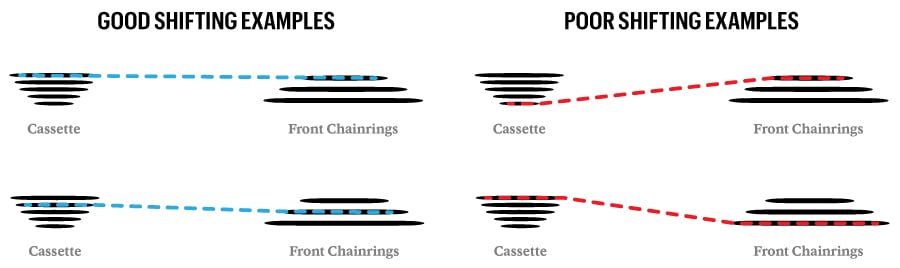
Cross-chaining means using the biggest front chainring and biggest rear cog, or the smallest in both. This puts strain on the chain and can cause damage or noisy pedaling. Instead, match front and rear gears wisely.
5. Shift One Gear At A Time
Don’t shift several gears at once. Move one gear, pedal a few strokes, then shift again if needed. This prevents chain drops or jams.
6. Practice Timing
Shift before the terrain changes, not during. For example, shift to a low gear before the hill, not while you’re already climbing.
Choosing The Right Gear For Each Situation
Picking the correct gear depends on where you ride. Here are common situations and best practices.
Climbing Hills
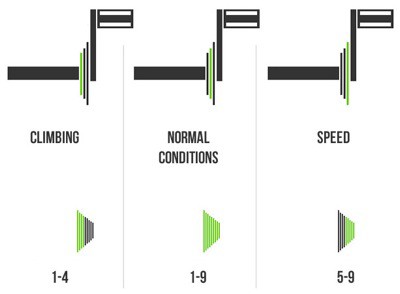
Use a low gear (small front chainring, large rear cog). This makes pedaling easier, but you go slower. Shift early, before you feel resistance.
Descending
Use a high gear (large front chainring, small rear cog). You’ll pedal harder and go faster. But sometimes, you don’t need to pedal much downhill—let gravity do the work.
Flat Terrain
Use a medium gear. This gives a balance between speed and effort. Adjust as needed if wind or surface changes.
Technical Trails
For rocky or twisty trails, use gears that let you pedal smoothly and keep good control. Usually, this is a medium front chainring and a medium rear cog.
Stopping And Starting
Shift to a low gear before you stop, so it’s easy to start again. If you forget, shift as soon as you start pedaling.
Credit: nce.lk
Common Gear Mistakes And How To Avoid Them
Many beginners make mistakes when using gears. Knowing these can save your bike and help you ride better.
- Shifting under load: Changing gears while pedaling very hard can cause chain damage or make shifting rough.
- Cross-chaining: Using extreme gear combinations (big-big or small-small) wears out the chain and gears.
- Not shifting soon enough: Waiting until you’re on the hill to shift makes it harder. Shift early.
- Skipping maintenance: Dirty or dry chains don’t shift smoothly. Clean and oil your chain often.
- Ignoring gear noise: If your bike makes noise when you shift, check for problems or adjust your derailleurs.
How To Maintain Your Gear System
Keeping your gears clean and adjusted helps them last longer and work better. Here’s what you should do:
Cleaning The Gears
Wipe down the chain, cassette, and derailleurs with a rag after each ride. Use a brush for mud or dirt. Every few weeks, use a bike-specific cleaner.
Lubricating The Chain
Apply bike chain lubricant to the chain. Wipe off excess oil. Lubricate every 100 miles, or after wet rides.
Checking Gear Adjustment
If shifting feels rough or noisy, check the alignment. Adjust derailleurs using the barrel adjusters on the shifters or cables. If unsure, visit a bike shop.
Replacing Worn Parts
Chains and cogs wear out over time. Replace the chain every 2,000–3,000 miles. Replace cogs if they look sharp or shifting feels sloppy.
Advanced Gear Tips For Mountain Biking
Experienced riders use special gear tricks to stay fast and safe.
Anticipate The Terrain
Look ahead and shift gears before you reach tough spots. This gives you time to adjust and keeps your momentum.
Use Cadence
Cadence is how fast you pedal. Aim for 70–90 RPM (revolutions per minute). If you pedal too slowly, shift to an easier gear. If you pedal too fast and feel no resistance, shift to a harder gear.
Combine Front And Rear Gears
On bikes with multiple front chainrings, use the middle ring for most riding. Use the smallest ring for steep hills and the largest for fast sections.
Practice Smooth Shifting
Don’t rush gear changes. Pedal gently and shift one gear at a time. This keeps your bike running smoothly and avoids sudden chain drops.
Understanding Gear Numbers And Combinations
Some riders get confused by the numbers (like “3×9” or “1×11”). These show how many front and rear gears you have.
- 3×9: Three front chainrings, nine rear cogs = 27 gear combinations.
- 2×10: Two front chainrings, ten rear cogs = 20 combinations.
- 1×11: One front chainring, eleven rear cogs = 11 combinations.
More gears give you more choices, but can be confusing. Fewer gears are simpler but may limit your options on steep hills.
| Setup | Front Chainrings | Rear Cogs | Total Gears | Complexity |
|---|---|---|---|---|
| 3×9 | 3 | 9 | 27 | High |
| 2×10 | 2 | 10 | 20 | Medium |
| 1×11 | 1 | 11 | 11 | Low |
Credit: exportersvyapar.com
How To Use Gears For Different Riding Styles
Mountain biking includes several types of riding. Each style has unique gear needs.
Cross-country (xc)
XC riders cover long distances, often with hills. Use a wide range of gears. Shift often to keep your cadence steady.
Trail Riding
Trail riding is mixed terrain—hills, flats, obstacles. Use medium gears for most sections. Shift to low gears for climbs and technical parts.
Downhill
Downhill riders use high gears for speed, but often coast instead of pedaling. Shift to harder gears at the start, then let gravity take over.
Enduro
Enduro mixes climbing and fast descents. Use low gears for uphills, high gears for speed. Shift smoothly to avoid losing time.
Using Gears In Wet Or Muddy Conditions
Gear shifting can be harder in mud or rain. Here’s how to handle it:
- Clean your chain after every wet ride.
- Lubricate more often.
- Shift gently—mud can block the gears.
- Avoid cross-chaining, as mud can make the chain slip off.
Wet conditions also make chains rust faster. Check and maintain your gear system more regularly.
How To Teach Gear Use To Beginners
If you’re helping someone learn, keep it simple:
- Start with flat terrain.
- Show how shifters work—left for big changes, right for small.
- Practice shifting while pedaling gently.
- Teach them to shift before hills.
- Watch their chain—avoid cross-chaining.
- Encourage regular maintenance.
Beginners often forget to shift early. Remind them to look ahead and change gears before they need to.
Gear Use For Kids And Youth Riders
Kids’ bikes usually have fewer gears. Still, teaching them when and how to shift helps them ride more confidently.
- Choose easy gears for starts and hills.
- Teach smooth shifting—no fast, hard pushes.
- Encourage cleaning and oiling their chain.
Many youth bikes now use 1x drivetrains for simplicity.
The Importance Of Gear System Quality
Not all gear systems are equal. High-quality derailleurs and shifters make shifting easier and more reliable.
Popular Brands
- Shimano: Reliable, wide range of options.
- SRAM: Popular for high-end mountain bikes.
- MicroShift: Affordable, good for entry-level bikes.
If you ride often, invest in better gear components. They last longer and shift more smoothly.
Data: Gear Use And Rider Efficiency
Studies show that efficient gear use can improve your riding speed by 15–20% and reduce fatigue. Riders who shift correctly finish longer rides with less tiredness. Poor shifting can waste energy and lead to bike damage.
A survey by BikeRadar found that 60% of new mountain bikers didn’t know how to use gears properly. After learning, their ride comfort and confidence improved.
Real-life Example: Shifting On A Steep Trail
Imagine riding a steep, rocky trail. You see the hill ahead and shift to a low gear before you start climbing. Your cadence stays steady, and you don’t struggle. At the top, you shift to a medium gear for the flat section.
When the trail turns downhill, you shift to a high gear and coast, using brakes to control speed.
If you waited too long to shift, you’d have to pedal harder or risk chain problems. This example shows why timing and gear choice matter.
Practical Tips For Smooth Gear Use
- Shift early, not late.
- Keep your chain clean and oiled.
- Avoid extreme gear combinations.
- Practice shifting on easy trails.
- Listen for gear noise—fix problems fast.
- Use gears to control your effort, not just speed.
Learning Resources
If you want to learn more about bike gears, visit Wikipedia for detailed information and history.
Frequently Asked Questions
How Do I Know Which Gear To Use?
Choose a low gear for hills, a high gear for flat or downhill, and a medium gear for regular trails. If pedaling feels too hard, shift to an easier gear.
Why Does My Chain Make Noise When I Shift?
Gear noise often means the chain or derailleurs need cleaning or adjusting. Check for dirt or misalignment. If problems continue, visit a bike shop.
Can I Shift Gears While Stopped?
You should only shift gears while pedaling. Shifting when stopped can cause chain jams or damage.
How Often Should I Clean My Gear System?
Clean your chain and gears every few rides, or after muddy conditions. Oil the chain every 100 miles or after wet rides.
What Is Cross-chaining And Why Should I Avoid It?
Cross-chaining is using the biggest front chainring with the biggest rear cog, or smallest with smallest. It strains your chain and gears, causes noise, and makes shifting difficult.
Mastering gears makes mountain biking safer and more fun. With practice, you’ll climb hills easily, ride farther, and protect your bike from wear. Remember to shift early, maintain your gear system, and use the right gear for each situation. Enjoy your ride!

Hello Guys! I am John Reese, a professional biker and my hobby is biking! I have been biking for last 12 years and I love using bikes while outing as well. Based on my experiences with the different type of bikes (mountain bikes, road bikes and hybrid bikes); I am sharing my opinion about various bikes so that a beginner can get started right away. Happy reading!