
Riding a mountain bike isn’t just about pedaling hard or picking the best trails. To really enjoy your ride and handle any terrain, you need to know how to shift gears smoothly. Many beginners find gear shifting confusing and sometimes even avoid it, sticking to one gear all the time.
But mastering gear changes can make climbs easier, descents safer, and your whole ride more enjoyable. Let’s explore how to shift gears on a mountain bike, step by step, with tips, examples, and clear advice for every rider.
Understanding Mountain Bike Gears
Mountain bikes use a system of front chainrings and rear cogs (the cassette) to give you a wide range of gears. The combination of these gears lets you adjust how hard you need to pedal, making it easier to climb hills or go faster on flat trails.
- The front derailleur moves the chain between chainrings (usually 1-3 options).
- The rear derailleur moves the chain across the cassette (typically 7-12 cogs).
Most modern mountain bikes have 1x (single front ring) or 2x drivetrains. Older bikes may have 3 chainrings. The number of possible gear combinations is the number of chainrings multiplied by the number of cogs on the cassette. For example, a 2×10 drivetrain gives you 20 combinations.
Why Do Gears Matter?
Gears let you control your pedaling effort. In a low gear, you pedal more easily but go slower—perfect for climbing. In a high gear, you pedal harder but go faster—good for descending or flat sections. Shifting correctly keeps your legs from getting tired too quickly and helps you maintain momentum.
Non-obvious insight: Shifting isn’t just about the steepness of the trail. Wind, trail surface, and your own energy level also affect which gear is best.
The Basics: How Shifting Works
On most mountain bikes, the right shifter controls the rear derailleur (smaller jumps in effort), while the left shifter controls the front derailleur (bigger jumps). If you have only one chainring, you’ll use only the right shifter.
- Right hand: Moves the chain across the cassette (rear gears).
- Left hand: Moves the chain between chainrings (front gears).
Trigger shifters are common. Usually, pushing one lever with your thumb shifts to a lower gear, and another lever (often with your index finger) shifts to a higher gear.
Common Gear Terms
- Low gear: Easiest to pedal (biggest rear cog, smallest front chainring).
- High gear: Hardest to pedal (smallest rear cog, biggest front chainring).
- Middle gears: For flat or rolling terrain.
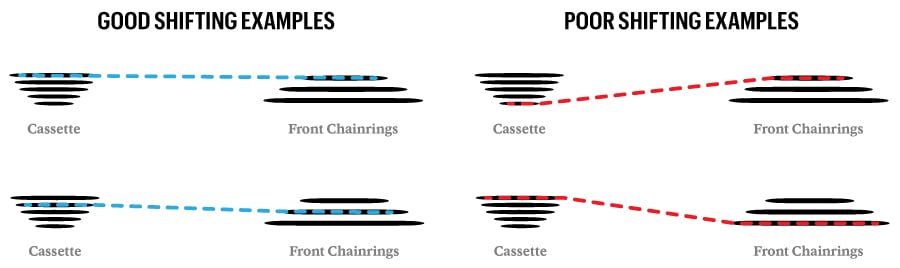
Non-obvious insight: Not all gear combinations are ideal. Some “cross-chaining” (using the smallest front and smallest rear, or biggest front and biggest rear together) puts extra strain on your chain and should be avoided.
When And Why To Shift Gears
Knowing when to shift is as important as knowing how. Shifting at the wrong moment can make your ride harder or even damage your bike.
When To Shift
- Before a climb: Shift to an easier gear before you reach a hill. Shifting while climbing is harder and can strain your drivetrain.
- Before a descent: Shift to a harder gear at the top, so you don’t spin out on the way down.
- On flat terrain: Use middle gears for steady, comfortable pedaling.
- Before stopping: Shift to an easier gear before you stop, so you can start again easily.
Why Shift?
- To save energy on climbs.
- To keep your pedaling smooth.
- To avoid knee pain from pushing too hard.
- To prevent chain or gear damage.
Example: Imagine you’re approaching a steep hill. If you wait until you’re already grinding uphill to shift, the chain might slip or you might have to stop. Shifting early keeps your bike and body happy.
Step-by-step: How To Shift Gears On A Mountain Bike
Shifting is simple once you understand the basics. Here’s how to do it in real-world conditions.
1. Start Pedaling
You must be pedaling forward for the gears to shift (except on some expensive electronic systems). If you’re not moving, the chain won’t move.
2. Lighten Your Pedal Pressure
When you want to shift, ease up on how hard you’re pedaling. This reduces strain and helps the chain move smoothly.
3. Use The Right Shifter
- For small adjustments (like a slight hill), use the right shifter to change rear gears.
- For big changes (like a sudden steep climb), use the left shifter to change front chainrings if you have more than one.
4. Shift One Gear At A Time
Don’t shift multiple gears at once, especially under pressure. Shift one gear, pedal a few strokes, then shift again if needed.
5. Listen And Feel
A smooth, quiet shift means you did it right. If you hear grinding, your chain may not be aligned properly.
Types Of Mountain Bike Shifters
There are a few common types of shifters you may find on mountain bikes. Each works differently, and it’s good to know what you have.
| Shifter Type | How It Works | Common Brands | Best For |
|---|---|---|---|
| Trigger | Press levers with thumb and finger | Shimano, SRAM | Most modern mountain bikes |
| Twist (Grip) | Twist the handlebar grip | SRAM Grip Shift | Entry-level or kids’ bikes |
| Bar-End | Move a lever at handlebar end | Microshift | Touring or retro bikes |
| Electronic | Press a button, motor shifts for you | Shimano Di2, SRAM AXS | High-end bikes |
Gear Combinations: What To Use And When
Choosing the right gear depends on your terrain, fitness, and the bike itself.
Climbing Hills
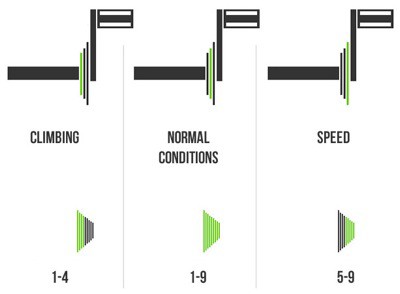
Use a low gear (small front chainring, big rear cog). You’ll pedal more times, but with less effort.
Descending
Use a high gear (big front chainring, small rear cog). This lets you go faster without spinning your legs too quickly.
Flat Terrain
Middle gears are usually best. You’ll have a good mix of speed and effort.
Technical Trails
If the trail is full of roots, rocks, or sharp corners, use a low or middle gear to keep control and pedal smoothly.
Tip: If you’re unsure, shift to an easier gear before the tricky section. You can always shift up again if it’s too easy.
Credit: nce.lk
Common Gear-related Problems And Solutions
Even with the best technique, you might face some issues. Knowing how to fix them can save your ride.
Chain Skipping
If your chain skips or jumps gears, your drivetrain may need adjustment or lubrication. Check for:
- Worn chain or cassette
- Derailleur out of alignment
- Dirty or dry chain
Chain Drops
If the chain falls off the gears, it may be due to cross-chaining or a bent derailleur hanger.
Hard Shifting
If it’s difficult to shift, check:
- Cable tension
- Dirty shifters or derailleur
- Bent components
Noisy Gears
Noise often means the chain isn’t sitting right or needs lube. Clean and lubricate your chain regularly.
Practical example: After riding in muddy conditions, your gears may shift poorly. Clean the drivetrain and check for mud in the derailleurs.
How Gearing Affects Your Ride: Real Data
Let’s look at how gear choices affect your speed and effort using a real-world example.
Suppose you’re riding a 29-inch mountain bike with 2 chainrings (24T and 36T) and an 11-42T cassette.
| Gear Combo | Cadence (rpm) | Speed (mph) | Effort Level |
|---|---|---|---|
| 24T Front / 42T Rear | 70 | 5.5 | Easy (climbing) |
| 36T Front / 11T Rear | 70 | 18.5 | Hard (descending) |
| 36T Front / 24T Rear | 70 | 9.2 | Moderate (flat) |
Changing gears makes a huge difference in how fast you go and how much energy you use.
Advanced Tips For Smoother Shifting
Once you understand the basics, you can fine-tune your technique for even better results.
1. Anticipate The Terrain
Look ahead on the trail and shift before you need to. Waiting until the hill starts is too late.
2. Use Your Ears
A well-tuned drivetrain is quiet. If you hear clicking or grinding, check your chainline or adjust your derailleur.
3. Avoid Cross-chaining
Don’t use the biggest front chainring with the biggest rear cog, or the smallest with the smallest. This puts extra stress on your components and can cause the chain to slip or drop.
4. Practice One-handed Shifting
Get comfortable shifting with both hands, especially if you have to control your dropper post or brakes at the same time.
5. Adjust Cable Tension
If shifting isn’t crisp, turn the barrel adjuster (small knob on the derailleur or shifter) to fine-tune your gears.
6. Shift Under Load (carefully)
Some modern drivetrains can shift under pressure, but it’s always better to ease off a little when shifting, especially on climbs.
How To Maintain Your Gears
A well-maintained drivetrain shifts better and lasts longer. Here’s how to keep your gears in top shape.
- Clean your chain regularly (at least every few rides or after muddy conditions).
- Lubricate the chain with a good bike lube—dry for dusty conditions, wet for mud.
- Check for wear on the chain, cassette, and chainrings every few months.
- Adjust your derailleurs if shifting feels rough or the chain skips.
- Replace cables if they feel stiff or frayed.
Pro tip: A clean, well-lubed chain not only shifts better but also saves you money on replacement parts.

Credit: www.youtube.com
Comparing Drivetrain Setups: 1x Vs 2x Vs 3x
Mountain bikes can have different gear setups, each with pros and cons.
| Drivetrain Type | No. of Front Chainrings | Gear Range | Pros | Cons |
|---|---|---|---|---|
| 1x | 1 | Wide (with 10-12 cogs) | Simple, light, less to think about | May lack very low or high gears |
| 2x | 2 | Very wide | More gear options, better for steep climbs | Heavier, more complex |
| 3x | 3 | Widest | Great for all terrains | Heaviest, most complex |
Most modern mountain bikes use 1x or 2x systems for simplicity and reliability.
Mistakes To Avoid When Shifting Gears
Even experienced riders sometimes make these errors. Avoid them for smoother rides and longer-lasting parts.
- Shifting under heavy load: Always ease up a little before shifting, especially on steep hills.
- Cross-chaining: Avoid extreme gear combinations that stress the chain.
- Shifting too late: Shift before you need the easier gear, not in the middle of a climb.
- Ignoring maintenance: Dirty or dry chains shift poorly and wear out faster.
- Jumping too many gears at once: Shift one gear at a time, especially in the rear.
Practical Scenario: Shifting On A Real Trail
Imagine you’re riding a forest trail with a mix of flat, uphill, and downhill sections.
- Flat start: Use a middle gear. Pedaling feels smooth.
- Approaching a hill: Shift to a lower gear before you hit the slope. Pedal becomes easier.
- Reaching the top: Shift to a higher gear as you go downhill. You pick up speed without spinning out.
- Technical section with rocks: Drop to an easier gear for better control.
With practice, shifting becomes second nature and helps you tackle any trail confidently.
How To Practice Gear Shifting
The best way to learn is by doing. Here’s a simple practice routine:
- Find a safe, flat area and ride slowly.
- Shift through all your gears, one at a time, paying attention to how each feels.
- Practice shifting while going up and down gentle hills.
- Try shifting both the front and rear derailleurs (if you have both).
- Listen for noise and feel for smoothness.
After a few sessions, you’ll know which gears suit different situations—and you’ll be ready for more challenging trails.
The Role Of Cadence
Cadence is how fast you pedal, measured in revolutions per minute (rpm). Most riders are comfortable at 70–90 rpm. Gears help you keep a steady cadence, even when the terrain changes. If your cadence drops below 60 rpm, you’re likely in too hard a gear. If it’s above 100 rpm, shift up for more speed.
Pro insight: Racers often use cadence to save energy over long rides. You can do the same—shift to keep your pedaling steady, not just your speed.
Electronic Shifting: The Future Of Gears?
Electronic shifting systems like Shimano Di2 or SRAM AXS are becoming popular, especially on high-end bikes. They use motors and buttons instead of cables and levers.
Benefits
- Precise, effortless shifting.
- Less maintenance (no cables to stretch).
- Can shift under load more easily.
Downsides
- Expensive.
- Requires batteries and charging.
- Harder to fix on the trail if something goes wrong.
For most riders, traditional cable shifting works great. But if you want the latest tech, electronic systems are worth a look. For more details on drivetrain technology, check the Bicycle Drivetrain Systems Wikipedia page.
Credit: exportersvyapar.com
Frequently Asked Questions
How Do I Know Which Gear To Use On My Mountain Bike?
Start with a middle gear on flat terrain. Shift to a lower gear for hills and a higher gear for descents. With practice, you’ll learn which gears feel best for different sections of trail.
Why Does My Chain Make Noise When I Shift?
Noise usually means the chain isn’t lined up or needs lubrication. Check your chain for dirt and make sure your derailleurs are adjusted properly.
Is It Okay To Shift Gears While Standing Up?
Yes, but be careful. Shifting under heavy pressure can strain your drivetrain. Try to ease off the pedals a bit, even when standing.
How Often Should I Clean And Lube My Chain?
Clean and lube your chain every few rides, or after riding in mud or rain. A clean chain shifts better and lasts longer.
Can I Upgrade My Shifters To Electronic?
You can, if your bike is compatible and you’re ready to invest. Electronic shifters are precise but expensive. Most riders are happy with mechanical shifters.
—
Learning how to shift gears on a mountain bike transforms your riding experience. You’ll climb hills with less effort, descend with more control, and enjoy smoother, safer rides. Like any skill, it gets easier with practice. Pay attention to your bike, listen to its feedback, and don’t be afraid to experiment.
With these tips, you’re ready to tackle any trail with confidence and skill.

Hello Guys! I am John Reese, a professional biker and my hobby is biking! I have been biking for last 12 years and I love using bikes while outing as well. Based on my experiences with the different type of bikes (mountain bikes, road bikes and hybrid bikes); I am sharing my opinion about various bikes so that a beginner can get started right away. Happy reading!