
Building your own mountain bike jump brings a new level of excitement to riding. It gives you freedom to practice tricks, control your learning pace, and enjoy the thrill close to home or at your local trail. But many riders are unsure where to start or worry about safety and durability.
Creating a well-constructed jump is not just about piling up dirt—it requires planning, the right tools, and an understanding of physics and safety. In this guide, you’ll learn how to build a mountain bike jump step by step, avoid common mistakes, and create a jump that’s safe and fun for repeated use.
Understanding Mountain Bike Jumps
Mountain bike jumps come in many forms, from simple dirt mounds to elaborate wooden ramps. The most common types include tabletops, doubles, and kickers. Each design offers a different riding experience:
- Tabletops are flat on top, making them safer for beginners because there’s less risk if you come up short.
- Doubles have a gap between take-off and landing, offering more challenge and risk.
- Kickers are steep ramps for launching high or far, often used for tricks.
Choosing the right jump depends on your skill level, available space, and what you want to practice. If you’re new to building, a tabletop jump is recommended for its forgiving design and flexibility.
Planning Your Mountain Bike Jump
Before you break ground, careful planning is essential. A well-thought-out plan ensures your jump is safe, durable, and suits your riding goals.
Location Selection
Choose a spot with:
- Firm, well-drained soil: Avoid muddy or sandy areas.
- Open space: Ensure you have enough run-up and landing room—ideally, at least 20–30 feet before and after the jump.
- Gentle slope: Slight downhill slopes help maintain speed.
- No obstacles: Keep away from trees, rocks, and fences for safety.
Check local rules—some areas restrict building jumps in public parks or forests. Always get permission if needed.
Jump Size And Shape
The size of your jump affects both safety and fun. Here’s a comparison of typical dimensions for beginner, intermediate, and advanced jumps:
| Skill Level | Take-off Height | Length (Lip to Landing) | Tabletop Width |
|---|---|---|---|
| Beginner | 1.5 ft (45 cm) | 4–5 ft (1.2–1.5 m) | 3 ft (0.9 m) |
| Intermediate | 2.5 ft (75 cm) | 6–8 ft (1.8–2.4 m) | 4 ft (1.2 m) |
| Advanced | 4 ft (1.2 m) or more | 10+ ft (3+ m) | 5 ft (1.5 m) |
For a first project, a jump with a 1. 5–2 ft height and a 4–6 ft gap is ideal. The ramp’s angle should be smooth, not abrupt—a gentle curve with a radius of 8–12 ft is comfortable for most riders.
Tools And Materials
You’ll need:
- Shovel (flat and round)
- Pickaxe or mattock for tough soil
- Wheelbarrow for moving dirt
- Rake for shaping
- Tamping tool (or a homemade tamper from a log or brick)
- Water source (hose or buckets)
- Measuring tape and stakes
Optional but helpful:
- Saw and hammer (if adding wood supports)
- Level for precise shaping
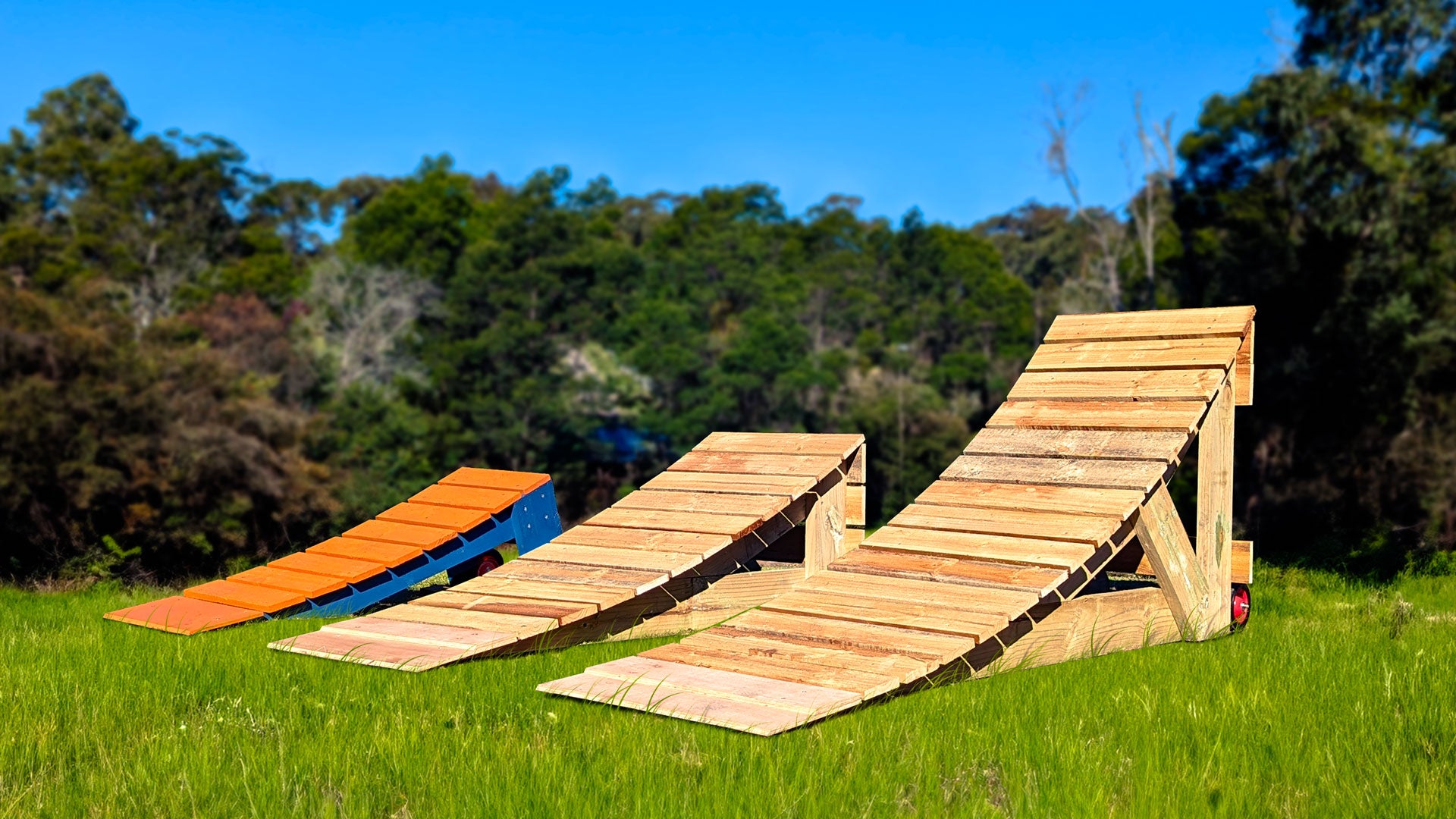
Most jumps use dirt, but wooden lips or supports are sometimes added for stability.
Credit: cutlaps.com
Step-by-step: Building The Jump
Building a strong, smooth jump takes patience and attention to detail. Rushing the process leads to soft, uneven jumps that wear out quickly or cause accidents.
1. Mark Your Jump Area
Start by marking the take-off, tabletop (if used), and landing areas with stakes and string. Lay out the run-in and run-out zones as well. Double-check the spacing and angles—standing back to visualize the line helps.
2. Gather And Prepare Dirt
You’ll need a lot of dirt—often more than you think. For a 2 ft high, 6 ft long tabletop, you might need 1–1. 5 cubic yards (about 1–1. 2 cubic meters) of compacted soil. Good dirt is key; clay-rich soil is best because it packs hard and holds shape.
Remove grass, rocks, and roots before building.
Quick Dirt Estimate:
| Jump Size | Dirt Volume Needed |
|---|---|
| Small (2 ft high, 6 ft long) | 1–1.2 cubic yards |
| Medium (3 ft high, 8 ft long) | 2–2.5 cubic yards |
| Large (4 ft high, 10 ft long) | 3–4 cubic yards |
3. Build The Base
Pile dirt in layers, not all at once. Lay down 4–6 inch (10–15 cm) layers, then compact each layer with your tamper. Use water to help the soil stick and pack firmly. This step is crucial—poorly compacted bases quickly develop ruts and collapse.
Shape the mound wider than your planned riding surface for stability. For example, if your tabletop is 3 ft wide, build the base at least 5 ft wide.
4. Shape The Take-off Ramp
Once the base is firm, start forming the take-off ramp. Use the shovel and rake to sculpt a smooth, even curve. For most jumps, a parabolic shape (gradually curving) gives a predictable launch. Avoid flat spots or sharp transitions.
Common mistake: making the lip too steep. This can launch riders unpredictably and lead to crashes. Aim for a take-off angle of 30–45 degrees, blending smoothly into the tabletop or gap.
5. Construct The Tabletop Or Gap
For a tabletop, pile and pack dirt across the top, keeping it level and smooth. Use the level to check your work. The tabletop should be at least 2–3 ft wide for safety.
For a double (gap jump), leave the gap clear and build a separate landing mound. The landing should be longer and lower than the take-off, sloping gently to the ground for a smooth touchdown.
6. Shape The Landing
The landing is just as important as the take-off. A good landing is at least 1. 5 times as long as the jump’s height and slopes at about 25–35 degrees. This helps absorb impact and keeps the ride smooth.
Pack the landing firmly and remove any rocks or debris.
7. Final Tamping And Watering
Once shaped, spray the entire jump with water and pack it again. This step locks the soil together and reduces dust. Pay extra attention to the lip and landing edges—they wear out fastest.
Let the jump settle for a day or two if possible, watering and tamping again before riding.
8. Test And Adjust
Start with slow-speed roll-overs to check for soft spots or odd transitions. Adjust the shape if needed—small changes make a big difference in how the jump rides.
Insight: Most beginners skip repeated tamping, which leads to quick erosion and unsafe lips. Take time to really compact each layer, not just the surface.
Safety Tips For Building And Riding
Building jumps is fun, but safety should be your first priority. Injuries are common when jumps are rushed or poorly designed.
- Wear gloves and boots when digging to avoid blisters and injury.
- Never build alone in remote areas—have a friend nearby, especially when moving heavy dirt.
- Check for underground utilities before digging.
- Test jumps slowly and reshape as needed.
- Keep the area clear of loose rocks, sticks, and trash.
When riding your new jump:
- Always wear a helmet.
- Check the jump before each session—erosion and weather can change conditions quickly.
- Ride within your limits. Start small and build confidence.
Maintenance And Longevity
A mountain bike jump is not a one-time project. Weather, repeated use, and time will change its shape. Regular maintenance keeps your jump safe and fun.
Regular Checks
- Inspect for cracks, ruts, and soft spots weekly.
- Repair with fresh dirt, packing and watering as before.
- After rain, let the jump dry before riding to avoid deep ruts.
Seasonal Care
- In wet seasons, cover the lip with a tarp to prevent erosion.
- Edge repairs often need more clay-rich soil for durability.
Unexpected Challenges
Non-obvious insight: Tree roots under the jump can swell or shrink with moisture, shifting the lip over time. If possible, build on root-free ground, or check and adjust the jump regularly.
Another tip: Adding a small amount of gravel or crushed stone to the base layer improves drainage and stability, especially in wet climates.
Common Mistakes And How To Avoid Them
Many first-time builders repeat similar errors. Here’s how to avoid them:
- Skipping tamping: Leads to soft, dangerous jumps. Pack every layer.
- Too steep or abrupt take-off: Causes crashes. Keep curves gradual.
- Ignoring landing size: Small landings don’t absorb impact well.
- Using sandy or loose soil: Doesn’t pack, wears out fast.
- Building without permission: Can lead to removal or fines.
How Jump Shape Affects Your Ride
Jump shape changes everything about the experience. Here’s a look at how ramp angles and radii affect take-off and landing:
| Ramp Angle | Jump Height | Effect on Rider |
|---|---|---|
| 20–30° (Shallow) | Low | Smoother, less air, safer for beginners |
| 30–45° (Moderate) | Medium | Balanced height and distance, ideal for tricks |
| 45°+ (Steep) | High | Short distance, high pop, harder to control |
If you want to try tricks, a moderate take-off with a longer landing is safest. For distance, a shallower ramp with a longer gap works best. Test and reshape until you find the sweet spot.
Using Wood And Other Materials
While most backyard jumps are dirt, wood ramps are sometimes used for lips or supports. This can help if you have rocky ground, need to move the jump, or want a precise take-off.
Basic Wooden Kicker
A simple wooden kicker uses plywood and 2×4 lumber. Cut an arc for the ramp surface, attach supports underneath, and anchor the base firmly. Always cover wood surfaces with grip tape or rough paint to prevent slipping.
Note: Wood jumps can get slippery when wet and often require more maintenance. They also need to be stored out of the weather for longer life.

Credit: www.youtube.com
Environment And Community Considerations
Building jumps isn’t just about you—it affects the land and other users. Here’s how to do it responsibly:
- Don’t dig in protected areas or public parks without permission.
- Use local dirt instead of importing material, which can introduce weeds.
- Restore land when finished—fill in holes, plant grass, and remove trash.
- Respect other trail users and educate others about safe, sustainable building.
For more on sustainable trail building and best practices, check out the guidelines at IMBA.
Progression: Expanding Your Jump Line
Once you’re comfortable with your first jump, you may want to build a series (a “line”) with multiple jumps in a row. This requires more planning:
- Space jumps far enough apart for safe landings and recovery.
- Vary the jump types (tabletops, doubles, rollers) to add fun and challenge.
- Design for flow—each jump should lead naturally to the next.
- Test each section separately before riding the full line.
Adding berms (banked turns) or rollers (small bumps) can also improve the line’s flow and fun.
Real-world Example: Backyard Tabletop
Let’s walk through a real-world example—a 2 ft high, 6 ft long tabletop jump:
- Location: Chosen on a slight downhill in a backyard, 25 ft run-in.
- Dirt: 1.2 cubic yards of clay-rich soil sourced from nearby.
- Base: Built up in 5 inch layers, tamped with water at each stage.
- Take-off: Shaped to a 35° angle, with a 10 ft radius curve.
- Tabletop: 3 ft wide, packed flat with a rake and checked with a level.
- Landing: 3 ft wide, sloped at 30°, 3 ft long.
- Watered and left to settle for 48 hours before first test.
- Minor adjustments made after first rides—soft spots filled, lip smoothed.
The jump lasted a full season with weekly checks, showing that careful prep pays off.
Frequently Asked Questions
How Much Does It Cost To Build A Mountain Bike Jump?
Costs vary widely. If you use local dirt and basic hand tools, expenses can be as low as $0–$50 (mainly for tools or renting a wheelbarrow). Buying dirt or wood, or hiring help, increases costs—wooden kicker ramps may cost $100–$300.
Can I Build A Mountain Bike Jump In My Backyard?
Yes, if you have enough space and your local laws or homeowners’ rules allow it. Check for property line setbacks and avoid digging near underground utilities or trees. Always get permission if you rent your home.
What Soil Type Is Best For Building Jumps?
Clay-rich soil is best—it packs hard, holds shape, and resists erosion. Avoid sandy or loose soils, which break down quickly. You can improve poor soil by mixing in a little clay or crushed gravel.
How Long Does A Mountain Bike Jump Last?
With regular maintenance (watering, tamping, repairing ruts), a well-built dirt jump can last months or even years. Neglected jumps quickly erode, especially after heavy rain or frequent use.
Is It Safe To Build And Ride My Own Jump?
When built with care and tested slowly, backyard jumps can be safe and very rewarding. Always wear safety gear and check the jump before each session. Start with smaller jumps and progress as your skills improve.
Building your own mountain bike jump is both a challenge and a joy. With planning, patience, and ongoing care, you’ll have a safe, fun place to ride and improve your skills. And as you grow, you’ll find endless ways to shape and refine your jump for years of enjoyment.

Credit: cutlaps.com

Hello Guys! I am John Reese, a professional biker and my hobby is biking! I have been biking for last 12 years and I love using bikes while outing as well. Based on my experiences with the different type of bikes (mountain bikes, road bikes and hybrid bikes); I am sharing my opinion about various bikes so that a beginner can get started right away. Happy reading!