
Building your own mountain bike wheel is a rewarding skill. It gives you control over quality, performance, and the chance to customize every detail. At first, the process can look complex—so many parts, so many steps. But with clear guidance, anyone can learn to build strong, reliable wheels.
Whether you ride trails, race, or just want a better bike, understanding how to build a mountain bike wheel brings you closer to your machine. This article will guide you step-by-step, from choosing parts to the final truing. You’ll discover tips and insights that save time and prevent mistakes.
Let’s get started on building a wheel that will carry you confidently over rocks, roots, and rough terrain.
Understanding Mountain Bike Wheel Components
Before you start, it’s important to know each part of the wheel. Mountain bike wheels have several key components. Choosing the right ones matters for strength, weight, and performance.
1. Rim
The rim is the circular metal part. It supports the tire and holds the spokes. Most mountain bike rims are made from aluminum or carbon fiber. Aluminum is affordable and tough. Carbon fiber is lighter and stiffer, but more expensive.
2. Hub
The hub sits at the center of the wheel. It contains bearings and is where the axle fits. Hubs come in different sizes, and the spacing (called “width” or “spacing”) must match your bike. For mountain bikes, common rear hub widths are 135mm, 142mm, and 148mm Boost. Front hubs are usually 100mm or 110mm Boost.
3. Spokes
Spokes connect the hub to the rim. Most mountain bike wheels use 28, 32, or 36 spokes. More spokes mean stronger wheels but heavier. Spokes are usually made from stainless steel. Some riders choose butted spokes (thinner in the middle) for lighter weight.
4. Nipples
Nipples are small threaded pieces that attach the spokes to the rim. Most are made from brass or aluminum. Brass is durable; aluminum is lighter but can strip more easily.
5. Tire
While not part of the wheel build itself, the tire fits on the rim. Tires for mountain bikes come in sizes like 27.5-inch or 29-inch.
Common Component Choices
Choosing the right parts depends on your riding style. For downhill, you need strong rims and more spokes. For cross-country, lighter rims and fewer spokes work. Here’s a quick comparison:
| Component | Downhill | Cross-country | All-mountain |
|---|---|---|---|
| Rim | Wide, heavy | Narrow, light | Medium width |
| Spokes | 36 | 28 | 32 |
| Hub | Strong, sealed bearings | Lightweight | Balanced |
| Nipples | Brass | Aluminum | Brass/Aluminum |
A common mistake is mismatching rim and hub sizes. Always check specs before you buy.
Tools You Need For Wheel Building
Building a mountain bike wheel requires special tools. Using the right tools makes the job easier and prevents damage.
Essential Tools
1. Spoke Wrench
This tool fits the nipples and lets you tighten or loosen spokes.
2. Truing Stand
Holds the wheel and helps you check for straightness (trueness).
3. Nipple Driver Or Screwdriver
Useful for starting nipples before using the spoke wrench.
4. Grease And Oil
Grease for threads and hub parts; oil for spoke nipples.
5. Tension Meter
Measures spoke tension. This is important for strong, balanced wheels.
6. Hub Axle Adapters
If your truing stand does not fit your hub, adapters help.
7. Ruler Or Calipers
Measure spoke length accurately.
8. Spoke Calculator (online Or App)
Calculates the correct spoke length based on rim, hub, and spoke pattern.
Optional Tools
- Dish tool: Checks that the rim sits centered over the hub.
- File or emery cloth: Smooth rough spoke ends.
- Tire lever: For fitting the tire after the wheel is built.
Many beginners skip the tension meter or dish tool, but these tools prevent uneven tension and poor alignment. Investing in quality tools saves frustration.

Credit: gearjunkie.com
Selecting The Right Rim, Hub, And Spokes
Choosing the right parts is crucial for wheel strength and performance. Let’s look at each choice in detail.
Rim Selection
Most mountain bike rims range from 20–40mm wide. Wider rims give more tire support and grip. Look for double-wall rims—they’re stronger than single-wall. Check rim weight; lighter rims improve acceleration but can be less durable.
Some popular rim brands:
- DT Swiss
- Stan’s NoTubes
- Race Face
Hub Selection
Select a hub that matches your bike’s axle and brake type (disc or rim brakes). For mountain bikes, disc brake hubs are standard. Look for sealed bearings; they last longer in muddy or wet conditions.
Hub engagement (the number of points the hub “clicks” when you pedal) affects how quickly power transfers. More engagement points are better for technical riding.
Spoke Selection
Spoke length must match your rim and hub. Use a spoke calculator to find the right size. Stainless steel is standard. For lighter wheels, use butted spokes. For maximum strength, use straight gauge spokes.
Nipple Selection
Choose brass for durability, especially in wet conditions. Aluminum is lighter but can corrode and strip. Make sure nipples fit your spoke size.
Example Of Rim-hub-spoke Compatibility
| Rim | Hub | Spoke Count | Brake Type | Axle Size |
|---|---|---|---|---|
| Stan’s Flow MK3 | DT Swiss 350 | 32 | Disc | 148mm (Boost) |
| Race Face AR30 | Hope Pro 4 | 28 | Disc | 142mm |
| WTB ST i29 | Shimano XT | 36 | Disc | 135mm |
A non-obvious tip: Double-check the spoke hole diameter on rims. Some rims use larger holes for specific nipples.
Calculating And Ordering Spoke Length
Getting the right spoke length is vital. Too long, and spokes stick out. Too short, and you can’t tighten them enough.
How To Measure
- Measure the hub flange diameter—the circle where the spoke holes are.
- Measure the distance between hub flanges—from left to right.
- Measure the spoke hole diameter in the rim.
- Measure the effective rim diameter (ERD)—the diameter inside the rim where nipples seat.
Plug these numbers into an online spoke calculator. Enter the spoke pattern (usually 3-cross for mountain bikes).
Common Mistakes
- Not factoring in hub and rim specs leads to wrong lengths.
- Ignoring rim ERD; some rims have unusual ERD.
Order extra spokes (at least 2-4) in case you damage or misplace one. Beginners often forget this step.
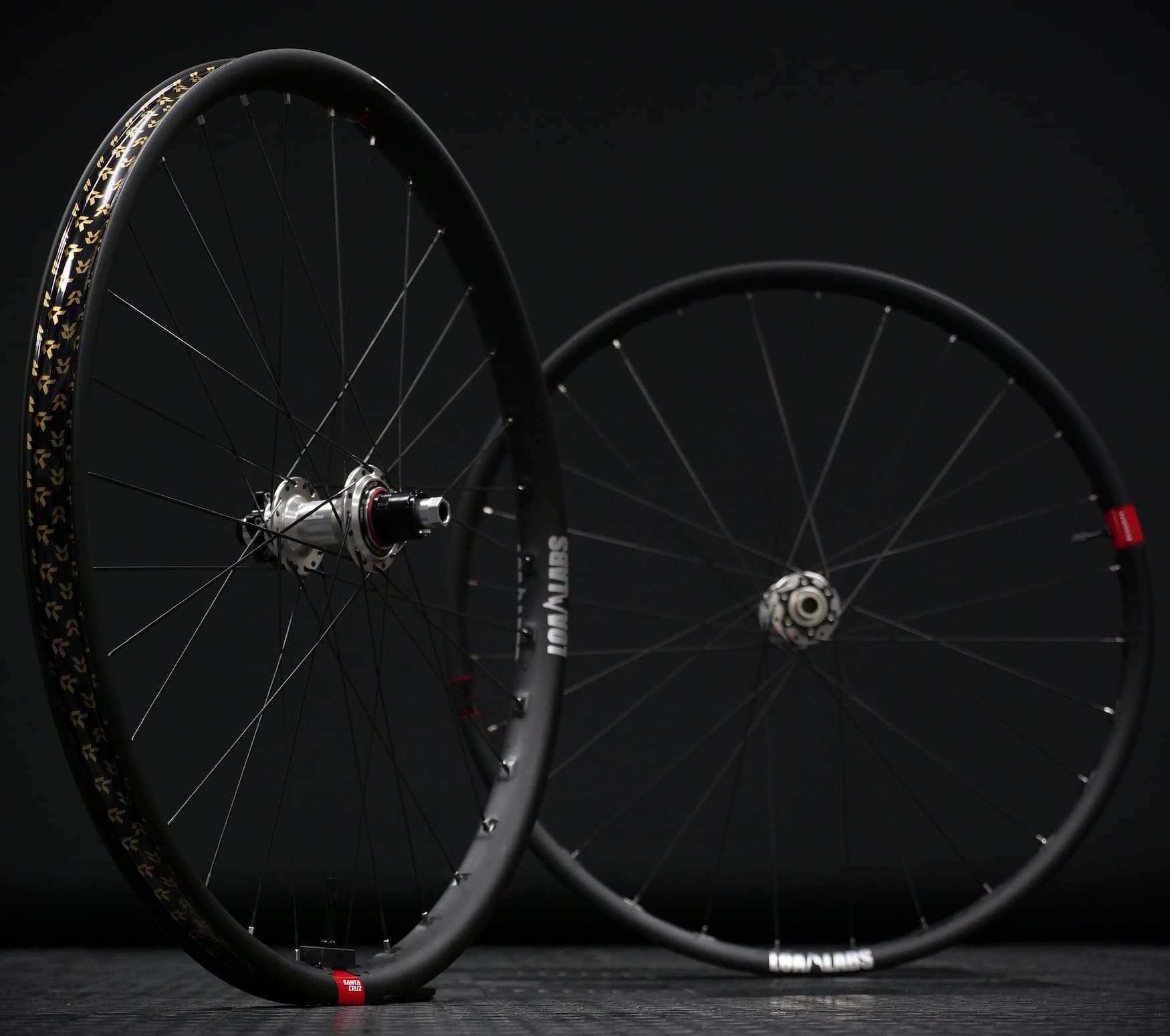
Credit: loamlabsusa.com
Preparing Your Workspace
A clean, organized workspace helps you focus and prevents mistakes. Set up your tools and parts before starting.
Steps To Prepare
- Lay out all parts—rim, hub, spokes, nipples.
- Organize tools—spoke wrench, truing stand, tension meter.
- Clean parts—wipe rims and hubs to remove dust or oil.
- Apply grease—lightly grease spoke threads and hub holes.
- Check lighting—good light helps you spot errors.
Have a towel or rag handy. Building wheels can get greasy.
Lacing The Wheel
Lacing means attaching the spokes between the hub and rim. The pattern you use affects strength and flexibility.
Choosing A Lacing Pattern
Most mountain bike wheels use the 3-cross pattern. Each spoke crosses three other spokes before reaching the rim. This gives strength for rough riding.
Other patterns:
- 2-cross: Lighter, less strong.
- Radial: Only for front wheels, not recommended for mountain bikes.
Step-by-step Lacing
1. Insert First Spoke
Put a spoke through a hub hole on the drive side (side with gears). Thread the nipple onto the spoke at the rim.
2. Add Every Other Spoke
Insert spokes into every other hole on the hub. Attach them to the correct rim holes.
3. Flip The Wheel
Turn the wheel over and repeat for the non-drive side.
4. Lace The Crossed Spokes
Insert remaining spokes so they cross three others. This gives the 3-cross pattern.
5. Finger-tighten Nipples
Screw each nipple until it just grips the spoke. Do not tighten fully yet.
6. Check Spoke Alignment
Make sure spokes line up straight from hub to rim. If any are bent or twisted, fix before continuing.
A practical tip: Start with the valve hole as your reference point. This makes it easier to fit the tire later.
Tensioning And Truing The Wheel
After lacing, you need to tension (tighten) the spokes and true (straighten) the wheel. This step is where wheels become strong and reliable.
Initial Tensioning
- Tighten each nipple a little at a time, going around the wheel.
- Check spoke tension with your fingers or a tension meter. Aim for equal tension.
Truing The Wheel
Put the wheel in the truing stand. Spin it to check for wobbles (side-to-side) and hops (up-and-down).
- Adjust side-to-side wobbles
Tighten spokes on the side where the rim moves away from the center. Loosen the opposite side if needed.
- Fix up-and-down hops
Tighten pairs of spokes near the high spot. Loosen near the low spot.
Repeat this process. Work slowly—small adjustments are better than big ones.
Final Tensioning
Check all spokes with a tension meter. Typical mountain bike spokes are tensioned to 100–120 kgf (kilogram-force). Too loose, and the wheel flexes. Too tight, and you risk rim damage.
Dishing The Wheel
Use a dish tool to check that the rim sits centered over the hub. Adjust spoke tension if needed.
Common Mistakes In Tensioning
- Overtightening: Causes rim damage or spoke breakage.
- Uneven tension: Leads to weak wheels and broken spokes.
- Ignoring dish: Rim not centered, causes handling problems.
An insight many beginners miss: Spokes are strongest when tension is balanced, not simply tight.
Installing The Tire And Checking The Wheel
After your wheel is trued and tensioned, it’s time to fit the tire and check for final issues.
Fitting The Tire
1. Install Rim Tape
Protects the inner tube from spoke holes.
2. Fit The Tire
Use tire levers if needed. Make sure the tire bead is seated evenly.
3. Inflate The Tire
Pump to recommended pressure—usually 30–40 psi for mountain bikes.
4. Spin The Wheel
Check for any wobbles or hops. If you see problems, retrue the wheel.
Final Checks
- Check spoke tension again after the tire is installed. Sometimes the rim shifts slightly.
- Test the wheel on the bike. Ride gently to see if the wheel stays true.
Real-world Example
A rider built a wheel with 32 butted spokes and a Stan’s rim. After the first ride, two spokes loosened because initial tension wasn’t high enough. Always re-check tension after your first ride.
Tips For Building Strong Mountain Bike Wheels
Building wheels takes practice. Here are key tips for strong, reliable wheels.
1. Use Quality Parts
Cheap rims or hubs can ruin a good build.
2. Balance Spoke Tension
Even tension is more important than maximum tightness.
3. Check Rim And Hub Compatibility
Mismatched parts cause weak wheels.
4. Work Slowly
Take small steps. Rushing leads to mistakes.
5. Practice Truing
Even experienced builders spend time perfecting truing.
6. Clean As You Go
Grease and grit can hide flaws.
7. Use A Tension Meter
Guessing tension causes problems.
8. Order Extra Spokes
Spokes bend or break during building.
9. Double-check Measurements
Wrong spoke length is a common beginner error.
10. Start With The Valve Hole
Keeps tire fitting easy.
Many riders overlook the importance of spoke tension balance. It’s the single biggest factor in wheel strength.
Comparing Factory-built Vs. Hand-built Wheels
Some riders wonder if hand-built wheels are better than factory-built. Here’s a comparison:
| Factor | Hand-built | Factory-built |
|---|---|---|
| Quality Control | High, personalized | Variable, often lower |
| Customization | Complete control | Limited options |
| Cost | Often higher | Lower |
| Performance | Optimized for rider | Standardized |
| Repairability | Easy to fix | Sometimes harder |
A non-obvious insight: Hand-built wheels can last longer because tension and dish are set by the builder, not by a machine.
Troubleshooting Common Problems
Even careful builders face challenges. Here’s how to fix issues:
Loose Spokes
If you hear a rattling noise, check for loose spokes. Tighten gently with the spoke wrench.
Wheel Not True
If the wheel wobbles, place it in the truing stand and adjust tension. Small changes are better than big ones.
Broken Spoke
Replace the spoke. If you ordered extras, it’s easy. Otherwise, find a matching replacement.
Rim Damage
If the rim is bent or cracked, stop riding. Replace the rim and rebuild the wheel.
Nipple Stripping
If nipples strip, use brass instead of aluminum. Always use the correct size spoke wrench.
A tip often missed: If you replace a spoke, always re-tension and re-true the wheel. Don’t just tighten one spoke.
Advanced Techniques For Experienced Builders
Once you’ve built a few wheels, you can try advanced techniques.
Double Butted Spokes
Double butted spokes are thinner in the middle. They flex more, absorbing impacts. Use for lighter, stronger wheels.
Tubeless Setup
Tubeless tires let you run lower pressures for better grip. Use rim tape and sealant. Make sure the rim is tubeless-compatible.
Spoke Patterns
Try 2-cross or mixed patterns for weight savings. Radial lacing is possible on front wheels but not for mountain bikes.
Using A Tension Meter
Experienced builders use a tension meter for every spoke. This ensures perfect balance.
Custom Colors
Colored nipples or spokes can match your bike. Make sure colored parts are high quality.
An advanced insight: Tubeless setups need perfect rim sealing. Even a tiny gap causes air leaks.
Safety And Maintenance After Building
Building the wheel is just the start. Keeping it safe and strong is ongoing.
Regular Checks
- Inspect spoke tension every month.
- Check for cracks in the rim after hard rides.
- Clean the wheel to spot damage early.
- Re-true the wheel if you notice wobbles.
Riding Safety
A loose or damaged wheel is dangerous. If you’re unsure, ask a bike shop to check your build.
Maintenance Tips
- Use a soft brush to clean rims and hubs.
- Avoid high-pressure water—it can damage bearings.
- Grease hub bearings every 6–12 months.
For more detailed wheel care, see guides from Park Tool.
Frequently Asked Questions
How Long Does It Take To Build A Mountain Bike Wheel?
Most beginners spend 2–4 hours on their first wheel. With practice, you can build a wheel in 1–2 hours. Time depends on experience and tools.
What Is The Best Spoke Pattern For Mountain Bike Wheels?
The 3-cross pattern is best for mountain bike wheels. It gives strength and flexibility for rough terrain. Some light riders use 2-cross, but 3-cross is standard.
Can I Reuse Old Spokes Or Nipples?
It’s possible, but not recommended. Old spokes may have fatigue or bends. Nipples can strip or crack. For reliability, use new spokes and nipples.
How Do I Know If My Wheel Is Properly Tensioned?
Use a tension meter for accurate results. Spokes should feel equally tight when squeezed. If some are loose or tight, re-adjust. Proper tension prevents wheel failure.
Is It Cheaper To Build Your Own Wheels?
Sometimes, yes. If you buy parts separately and already own tools, it can save money. However, buying tools adds cost. Many riders build wheels for customization and quality, not just price.
Building a mountain bike wheel is a skill that lasts a lifetime. It gives you freedom to choose parts, customize performance, and repair your bike with confidence. As you gain experience, your wheels will become stronger, lighter, and better suited for your riding style.
Remember to check tension, true regularly, and always use quality parts. With patience and practice, your next ride will be smoother, safer, and more enjoyable thanks to the wheel you built yourself.

Credit: www.youtube.com

Hello Guys! I am John Reese, a professional biker and my hobby is biking! I have been biking for last 12 years and I love using bikes while outing as well. Based on my experiences with the different type of bikes (mountain bikes, road bikes and hybrid bikes); I am sharing my opinion about various bikes so that a beginner can get started right away. Happy reading!