
Mountain biking is all about the experience—feeling the trail under your wheels, taking on new challenges, and enjoying nature. But one thing many riders overlook is how hard their mountain bike tires should be. It’s a small detail with a huge impact. The right tire pressure can give you better grip, smoother rides, and even help you avoid flats. Get it wrong, and you might feel every rock, lose control, or damage your rims.
Choosing the ideal tire pressure isn’t always simple. Factors like tire size, rider weight, terrain, and even weather all play a role. Many beginners just pump their tires until they “feel firm” or copy what a friend does. But those shortcuts can lead to a less enjoyable, less safe ride.
Let’s break down everything you need to know about how hard mountain bike tires should be—so your next ride feels just right.
Why Tire Pressure Matters On Mountain Bikes
Tire pressure is more than just a number. It’s about how your bike connects with the trail. If your tires are too hard, you might bounce and lose traction. If they’re too soft, you risk pinch flats and sluggish handling.
The Key Benefits Of The Right Pressure
- Better grip: Softer tires mold to the ground, helping you stay in control on corners and roots.
- Comfort: Less pressure absorbs bumps and vibrations, saving your hands and back.
- Protection: Correct pressure reduces the chance of rim damage or flats.
- Efficiency: The right setting lets your bike roll smoothly without wasting energy.
Small changes can make a big difference. Even 2-3 psi (pounds per square inch) can totally change how your bike feels.
What “hard” Means For Mountain Bike Tires
When people ask, “How hard should mountain bike tires be?” they’re talking about tire pressure, measured in psi or bar. Unlike road bikes, mountain bike tires usually run much lower pressures.
- Mountain bike tires: 18–35 psi is typical
- Road bike tires: 80–110 psi or more
Mountain bikes need lower pressure to grip loose, rough trails. But not all mountain bikes are the same. Fat tires, tubeless setups, and new rim designs give you more options—but also more decisions to make.
What Feels “hard” To The Touch?
Many beginners squeeze their tires by hand and guess. This is very unreliable. A tire can feel firm but still be at a low pressure. Always use a proper pressure gauge for accuracy.
Factors That Affect Ideal Tire Pressure
The best pressure isn’t the same for everyone. Here are the main things you need to consider:
1. Rider Weight
Heavier riders need more pressure to avoid bottoming out or pinching the tube. Lighter riders can use less for extra grip.
2. Tire Volume And Width
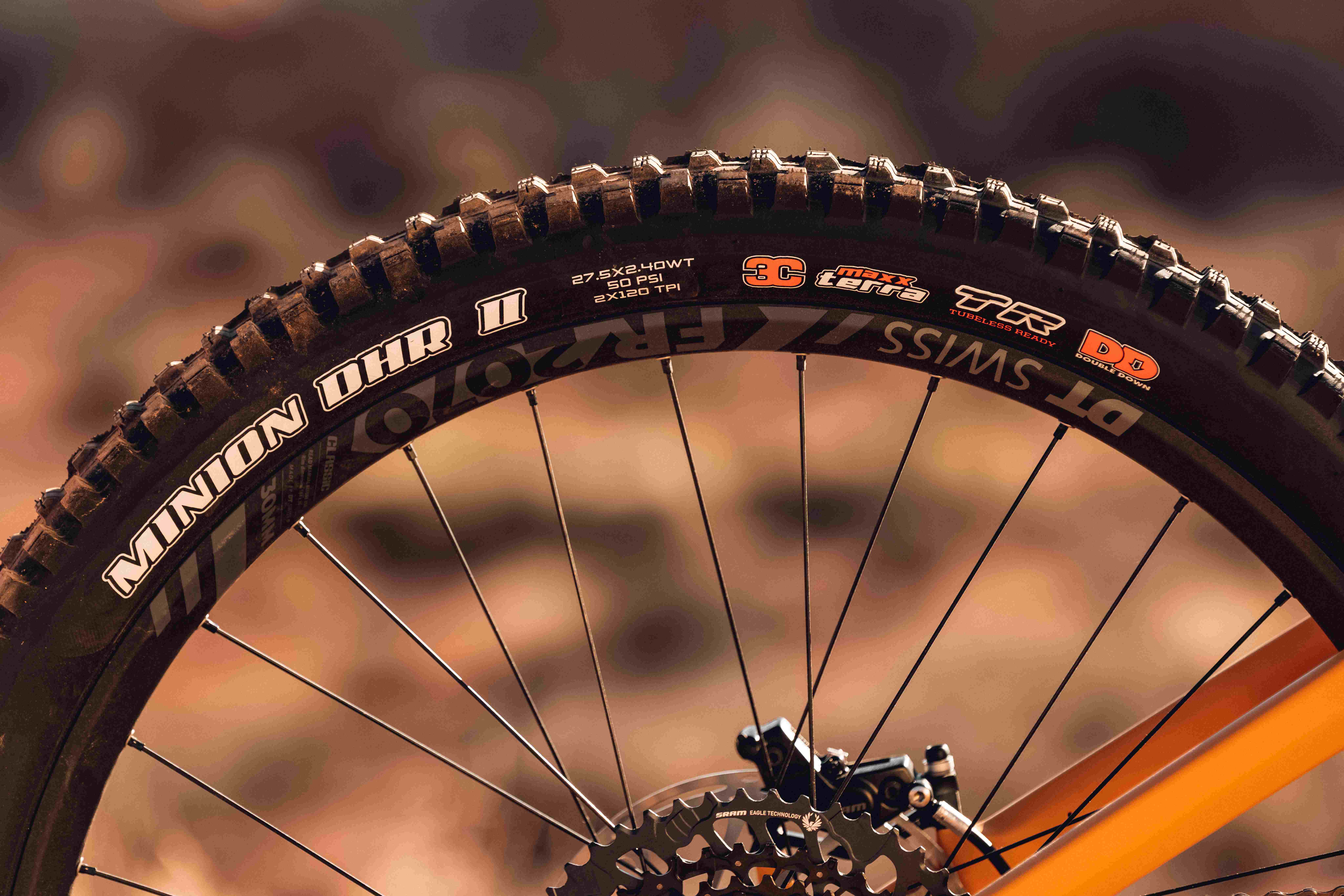
Wide tires hold more air and can run at lower pressure. For example, a 2. 8” tire can run softer than a 2. 1” tire without risking rim strikes.
3. Terrain Type
- Rocky trails: Slightly higher pressure for protection
- Muddy or loose trails: Lower pressure for grip
- Hardpacked dirt: Mid-range pressure for speed
4. Tire Construction
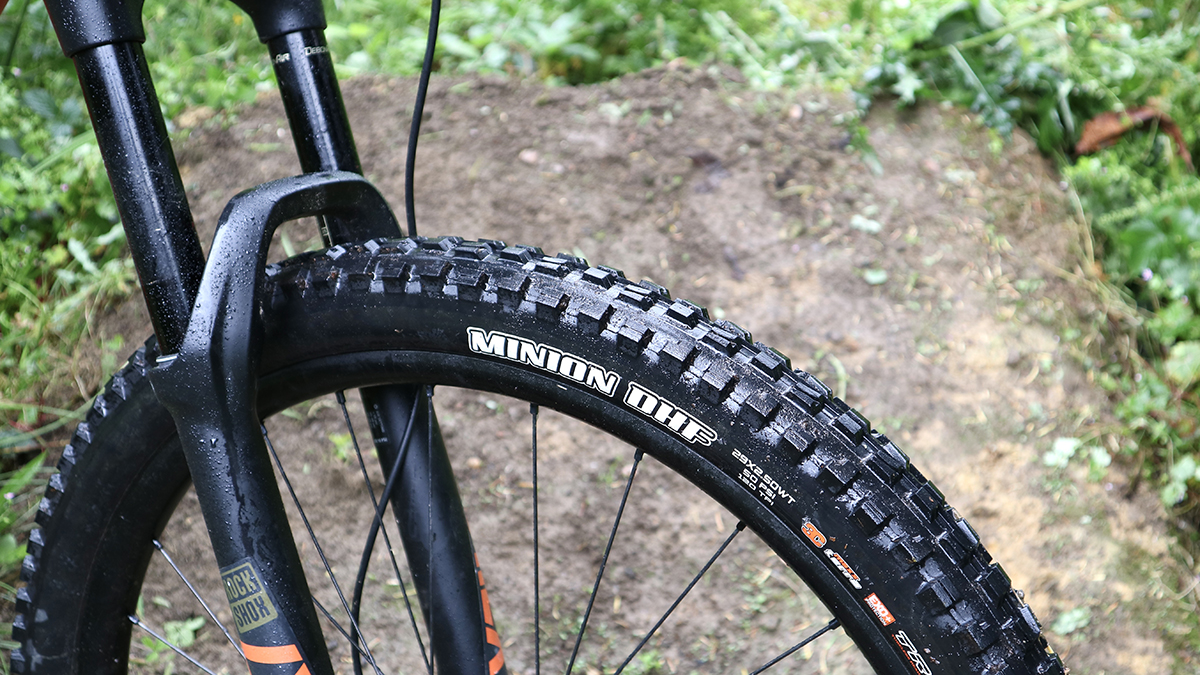
Tubeless tires let you run less pressure, since there’s no inner tube to pinch. Reinforced sidewalls allow even lower pressures.
5. Rim Width
Wider rims support the tire better, letting you use less pressure without squirming.
6. Weather And Temperature
Cold air contracts, which can lower your pressure overnight. Always check before you ride.
Typical Pressure Ranges For Different Bikes
Here’s a quick overview of common mountain bike setups and the pressure ranges that work best. Remember, these are starting points. Fine-tuning is always needed.
| Bike Type | Tire Width | Recommended Pressure (psi) |
|---|---|---|
| Cross-country (XC) | 1.9″–2.2″ | 23–35 psi |
| Trail / All-Mountain | 2.2″–2.5″ | 20–30 psi |
| Enduro / Downhill | 2.4″–2.6″ | 18–28 psi |
| Plus-size | 2.8″–3.0″ | 12–18 psi |
| Fat bike | 4.0″–5.0″ | 5–12 psi |
Notice how wider tires use much lower pressures. Don’t try to put road bike pressures in your mountain bike tires—they’ll be dangerously hard.
How To Find Your Perfect Pressure
There’s no single answer. But here’s a proven method to dial in your tire pressure for your bike and riding style:
Step 1: Start With Recommendations
Use the ranges above or your tire’s sidewall. Start in the middle of the suggested range.
Step 2: Adjust For Your Weight
- Under 150 lbs (68 kg): Use the lower end of the range
- 150–180 lbs (68–82 kg): Mid-range
- Over 180 lbs (82 kg): Upper end of the range
Step 3: Consider Your Terrain
- If you ride mostly rocky trails, add 2-3 psi for protection.
- For muddy or rooty trails, lower by 2-3 psi for grip.
Step 4: Use A Gauge
A digital pressure gauge is much more accurate than squeezing with your hand.
Step 5: Fine-tune
Go for a short ride and see how your bike feels:
- If the bike feels harsh or bounces, lower the pressure a little.
- If you feel rim strikes or squirmy handling, add a bit more air.
Repeat until you find the sweet spot.
Real-world Examples
Let’s look at two common rider profiles to see how this works in practice.
Example 1: Trail Rider, 160 Lbs, 2.3” Tubeless Tires
- Starts at 24 psi front / 26 psi rear
- Drops 2 psi for soft, rooty trails
- Adds 2 psi when riding rocky descents
Example 2: Downhill Rider, 200 Lbs, 2.5” Tubeless Tires
- Starts at 28 psi both tires
- Drops to 26 psi for muddy days
- Increases to 30 psi for sharp, rocky terrain
Small changes—just 1-2 psi—make a big difference in feel and performance.
Front Vs Rear Tire Pressure
Many riders use different pressures for the front and rear tires. The rear tire usually needs a bit more air because it carries more weight and takes more impacts.
Typical Difference
- Front tire: 1–3 psi lower than rear tire
This helps the front tire grip better for steering, while the rear tire is protected from pinch flats and rim damage.
Tube Vs Tubeless: How It Changes Pressure
Tubeless tires have changed mountain biking. Removing the tube lets you run lower pressures without as much risk of pinch flats (“snakebites”). This gives you better grip and comfort.
| Setup | Typical Pressure Range (psi) | Notes |
|---|---|---|
| Tube | 24–35 | Higher risk of pinch flats if too low |
| Tubeless | 18–28 | Lower pressure, fewer flats |
| Tubeless + Insert | 15–24 | Even lower, more rim protection |
But you still need to be careful. Too little pressure, even with tubeless, can let the tire “burp” (lose air) or damage your rim.
How To Check And Maintain Tire Pressure
Checking your tire pressure should be part of your regular routine—before every ride if possible.
- Use a quality gauge: Floor pumps are rarely accurate. Buy a dedicated digital or analog gauge.
- Check when tires are cold: Heat from riding can change pressure.
- Inspect for leaks: If pressure drops often, check your valve or rim seal.
- Adjust for weather: Air contracts in cold—pressure will read lower in winter.
Many pro riders check their pressure before every ride. It’s a small step that can prevent big problems.
Signs Your Tires Are Too Hard Or Too Soft
Knowing the symptoms helps you make quick adjustments:
Too Hard
- The bike feels harsh and bounces off obstacles
- Less traction, especially on roots and rocks
- Tires skip sideways in corners
- Increased risk of tire cuts or blowouts
Too Soft
- “Squirmy” feel in corners
- Rim strikes over rocks or roots
- Increased rolling resistance (slower)
- More risk of sidewall cuts or burping (tubeless)
If you feel any of these signs, adjust by 2 psi and test again.
Common Mistakes Riders Make
1. Over-inflating For “speed”
Some think harder tires roll faster. In mountain biking, too much pressure actually reduces grip and control—making you slower and less safe.
2. Using Tire Pressure For Suspension
Don’t try to “tune” your ride feel by just changing pressure. If your bike feels harsh, check your suspension setup too.
3. Ignoring Changes In Temperature
If you ride in hot or cold weather, check your pressure before every ride. A 10°F change can shift pressure by 1-2 psi.
4. Forgetting About Rim Width
A wider rim can support lower pressures. If you upgrade your wheels, experiment with less air.
5. Copying Someone Else’s Setup
What works for your friend might not work for you. Always start with recommendations, then fine-tune for your weight, style, and terrain.
Tire Pressure And Rider Safety
The right tire pressure isn’t just about performance—it’s also about safety. Under-inflated tires can roll off the rim or cause sudden loss of control. Over-inflated tires are more likely to blow out or lose grip, especially on steep descents.
A good rule: If you’re unsure, err on the side of slightly higher pressure, then lower it in small steps. It’s safer to start a ride a little too hard than too soft.
How Pro Riders Set Tire Pressure
Professional mountain bikers are very precise. Most have a “go-to” pressure, but they adjust for each trail. They use high-quality gauges and even record pressures in their training logs.
What you can learn:
- Be consistent. Use the same gauge each time.
- Don’t change pressure just because someone else does.
- Test changes on the trail, not just in the garage.
The Impact Of Tire Pressure On Speed And Comfort
Many riders are surprised to learn that slightly lower pressures can actually make them faster on rough trails. The tire absorbs bumps, helping you keep traction and speed. But too soft, and you’ll waste energy with rolling resistance.
A study by Schwalbe found that a 10 psi drop in pressure reduced vibration by up to 50% on rough ground, but only slowed riders by 2–4% on smooth surfaces. For most trails, the grip and control are worth the small speed trade-off.
Credit: www.canyon.com
How To Experiment And Find Your Sweet Spot
Set aside time to test different pressures. Pick a trail you know well. Start at the upper end of your pressure range, ride a section, then lower by 2 psi and repeat. Notice:
- Do you feel more or less in control?
- Are you hitting your rims?
- Is the ride smoother or bumpier?
Keep notes. After a few rides, you’ll know exactly what feels best for you.
Useful Tools For Tire Pressure
Consider these tools to make your life easier:
- Digital pressure gauge: For accurate readings
- Tubeless sealant: Seals small leaks so you can run lower pressures
- Mini pump or CO2 inflator: For quick trail-side adjustments
- Tire inserts: For aggressive riding and extra rim protection
Advanced Tips: Matching Pressure To Conditions
Racers and advanced riders often tweak pressure for each trail or weather change. Here’s how you can level up:
- Wet roots? Drop 1–2 psi for grip.
- Rocky descent? Add 2 psi for rim protection.
- New tires? Start a little higher—they can stretch after a few rides.
Myths About Mountain Bike Tire Pressure
Let’s clear up some common myths:
- Lower pressure is always better. Not true—you need to balance grip and rim protection.
- You can set and forget. Pressure changes with weather, tire wear, and even altitude.
- Hand-squeezing is good enough. It’s not—always use a gauge.

Credit: www.bikeperfect.com
Summary Table: Quick Tire Pressure Reference
Here’s a handy cheat sheet for starting pressures (adjust for your weight and style):
| Rider Weight | XC/Trail 2.2″ | Enduro 2.4″ | Plus 2.8″ | Fat 4.0″ |
|---|---|---|---|---|
| Under 150 lbs | 22–24 psi | 20–22 psi | 13–15 psi | 6–8 psi |
| 150–180 lbs | 24–26 psi | 22–24 psi | 15–17 psi | 8–10 psi |
| 180–210 lbs | 26–28 psi | 24–26 psi | 17–18 psi | 10–12 psi |
| Over 210 lbs | 28–30 psi | 26–28 psi | 18+ psi | 12+ psi |
Always adjust for your exact bike, trail, and feel.
When To Change Tire Pressure
You don’t need to adjust every ride, but you should rethink your pressure if:
- You change tires or wheels
- You switch between tube and tubeless
- The weather changes by more than 10°F
- You ride a very different type of trail
- You start getting more flats or rim strikes
Credit: www.bikeperfect.com
Real-world Insight: Why Beginners Struggle
Many new riders run too much air, thinking it prevents flats. But they end up with less control, more bouncing, and sometimes even more flats due to cuts. A key insight: most pinch flats happen from under-inflation with tubes, but tubeless setups let you go much lower safely. Also, tire pressure isn’t just about “not going flat”—it’s about finding the balance that makes your bike feel planted, predictable, and fun.
Another common beginner miss: Not realizing that rear tires wear faster and sometimes need more air as they age or if the tread gets thin. Check both tires, not just one.
Extra Resources
For more technical details and pressure calculators, check out resources from Sheldon Brown, a trusted cycling authority.
Frequently Asked Questions
What Is The Best Tire Pressure For Mountain Biking?
There’s no single answer—it depends on your weight, tire size, bike type, and terrain. Most riders are between 18–35 psi. Start with recommended ranges and fine-tune for feel and performance.
Can I Run My Mountain Bike Tires As Hard As Road Tires?
No. Mountain bike tires are much wider and meant to run lower pressures for grip and comfort. Using road bike pressures (80–100 psi) on a mountain bike is dangerous and will reduce control.
How Do I Check My Tire Pressure Accurately?
Use a dedicated digital or analog pressure gauge. Floor pumps are often inaccurate. Always check pressure when tires are cold, before riding.
Is Tubeless Better Than Tubes For Lower Pressure?
Yes. Tubeless setups let you run lower pressures with less risk of pinch flats, giving better grip and comfort. You still need to avoid going too soft to prevent burping or rim damage.
How Often Should I Check Or Adjust My Tire Pressure?
Ideally, check before every ride, especially if the weather changes. At a minimum, check once a week or after any major temperature shift.
Getting your mountain bike tire pressure right takes a little time and attention, but the rewards are big—better grip, more comfort, and a safer ride. Don’t just guess. Use these tips to find your perfect setup, and your bike will feel better on every trail.

Hello Guys! I am John Reese, a professional biker and my hobby is biking! I have been biking for last 12 years and I love using bikes while outing as well. Based on my experiences with the different type of bikes (mountain bikes, road bikes and hybrid bikes); I am sharing my opinion about various bikes so that a beginner can get started right away. Happy reading!