
Mountain biking is all about adventure, speed, and conquering tough trails. But even the best rides depend on something simple—your tires. Many riders wonder: how long do mountain bike tires last? The answer isn’t as simple as a fixed number. It depends on many things, including the type of tire, how and where you ride, and how well you take care of your bike. Understanding the lifespan of your tires is key for both safety and performance. Replacing tires at the right time can prevent accidents, improve your grip, and keep every ride fun.
This article will guide you through everything you need to know about mountain bike tire lifespan. You’ll learn what affects it, how to spot wear, and what you can do to make your tires last longer. We’ll look at real numbers, compare different tire types, and answer common questions riders have.
Whether you’re new to mountain biking or have years of experience, this guide will help you make smarter choices about your tires.
What Determines The Lifespan Of Mountain Bike Tires?
There is no universal answer to how long a mountain bike tire lasts. Instead, several factors come together to decide when you’ll need a replacement.
Riding Style And Terrain
The way you ride has a big impact on tire life. If you enjoy aggressive downhill runs, sharp turns, and technical trails, your tires will wear out faster. Rocky surfaces, roots, and loose gravel all take a toll. In contrast, riders who stick to smooth, packed dirt or paved paths see much slower wear.
For example, enduro and downhill riders may go through a rear tire every few months, especially if riding several times a week. Cross-country riders on less technical trails might get a year or more from their tires.
Tire Compound And Tread Pattern
Tires are made from different rubber compounds. Softer rubber grips better but wears out faster. Harder compounds last longer but may not provide as much traction. The tread pattern also matters. Aggressive, knobby treads give better grip on loose or muddy terrain but can wear out quickly on hard surfaces.
Tire Pressure And Maintenance
Running your tires at the correct pressure helps prevent early wear. Too low, and you risk sidewall damage and more flats. Too high, and the tire may not grip well, leading to uneven wear. Regularly checking for embedded stones, glass, or thorns and cleaning your tires can also extend their life.
Rider Weight And Bike Setup
Heavier riders put more stress on tires, especially the rear. Suspension setup, wheel size, and even the bike’s geometry influence how weight and force are distributed across the tires.
Mileage And Frequency Of Use
Just like car tires, more miles means more wear. But it’s not just about distance. Frequent stop-start riding, climbing, and descending all accelerate wear compared to steady, smooth riding.
Average Lifespan: What Do The Numbers Say?
On average, mountain bike tires last between 1,000 and 4,000 miles (1,600 to 6,400 km). This is a wide range because of all the factors above. Most riders replace their rear tire more often than the front. Here’s a quick look at typical lifespans:
| Tire Position | Average Lifespan (Miles) | Average Lifespan (Months) |
|---|---|---|
| Front Tire | 2,500–4,000 | 12–24 |
| Rear Tire | 1,000–3,000 | 6–18 |
- Front tires last longer because they don’t handle as much braking or drive force.
- Rear tires wear out quicker, especially with aggressive pedaling and braking.
Remember, these are just averages. Some riders may need new tires after a few hard months, while others can use the same set for years.
How To Recognize When Your Tires Need Replacing
Waiting for a tire to go flat is risky. Instead, look for clear signs of wear. Learning to spot these early will help you avoid accidents and enjoy better rides.
Key Warning Signs
- Worn Tread: The knobs on your tire should be tall and sharp. If they’re rounded off, flattened, or missing, grip will be poor.
- Cracks and Cuts: Check the sidewalls and tread for cracks or small cuts. This can happen from age, sun exposure, or sharp rocks.
- Frequent Flats: Are you getting more punctures than usual? Worn tires are easier to puncture.
- Visible Threads or Casing: If you can see the fabric or threads inside the tire, replace it immediately.
- Bald Spots: Sometimes tires wear unevenly, creating smooth spots with no tread left.
- Loss of Traction: If you notice slipping or sliding in corners where you used to feel confident, your tires may be done.
How To Inspect Your Tires
- Clean your tires so you can see the tread and sidewalls clearly.
- Spin each wheel slowly and look for damage, cracks, or worn areas.
- Press the tire gently to check for spots that feel soft or thin.
- Check the air pressure and see if the tire is holding air as it should.
Experienced riders often rotate their tires (move the front to the back) to even out wear, but this only works if both tires are in good shape.
Comparing Different Mountain Bike Tire Types
Mountain bike tires come in many styles and compounds. Each type wears differently, so lifespan can vary a lot.
| Tire Type | Best For | Average Lifespan | Key Features |
|---|---|---|---|
| XC (Cross Country) | Light, fast trails | 2,500–4,000 miles | Low rolling resistance, less aggressive tread |
| Trail/All-Mountain | Mixed terrain | 2,000–3,500 miles | Balanced grip and durability |
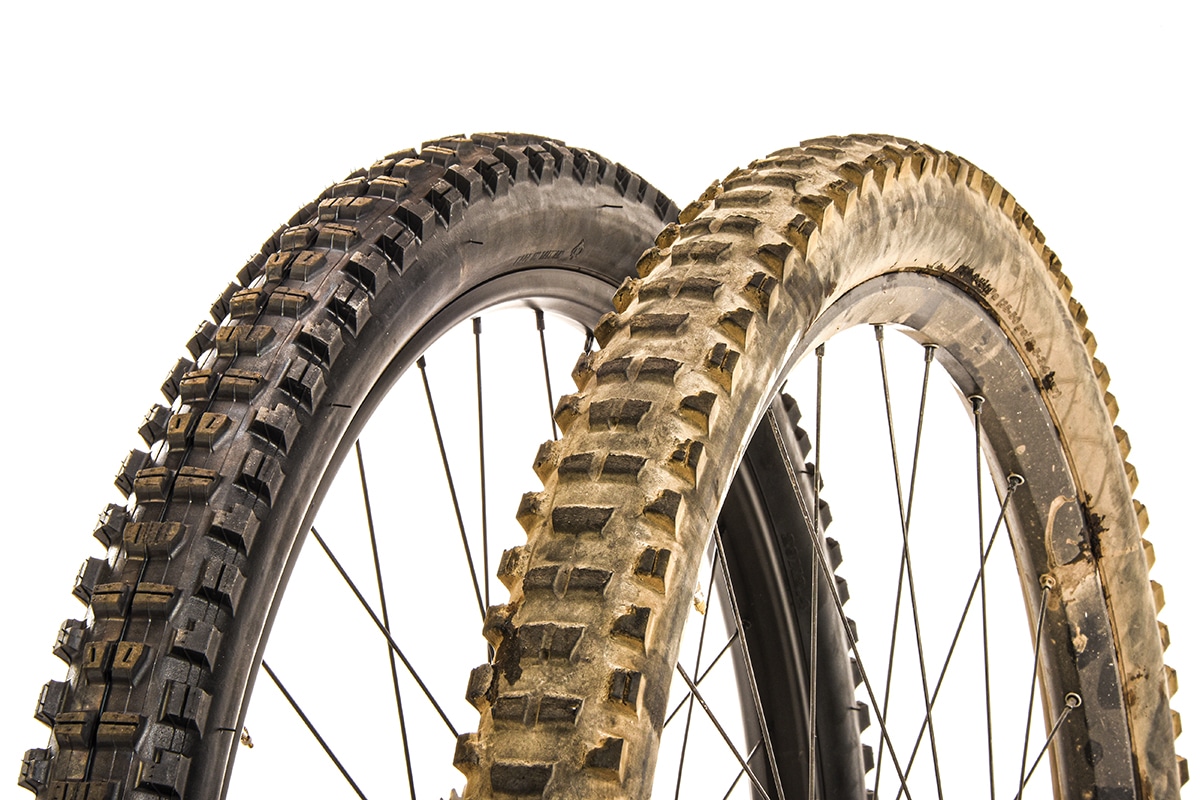
| Enduro/Downhill | Technical, steep descents | 1,000–2,500 miles | Thicker casing, aggressive tread, softer rubber |
| Fat Bike | Sand, snow, loose surfaces | 2,000–4,000 miles | Extra-wide, high volume, unique tread |
- XC tires last longer but may not grip as well on tough trails.
- Enduro and downhill tires offer maximum grip but wear out faster, especially in the rear.
Some brands offer “dual compound” tires, which use harder rubber in the center for durability and softer rubber on the sides for grip. This design can help you get more miles out of your tires without losing performance in corners.
Credit: mbaction.com
Rear Vs. Front Tire Wear: Why The Difference?
A common beginner mistake is thinking both tires wear out at the same rate. In reality, the rear tire usually wears out much faster. Here’s why:
- Power Transfer: The rear wheel pushes you forward. All your pedaling force goes through this tire.
- Braking: Riders often brake harder with the rear, especially on descents or in emergencies.
- Weight: Most of your body weight sits closer to the rear wheel, especially when climbing.
As a result, many riders replace two rear tires for every one front tire. Some experienced riders put their old front tire on the back and buy a new tire for the front—where grip is most important for control and safety.
Factors That Reduce Tire Lifespan
Even if you buy high-quality tires, certain habits and conditions can reduce how long they last. Here are some common issues:
Under-inflation Or Over-inflation
Both too little and too much air can cause problems. Under-inflated tires get pinched by rocks and roots, leading to sidewall damage. Over-inflated tires wear out faster in the center and lose grip on rough surfaces.
Poor Storage
Leaving your bike in the sun, heat, or cold can cause the rubber to dry out and crack. Store your bike indoors or under cover to protect your tires.
Ignoring Small Damage
A small cut or thorn can turn into a major problem if left untreated. Check your tires often and remove sharp objects right away.
Riding Style
Skidding, powerslides, and aggressive cornering all wear down tires quickly. While these moves are fun, they come at a cost.
Heavy Loads
Carrying extra gear or riding with a heavy backpack puts more pressure on your tires, especially the rear.
How To Make Your Mountain Bike Tires Last Longer
You can’t make tires last forever, but you can get the most life out of them with good habits.
Choose The Right Tire For Your Terrain
Don’t buy aggressive downhill tires if you only ride smooth trails—they’ll wear out quickly and won’t add much benefit. Match your tire’s tread pattern and compound to the places you ride most.
Keep Tires Properly Inflated
Check your tire pressure before every ride. Use a quality gauge, and adjust for conditions—lower for loose or wet trails, higher for hard-packed or paved paths.
Rotate Tires When Possible
If your front tire still has good tread but the rear is worn, consider swapping them. This extends the life of your tires and saves money.
Clean Tires After Every Ride
Dirt, mud, and small stones can work into the rubber and speed up wear. Cleaning your tires with water and a soft brush helps spot problems early.
Avoid Skidding
Try to brake smoothly and avoid locking up your wheels. Skidding is one of the fastest ways to destroy a tire, especially on hard or rocky trails.
Store Your Bike Properly
Keep your bike out of direct sunlight, away from heat sources, and in a dry place. This prevents the rubber from drying out and cracking.
Inspect Regularly
Make a habit of checking your tires for cracks, cuts, or embedded objects. Catching small issues early can prevent flats and extend tire life.
Use Tire Liners Or Sealant
If you get a lot of flats, consider using a tire liner or running tubeless with sealant. This won’t make your tires last longer, but it can help reduce punctures and small leaks, giving you more usable miles.
When Should You Upgrade To New Tires?
Sometimes it’s not just about wear—technology improves, and better tires can transform your ride. If your tires are several years old, consider upgrading for:
- Better puncture resistance
- Improved grip and handling
- Lower rolling resistance for faster rides
- Lighter weight for easier climbs
Modern tires use advanced rubber compounds and smart tread designs. Even if your old tires aren’t fully worn out, new ones could make your bike feel brand new.
Common Myths About Mountain Bike Tire Lifespan
There’s a lot of advice about tires, but not all of it is true. Let’s clear up a few myths:
1. “tires Last For Years If You Don’t Ride Much.”
Even unused tires can age, crack, and lose grip from exposure to air and sunlight. Rubber breaks down over time, so old tires can still be risky.
2. “front And Rear Tires Always Wear Out Together.”
Rear tires wear much faster. Don’t wait for both to be bald before replacing one.
3. “all Tires Work For All Trails.”
Using the wrong tire for your terrain speeds up wear and reduces performance.
4. “more Expensive Tires Always Last Longer.”
Price doesn’t always mean durability. Some high-end tires use softer rubber for better grip, which can wear out quickly.
5. “you Can Ignore Small Cracks And Cuts.”
Small damage can quickly turn into a blowout, especially at high speed.
Real-world Examples: How Riders Use And Replace Tires
Let’s look at a few rider profiles to see how tire lifespan changes in real life.
Example 1: The Weekend Warrior
Sarah rides every Saturday on local forest trails—mostly packed dirt, with the occasional rocky section. She uses trail tires and checks her tire pressure before every ride. Her rear tire lasts about 18 months (around 2,500 miles), while her front tire lasts over 2 years.
Example 2: The Downhill Racer
Mike races enduro and downhill. He rides aggressively, brakes hard, and often rides rocky, steep trails. His rear tire sometimes needs replacing after only 6 months (1,000 miles), while his front tire can last a year if he avoids major crashes.
Example 3: The Commuter
Alex uses a mountain bike to commute to work on paved roads and smooth paths. He uses a hybrid tire with a semi-slick tread and gets over 3,000 miles on both front and rear tires because his riding is smooth and steady.
These examples show that tire life isn’t just about the tire—it’s about how and where you ride.

Credit: www.reddit.com
Cost Vs. Value: Is Replacing Tires Worth It?
New mountain bike tires can be expensive, often $40 to $100 each for quality brands. Some riders delay replacing tires to save money, but this can be a false economy. Worn tires:
- Increase your risk of flats and accidents
- Make riding less fun and more stressful
- Can damage your rims if you hit rocks or curbs
Investing in new tires when needed is one of the best ways to keep your bike safe and enjoyable. If you ride often, consider buying tires in pairs or during sales to save money in the long run.
Useful Resources For Mountain Bike Tire Care
If you want to dive deeper into tire technology and maintenance, check out the information on the Sheldon Brown website. It’s packed with details on tire types, care, and replacement tips.

Credit: emountainbikekings.com
Frequently Asked Questions
How Often Should I Check My Mountain Bike Tires?
Check your tires before every ride. Look for cuts, cracks, or embedded objects. Check air pressure and tread wear at least once a week if you ride often.
Can I Use Road Tires On My Mountain Bike To Make Them Last Longer?
You can use road or semi-slick tires for commuting or paved paths. They’ll last longer on smooth surfaces, but you’ll lose grip and control on dirt or rough trails.
Is It Safe To Repair Small Cuts In A Mountain Bike Tire?
Small cuts in the tread can sometimes be repaired with a tire patch or sealant, especially in tubeless setups. However, cuts in the sidewall or large gashes usually mean the tire should be replaced.
What Is The Best Way To Store Mountain Bike Tires To Extend Their Life?
Store your bike in a cool, dry place away from sunlight and heat. If you have spare tires, keep them in a sealed bag or box to slow down rubber aging.
Do Tubeless Tires Last Longer Than Tube-type Tires?
Tubeless tires often handle small punctures better and can last longer in rocky terrain, but the rubber itself wears at the same rate. The main benefit is fewer flats, not more total miles.
—
A good set of mountain bike tires is your connection to the trail. Knowing when to replace them, how to care for them, and what factors affect their lifespan keeps your rides safe and enjoyable. Check your tires regularly, match your tires to your riding style, and don’t hesitate to upgrade when the time is right. Small investments in tire care can make a big difference in performance and peace of mind every time you hit the trail.

Hello Guys! I am John Reese, a professional biker and my hobby is biking! I have been biking for last 12 years and I love using bikes while outing as well. Based on my experiences with the different type of bikes (mountain bikes, road bikes and hybrid bikes); I am sharing my opinion about various bikes so that a beginner can get started right away. Happy reading!