
Sizing a mountain bike can feel confusing, especially if you are new to cycling or buying your first bike. The right fit is not just about comfort—it affects your control, safety, and performance. A poorly sized bike can cause pain, limit your riding, and make trails less fun.
But with clear guidance, you can find a mountain bike size that matches your body, riding style, and goals. This guide will walk you through each step, explain key measurements, clear up common mistakes, and show you how to check your fit at home or in a shop.
Whether you’re after speed, technical trails, or casual rides, understanding mountain bike sizing helps you ride better and enjoy every journey.
Why Mountain Bike Size Matters
Choosing the correct mountain bike size is more than just picking a frame that looks right. The frame size influences your ability to maneuver, pedal efficiently, and stay comfortable for hours. A bike that’s too big can feel unstable and hard to control, especially on technical trails. One too small may cause knee pain, back strain, and limit power output.
Bike sizing is not universal. Brands use different measurement systems and geometry. For example, a medium in one brand might be a large in another. Also, your riding style—downhill, cross-country, or enduro—can affect what size works best.
Data from the International Mountain Biking Association shows that 60% of beginner riders struggle with bike fit, leading to discomfort or injury. Getting it right saves money, increases enjoyment, and lets you focus on the trail, not your aches.
Key Measurements In Mountain Bike Sizing
To size a mountain bike correctly, you need to understand the main measurements used by manufacturers and bike shops. Each plays a role in fit and handling.
Frame Size
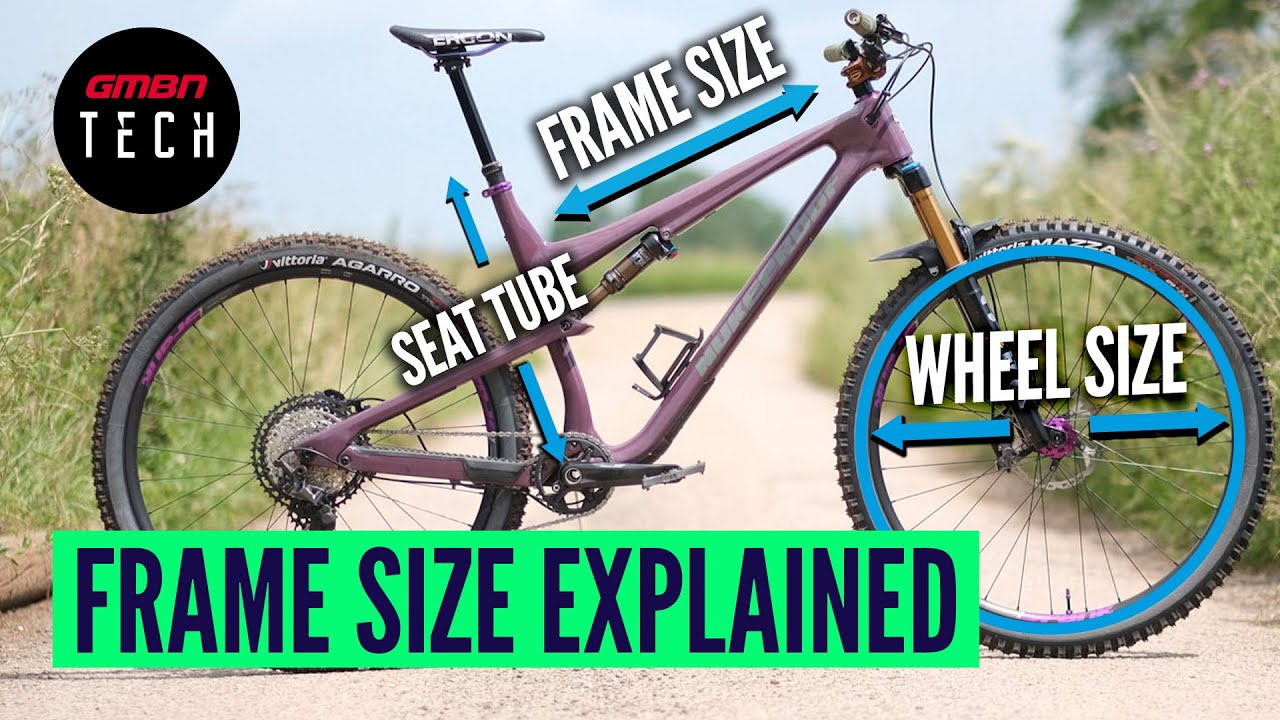
The frame size is usually measured from the center of the bottom bracket (where the pedals attach) to the top of the seat tube. It’s listed in inches or centimeters, or sometimes as Small, Medium, Large, etc.
Standover Height
Standover height is the distance from the ground to the top of the top tube. You should be able to stand over the bike with both feet flat and have at least 2 inches (5 cm) of clearance. This prevents injury if you need to jump off quickly.
Reach And Stack
Reach is the horizontal distance from the bottom bracket to the center of the head tube (where the handlebars attach). Stack is the vertical distance. These affect how stretched out or upright you feel.
Wheel Size
Common mountain bike wheel sizes are 26”, 27. 5” (650b), and 29”. Larger wheels roll over obstacles more easily but can affect fit for shorter riders.
Effective Top Tube Length
This is the horizontal distance from the head tube to the seat tube. It impacts cockpit length and your riding posture.
Seat Tube Length
The seat tube length affects how high or low you can set your saddle. Shorter tubes allow more stand-over clearance.
Example: Comparing Frame Sizes
Here’s a sample comparison between two frame sizes for a typical mountain bike:
| Size | Standover Height (in) | Reach (mm) | Wheel Size |
|---|---|---|---|
| Medium | 30.5 | 440 | 27.5″ |
| Large | 32.0 | 465 | 29″ |
How To Measure Yourself For A Mountain Bike
Before you choose a bike, you’ll need a few measurements from your own body. These are easy to take at home.
Step 1: Measure Your Height
Stand against a wall, feet flat. Use a tape measure or ruler from the floor to the top of your head. Write down your height in centimeters or inches.
Step 2: Measure Your Inseam
Put a book between your legs, spine up, as high as is comfortable. Measure from the floor to the top of the book. This is your inseam.
Step 3: Compare To Manufacturer Charts
Most brands offer sizing charts based on height or inseam. Use your measurements to match their recommendations.
Example Sizing Chart By Height
Here’s a typical mountain bike sizing chart:
| Rider Height | Suggested Frame Size |
|---|---|
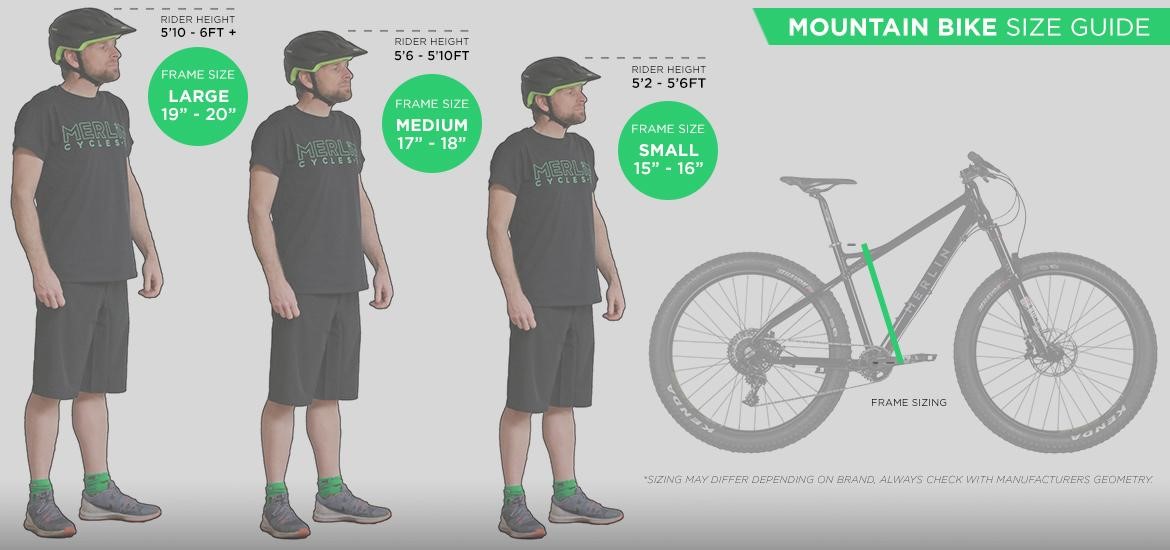
| 4’10” – 5’2” (147–158 cm) | 13–14” (XS) |
| 5’2” – 5’6” (158–168 cm) | 15–16” (S) |
| 5’6” – 5’10” (168–178 cm) | 17–18” (M) |
| 5’10” – 6’2” (178–188 cm) | 19–20” (L) |
| 6’2” – 6’6” (188–198 cm) | 21–22” (XL) |
Step 4: Check Standover Clearance
Stand over the bike in the shop or at home. Make sure you have at least 2 inches (5 cm) between you and the top tube.
How Mountain Bike Geometry Affects Fit
Modern mountain bikes use different geometry for different riding styles. Geometry is how the frame is shaped, which affects fit and handling.
Trail Bikes
Trail bikes are versatile and have balanced geometry. They work for most riders and offer a mix of comfort and speed.
Cross-country Bikes
Cross-country bikes have longer top tubes and shorter head tubes. This gives a stretched-out position for speed and efficiency.
Downhill Bikes
Downhill bikes have slack angles and longer wheelbases. They’re designed for stability at high speeds, but can feel big for smaller riders.
Enduro Bikes
Enduro bikes balance downhill ability and climbing. Their geometry is often adjustable and fits a wider range of sizes.
Geometry Comparison Table
A quick look at how geometry affects sizing:
| Bike Type | Typical Reach (mm) | Head Angle (°) | Best For |
|---|---|---|---|
| Trail | 430–470 | 66–68 | All-around |
| XC | 420–460 | 68–70 | Speed |
| Downhill | 460–500 | 63–65 | Steep descents |
| Enduro | 440–480 | 65–67 | Mixed terrain |
Credit: www.walmart.com
Adjusting Fit After Choosing Your Size
Even after selecting the correct frame, you can fine-tune your bike for a perfect fit.
Saddle Height
Set your saddle height so your knee is slightly bent at the bottom of the pedal stroke. This boosts comfort and power.
Handlebar Position
You can adjust the handlebar height and angle with spacers or by flipping the stem. Higher bars are more comfortable; lower bars are better for speed.
Stem Length
Changing the stem length (the part that connects handlebars to the bike) can make the bike feel longer or shorter.
Crank Length
Most mountain bikes use 170–175 mm cranks, but shorter riders may prefer 165 mm.
Grip Size
Choose grips that fit your hand size. Too thick or thin can cause fatigue.
Common Adjustments Table
Here’s a summary of common adjustments and their effects:
| Adjustment | Effect on Fit |
|---|---|
| Saddle Height | Knee comfort, power |
| Handlebar Height | Back/shoulder comfort |
| Stem Length | Reach and handling |
| Grip Size | Hand fatigue |
Sizing For Different Riding Styles
Your ideal mountain bike size can change depending on what kind of riding you plan to do.
Cross-country (xc)
XC riders often prefer a slightly larger frame for a stretched, aerodynamic position. This helps with speed and efficiency.
Trail Riding
Trail riders usually pick a frame that allows a comfortable upright posture. This helps with control and endurance.
Downhill And Enduro
For downhill, a bigger frame can feel more stable, but too large makes it hard to maneuver. Enduro riders balance between climbing comfort and descending stability.
Women’s Specific Bikes
Some brands offer women’s specific bikes with shorter top tubes and narrower handlebars. These are not mandatory—choose what feels best.
Choosing Between Sizes: When You’re Between Two
Sometimes your measurements fall between two sizes. Here’s how to decide:
- Test Ride Both Sizes: If possible, ride both. Feel which is more comfortable.
- Consider Riding Style: If you want speed, go larger. For technical trails, choose smaller.
- Check Adjustability: Smaller frames are easier to adjust with seatposts and stems.
A non-obvious insight: Many riders overlook the impact of reach and stack—these can be more important than seat tube length. Also, if you plan to upgrade components (like dropper posts or wider handlebars), check how much room the frame allows.
Common Sizing Mistakes And How To Avoid Them
Even experienced riders make mistakes when sizing a mountain bike. Here are the most frequent errors:
- Ignoring Reach and Stack: Focusing only on seat tube length misses cockpit comfort.
- Assuming Brand Sizes Are the Same: Sizes differ by brand. Always check geometry.
- Buying Without Test Riding: Fit feels different in real life. Test before buying.
- Choosing Based on Looks: A bike that looks “cool” may not fit well.
- Overlooking Future Upgrades: Components change, so check compatibility.
A tip many miss: When buying online, always check return policies. Some shops let you swap sizes if the fit isn’t right.
Credit: www.merlincycles.com
Sizing For Kids And Teens
Sizing for young riders follows similar rules but with extra care. Kids grow fast, and bikes that are too big can be dangerous.
- Measure height and inseam.
- Check standover clearance carefully.
- Choose adjustable seatposts for longer use.
- Avoid “buying big for growth”—it’s safer to size correctly and upgrade later.
Should You Use Online Calculators?
Many websites offer bike sizing calculators. They use your height and inseam to suggest sizes. These tools are useful for a first estimate, but they don’t replace a real test ride.
For more advanced guidance, check official resources like Bicycling Magazine, which provides detailed charts and expert advice.
Sizing For Special Needs And Unique Body Types
Not every rider fits standard sizing. If you have extra-long legs, a short torso, or physical challenges, custom fitting may help.
- Custom frames are available from some builders.
- Professional bike fitting can adjust components for unique needs.
- Adaptive bikes exist for those with mobility issues.
A practical insight: Riders with unusual proportions often find that adjusting saddle setback and handlebar width makes a bigger difference than frame size alone.
Sizing For E-mountain Bikes
E-mountain bikes (electric mountain bikes) use similar sizing principles. The main difference is the added weight and motor. This can affect balance and handling.
- Check weight distribution: Heavier bikes feel different.
- Standover clearance: Even more important for heavier bikes.
Credit: www.youtube.com
Buying In-store Vs. Online
Buying in-store lets you test ride, ask questions, and get expert help. Online buying is cheaper but riskier for fit. If buying online:
- Use detailed geometry charts.
- Check for return or exchange policies.
- Read reviews from riders with similar height and riding style.
Frequently Asked Questions
How Do I Know If My Mountain Bike Is Too Big Or Too Small?
If you struggle to reach the handlebars, feel stretched, or cannot stand over the top tube comfortably, your bike is likely too big. A too-small bike makes you feel cramped, causes knee pain, and can be unstable.
What Is The Best Way To Test Mountain Bike Size Before Buying?
Test riding is ideal. Stand over the bike, check reach and comfort, and ride for at least 10–15 minutes on mixed terrain. If you can’t test ride, compare your measurements to detailed geometry charts.
Do Mountain Bike Sizes Change Between Brands?
Yes, sizing varies greatly. Always check the geometry chart for each brand. “Medium” in one brand may fit like “Large” in another.
Can I Adjust The Fit After Buying?
Yes. You can change saddle height, handlebar position, stem length, and grip size. These adjustments fine-tune comfort and performance.
Is Wheel Size Important For Sizing?
Wheel size affects fit and handling. Larger wheels (29”) roll faster and smoother but may not suit shorter riders. Always check how wheel size changes standover height and overall bike feel.
Sizing a mountain bike is a journey, not just a quick decision. Taking time to measure yourself, compare geometry, and test different options pays off with better rides and less pain. Remember, the right size makes every trail more fun and safer.
With this guide, you now know how to size a mountain bike confidently—so you can focus on the adventure ahead.

Hello Guys! I am John Reese, a professional biker and my hobby is biking! I have been biking for last 12 years and I love using bikes while outing as well. Based on my experiences with the different type of bikes (mountain bikes, road bikes and hybrid bikes); I am sharing my opinion about various bikes so that a beginner can get started right away. Happy reading!