
Riding a mountain bike is more than just pushing pedals and steering. One of the biggest challenges for beginners is using gears properly. Gears can make your ride easier, faster, and safer—especially on rough trails or steep hills. Many riders struggle because they don’t know when or how to shift. If you’ve ever felt your legs spinning too fast on a downhill or grinding painfully up a slope, you’ve experienced the power (and frustration) of gears firsthand. This article will help you understand how to use gears on a mountain bike, so you ride smarter and enjoy every trail.
What Are Gears And Why Do They Matter?
Mountain bikes have gears to help you adjust how hard you need to pedal. Gears change how much force your legs must use for each turn of the pedals. When you use the right gear, your bike moves efficiently, and your muscles don’t get tired too quickly.
The Basics Of Mountain Bike Gears
Most mountain bikes have:
- Front gears (chainrings): Usually 1, 2, or 3
- Rear gears (cogs or cassette): Usually 7–12
The combination of these gives you a range of speeds and pedaling forces. For example, a bike with 2 front chainrings and 10 rear cogs has 20 possible gear combinations.
Why Correct Gear Use Is Important
Using the wrong gear can make your ride harder:
- Too high a gear (hard to pedal): You struggle up hills and tire quickly.
- Too low a gear (easy to pedal): Your legs spin fast, but you don’t go far.
Correct gear use:
- Reduces fatigue
- Improves speed and control
- Prevents damage to bike parts
Understanding How Mountain Bike Gears Work
The Role Of Derailleurs And Shifters
Mountain bikes use derailleurs to move the chain between gears. The shifters on your handlebars control the derailleurs.
- Right shifter: Changes the rear gears (fine adjustments)
- Left shifter: Changes the front gears (big adjustments)
Gear Ratios Explained
A gear ratio is the relationship between the front chainring and the rear cog. Higher gear ratios (big front, small rear) make you go faster but require more force. Lower gear ratios (small front, big rear) make pedaling easier.
Here’s a simple example:
| Front Chainring | Rear Cog | Gear Ratio | Pedaling Effort |
|---|---|---|---|
| Largest | Smallest | High | Hard |
| Smallest | Largest | Low | Easy |
Types Of Gear Systems
There are three main types:
- Single chainring (1x): Simple, fewer gears, easier to use
- Double chainring (2x): More range, more choices
- Triple chainring (3x): Older style, widest range
Single chainring bikes are becoming popular because they’re less confusing.

Credit: omobikes.com
When And How To Shift Gears
Knowing when to shift is just as important as knowing how to shift. Here are practical tips for every situation.
Shifting Before The Hill
Always shift to an easier gear before you reach a steep hill. If you wait until you’re already climbing, shifting gets harder and can damage your bike.
Shifting On Flat Terrain
On flat ground, use middle gears for steady speed. This helps keep your legs moving smoothly without overworking.
Shifting On Downhills
Shift to a harder gear (higher gear) before descending. This lets you control your speed and prevents your legs from spinning too fast.
Shifting While Pedaling
Always shift while pedaling. If you try to shift without turning the pedals, the chain won’t move.
But don’t pedal too hard when shifting. Ease up slightly—this protects your bike and makes shifting smoother.
Avoid Cross-chaining
Cross-chaining is when you use the biggest front chainring with the biggest rear cog, or the smallest front with the smallest rear. This strains the chain and can cause damage.
Here’s a quick guide:
| Front Chainring | Rear Cog | Should You Use? |
|---|---|---|
| Largest | Largest | No |
| Smallest | Smallest | No |
| Middle | Middle | Yes |
Practical Guide: Step-by-step Shifting
Let’s look at step-by-step instructions for using gears on a mountain bike.
- Start in an easy gear: When beginning your ride, use a middle or low gear. This helps you accelerate smoothly.
- Shift as terrain changes: Look ahead. If you see a hill, shift to an easier gear before you reach it.
- Use small shifts: On the rear cassette, change one gear at a time for small adjustments.
- Use big shifts for big changes: On the front chainring, shift only when you need a big change in pedaling force.
- Don’t force the shifters: If the chain won’t move, pedal gently and try again.
- Listen for noise: A grinding sound means the chain is not aligned. Shift to correct it.
- Practice timing: Shift just before you need to, not during heavy stress.
Real-life Example
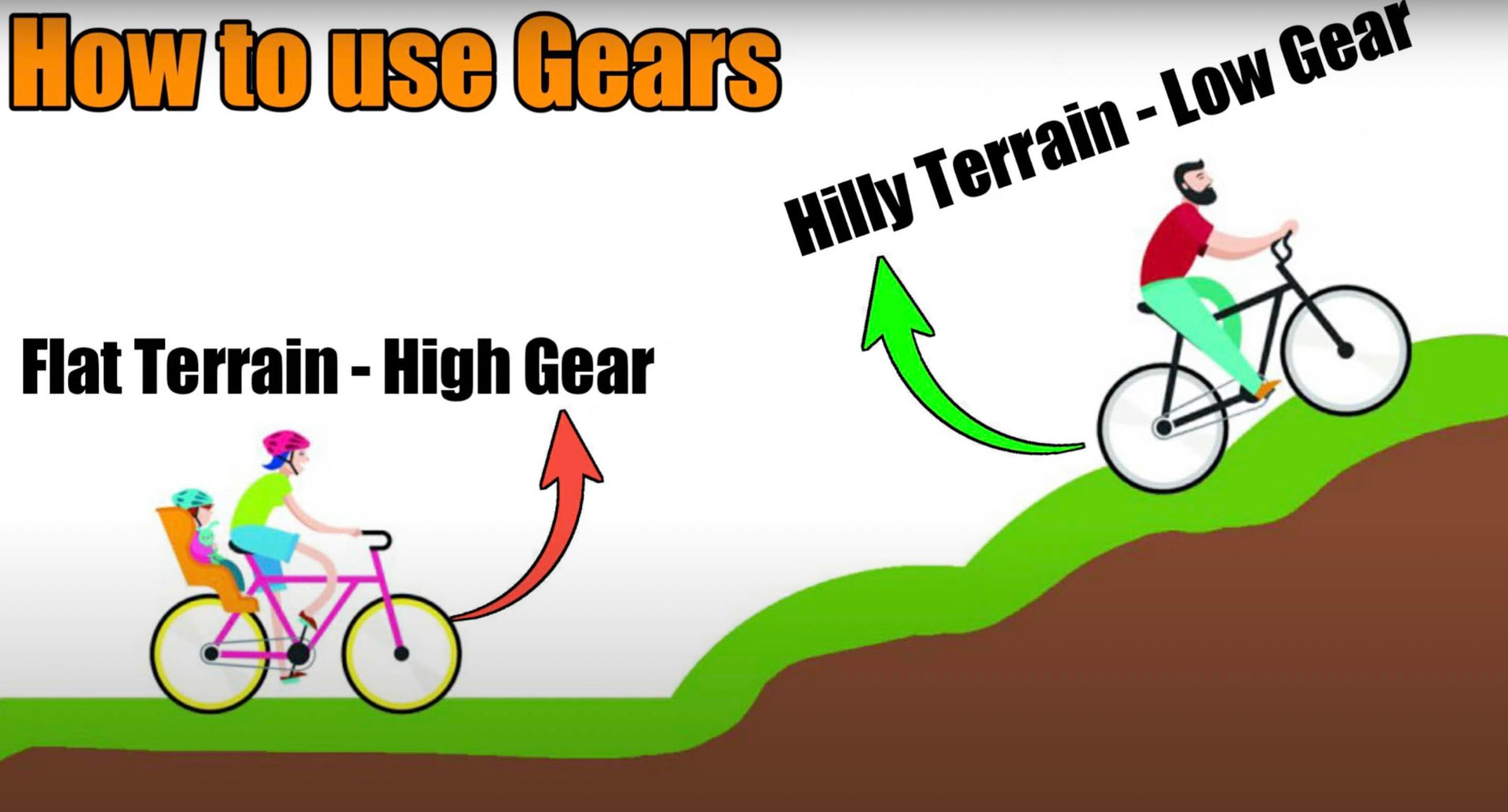
Imagine you’re riding a trail with a mix of hills and flat parts:
- On the flat: Use middle gears.
- Approaching a hill: Shift down to an easier gear before you start climbing.
- At the top: Shift up to a harder gear for the descent.
Credit: lowbillenergy.com
Choosing The Right Gear For Different Terrain
Terrain changes often on mountain bike trails. Here’s how to pick the right gear for each situation.
Uphill
- Use low gears (smaller front, larger rear).
- Pedaling is easier, but you move slowly.
Downhill
- Use high gears (larger front, smaller rear).
- Pedaling is harder, but you move faster and control speed.
Rocky Or Technical Sections
- Use medium-low gears.
- You need control and quick responses.
Flat Trails
- Use medium gears.
- Balance speed and effort.
Mud Or Loose Ground
- Use lower gears.
- Helps keep traction and prevents slipping.
Common Mistakes Beginners Make
Many new riders make mistakes that can lead to frustration or even damage their bike.
- Shifting too late: Waiting until you’re halfway up a hill makes shifting hard.
- Pedaling too hard while shifting: This can cause chain slips or break the derailleur.
- Using only one shifter: Both shifters work together. Ignoring one limits your options.
- Cross-chaining: Causes noise and wears out the chain quickly.
- Ignoring maintenance: Dirty or dry chains make shifting rough.
- Skipping gears: Jumping several gears at once can jam the chain.
- Not practicing: Gear use improves with practice. Don’t be afraid to experiment.
Tips For Smooth And Efficient Gear Use
Here are some practical tips to help you use gears like an experienced rider:
- Anticipate terrain: Look ahead and shift before needed.
- Keep cadence steady: Aim for a pedal speed (cadence) of 70–100 RPM.
- Shift gradually: Use rear gears for small changes, front gears for big changes.
- Maintain your drivetrain: Clean and oil your chain regularly.
- Listen to your bike: Grinding or clicking means the gears need adjustment.
- Practice off the trail: Try shifting on flat ground to get comfortable.
Cadence And Gear Choice
Cadence is how fast you pedal. Most riders feel comfortable between 70–100 pedal rotations per minute. If your legs spin too fast or too slow, change gears to find your rhythm.
How Gear Choice Affects Speed And Effort
Your gear choice directly affects how fast you go and how hard you work.
Comparing Gear Effects
| Gear Type | Speed | Effort | Best Use |
|---|---|---|---|
| Low Gear | Slow | Easy | Uphill, technical |
| Medium Gear | Moderate | Moderate | Flat, rolling terrain |
| High Gear | Fast | Hard | Downhill, sprints |
Real Data: Gear Range
A mountain bike with a 32-tooth front chainring and an 11–50 tooth rear cassette offers a gear ratio from 0. 64 (easy) to 2. 91 (hard). This wide range lets you ride up steep hills and fast downhills.
How To Fine-tune Your Shifting
Sometimes, even when you know how to use gears, your shifting feels rough. Here’s how to fix that.
Adjusting Derailleurs
If your chain skips or makes noise, the derailleur may need adjustment. Small turns of the barrel adjuster can help:
- Turn clockwise to tighten
- Turn counterclockwise to loosen
If unsure, ask a bike shop for help.
Cleaning And Lubricating
A clean, well-oiled chain shifts better. Dirt and rust make shifting slow and noisy. Clean your chain every few rides and use a bike-specific lubricant.
Upgrading Your Gear System
If your bike is old or doesn’t shift well, consider upgrading to a modern 1x drivetrain. These systems are easier to use and require less maintenance.
Advanced Gear Use: Techniques For Experienced Riders
Once you master basic shifting, you can use advanced strategies to boost performance.
Pre-shifting
Experienced riders pre-shift before changes in terrain. For example, shift to an easier gear just before hitting a technical section.
Multi-shifting
Some shifters allow you to shift several gears at once. Use this feature for quick changes—like when you suddenly hit a steep climb.
Gear Mapping
Learn which gear combinations work best for you. Spend time memorizing which gears match your favorite pedaling style.
Comparing Mountain Bike Gear Systems
Modern mountain bikes offer a range of gear systems. Here’s a quick comparison of the most common:
| System | Number of Gears | Complexity | Maintenance | Best For |
|---|---|---|---|---|
| 1x (Single) | 10–12 | Simple | Low | Beginner, trail |
| 2x (Double) | 16–20 | Medium | Medium | All-round |
| 3x (Triple) | 21–27 | High | High | Old bikes, touring |
Non-obvious Insights For Beginners
Most guides skip these important points:
- Gear overlap: Some gear combinations (like middle front and middle rear) repeat the same ratio. Not every combination is unique. Learn which ones feel best for you.
- Chain angle: The chain works best when it’s not bent sharply. Avoid extreme gear combinations to keep shifting smooth.
- Quiet shifting: Good shifting is almost silent. If you hear clicking, you need to adjust or change gears.

Credit: www.youtube.com
How To Practice Gear Use
You don’t need a trail to practice. Try these exercises:
- Parking lot practice: Ride in circles and shift through all gears.
- Simulate hills: Use ramps or inclines to practice shifting before you reach the slope.
- Cadence drills: Use a bike computer or app to measure your pedal speed and practice shifting to keep your cadence steady.
Maintenance For Reliable Gear Performance
Regular maintenance keeps your gears working well:
- Clean your drivetrain: Use a brush and bike cleaner every few rides.
- Lubricate the chain: Oil the chain after cleaning, wipe off extra oil.
- Check cables: Inspect shifter cables for fraying or rust.
- Adjust derailleurs: If shifting feels rough, make small adjustments or visit a mechanic.
- Replace worn parts: Chains and cogs wear out—replace them every 2,000–3,000 miles.
Frequently Asked Questions
What Is The Best Gear For Climbing Hills?
Use the lowest gear (smallest front chainring, largest rear cog) for steep climbs. This makes pedaling easier, so you can keep a steady pace without tiring quickly.
How Can I Avoid Cross-chaining?
Cross-chaining happens when you use extreme gear combinations (biggest front with biggest rear or smallest with smallest). Stay in the middle gears or match front and rear sizes so the chain runs straight.
Why Does My Bike Make Noise When I Shift?
Noise usually means the chain isn’t aligned or the derailleur needs adjustment. Clean your chain, check for worn parts, and make small tweaks to the barrel adjuster. If noise continues, visit a bike shop.
Is 1x Gearing Better Than 2x Or 3x?
1x gearing is simpler and requires less maintenance, making it ideal for beginners and most trails. However, 2x and 3x offer a wider range for touring or steep climbs. Choose based on your riding style.
Can I Shift Gears While Stopped?
You should not shift gears while stopped. The chain needs to move to change gears. Shift while pedaling gently; never force the shifters when the bike isn’t moving.
Using gears well turns a difficult mountain bike ride into a smooth, enjoyable experience. Don’t let the number of gears or shifters confuse you—practice, listen to your bike, and follow the guidance above. If you want more in-depth knowledge, check out this Wikipedia guide for technical details. Remember: the right gear makes every trail easier, and the best riders are those who shift smartly, not just strongly. So, get out there, experiment, and discover how gears can transform your mountain biking adventure.

Hello Guys! I am John Reese, a professional biker and my hobby is biking! I have been biking for last 12 years and I love using bikes while outing as well. Based on my experiences with the different type of bikes (mountain bikes, road bikes and hybrid bikes); I am sharing my opinion about various bikes so that a beginner can get started right away. Happy reading!