
Adjusting the gears on your mountain bike can seem tricky, but once you learn the basics, you’ll ride smoother and climb hills with less effort. Many riders struggle with shifting problems, chain noise, or gears that skip under load. Often, these issues come from gear misalignment, cable tension errors, or small mistakes during adjustments.
In this guide, you’ll learn how to adjust mountain bike gears step by step. You’ll also get practical tips, common mistakes to avoid, and clear explanations for every part of the process. Whether you’re a beginner or just want to improve your skills, you’ll leave knowing exactly how to tune your bike’s gears and enjoy your rides more.
Understanding Mountain Bike Gear Systems
Mountain bikes use either derailleur or internal hub gear systems, but most bikes have derailleur setups. The derailleur system includes the front and rear derailleurs, shifters, gear cables, and multiple chainrings and cogs. These parts work together to move the chain across different gears, making pedaling easier or harder based on terrain.
Basic Components
- Rear derailleur: Moves the chain across the rear cassette (the cluster of gears).
- Front derailleur: Shifts the chain across the front chainrings (usually 1-3 rings).
- Shifters: Located on the handlebars, control gear changes.
- Gear cables: Connect shifters to derailleurs, transmitting your commands.
- Cassette: The set of sprockets on the rear wheel.
- Chainrings: The gears attached to the crankset.
Why Gear Adjustment Matters
Proper adjustment helps you:
- Shift smoothly without chain skipping or noise.
- Prevent premature wear on the drivetrain.
- Ride safely, especially on steep hills or technical trails.
- Save money by avoiding costly repairs.
Many beginners overlook small issues like cable stretch or dirty components. These can make shifting difficult, even if the rest of the system is fine. Regular gear checks and adjustments keep your bike reliable and fun to ride.
Preparing To Adjust Your Mountain Bike Gears
Before you start, gather your tools and make sure your bike is ready. Preparation is key for a successful adjustment.
Essential Tools And Supplies
- Bike stand (optional but helpful)
- Phillips screwdriver
- Allen wrenches (usually 4mm or 5mm)
- Needle-nose pliers
- Chain lubricant
- Clean rag
- New gear cable (if replacing)
- Cable cutters (if replacing cables)
Setting Up Your Bike
- Place your bike in a stable position, using a stand or leaning against a wall.
- Shift your gears to the smallest chainring and smallest cog (lowest gears).
- Clean the drivetrain with a rag and apply chain lubricant if needed.
- Inspect the derailleur hanger. It should be straight. A bent hanger causes shifting problems.
Safety Check
- Make sure the bike is secure and won’t tip over.
- Wear gloves if you want to keep your hands clean.
- Keep tools organized nearby.
Many new riders forget to check the derailleur hanger or clean the chain before adjusting. Dirt and misalignment can make adjustments harder and less effective.

Credit: www.youtube.com
How Gear Shifting Works
Understanding how gear shifting works helps you diagnose problems faster. Mountain bike shifters pull or release cable tension, moving the derailleurs. The derailleurs push the chain onto different cogs or chainrings.
Shifting Process
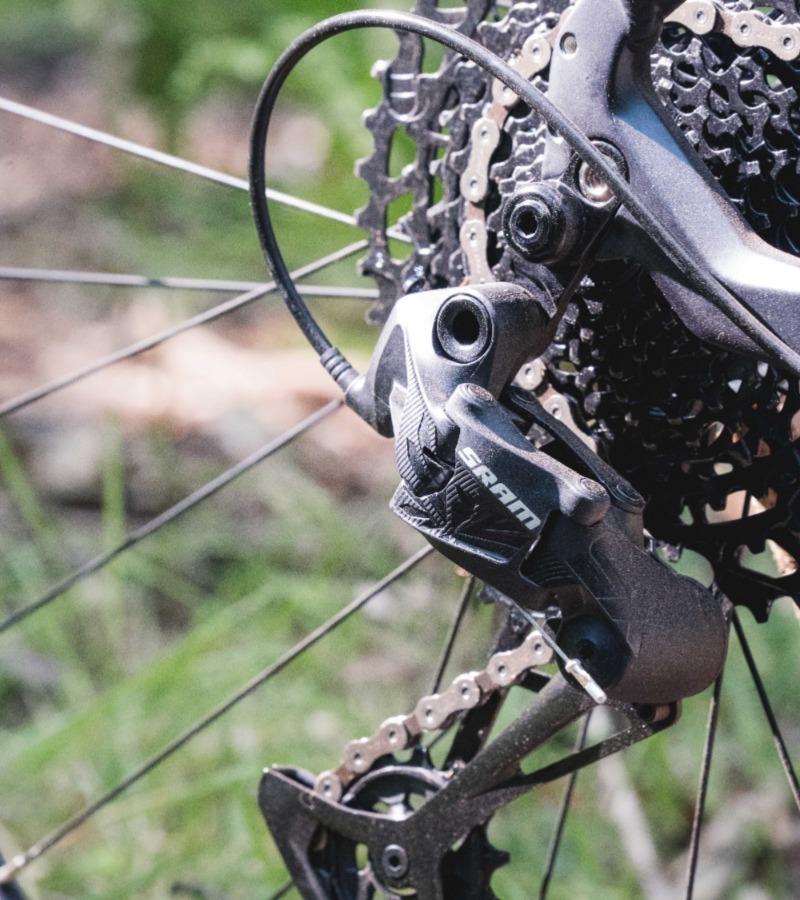
- Rear derailleur: Moves the chain horizontally across the cassette. More cable tension moves the chain to larger cogs (easier gears), less tension moves it to smaller cogs (harder gears).
- Front derailleur: Moves the chain between chainrings. More cable tension shifts to bigger rings, less tension shifts to smaller rings.
When gears are adjusted correctly:
- The chain moves smoothly with each click.
- The derailleur lines up perfectly with each cog or ring.
- There’s minimal noise or rubbing.
If your gears are not shifting well, the most common causes are incorrect cable tension, limit screw errors, or dirty parts.
Step-by-step Guide: Adjusting Rear Derailleur
Most shifting problems happen in the rear derailleur. Here’s how to adjust it, from basic checks to fine-tuning.
1. Inspect The Rear Derailleur
- Check for bends or damage.
- Make sure the derailleur hanger is straight.
2. Set The Limit Screws
Limit screws keep the derailleur from moving the chain too far. There are two screws, usually marked H (high) and L (low).
- Shift to the smallest cog (furthest from the wheel).
- Adjust the H screw so the derailleur lines up with the smallest cog.
- Shift to the largest cog (closest to the wheel).
- Adjust the L screw so the derailleur lines up with the largest cog.
| Limit Screw | Controls | Common Mistake |
|---|---|---|
| H (High) | Smallest cog | Too loose: chain falls off |
| L (Low) | Largest cog | Too tight: can’t reach biggest gear |
3. Adjust Cable Tension
- Shift to the smallest cog.
- Use the barrel adjuster (near shifter or derailleur) to fine-tune cable tension.
- Turning the barrel adjuster counterclockwise increases tension (moves chain to larger cogs).
- Turning it clockwise decreases tension (moves chain to smaller cogs).
Many beginners over-tighten the cable, causing slow shifting or chain skipping.
4. Fine-tune Shifting
- Shift through all the gears, one click at a time.
- Check if the chain moves smoothly.
- If the chain hesitates or skips, adjust the barrel adjuster slightly.
- Small changes make a big difference.
5. Check The B-tension Screw
The B-tension screw sets the gap between the derailleur and the cassette. Too close, and the chain rubs; too far, and shifting is slow.
- Shift to the largest cog.
- Adjust the B-tension screw so there’s a 5-6mm gap between the upper derailleur pulley and the cog.
Many riders ignore the B-tension screw, but it’s important for crisp shifting.

Credit: www.youtube.com
Step-by-step Guide: Adjusting Front Derailleur
The front derailleur moves the chain between chainrings. It’s easier to adjust, but mistakes can cause chain drops or rubbing.
1. Inspect The Front Derailleur
- Check for bends or damage.
- Make sure it’s parallel to the chainrings.
2. Set The Height And Alignment
- The cage should sit 1-3mm above the largest chainring.
- The cage should be parallel to the chainrings.
3. Set The Limit Screws
Limit screws prevent the derailleur from moving the chain too far.
- L screw: Controls the inner limit (smallest ring).
- H screw: Controls the outer limit (largest ring).
- Shift to the smallest chainring and adjust the L screw until the cage just clears the chain.
- Shift to the largest ring and adjust the H screw until the cage just clears the chain.
| Limit Screw | Controls | Common Mistake |
|---|---|---|
| L (Low) | Smallest ring | Too tight: can’t shift onto small ring |
| H (High) | Largest ring | Too loose: chain falls off |
4. Adjust Cable Tension
- Shift to the middle ring (if you have three).
- Use the barrel adjuster to fine-tune tension.
- If the chain struggles to shift to the big ring, add tension.
5. Fine-tune Shifting
- Shift through all front gears.
- Listen for chain rubbing or hesitancy.
- Adjust limit screws or cable tension as needed.
Many beginners forget to check the height and parallel alignment of the cage, which causes rubbing or poor shifting.
Diagnosing Common Gear Problems
Even after adjustment, you might run into issues. Here’s how to diagnose them.
Chain Skipping
- Usually caused by worn cogs, poor cable tension, or dirty chain.
- Check for chain wear using a chain checker tool.
Slow Shifting
- Often caused by low cable tension.
- Increase tension slightly using the barrel adjuster.
Chain Drops
- Usually from incorrect limit screw settings or bent derailleur.
- Check alignment and adjust limit screws.
Noisy Shifting
- Often from dirty chain or misaligned derailleurs.
- Clean the drivetrain and recheck alignment.
Inconsistent Shifting
- Sometimes caused by cable stretch. New cables stretch after a few rides.
- Re-adjust cable tension after your first few rides.
| Problem | Possible Cause | Quick Fix |
|---|---|---|
| Chain skips | Worn cogs, cable tension | Replace cogs, adjust tension |
| Slow shifting | Low tension, dirty chain | Increase tension, clean chain |
| Chain drops | Limit screw, bent derailleur | Adjust screws, check hanger |
Replacing Gear Cables
Sometimes, cables get old, frayed, or stretched and need replacement. Changing cables improves shifting dramatically.
Steps To Replace Gear Cables
- Shift to the lowest gear.
- Cut the old cable near the anchor bolt using cable cutters.
- Remove the old cable from the shifter and housing.
- Insert the new cable into the shifter and housing.
- Pull the cable tight, then anchor it to the derailleur.
- Trim the cable and attach an end cap.
- Adjust tension using the barrel adjuster.
Tip: Always use quality cables and housing for smoother shifting.
Upgrading Your Gear System
Upgrading parts can improve shifting and durability. Common upgrades include:
- Better shifters: More precise, easier to use.
- High-quality derailleurs: Lighter, more accurate.
- Wider-range cassettes: More gears for steep climbs.
- Stronger chains: Last longer, shift better.
Many riders underestimate the impact of good cables and housing. Upgrading these often improves shifting more than changing derailleurs.
How Often Should You Adjust Gears?
Gear adjustment isn’t just a one-time job. It’s part of regular maintenance.
- Monthly: Quick check and minor adjustments.
- After replacing cables or chain: Full adjustment.
- After crashes or falls: Check for bent parts.
- When shifting feels rough: Adjust immediately.
If you ride in muddy or wet conditions, you may need to adjust and clean your gears more often. This prevents rust and keeps shifting smooth.
Practical Tips For Smooth Gear Adjustment
Making your adjustments easier starts with small but smart habits.
- Shift gently while adjusting; don’t force the shifter.
- Make small changes, then test before making more.
- Keep your chain clean and lubricated.
- Check cables for fraying or rust.
- After adjusting, test ride and shift through all gears.
- Write down your adjustments for future reference.
Non-obvious insight: Many shifting problems are solved simply by cleaning and lubricating the chain, not by adjusting the derailleur.
Comparison: Mechanical Vs Electronic Shifting
Modern mountain bikes may have electronic shifting. Here’s a quick comparison.
| Feature | Mechanical Shifting | Electronic Shifting |
|---|---|---|
| Adjustment | Manual, tool-based | Automatic, software-based |
| Reliability | Good, with regular maintenance | Excellent, less affected by cable stretch |
| Cost | Lower | Higher |
| Complexity | Easy for beginners | Requires technical knowledge |
Most mountain bikes use mechanical shifting. Electronic systems are found in high-end bikes and are easier to adjust but cost more.
Real-world Example: Adjusting Gears On A Trail Ride
Let’s look at a practical scenario. Imagine you’re on a trail and your gears start skipping. Here’s what you’d do:
- Stop in a safe spot.
- Shift to the smallest cog and chainring.
- Check the derailleur hanger for bends.
- Use the barrel adjuster to increase tension if shifting is slow.
- Shift through gears to test.
- If the chain drops, check limit screws.
On the trail, you usually can’t do a full adjustment, but you can fix most problems by adjusting cable tension.
Credit: griffindentalclinic.com
Data: Gear Adjustment Frequency And Impact
Studies show regular gear adjustment can improve shifting performance by up to 40%. Riders who adjust their gears monthly report fewer chain skips and lower repair costs.
- Monthly adjustment: Reduces gear problems by 35%
- Annual cable replacement: Extends gear life by 20%
- Regular chain cleaning: Improves shifting speed by 25%
Most riders don’t realize that small, regular adjustments prevent big problems.
Mistakes Beginners Make When Adjusting Gears
Learning to adjust gears is easier when you know what to avoid.
- Over-tightening cables: Causes slow shifting.
- Ignoring derailleur hanger alignment: Leads to poor shifting.
- Skipping chain cleaning: Dirt makes adjustments harder.
- Forgetting to check limit screws: Causes chain drops.
- Making big changes: Small adjustments work better.
- Not testing all gears: Problems may only show up in certain gears.
- Neglecting cable stretch: Always recheck after new cable installs.
Many beginners believe gear problems need expensive parts. Often, proper adjustment and cleaning solve most issues.
When To Seek Professional Help
Sometimes, a bike shop is your best option.
- If the derailleur hanger is bent and you can’t fix it.
- If you’ve tried all adjustments and gears still skip.
- If cables are frayed or stuck.
- If you have electronic shifting and don’t know the software.
Bike shops have special tools and experience to fix complex problems. It’s worth visiting a pro if you’re stuck or want a perfect adjustment.
Maintaining Your Mountain Bike Gear System
Keeping your gear system healthy is simple with routine care.
- Clean the chain and cassette every 2 weeks.
- Lubricate the chain after every wash or wet ride.
- Inspect cables for rust and replace yearly.
- Check derailleur alignment monthly.
- Test all gears before each ride.
Regular maintenance keeps your bike running smoothly and prevents expensive repairs.
Advanced Tips For Experienced Riders
If you want even better shifting, try these advanced tips.
- Use a gear alignment gauge to check derailleur hanger.
- Upgrade to sealed cables for less dirt and smoother shifting.
- Replace cogs and chainrings when worn.
- Use high-quality chain lubricants.
- Learn to adjust your bike on the trail for emergencies.
Non-obvious insight: Upgrading to sealed cables often improves shifting more than changing to a more expensive derailleur.
Frequently Asked Questions
How Do I Know If My Derailleur Hanger Is Bent?
Check if the derailleur sits straight when viewed from behind the bike. If it looks twisted or the chain doesn’t sit directly under the cogs, it’s likely bent. Bike shops have special tools to confirm and fix this.
Why Does My Chain Skip When I Shift Gears?
Chain skipping is usually caused by worn cogs, incorrect cable tension, or a dirty chain. Try cleaning the chain, adjusting tension, and check if the cassette teeth look sharp or worn down.
How Often Should I Lubricate My Chain?
Lubricate your chain every 2 weeks or after every wet ride. If your chain is dry or squeaky, it’s time for lube. Clean the chain first, then apply lubricant and wipe off excess.
Can I Adjust Gears Without A Bike Stand?
Yes, you can adjust gears without a stand by leaning your bike against a wall or turning it upside down. A stand makes the process easier, but it’s not essential.
Is Electronic Shifting Better Than Mechanical?
Electronic shifting is more precise and needs less manual adjustment, but it’s more expensive and complex. Mechanical shifting works well with regular care and is easier for beginners to maintain. For more details on gear systems, visit Wikipedia.
Adjusting your mountain bike gears takes practice, patience, and attention to detail. Once you master the basics, you’ll ride with confidence and enjoy smoother, quieter shifting. Remember, small adjustments make big improvements. Keep your gear system clean, check alignment, and don’t be afraid to ask for help if needed.
With these skills, your mountain bike will handle any trail and terrain.

Hello Guys! I am John Reese, a professional biker and my hobby is biking! I have been biking for last 12 years and I love using bikes while outing as well. Based on my experiences with the different type of bikes (mountain bikes, road bikes and hybrid bikes); I am sharing my opinion about various bikes so that a beginner can get started right away. Happy reading!