
Mountain biking is thrilling, but it comes with risks. Fast descents, rocky trails, and jumps can lead to serious falls. One of the most dangerous injuries is to the neck or spine. Riders often wear helmets, but many do not realize that a helmet alone cannot fully protect the neck. This is where a mountain bike neck brace plays a crucial role. It is a specialized device designed to reduce the chance of severe neck injuries. Understanding how a mountain bike neck brace works can help riders make informed decisions about their safety gear, and ultimately, their well-being on the trails.
What Is A Mountain Bike Neck Brace?
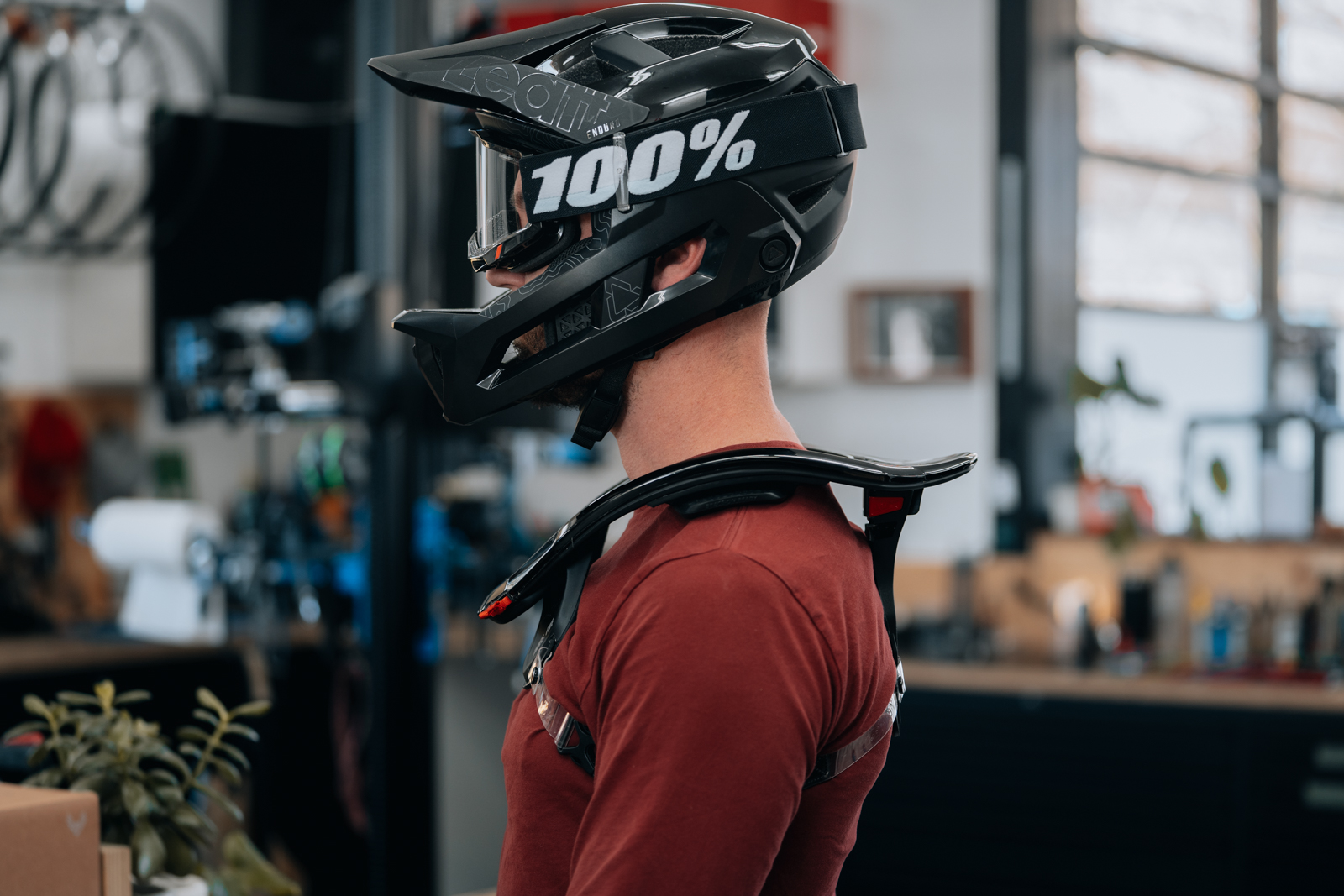
A mountain bike neck brace is a protective collar worn around the neck and shoulders. Unlike a helmet, which protects the head, this brace is designed to limit extreme movements of the neck during a crash. It is made from strong, lightweight materials such as fiberglass, carbon fiber, or reinforced plastic. The brace sits on the shoulders and connects with the helmet. Its main goal is to prevent the neck from bending too far in any direction, which can cause fractures or spinal cord injuries.
Key Components
- Collar Structure: The main frame wraps around the neck, resting on the shoulders.
- Front and Rear Supports: These are shaped pads or extensions that distribute impact forces.
- Padding: Soft foam or rubber inside cushions the brace against the skin.
- Helmet Interface: The brace has a flat top surface that interacts with the helmet rim.
- Adjustable Straps or Clips: These secure the brace tightly but comfortably.
Most modern neck braces are adjustable to fit different body sizes. The materials used are strong enough to handle heavy impact but light enough not to restrict movement.
How Does A Mountain Bike Neck Brace Work?
Limiting Neck Movement
The primary function of a neck brace is to limit excessive neck movement during a crash. When a rider falls, the helmet may hit the ground and force the head in an unnatural direction. The neck brace acts as a barrier. It stops the helmet from moving too far forward, backward, or sideways. By doing this, the brace reduces the chance of the neck being forced into a dangerous position.
Spreading Impact Forces
A key insight many beginners miss is how the brace spreads impact. Instead of letting all the force go through the neck, the brace pushes some of it onto the shoulders and upper body. This distribution lowers the risk of spinal injuries, which can be life-changing or even fatal.
Example Scenario
Imagine a rider crashing head-first. Without a brace, the helmet could push the head forward, causing the neck to bend sharply. With a neck brace, the helmet rim hits the brace, which then transfers the force to the shoulders. The neck only bends within a safe range.
Preventing Hyperflexion And Hyperextension
Medical studies show that neck braces help prevent hyperflexion (too much forward bend) and hyperextension (too much backward bend). These are common in mountain bike crashes, especially when landing poorly from jumps. By restricting these movements, the brace lowers the risk of:
- Cervical spine fractures
- Spinal cord damage
- Paralysis
Reducing Rotational Injuries
Some neck braces are also designed to limit rotational movement (twisting). This is important because twisting forces can cause ligament injuries or vertebrae dislocation. While no brace can fully eliminate risk, studies indicate they reduce dangerous motion by up to 40% in controlled tests.
Credit: www.ambmag.com.au
Types Of Mountain Bike Neck Braces
There are several types of neck braces used in mountain biking. The design affects how the brace works and how comfortable it feels.
| Type | Main Material | Weight (avg) | Protection Level | Comfort |
|---|---|---|---|---|
| Rigid Brace | Carbon Fiber/Plastic | 700g | High | Medium |
| Semi-Rigid Brace | Reinforced Plastic | 550g | Medium | High |
| Soft Brace | Foam/Textile | 300g | Low | Very High |
- Rigid braces offer the best protection but may feel bulky.
- Semi-rigid braces balance safety and comfort.
- Soft braces are lightweight and comfortable but provide less structural support.
How A Neck Brace Is Worn And Fitted
Fitting a neck brace correctly is essential. An improperly fitted brace can fail to protect or even cause discomfort. Most braces come with adjustment features:
- Place the brace on the shoulders so it rests evenly.
- Adjust the rear and front supports so they align with the helmet rim.
- Secure straps or clips so the brace stays in place during movement.
- Check that the brace does not interfere with arm or head movement.
The helmet and neck brace should work together. There should be a small gap between the helmet rim and the brace, so normal movement is possible, but the rim should contact the brace when pushed in a crash.
Benefits Of Using A Mountain Bike Neck Brace
Preventing Serious Injuries
Wearing a neck brace can reduce the risk of catastrophic injuries. Data from trauma centers show that riders using neck braces have 35% lower rates of cervical spine injuries compared to those without. This is especially important in downhill or enduro racing, where crashes are common.
Confidence On The Trail
Many riders report feeling more confident when wearing a brace. Knowing you have extra protection allows you to focus more on riding and less on the risk of injury. This confidence can help you ride better and progress faster.
Compatibility With Other Gear
Modern neck braces are designed to fit with most full-face helmets and chest protectors. Some brands even create integrated systems for maximum protection. You do not have to sacrifice comfort or other gear to wear a neck brace.
Lightweight And Durable
Advances in materials mean neck braces are lighter than ever. Top models weigh less than 1 pound (450g) and are strong enough to survive multiple crashes.
Easy To Clean And Maintain
Most braces have removable pads for washing. The main frame can be wiped clean with a damp cloth. This means you can keep your gear fresh and hygienic with little effort.
Limitations And Common Misunderstandings
Does Not Prevent All Injuries
A neck brace is not a magic solution. While it greatly reduces certain risks, it cannot protect against every injury. Collarbones, shoulders, and other parts are still exposed.
Not A Substitute For Skill
Some beginners think wearing a neck brace means they can ride recklessly. This is a mistake. Good riding skills, proper technique, and awareness are still essential for safety.
Can Cause Minor Discomfort
Some riders complain of neck or shoulder discomfort during long rides. This usually comes from poor fit or adjustment. Choosing the right size and taking time to fit the brace can solve most issues.
May Limit Head Movement Slightly
A neck brace restricts extreme head movement. Some riders find this affects their ability to look around quickly. However, most models are designed to allow normal movement for riding.
Comparing Neck Braces With Other Safety Gear
It is helpful to compare neck braces with other common mountain bike safety gear.
| Gear Type | Main Protection | Injury Prevention (%) | Comfort Level | Cost (avg) |
|---|---|---|---|---|
| Helmet | Head | 70 | High | $80 |
| Neck Brace | Neck/Spine | 35 | Medium | $200 |
| Chest Protector | Chest/Ribs | 30 | Medium | $60 |
| Knee Pads | Knees | 50 | High | $40 |
| Elbow Pads | Elbows | 40 | High | $30 |
Neck braces are unique in their focus on spinal safety. Helmets protect the head, but without a neck brace, the neck is still vulnerable in certain crashes.
Real-world Results And Statistics
Research from racing events and hospitals show clear benefits. A study from the 2018 UCI Mountain Bike World Cup found that riders wearing neck braces had fewer neck injuries, even in high-speed crashes. Out of 1,200 riders, only 0. 8% of neck brace users reported a neck injury, compared to 2.
5% without.
Another insight is that most injuries happen in downhill and freeride disciplines, where speeds and jump heights are highest. Wearing a neck brace is most valuable in these situations.
Credit: suspension-traveler.com
Choosing The Right Mountain Bike Neck Brace
Key Factors To Consider
- Fit and Comfort: The brace must fit your body and helmet. Try several models to find the best match.
- Weight: Lighter braces are easier to wear for long rides.
- Protection Level: Rigid models offer more protection but may feel bulky.
- Compatibility: Make sure the brace works with your helmet and any chest protector.
- Adjustability: Choose a brace with multiple adjustment points for a custom fit.
Common Buyer Mistakes
- Buying the wrong size: Always check sizing charts and try before you buy.
- Ignoring compatibility: Some braces may not fit all helmet styles.
- Choosing based on price alone: Cheaper braces may lack essential protection.
- Not considering riding style: Downhill riders need more protection than cross-country riders.
Top Brands And Models
Some popular brands are Leatt, Alpinestars, and Atlas. They are known for quality, durability, and innovation. For detailed reviews and technical specifications, you can check BikeRadar.
How To Use A Neck Brace Correctly
Step-by-step Guide
- Put on your riding jersey and helmet.
- Place the neck brace on your shoulders, making sure it sits flat.
- Adjust the rear and front supports to align with the helmet rim.
- Fasten straps or clips securely.
- Move your head to check for freedom of motion. The brace should not block normal movement but should contact the helmet rim when pushed.
- Check for gaps between the helmet and brace. There should be a small space for movement, but not too much.
- Go for a short ride to test comfort and fit. Adjust as needed.
Practical Tips
- Wash removable pads regularly.
- Inspect the brace for cracks or damage after any crash.
- Replace the brace every 2–3 years or after a major crash.
Common Mistakes And How To Avoid Them
Mistake 1: Wearing The Brace Too Loose
If the brace is not tight, it can move during a crash and fail to protect. Make sure straps are snug.
Mistake 2: Not Checking Helmet Compatibility
Some helmet shapes do not work well with certain braces. Always check before buying.
Mistake 3: Ignoring Signs Of Discomfort
If the brace hurts your neck or shoulders, adjust or try a different model. Comfort is essential for safety.
Mistake 4: Using A Damaged Brace
A cracked or broken brace cannot protect properly. Replace damaged gear immediately.
Advanced Insights For Experienced Riders
Understanding Force Distribution
A neck brace transfers impact energy from the helmet to the shoulders, chest, and back. The best models use specially shaped supports that direct force away from sensitive areas like the collarbone. This reduces the chance of secondary injuries.
Customization And Upgrades
Many brands offer extra pads, adjustable supports, or integrated systems. Experienced riders often customize their brace for maximum comfort and protection. This can include swapping pads, adjusting angles, or combining with other protective gear.

Credit: www.reddit.com
Frequently Asked Questions
What Injuries Does A Mountain Bike Neck Brace Prevent?
A neck brace mainly prevents neck fractures, spinal cord damage, and paralysis from extreme neck movement in crashes. It reduces but does not eliminate risk.
Is A Neck Brace Uncomfortable To Wear?
Most modern braces are designed for comfort. If fitted correctly, you should barely notice it. Some riders feel minor discomfort on long rides, but this is usually solved by adjusting the fit.
Can I Use A Motocross Neck Brace For Mountain Biking?
Some motocross braces work for mountain biking, especially downhill or freeride. However, mountain bike braces are lighter and better suited for cycling-specific movement.
How Do I Clean And Maintain My Neck Brace?
Remove pads and wash them with mild soap. Wipe the main frame with a damp cloth. Inspect for cracks or damage after every crash. Replace pads as needed.
Are Neck Braces Required In Mountain Biking Competitions?
Most competitions do not require neck braces, but many professional riders wear them, especially in downhill and enduro events. It is a personal safety choice.
Mountain bike neck braces are a powerful tool for preventing serious injuries. They work by limiting dangerous neck movement and spreading impact forces. While not foolproof, they offer clear benefits for riders who value safety. Choosing the right brace, fitting it correctly, and understanding its role will help you enjoy the sport with greater confidence.
If you ride fast, tackle jumps, or race downhill, a neck brace is worth considering. Safety should never be an afterthought; with the right gear, you can push your limits and return home safe after every ride.

Hello Guys! I am John Reese, a professional biker and my hobby is biking! I have been biking for last 12 years and I love using bikes while outing as well. Based on my experiences with the different type of bikes (mountain bikes, road bikes and hybrid bikes); I am sharing my opinion about various bikes so that a beginner can get started right away. Happy reading!