
How Much Does A Light Mountain Bike Weigh
A mountain bike’s weight can make a big difference in how it feels to ride. If you’ve ever carried your bike uphill, or tried to keep up with friends on a trail, you know that every pound matters. But what does “light” mean for a mountain bike?
And how much does a light mountain bike actually weigh? This article explains everything you need to know about mountain bike weight, from real numbers and examples, to why weight matters, what affects it, and how you can choose the right bike for your needs.
Many beginners think lighter is always better. But light bikes can be expensive, sometimes less durable, and not always the best fit for every rider or trail. We’ll help you understand what counts as “light,” how weight changes for different types of mountain bikes, and what you should look for if you want to buy or upgrade to a lighter bike.
You’ll also see comparisons, practical tips, and answers to common questions.
What Is Considered A Light Mountain Bike?
When talking about light mountain bikes, we mean bikes that weigh less than most typical models in their category. The average mountain bike weight is around 30–35 pounds (13.6–15.9 kg), but “light” bikes are much lower.
Typical Weight Ranges
- Cross-country (XC) bikes: 20–26 pounds (9–11.8 kg)
- Trail bikes: 25–30 pounds (11.3–13.6 kg)
- Enduro bikes: 28–32 pounds (12.7–14.5 kg)
- Downhill bikes: 35–40 pounds (15.9–18.1 kg)
For most riders, a light mountain bike is one that falls in the lower end of these ranges. For example, an XC bike under 23 pounds is considered very light.
Why Weight Standards Matter
Manufacturers use different standards for measuring weight, such as including pedals, bottle cages, or tubeless setups. Always check what’s included in the published weight.
How Weight Feels In Real Life
A difference of just 3–5 pounds can change how a bike climbs, accelerates, and handles on technical terrain. For example, a 22-pound bike feels much easier to carry and control than a 29-pound bike, especially on steep trails.
Why Bike Weight Matters
Mountain bike weight is more than just a number; it affects nearly every aspect of your ride.
Climbing And Acceleration
Lighter bikes are easier to climb with because you need less force to move them uphill. On flat or rolling terrain, they accelerate faster.
Handling And Agility
A lighter bike can be moved quickly, which helps in tight corners, jumps, or technical sections. You can change direction faster and respond to obstacles better.
Fatigue And Endurance
If you ride long distances, a lighter bike puts less strain on your body. Carrying extra weight, even a few pounds, can tire you out faster, especially when lifting or pushing the bike.
Not Always The Best Choice
While light bikes are fun and fast, they can be less durable or more expensive. Heavier bikes, especially downhill and enduro models, are built for strength and stability, not lightness.
Factors That Affect Mountain Bike Weight
Several parts and materials make a big impact on how heavy or light a mountain bike is.
Frame Material
- Carbon fiber: The lightest option, but often the most expensive. Used for high-end bikes.
- Aluminum: A bit heavier than carbon, but strong and affordable. Most mid-range bikes use aluminum.
- Steel: Heavier, but durable and comfortable. Less common for performance mountain bikes.
- Titanium: Light and strong, but rare and expensive.
Bike Components
- Fork and suspension: Lighter forks and shocks use advanced materials, but cost more.
- Wheels: Lightweight wheels (especially carbon) reduce overall weight and improve acceleration.
- Drivetrain: High-end groupsets (shifters, derailleurs, cranks) are lighter.
- Brakes: Hydraulic disc brakes tend to be lighter than mechanical ones.
- Handlebars, seatpost, saddle: Small savings add up. Carbon components are lighter.
Tire Choice
Lighter tires can reduce weight, but may wear out faster or be less puncture-resistant.
Extra Accessories
Adding bottle cages, lights, or heavy pedals can add up to 2–3 pounds.
Weight Comparison Of Popular Mountain Bikes
Here’s a simple comparison of some well-known light mountain bikes. This helps you see how weight varies by model and type.
| Model | Type | Frame Material | Weight (lbs) | Weight (kg) |
|---|---|---|---|---|
| Specialized S-Works Epic | Cross-Country | Carbon | 21.0 | 9.5 |
| Santa Cruz Blur CC | Cross-Country | Carbon | 22.5 | 10.2 |
| Trek Supercaliber 9.9 | Cross-Country | Carbon | 21.6 | 9.8 |
| Yeti SB100 | Trail | Carbon | 25.5 | 11.6 |
| Giant Trance Advanced Pro | Trail | Carbon | 26.2 | 11.9 |
| Canyon Spectral CF 7 | Enduro | Carbon | 29.5 | 13.4 |
As you can see, cross-country bikes are the lightest, with most models under 23 pounds. Trail and enduro bikes are heavier because they need stronger frames and more suspension.

Credit: freehub.com
How Manufacturers Achieve Light Weight
Bike brands use several tricks to make bikes lighter without losing strength.
Carbon Fiber Technology
Carbon fiber is strong, stiff, and much lighter than metal. Companies use special shapes and layers to make frames light but tough. Some use “high modulus” carbon for even less weight.
Integrated Components
Some bikes use integrated seatposts, handlebars, and other parts to reduce weight and improve stiffness.
Tubeless Tires
Removing inner tubes and using tubeless tires can save weight and improve performance.
Minimal Design
Many light bikes skip extra features, such as heavy chain guards or oversized grips.
Real-world Examples: Light Mountain Bikes
Let’s look at a few top models and their weights.
Specialized S-works Epic
This is a high-end cross-country bike with a carbon frame. It weighs about 21 pounds (9.5 kg). It’s used in professional races and known for its speed.
Trek Supercaliber 9.9
Another top XC bike, the Supercaliber uses a unique rear suspension system to save weight. It weighs around 21.6 pounds (9.8 kg).
Santa Cruz Blur Cc
This bike is popular for both racing and long rides. Its weight is about 22.5 pounds (10.2 kg).
Yeti Sb100
A light trail bike, the SB100 weighs 25.5 pounds (11.6 kg). It is designed for both speed and control.
Weight And Performance: What Really Changes?
Many riders think a lighter bike means instant speed. But the real changes depend on how and where you ride.
Climbing Efficiency
On steep hills, a lighter bike lets you climb faster with less effort. You’ll notice this especially if you ride for hours or on long climbs.
Handling
A lighter bike responds quickly when you turn, jump, or dodge obstacles. This is important in cross-country races and technical trails.
Comfort And Safety
Some riders feel safer on heavier bikes, especially downhill, because they are more stable. Light bikes can feel “twitchy” or less planted.
Racing Vs. Casual Riding
For racing, every ounce matters. For casual riding, comfort, durability, and cost may matter more than weight.
Pros And Cons Of Light Mountain Bikes
To help you decide, here are the main advantages and disadvantages.
Advantages
- Faster climbing: Less weight makes hills easier.
- Better acceleration: Quick starts and sprints.
- Easier to carry: Good for travel or hiking with your bike.
- Less fatigue: Helps on long rides.
Disadvantages
- Higher price: Light bikes use expensive materials.
- Less durability: May be more fragile, especially if you crash.
- Limited compatibility: Some parts are not interchangeable.
- Reduced comfort: Ultra-light bikes may feel harsher.
Credit: www.sepr.es
How To Make Your Mountain Bike Lighter
If you already own a mountain bike, you can reduce its weight with some smart upgrades.
1. Switch To Carbon Components
Replace aluminum handlebars, seatpost, or cranks with carbon versions. This can save 1–2 pounds.
2. Upgrade Wheels
Lightweight wheels improve both weight and performance. Consider carbon rims if your budget allows.
3. Use Lighter Tires
Select tires with thinner casings or lighter materials. But check they are strong enough for your riding style.
4. Go Tubeless
Remove the inner tubes and use tubeless sealant. This saves weight and reduces punctures.
5. Remove Unnecessary Accessories
Take off bottle cages, heavy pedals, or large saddlebags if you don’t need them.
6. Change The Drivetrain
High-end groupsets are lighter and shift better. Look for models like Shimano XTR or SRAM XX1.
7. Choose Minimalist Saddles
A light saddle can save up to half a pound.
Common Mistakes
- Focusing only on weight and ignoring strength.
- Using light tires that puncture easily.
- Skipping maintenance, which can make a light bike unreliable.
Comparing Bike Types By Weight
Different mountain bike types have different weight targets. Here’s a clear comparison:
| Bike Type | Typical Weight (lbs) | Frame Material | Main Use |
|---|---|---|---|
| Cross-Country | 20–26 | Carbon/Aluminum | Racing, fast climbs |
| Trail | 25–30 | Carbon/Aluminum | Mixed terrain |
| Enduro | 28–32 | Carbon/Aluminum | Rough descents, long rides |
| Downhill | 35–40 | Aluminum/Steel | Steep, technical descents |
Notice that downhill bikes are much heavier because they need extra strength for big jumps and rough landings.
What Weight Should You Choose?
Your ideal mountain bike weight depends on your riding style, budget, and goals.
For Racing
Aim for the lightest bike you can afford, ideally under 23 pounds (10.4 kg) for cross-country.
For Trail Riding
A bike around 26–28 pounds (11.8–12.7 kg) is light enough for quick handling, but strong enough for rough terrain.
For Enduro Or Downhill
Weight is less important. Focus on strength, stability, and safety.
For Beginners
Choose a bike that feels comfortable, is easy to handle, and fits your budget. Don’t worry too much about being ultra-light.
Key Insights Beginners Miss
- Weight is not always published accurately. Some brands hide extra pounds by removing pedals or accessories. Always check the full build weight.
- Light bikes can be harder to repair. Carbon fiber parts need special tools and skills. If you’re new to mountain biking, factor in maintenance costs.
Cost Of Light Mountain Bikes
Light bikes cost more because they use expensive materials and high-end parts.
Price Ranges
- Entry-level light mountain bikes: $1,200–$2,000
- Mid-range light bikes: $2,500–$4,000
- High-end racing bikes: $5,000–$10,000+
A basic aluminum XC bike can weigh 26–28 pounds and cost around $1,500. A top carbon bike at 21 pounds can be over $8,000.
Weight Vs. Strength: Finding Balance
The lightest mountain bikes are made for racing, but they are not always the best for rough trails or big jumps. If you ride hard, or on rocky terrain, a slightly heavier bike may last longer and keep you safer.
Practical Advice
- Test ride before buying: See if the bike feels stable and strong.
- Ask about warranty: Some light bikes come with limited warranties.
- Think about your local trails: If you ride mostly smooth paths, light bikes are great. For rocky, rough trails, choose strength.
Impact Of Rider Weight
The weight of the rider also affects performance. If you weigh 150 pounds, a 21-pound bike feels much lighter than if you weigh 220 pounds.
Bike Fit
A light bike must fit your body. If it’s too small or too big, weight won’t help.
Carrying Gear
If you carry tools, water, or snacks, add 2–5 pounds to the total weight.
The Future Of Light Mountain Bikes
New materials and designs are making bikes lighter every year. Some brands are using graphene and advanced carbon blends to reduce weight further.
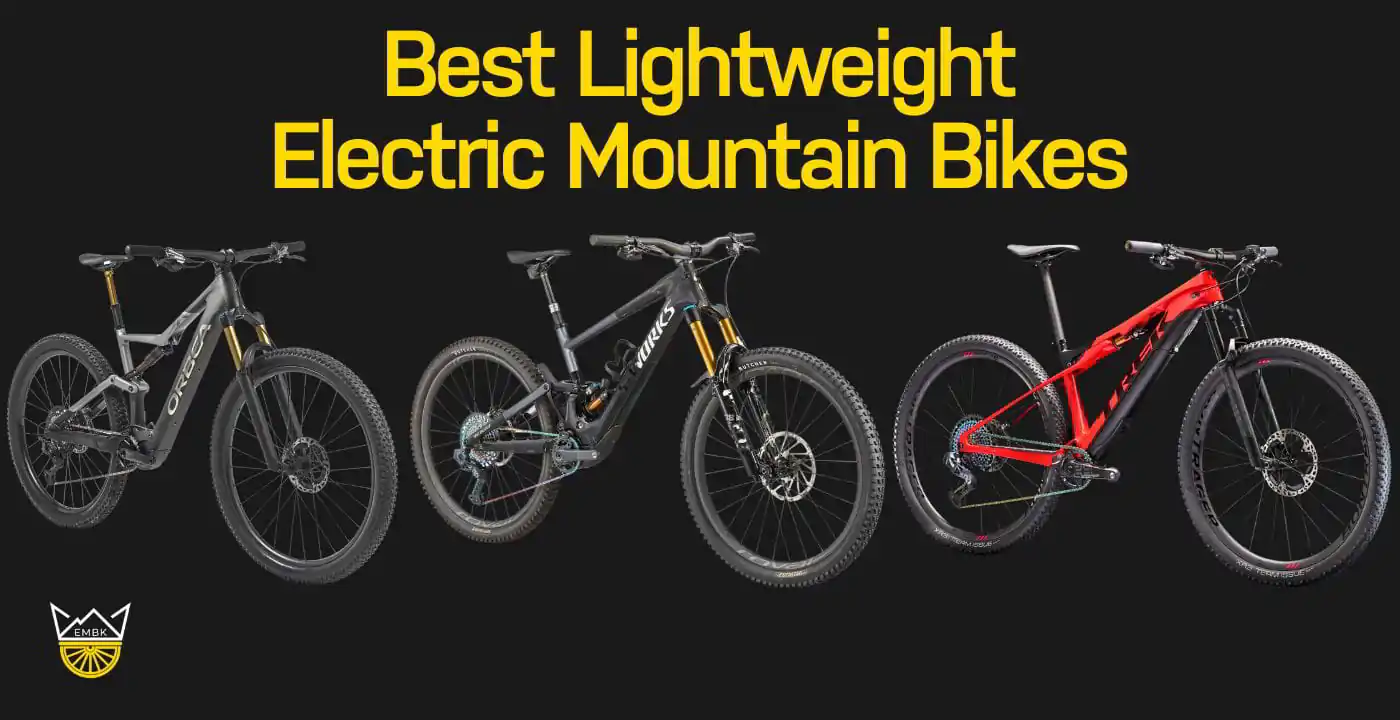
Electric Mountain Bikes
E-bikes are heavier because of batteries and motors. The lightest e-mountain bikes are around 34–38 pounds (15.4–17.2 kg). For comparison, a regular light bike is about half that.
Comparing Weight With Other Bikes
Mountain bikes are heavier than road bikes, but lighter than some hybrid or fat bikes.
| Bike Type | Average Weight (lbs) | Main Feature |
|---|---|---|
| Road bike | 17–22 | Speed |
| Light mountain bike | 21–26 | Off-road |
| Fat bike | 32–40 | Wide tires |
| E-mountain bike | 34–45 | Motor assist |
How Weight Is Measured
Bike weight is usually measured without pedals, bottle cages, or accessories. If you want to compare, ask for “complete build weight. ” Some shops will let you use their scale.
Practical Example
If your bike weighs 25 pounds without pedals, and your pedals weigh 1 pound, your total is 26 pounds.
How To Check If Your Bike Is Light
Compare your bike’s weight with similar models. If your trail bike is under 27 pounds, it’s light. For XC bikes, under 23 pounds is very light.
What If My Bike Is Heavy?
You can upgrade parts or remove accessories. But sometimes, a heavy bike is safer and more durable, especially for beginners.
Buying Tips: Choosing A Light Mountain Bike
- Set your budget. Light bikes cost more, but you can find deals.
- Choose frame material. Carbon is lightest, but aluminum is good for most riders.
- Test ride different models. See how the bike feels and handles.
- Check reviews and specs. Look for “complete build weight.”
- Ask about warranty and service. Light bikes may need special care.
Non-obvious Insight
Some bikes are advertised as light, but only in the smallest size. If you need a large frame, weight may go up by 1–2 pounds.
Common Myths About Mountain Bike Weight
- Lighter always means better. Not true. Sometimes, heavier bikes are safer and more fun.
- Carbon is always lighter. Some aluminum bikes are nearly as light as carbon.
- You need the lightest bike for every ride. For casual rides, comfort matters more.
Environmental Impact
Light bikes often use advanced materials like carbon fiber. Making carbon frames uses more energy than aluminum. If you care about the environment, ask about recycled materials.
Maintenance For Light Mountain Bikes
Light bikes, especially carbon models, need careful maintenance.
Cleaning
Use gentle soap and soft brushes. Avoid harsh chemicals.
Storage
Keep your bike dry and out of extreme heat.
Repairs
Carbon frames need special tools and skills. Aluminum bikes are easier to fix.
Inspections
Check for cracks or damage often. Light bikes can be less forgiving.
Weight And Bike Fit
A light bike must fit your body and riding style.
- Frame size: Make sure you can stand over and reach all controls.
- Suspension setup: Light bikes with wrong suspension can feel harsh.
- Tire pressure: Low pressure can make a light bike feel slow.
Light Mountain Bikes For Women And Youth
Some brands make lighter bikes for smaller riders. Women’s and youth models may be 1–2 pounds lighter because of smaller frames and parts.
Practical Example
A youth XC bike can weigh 18–20 pounds (8.1–9 kg), making it easier for young riders.
Where To Find Accurate Weight Data
Bike shops, official brand websites, and trusted reviews are best. Avoid online ads with no clear specs.
For more data, see this BikeRadar guide.
Credit: www.pinkbike.com
Frequently Asked Questions
How Much Does A Light Mountain Bike Weigh?
A light mountain bike usually weighs 21–26 pounds (9.5–11.8 kg) for cross-country models and 25–29 pounds (11.3–13.2 kg) for trail bikes. Enduro and downhill bikes are heavier.
Is A Lighter Mountain Bike Always Better?
No. Lighter bikes are faster and easier to handle, but may be less durable and more expensive. Choose the right balance for your riding style.
How Can I Make My Mountain Bike Lighter?
You can switch to carbon components, upgrade wheels, use lighter tires, go tubeless, and remove extra accessories. But make sure you don’t sacrifice strength.
Are Carbon Mountain Bikes Much Lighter Than Aluminum?
Carbon bikes are usually 1–3 pounds lighter than similar aluminum models. But some high-end aluminum bikes are nearly as light.
What’s The Lightest Mountain Bike Ever Made?
Some custom cross-country bikes weigh under 17 pounds (7.7 kg), but these are rare and not practical for most riders. Most production bikes for racing are around 20–22 pounds (9–10 kg).
A light mountain bike can change your ride, making climbs easier and handling faster. But weight is only one part of choosing the right bike. Consider your trails, your budget, and your own riding style. The best bike is one that fits you, lasts, and makes you want to ride.
Remember, a light mountain bike weighs between 21–26 pounds for XC models, and up to 29 pounds for trail bikes. If you focus on smart upgrades and careful choices, you can enjoy both performance and durability.

Hello Guys! I am John Reese, a professional biker and my hobby is biking! I have been biking for last 12 years and I love using bikes while outing as well. Based on my experiences with the different type of bikes (mountain bikes, road bikes and hybrid bikes); I am sharing my opinion about various bikes so that a beginner can get started right away. Happy reading!