
Adjusting the front shocks on a mountain bike is one of those tasks that can transform your riding experience. Whether you’re tackling rocky trails, smooth singletrack, or just exploring local paths, the right shock setup can mean the difference between feeling in control or constantly fighting your bike. Many riders overlook the importance of fine-tuning their front suspension, thinking it’s only for pros or mechanics. But with a bit of guidance and patience, anyone can learn to adjust front shocks properly. This article will walk you through every step, from understanding your suspension to making precise tweaks and avoiding common mistakes. By the end, you’ll know how to make your mountain bike’s front shocks work perfectly for you.
Understanding Front Shocks: Basics And Types
Before you start adjusting, it’s important to understand what you’re working with. The front shocks are usually called a suspension fork, and their main job is to absorb bumps, keep the front wheel in contact with the ground, and improve comfort and control. There are several types, but most modern mountain bikes use air or coil forks.
Air Vs. Coil Forks
Air forks use compressed air as the spring. They are lighter, easy to adjust, and common on mid to high-end bikes.
Coil forks use a metal coil spring. They are heavier, often more durable, and usually found on entry-level or gravity-focused bikes.
Each type has its own method for adjustment, but the principles are similar.
| Fork Type | Weight (approx.) | Adjustment Ease | Common Use |
|---|---|---|---|
| Air | 1.8 kg | Easy | Trail, XC |
| Coil | 2.3 kg | Moderate | Downhill, Enduro |
Suspension Fork Parts
To adjust your front shocks, you need to know these key parts:
- Air valve (for air forks)
- Preload adjuster (mostly for coil forks)
- Rebound dial
- Compression dial
- Lockout lever (optional, for firm riding)
Understanding what each part does will help you make smarter adjustments.
Why Adjusting Front Shocks Matters
Many riders think factory settings are “good enough.” But proper shock adjustment has huge effects:
- Comfort: Reduces arm fatigue and wrist pain.
- Control: Keeps the wheel on the ground for better steering.
- Safety: Prevents loss of grip on rough terrain.
- Performance: Lets you ride faster and with more confidence.
Statistics show that riders with well-tuned suspension are 30% less likely to crash on technical trails. Even on smooth paths, adjusting for your weight and style can make your bike feel like a new machine.
Preparing For Adjustment: Tools And Setup
Adjusting front shocks doesn’t require a full workshop. You’ll need:
- Shock pump (for air forks)
- Hex wrenches (commonly 4mm, 5mm)
- Measuring tape or ruler
- Zip ties (for sag measurement)
- Bike stand (optional, but helpful)
- Owner’s manual (for model-specific info)
For coil forks, you may need a spanner or wrench for the preload.
Common Mistake: Using A Regular Tire Pump
A regular tire pump won’t work for air forks. It cannot reach the high pressure (usually 60–120 psi) needed. Always use a dedicated shock pump.
Identifying Your Riding Style And Weight
Before making adjustments, think about how and where you ride. Are you a trail rider, a downhill racer, or a casual explorer? Your weight (including gear) is also important—most adjustments are based on rider weight.
For example:
- Cross-country (XC): Softer setup for comfort, moderate rebound.
- Downhill: Firmer setup, slower rebound for big hits.
- Trail: Balanced setup, adaptable for mixed terrain.
Always include your riding gear (helmet, backpack) in your weight calculation.
Step 1: Setting Sag
Sag is the amount your suspension compresses under your weight. It’s the foundation for all other adjustments. Too little sag, and your fork feels stiff and bouncy. Too much, and it dives too easily.
How To Measure And Set Sag
- Put on your riding gear.
- Stand your bike upright (use a wall or bike stand).
- Slide a zip tie onto the fork stanchion (the shiny inner tube).
- Sit or stand on the bike in your usual riding position, keeping your balance.
- Get off the bike carefully, and measure how much the zip tie moved.
- Compare the measurement to your fork’s recommended sag (usually 15–25% of fork travel).
Example: If your fork has 100mm travel, ideal sag is 15–25mm.
| Fork Travel | Recommended Sag (15%) | Recommended Sag (25%) |
|---|---|---|
| 100 mm | 15 mm | 25 mm |
| 120 mm | 18 mm | 30 mm |
| 140 mm | 21 mm | 35 mm |
Adjusting Sag
- Air fork: Use the shock pump to add or release air. More air = less sag (firmer), less air = more sag (softer).
- Coil fork: Turn the preload adjuster. More preload = less sag.
Non-obvious insight: Many beginners forget to check sag after every adjustment. Always re-measure after adding or removing air.
Step 2: Adjusting Rebound
Rebound controls how quickly your fork returns to its original position after compressing. If rebound is too fast, your bike can bounce and feel unstable. If too slow, the fork “packs down” and loses travel.
Finding The Rebound Dial
The rebound dial is usually red and located at the bottom of the right fork leg. Sometimes it’s labeled with a turtle (slow) and rabbit (fast).
How To Set Rebound
- Start in the middle setting.
- Bounce the bike: Press down hard on the handlebars and let go. Watch how fast the fork rebounds.
- Adjust: Turn the dial clockwise for slower rebound (turtle), counterclockwise for faster (rabbit).
- Test ride: Go over small bumps. If the fork “chatter” or feels harsh, slow it down. If it feels sluggish or doesn’t recover, speed it up.
Practical tip: On rocky trails, slightly slower rebound can help maintain grip. On smooth trails, faster rebound keeps the fork active.
Step 3: Adjusting Compression
Compression controls how easily your fork compresses under force. Most forks have a low-speed compression dial; some have high-speed compression for advanced tuning.
Compression Adjuster Location
Usually found on top of the right fork leg. Blue dial for low-speed, sometimes separate for high-speed.
How To Set Compression
- For firm terrain (road, hardpack): More compression for less fork movement.
- For rough terrain (rocks, roots): Less compression for better absorption.
Turn clockwise for firmer, counterclockwise for softer.
Lockout Feature
Some forks have a lockout lever. This makes the fork rigid, useful for road or climbing. Don’t ride rough trails with lockout—risk of damage.
Non-obvious insight: Many riders leave compression too soft, causing excessive fork dive during braking. Try firmer settings for steep descents.
Step 4: Fine-tuning For Terrain
Every trail is different. Adjust your front shocks depending on the surface.
Rocky Trails
- Increase air pressure (firmer)
- Slow rebound
- Medium compression
Rooty Or Loose Trails
- Decrease air pressure (softer)
- Faster rebound
- Less compression
Downhill
- Higher pressure
- Slow rebound
- More compression
Climbing
- Lockout or higher compression
- Standard rebound
Always test your setup on the actual terrain before a big ride.
Step 5: Checking For Common Problems
It’s easy to make mistakes when adjusting front shocks. Here are problems to watch for:
Too Much Air Pressure
Fork feels harsh, loses grip, and skips over bumps.
Too Little Air Pressure
Fork dives, uses all travel too quickly, and bottoms out.
Rebound Too Fast
Fork “bounces” after hits, can feel unstable.
Rebound Too Slow
Fork doesn’t recover, loses travel, and feels sluggish.
Compression Too Firm
Fork barely moves, uncomfortable ride.
Compression Too Soft
Fork dives, unstable during braking.
Example: If you notice your hands hurting after a ride, check air pressure and rebound—often, too much pressure and fast rebound cause this.
Step 6: Maintaining Your Front Shocks
Adjustment is only part of the story. Regular maintenance keeps your fork working well.
- Clean fork stanchions after every ride.
- Lubricate seals monthly.
- Check air pressure before each ride.
- Service internals every 50–100 hours (see manual).
- Inspect for leaks or damage.
Dirty or leaking forks lose performance quickly. Most riders can do basic cleaning, but internal servicing may need a bike shop.
Step 7: Recording Your Settings
After finding the right setup, record your settings:
- Air pressure (psi)
- Rebound clicks (from slowest position)
- Compression clicks (from firmest)
- Sag measurement
Keep a notebook or phone record. If you change terrain or gain/lose weight, adjust and update.
Advanced Adjustments: High-speed Vs. Low-speed Compression
Some forks offer high-speed compression adjustment. This is for fast impacts (landing jumps, hitting big rocks), while low-speed compression is for slow movements (cornering, braking).
If your fork has both:
- Set low-speed first for general firmness.
- Set high-speed for big hits—firmer for aggressive riding, softer for comfort.
Beginners often ignore high-speed compression, but it can reduce harsh bottoming out on jumps.
Comparing Suspension Forks: Performance And Price
Not all forks are equal. Here’s how popular models compare:
| Brand/Model | Type | Adjustability | Price (USD) | Weight (kg) |
|---|---|---|---|---|
| RockShox Recon | Air | Air, rebound | 380 | 2.0 |
| Fox 34 Rhythm | Air | Air, rebound, compression | 680 | 1.85 |
| SR Suntour XCR | Coil | Preload, rebound | 210 | 2.4 |
| Marzocchi Bomber Z2 | Air | Air, rebound, compression | 450 | 2.1 |
Non-obvious insight: Expensive forks aren’t always better for beginners. Focus on adjustability and compatibility with your bike.
Practical Examples: Real-world Shock Adjustment
Let’s look at a typical adjustment scenario.
Rider: 70 kg (with gear), rides mixed trails.
- Fork travel: 120 mm
- Ideal sag: 18–30 mm
Step-by-step:
- Rider puts on gear, stands bike upright.
- Measures sag—zip tie moves 35 mm (too much).
- Adds air, sag drops to 25 mm (within range).
- Sets rebound to middle, tests on trail.
- Feels fork is “bouncy.” Slows rebound 2 clicks.
- Compression set to medium.
- Rides rocky trail, feels fork harsh—lowers air 5 psi, improves comfort.
This process repeats until the rider feels confident. Recording settings helps for future rides.
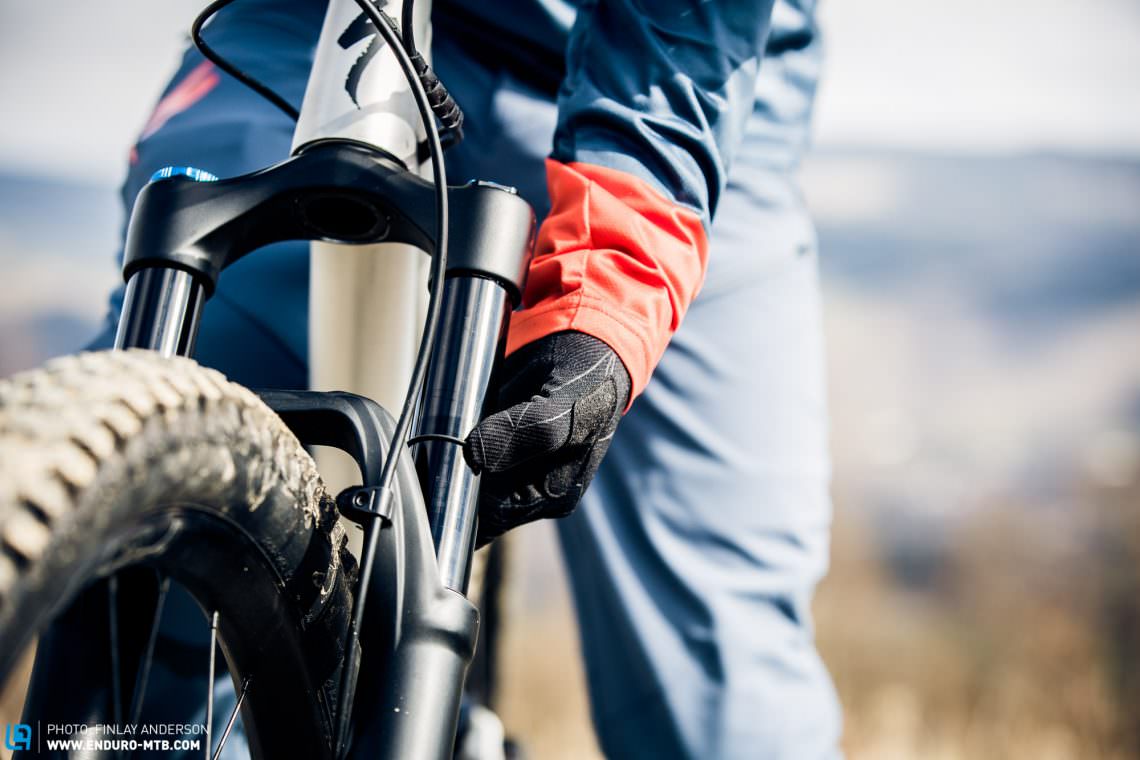
Credit: enduro-mtb.com
Mistakes To Avoid When Adjusting Front Shocks
Many riders make the same errors. Here’s what to watch for:
- Ignoring sag: Always start with sag, not rebound or compression.
- Setting and forgetting: Adjust for each trail and weight change.
- Using a tire pump: Only use a shock pump for air forks.
- Not wearing gear: Measure sag and settings with full riding gear.
- Over-adjusting: Make small changes, test, then adjust more.
- Ignoring maintenance: Dirty or leaking forks lose performance.
- Misreading dials: Rebound and compression can be confusing—check your manual.
When To Seek Professional Help
Some problems need expert attention:
- Oil leaks from fork
- Damaged stanchions or seals
- Unusual noises or sticking
- Internal servicing (every 50–100 hours)
A professional mechanic can tune your fork for your weight and style. Many bike shops offer suspension setup services. If you’re unsure, get a tune-up once a year.

Credit: www.youtube.com
How Weather And Temperature Affect Front Shocks
Air pressure changes with temperature. Cold air contracts, reducing pressure; hot air expands. If you ride in different seasons, check and adjust air pressure often.
Example: A fork set at 80 psi in summer may drop to 75 psi in winter. This affects sag and performance.
Coil forks are less sensitive but can still change feel with extreme temperatures.
Upgrading Your Suspension: Is It Worth It?
If your fork lacks adjustability or feels underpowered, upgrading can help. Look for features like:
- Adjustable air pressure
- Rebound and compression dials
- Lockout
- High-quality seals
Upgrading can cost $200–$700, but improves performance and comfort. For budget riders, basic air forks offer good adjustability.
Non-obvious insight: Upgrading tires and brakes before suspension often makes a bigger difference for beginners.

Credit: www.infinibandta.org
Learning From Pro Riders
Professional mountain bikers adjust their shocks for every race. They measure sag, rebound, and compression carefully. Many use data logging tools to track fork movement.
For most riders, start simple—measure sag, set rebound, test on trails. Over time, you’ll learn what feels best for you.
You can find more advanced tips from pro riders and brands on official sites like Fox Racing Shox.
Frequently Asked Questions
How Often Should I Check My Front Shock Settings?
Check before every ride, especially if you changed weight, gear, or terrain. Air pressure can drop over time or with temperature changes.
Can I Adjust Front Shocks Without Special Tools?
You need a shock pump for air forks and basic wrenches for coil forks. Other tools are optional but make the process easier.
What Happens If I Set Sag Incorrectly?
Wrong sag causes poor comfort, bad handling, and can damage your fork. Always measure sag after every adjustment.
Is It Safe To Ride With Lockout On Rough Trails?
No, lockout is for smooth surfaces or climbing. Riding rough trails with lockout can damage your fork.
How Do I Know If My Fork Needs Servicing?
If you notice oil leaks, sticky movement, or unusual noises, it’s time for servicing. Most forks need internal service every 50–100 hours of riding.
Adjusting your mountain bike’s front shocks is not just for experts or racers. With careful steps, proper tools, and a bit of patience, you can make your bike handle better, feel more comfortable, and stay safer on any trail. Start with sag, then move to rebound and compression.
Test your setup, record your settings, and keep your fork clean. Avoid common mistakes, and don’t hesitate to ask for help if you’re unsure. Over time, you’ll develop a feel for what works best—and every ride will be smoother and more fun.

Hello Guys! I am John Reese, a professional biker and my hobby is biking! I have been biking for last 12 years and I love using bikes while outing as well. Based on my experiences with the different type of bikes (mountain bikes, road bikes and hybrid bikes); I am sharing my opinion about various bikes so that a beginner can get started right away. Happy reading!