
Riding a Trek mountain bike brings adventure, freedom, and challenge. But nothing kills the thrill faster than gears that won’t shift smoothly. Whether you’re climbing steep trails or speeding downhill, well-adjusted gears make every ride easier. If your bike skips gears, makes strange noises, or feels slow to respond, don’t worry. With the right steps, you can fix these issues yourself—even if you’re new to bike maintenance.
This guide will show you exactly how to adjust gears on Trek mountain bike. You’ll learn what causes shifting problems, how to spot them, and how to make your gears work like new. We’ll break down each step with simple language and clear examples. No special tools or advanced skills needed—just patience and a willingness to follow instructions. By the end, you’ll feel confident about tackling gear adjustments for smoother, safer rides.
Understanding Trek Mountain Bike Gears
Before you start adjusting, it’s important to know how Trek mountain bike gears work. Most Trek mountain bikes use derailleurs—mechanisms that move your chain between different gears on the front and back sprockets (called chainrings and cogs).
Trek bikes usually come with:
- A front derailleur: Shifts the chain between 2 or 3 front chainrings
- A rear derailleur: Moves the chain across 7 to 12 rear cogs
- Shifters: Handlebar levers or triggers that control the derailleurs
When you press a shifter, the derailleur moves, changing the chain’s position. This makes pedaling easier or harder, depending on the gear.
Key Gear Terms
- Low gear: Bigger sprocket at the back, smaller chainring at the front. Good for climbing.
- High gear: Smaller sprocket at the back, bigger chainring at the front. Good for speed.
- Index shifting: Each click on the shifter moves the chain exactly one gear.
Understanding these basics helps you spot problems and fix them faster.
Common Gear Problems On Trek Mountain Bikes
Gear problems can ruin your ride. Here are the most common issues Trek mountain bike owners face:
- Chain skips or slips: The chain jumps between gears unexpectedly.
- Slow shifting: The chain takes too long to move when you shift.
- Noisy shifting: Grinding, clicking, or rubbing sounds when changing gears.
- Chain won’t move to highest/lowest gear: You can’t reach the full range of gears.
- Chain drops off: The chain falls off the sprockets completely.
These problems usually happen because of:
- Cable tension: Too loose or tight cables
- Dirty or worn components: Old chain, cassette, or derailleur
- Limit screw misadjustment: Screws that control the derailleur’s range
- Bent derailleur hanger: Misaligned parts from crashes or bumps
Spotting the exact issue is the first step to fixing it.
Preparing Your Trek Mountain Bike For Gear Adjustment
Before you start adjusting gears, prepare your bike and workspace. This helps prevent mistakes and makes the job easier.
What You Need
- Bike stand (optional): Holds the bike steady
- Phillips screwdriver: For limit screws
- Hex wrench set: For derailleur bolts
- Clean rag: Wipes off dirt
- Bike lubricant: For chain
- Needle-nose pliers (optional): For cable adjustments
If you don’t have a bike stand, you can flip your bike upside down or lean it against a wall. Just make sure it’s stable.
Safety Tips
- Work in a well-lit area.
- Keep tools within reach.
- Wear gloves if possible.
- Avoid distractions.
Check your bike for obvious damage or bent parts before starting. If something looks broken, fix it first.
Step-by-step Guide: Adjusting Rear Derailleur Gears
The rear derailleur is responsible for most shifting problems. Let’s focus here first, using simple steps.
1. Inspect The Rear Derailleur
Look closely at the derailleur. Is it straight? If it’s bent, shifting will never be smooth. The hanger (the small metal arm connecting the derailleur to the bike) should line up with the cogs. If it’s not, you may need a professional to straighten it.
2. Clean And Lubricate
Dirt and grime cause poor shifting. Use a rag to clean the derailleur and chain. Apply a thin layer of bike lubricant to the chain.
3. Check Cable Tension
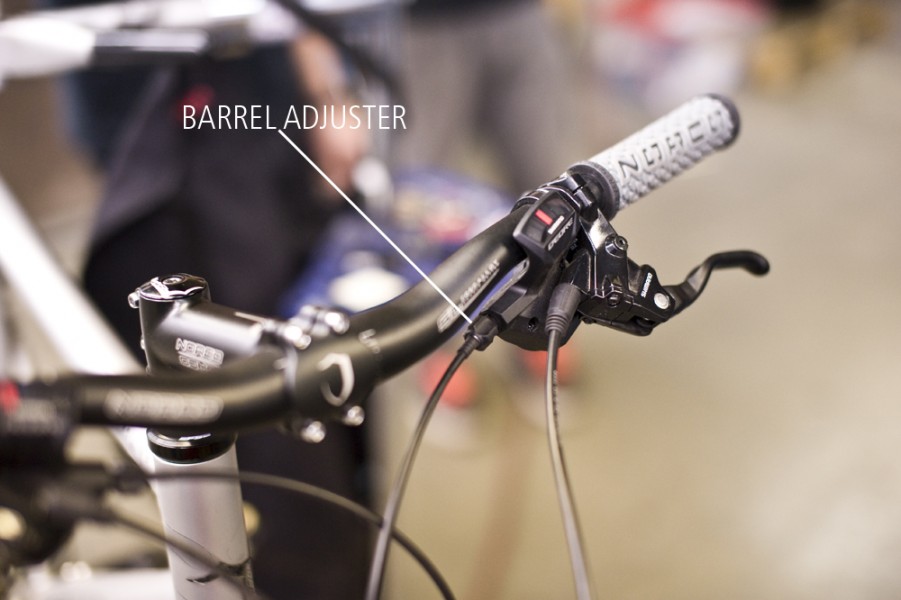
Find the barrel adjuster—a small knob where the cable enters the derailleur or shifter. This is used to fine-tune cable tension.
Turn the barrel adjuster:
- Clockwise: Loosens cable tension
- Counterclockwise: Tightens cable tension
If shifting feels slow or the chain won’t move up to larger cogs, the cable may be too loose. If the chain won’t move down to smaller cogs, it might be too tight.
4. Set The High And Low Limit Screws
On the derailleur, you’ll see two screws marked H (high) and L (low). These control how far the derailleur can move.
- High limit screw: Controls movement toward the smallest cog.
- Low limit screw: Controls movement toward the largest cog.
To adjust:
- Shift to the smallest cog.
- Turn the H screw so the derailleur lines up perfectly with the smallest cog.
- Shift to the largest cog.
- Turn the L screw so the derailleur lines up with the largest cog.
If the chain tries to move off the cogs, adjust the screws until it stays centered.
5. Index The Gears
This means making sure each click of the shifter moves the chain exactly one gear.
- Shift through all the gears, one at a time.
- If the chain doesn’t move with each click, use the barrel adjuster to fine-tune cable tension.
- Repeat until shifting feels crisp and reliable.
6. Check B-tension Adjustment
The B-tension screw controls how close the derailleur is to the cogs. If the derailleur is too close, the chain may rub. If it’s too far, shifting may be slow.
- Shift to the largest cog.
- Adjust the B-tension screw until there’s about 5mm gap between the derailleur jockey wheel and the cog.
This step is often missed by beginners, but it makes a big difference.
Step-by-step Guide: Adjusting Front Derailleur Gears
The front derailleur controls shifting between your chainrings. Problems here are less common, but important for smooth riding.
1. Inspect And Clean
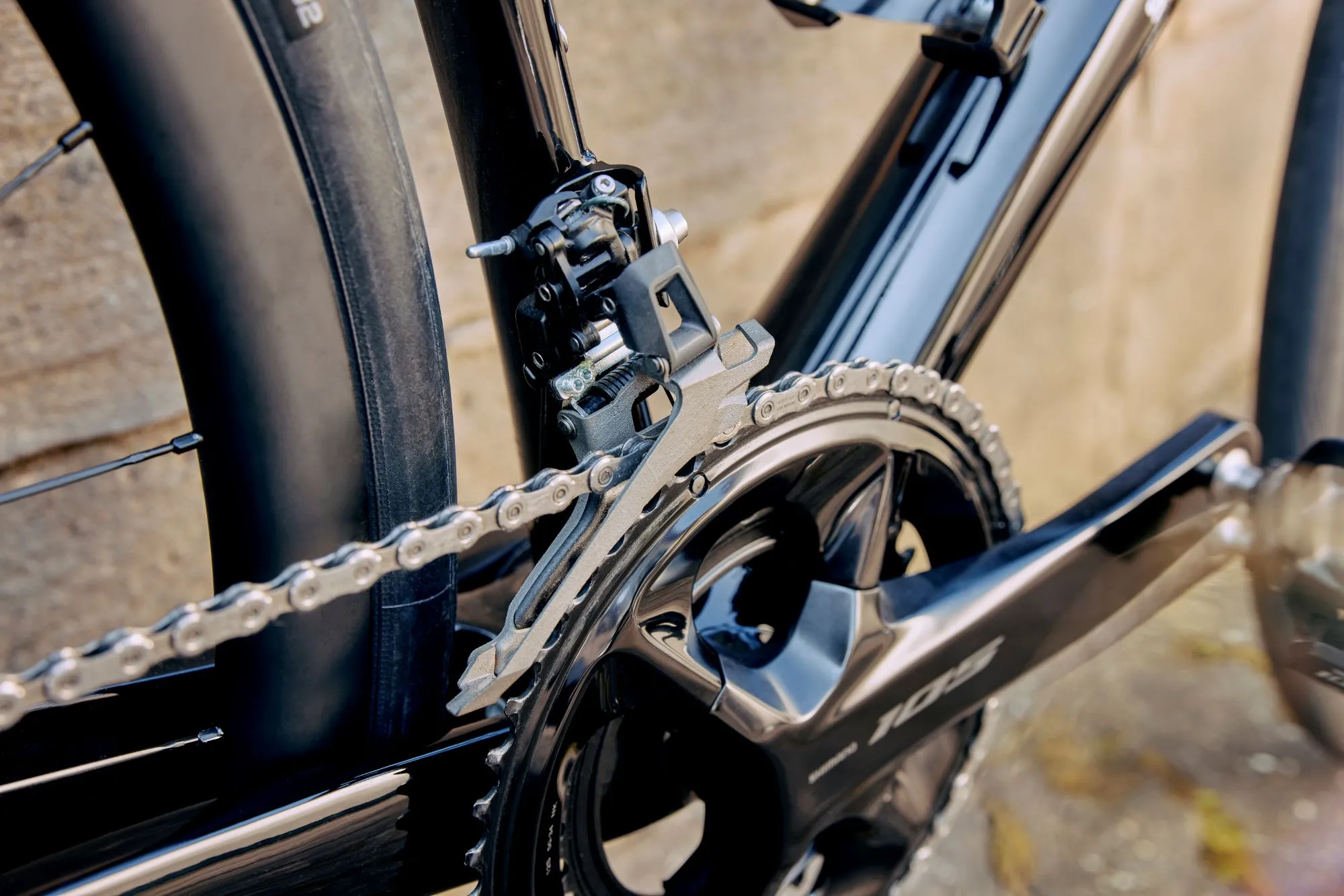
Look at the front derailleur. Is it parallel to the chainrings? Clean off any dirt.
2. Check Cable Tension
Just like the rear, use the barrel adjuster (if present) to fine-tune cable tension. Most Trek bikes have a barrel adjuster near the shifter.
3. Set Limit Screws
You’ll see two screws on the derailleur:
- L (low): Controls movement toward the smallest chainring.
- H (high): Controls movement toward the largest chainring.
To adjust:
- Shift to the smallest chainring.
- Adjust L screw so the derailleur cage is just 1-2mm away from the chain.
- Shift to the largest chainring.
- Adjust H screw so the cage is just 1-2mm away from the chain.
If the chain rubs or falls off, adjust until it moves smoothly.
4. Index The Gears
Shift through all front chainrings. If the chain doesn’t move with each shifter click, adjust cable tension.
5. Height And Angle Adjustment
The derailleur cage should be about 2-3mm above the largest chainring. It should be parallel to the chainrings.
If it’s too high, shifting will be slow. If it’s not parallel, the chain may rub. Use a hex wrench to loosen the clamp and adjust position.
Comparison: Trek Mountain Bike Derailleur Types
Trek mountain bikes use different derailleur types. Here’s a helpful comparison:
| Derailleur Type | Main Features | Common Problems | Adjustment Difficulty |
|---|---|---|---|
| Shimano Deore | Reliable, smooth shifting | Cable stretch, limit screw misadjustment | Easy |
| SRAM SX Eagle | Wide gear range, robust | Chain slap, hanger misalignment | Medium |
| Shimano Altus | Affordable, basic performance | Slow shifting, noisy | Easy |
| Shimano XT | High performance, lightweight | Precision needed, cable tension issues | Medium |
Knowing your derailleur type helps you understand which adjustments matter most.
Troubleshooting: Diagnosing Gear Issues
Even after adjustment, problems can appear. Here’s how to diagnose them:
Chain Skips Or Slips
- Check for worn chain or cassette
- Make sure cable tension is correct
- Inspect for bent derailleur hanger
Slow Shifting
- Clean and lubricate components
- Increase cable tension slightly
- Check for frayed cables
Noisy Shifting
- Adjust limit screws
- Check for chain rubbing on derailleur cage
- Make sure derailleur is parallel
Chain Drops Off
- Adjust limit screws carefully
- Check derailleur height and angle
- Replace worn chainrings or cogs
Gear Won’t Shift
- Inspect shifter for damage
- Replace stretched cables
- Make sure barrel adjuster isn’t maxed out
Data: Cable Tension And Limit Screw Specs
Bike mechanics often use specific numbers for cable tension and screw settings. Here’s a handy reference:
| Adjustment | Recommended Setting | Effect |
|---|---|---|
| Rear cable tension | 1.5–2.5 mm cable movement per click | Smooth shifting |
| Front cable tension | 1.5–2.0 mm cable movement per click | No chain rub |
| Limit screw gap | 1–2 mm from chain | Prevents chain drop |
| B-tension screw gap | 5 mm between jockey wheel and cog | Fast shifting |
Use these numbers as a starting point, but always fine-tune by feel.
Credit: ipmba.org
How Often Should You Adjust Gears?
Regular adjustment keeps your Trek mountain bike performing well. Here’s a basic schedule:
- After every 50–100 miles: Check cable tension
- After riding in mud or rain: Clean and lubricate chain and derailleurs
- After a crash or fall: Inspect derailleur hanger
- Every 6 months: Full gear adjustment
If you ride often or in tough conditions, check your gears more frequently. Small adjustments prevent bigger problems.
Practical Tips For Smooth Gear Adjustment
Over years of working with Trek mountain bikes, I’ve learned some non-obvious insights that beginners usually miss:
- Always shift gently: Forcing the shifter can stretch cables or damage the derailleur.
- Lubricate before adjusting: Lubrication makes adjustments more accurate.
- Record changes: Write down how many turns you make on barrel adjusters. This helps undo mistakes.
- Test on real terrain: After adjusting, ride your bike on hills and rough ground, not just on a stand.
- Inspect cables for rust: Old or rusty cables cause slow shifting—even if your adjustments are perfect.
Applying these tips makes your adjustments last longer and prevents frustration.
Example: Adjusting Gears On Trek Marlin Series
The Trek Marlin is a popular mountain bike with a 1x or 2x drivetrain. Here’s a real-world example:
- Shift to the lowest gear (largest rear cog).
- Check cable tension—if the chain doesn’t move, tighten the barrel adjuster.
- Move through all gears. If the chain skips between cogs, adjust the limit screws.
- Check the B-tension screw gap.
- Clean and lubricate after adjustment.
Most Marlin riders find cable tension is the biggest issue, especially after several rides.
Comparison: Manual Vs Electronic Gear Adjustment
Some Trek mountain bikes use electronic shifting like Shimano Di2. Here’s a comparison:
| Adjustment Type | Process | Benefits | Drawbacks |
|---|---|---|---|
| Manual (mechanical) | Adjust cables, screws by hand | Simple, affordable | Needs regular maintenance |
| Electronic (Di2) | Use buttons, software | Precise, fast | Expensive, battery needed |
Most Trek mountain bikes use manual adjustment, but electronic is becoming more common.
Credit: www.infinibandta.org
Preventing Gear Problems: Maintenance Tips
Good maintenance prevents most gear issues. Here’s what works best:
- Wash your bike regularly: Mud and dust cause shifting problems.
- Lubricate the chain every 2–3 rides: Prevents wear.
- Replace cables yearly: Fresh cables improve shifting.
- Check for bent hangers after crashes: Quick fixes prevent bigger repairs.
- Inspect limit screws after long rides: Screws can loosen over time.
These habits save money and keep your Trek mountain bike running smoothly.
When To Seek Professional Help
Sometimes, home adjustment isn’t enough. Visit a bike shop if:
- The derailleur hanger is badly bent
- Cables are frayed or rusted
- Gears won’t shift at all, even after adjustment
- You hear grinding noises that won’t go away
Professional mechanics have special tools and experience. If you’re unsure, it’s better to ask for help.

Credit: www.infinibandta.org
Real-world Statistics: Gear Adjustment Success
According to a survey by BikeRadar, 70% of mountain bikers say their gear shifting improved after adjusting at home. However, 30% still needed help from a mechanic for serious issues.
Most Trek mountain bike owners report:
- Faster shifting after adjusting cable tension
- Less chain skipping after cleaning and lubricating
- Better performance after replacing old cables
These numbers show that learning to adjust gears is a valuable skill.
Advanced Gear Adjustment: Fine-tuning For Experienced Riders
If you want peak performance, consider these advanced steps:
- Micro-indexing: Fine-tune cable tension in quarter-turns for perfect shifting.
- Chain length adjustment: Too short or long chains cause shifting issues.
- Tuning shifter feel: Some shifters allow internal adjustments for smoother clicks.
- Upgrading components: Higher-quality derailleurs and shifters improve reliability.
These steps aren’t necessary for beginners, but can make a big difference for advanced riders.
Gear Adjustment Mistakes To Avoid
Many beginners make the same mistakes. Avoid these for better results:
- Over-tightening screws: This can strip threads or damage parts.
- Ignoring dirt and rust: Cleanliness is key.
- Skipping test rides: Always test adjustments on real trails.
- Mixing up H and L screws: Know which screw does what.
- Using wrong tools: Use the correct size hex wrench and screwdriver.
Careful work prevents costly repairs.
Useful Resources For Trek Mountain Bike Owners
For more details, visit Trek’s official support page or trusted bike maintenance sites. For example, the Trek Bikes Support site offers videos and manuals specific to your model.
Frequently Asked Questions
How Often Should I Adjust Gears On My Trek Mountain Bike?
It’s best to check and adjust gears every 50–100 miles, or after rides in tough conditions like mud or rain. Regular maintenance prevents bigger problems and keeps your bike running smoothly.
Can I Use The Same Steps For Other Mountain Bike Brands?
Yes, most steps work for any bike with derailleurs. However, Trek mountain bikes may have specific parts or settings. Always check your bike’s manual for details.
What Should I Do If My Gears Still Won’t Shift After Adjustment?
If gears don’t shift after careful adjustment, check for bent hangers, damaged cables, or worn-out cogs. Sometimes a professional mechanic is needed for complex issues.
Is Electronic Gear Adjustment Better Than Manual?
Electronic adjustment offers faster, more precise shifting, but is more expensive and needs batteries. Manual adjustment is simpler and works well for most Trek mountain bikes.
What Tools Are Essential For Gear Adjustment?
You need a Phillips screwdriver, hex wrench set, clean rag, and bike lubricant. A bike stand and needle-nose pliers make the job easier, but aren’t essential.
Keeping your Trek mountain bike’s gears adjusted isn’t just about smooth rides—it’s about safety and confidence. When your gears work well, you climb hills, cruise flats, and fly down trails with ease. Don’t let poor shifting spoil your fun. With this guide, you have everything you need to fix your gears and enjoy your ride.
Take your time, follow each step, and soon you’ll shift like a pro—no bike shop required.

Hello Guys! I am John Reese, a professional biker and my hobby is biking! I have been biking for last 12 years and I love using bikes while outing as well. Based on my experiences with the different type of bikes (mountain bikes, road bikes and hybrid bikes); I am sharing my opinion about various bikes so that a beginner can get started right away. Happy reading!