
Changing the bottom bracket on your mountain bike can seem intimidating if you’ve never done it before. But with the right tools, a bit of patience, and clear instructions, you can save money and keep your bike running smoothly. A bottom bracket is the part that connects your bike’s crankset to the frame, allowing the cranks to rotate freely.
Over time, it can wear out, causing creaks, stiffness, or poor performance. Learning how to change it yourself is a valuable skill for any mountain biker.
Many bike shops charge $40–$100 for a bottom bracket replacement, not including the cost of parts. Doing it at home helps you understand your bike better and lets you choose the exact parts and quality you want. This guide will walk you through everything: identifying your bottom bracket type, gathering the right tools, removing the old unit, installing a new one, and some pro tips to avoid common mistakes. Even if you’re new to bike maintenance, you’ll find clear steps, practical advice, and answers to common questions.
Understanding Bottom Brackets
Before you start, it’s important to know what a bottom bracket is and which type your bike uses.
The bottom bracket is the bearing system that allows your crank arms to spin. It sits inside the bottom bracket shell (the tube at the base of your bike frame). There are many types, but the most common for mountain bikes are threaded and press-fit.
Main Bottom Bracket Types
| Type | Common Sizes | Key Features |
|---|---|---|
| Threaded (BSA) | 68mm, 73mm | Screws into frame, easy to service |
| Press-Fit (BB92, PF30, BB30) | 41mm, 46mm, 42mm | Pressed into frame, lighter, less tool-friendly |
| Square Taper/Octalink/ISIS | 68mm, 73mm | Older designs, use spindle with crank arms |
Threaded bottom brackets are the most common on mid-range and high-end mountain bikes. They are generally easier to replace and maintain. Press-fit bottom brackets are popular on newer bikes for weight savings but can be more difficult to service.
How To Identify Your Bottom Bracket
- Check your bike’s manual or manufacturer’s website.
- Look at the bottom bracket shell: Threaded types have visible threads; press-fit shells are smooth inside.
- Measure the shell width: Most mountain bikes use 68mm or 73mm shells.
- Remove the crank arm: This sometimes lets you see the bottom bracket type more clearly.
If you’re still unsure, a local bike shop can help you identify your bottom bracket, or you can compare your bike’s design to images on reputable cycling sites.
Tools And Materials Needed
Having the right tools makes changing a bottom bracket much easier. Some are specific to bottom bracket types.
Essential Tools
- Bottom bracket tool: Choose one that matches your bottom bracket style (e.g., Hollowtech II, ISIS, or press-fit removal tool).
- Crank puller: Needed for some cranksets, especially square taper.
- Allen keys (4mm–10mm): For crank bolts.
- Torque wrench: Ensures the correct tightness.
- Grease: High-quality bike grease.
- Anti-seize compound: Prevents seizing and creaks (especially for metal-on-metal).
- Rags and degreaser: For cleaning.
- Rubber mallet: Sometimes used for press-fit types.
- Replacement bottom bracket: Make sure it matches your frame and crankset.
Optional But Helpful
- Threadlocker (blue Loctite): For threaded types.
- Bearing press: For precise press-fit installation.
- Gloves: To keep your hands clean.
Example: Tools For Two Main Types
| Tool | Threaded (BSA) | Press-Fit |
|---|---|---|
| Bottom Bracket Tool | Hollowtech II/ISIS wrench | Press-fit remover/installer |
| Crank Puller | Square taper/Octalink tool | Usually not needed |
| Grease | Yes | Yes |
| Torque Wrench | Recommended | Recommended |
Pro tip: If you’re not sure what bottom bracket tool you need, take a clear photo of your crank area and compare it to pictures online, or bring your tool to a bike shop to confirm before starting.
Preparing Your Bike
Preparation is important for a smooth bottom bracket change. Start with a clean workspace and gather all your tools.
- Shift your bike into the smallest chainring and cog. This reduces chain tension.
- Remove pedals: Use a pedal wrench or 15mm spanner.
- Support the bike: Use a work stand if possible. If not, flip the bike upside down or lean it securely.
- Clean the bottom bracket area: Dirt and grit can get inside your frame and bearings.
- Take photos: Before removing anything, snap a few pictures. This helps you remember the order of parts.
Non-obvious tip: Take note of any spacers, washers, or specific crank arm orientations. Mixing up the order during reassembly is a common beginner mistake.
Removing The Crankset
You must remove the crank arms before accessing the bottom bracket. The method depends on your crank type.
For Hollowtech Ii And Similar (external Bearing)
- Remove the non-drive side crank bolt: Use a 5mm or 8mm Allen key.
- Loosen pinch bolts: Some models have two smaller bolts—loosen but don’t remove.
- Remove the plastic preload cap: Specialized tool required (often included with new cranks).
- Slide off the non-drive crank arm.
- Gently tap the spindle: The drive-side crank and spindle slide through the frame.
For Square Taper/octalink/isis
- Remove crank bolt: Use the correct Allen key or socket.
- Attach crank puller tool: Thread it into the crank arm.
- Turn the handle: This pulls the crank arm off the spindle.
- Repeat on both sides.
Common pitfall: Forcing crank arms off without the right tool can damage both the arm and bottom bracket threads. Always use a crank puller if required.
Removing The Old Bottom Bracket
Once the crank arms are off, you can remove the bottom bracket itself.
For Threaded (bsa) Bottom Brackets
- Insert the bottom bracket tool into the notches or splines.
- Turn the non-drive side (left) counterclockwise to loosen. Most are standard thread.
- Turn the drive side (right) clockwise to loosen. This side is often reverse-threaded.
- Remove both cups and pull out the bottom bracket.
Watch out: Bottom brackets can be very tight. Use a long-handled tool for leverage, and apply steady pressure.
For Press-fit Bottom Brackets
- Insert a press-fit removal tool through the shell from the opposite side.
- Position the tool so its lip catches the cup.
- Tap gently with a mallet to drive the cup out.
- Repeat for the other side.
Tip: If you don’t have a press-fit tool, a wooden dowel or old seatpost can sometimes work, but be gentle to avoid damaging your frame.
Cleaning And Inspecting The Bottom Bracket Shell
With the bottom bracket removed, this is a perfect time to clean and check the frame.
- Wipe the inside of the shell with a rag and degreaser.
- Inspect for wear or damage: Look for cracks, corrosion, or stripped threads.
- Check the fit: Make sure no old spacers or dirt remain.
If you see any frame damage, consult a professional before installing a new bottom bracket.
Advanced insight: Even a small amount of grit or old threadlocker can cause misalignment or creaking. Spend extra time cleaning now to prevent problems later.
Choosing The Right Replacement Bottom Bracket
Selecting the correct bottom bracket is critical. Using the wrong type can damage your frame or crankset.
Key Factors
- Compatibility: Match your frame’s shell type (threaded or press-fit) and width.
- Spindle diameter: Most mountain bikes use 24mm (Shimano) or 30mm (SRAM, Race Face).
- Crankset type: Some cranks require specific bottom bracket models.
- Quality: Higher-quality bearings last longer and spin smoother.
Popular Bottom Bracket Options
| Brand | Type | Approx. Price (USD) | Key Feature |
|---|---|---|---|
| Shimano Deore | Threaded (BSA) | $25–$40 | Reliable, easy to find |
| SRAM DUB | Press-Fit | $35–$50 | Wide crank compatibility |
| Race Face Cinch | Threaded/Press-Fit | $40–$70 | Sealed bearings, light weight |
| Cane Creek Hellbender | Threaded | $90–$120 | High-end, stainless bearings |
Beginner’s mistake: Assuming all bottom brackets are interchangeable. Always check measurements and manufacturer specs before buying.
Installing The New Bottom Bracket
Now comes the most important part—putting in your new bottom bracket correctly.
For Threaded (bsa) Bottom Brackets
- Grease the threads: Apply a thin layer of bike grease or anti-seize to both the shell and bottom bracket cups.
- Thread in the drive-side cup first: Remember, this side is often reverse-threaded (tighten counterclockwise).
- Thread in the non-drive side cup: Standard thread (tighten clockwise).
- Tighten to manufacturer’s torque: Usually 35–50 Nm, but check your bottom bracket instructions.
- Wipe away excess grease.
For Press-fit Bottom Brackets
- Grease the shell and bearing cups: Use a light layer of grease.
- Align the bearing cup: Press it in by hand as much as possible.
- Use a bearing press: Apply slow, even pressure until fully seated.
- Repeat for the other side.
- Check that both cups are flush: Uneven installation can cause creaking or bearing failure.
Pro Tips For Installation
- Don’t overtighten: Use a torque wrench to avoid damaging the frame.
- Check for smooth rotation: Spin the spindle by hand before reattaching cranks.
- Install any spacers or seals: Match the original setup.
Non-obvious insight: Some creaking is caused by dry metal-to-metal contact, not just loose parts. Grease or anti-seize on all contact points helps prevent this.
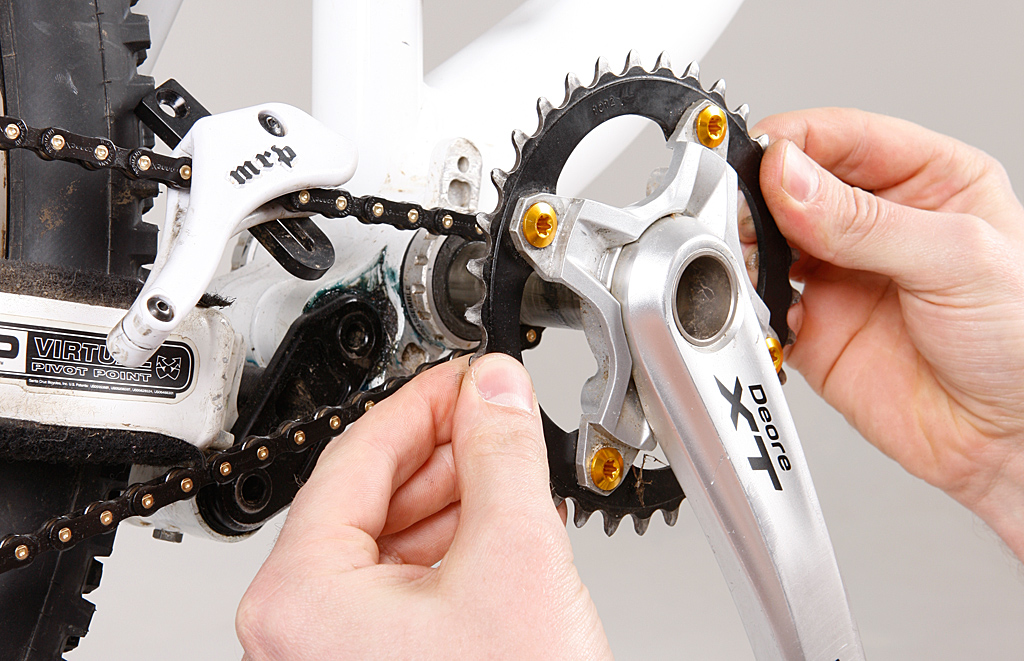
Credit: www.mbr.co.uk
Reinstalling The Crankset
Putting the crank arms back on is mostly the reverse of removal, but there are a few things to watch for.
Hollowtech Ii And Similar
- Slide the drive-side crank and spindle through the new bottom bracket.
- Attach the non-drive crank arm: Push it onto the spindle splines.
- Tighten the plastic preload cap by hand, then snug with the special tool.
- Tighten pinch bolts: Use a torque wrench, tightening each a little at a time.
- Reinstall chain and pedals.
Square Taper/octalink/isis
- Push crank arms onto the spindle: Make sure they’re at 180° to each other.
- Install crank bolts: Tighten to manufacturer’s torque.
- Reinstall pedals.
Double-check: Crank arms must be aligned exactly opposite each other. Misalignment can cause poor shifting and extra wear.
Testing And Final Checks
Before you ride, make sure everything is working perfectly.
- Spin the cranks: Should feel smooth, with no grinding or resistance.
- Check for play: Wiggle the cranks side to side; there should be no movement.
- Shift through all gears: Make sure the drivetrain runs quietly.
- Listen for noise: A silent bottom bracket is a sign of a good installation.
If you hear any new clicks or creaks, stop and check your work. Most problems are due to missed spacers, dry threads, or overtightening.
Maintenance Tips For Long-lasting Bottom Brackets
Changing your bottom bracket is only part of the story. With some care, you can greatly extend its life.
- Keep the area clean: Mud and water are the main enemies of bottom brackets.
- Check for play regularly: A wobbly crank arm usually means bearing wear.
- Avoid pressure washing: High-pressure water can push grit into the bearings.
- Replace when noisy or rough: Don’t wait for total failure.
- Use a torque wrench: Overtightening shortens bearing life.
Pro insight: Sealed bottom brackets can last 2,000–5,000 miles under normal use, but aggressive riding in wet conditions can reduce this to under 1,000 miles.
Troubleshooting Common Problems
Even with careful work, you may run into issues. Here’s how to handle the most common ones.
Creaking Or Clicking
- Check all bolts: Make sure everything is tight.
- Reapply grease: Remove and re-grease threads, cups, and spacers.
- Inspect for frame damage: Cracks or ovalized shells can cause persistent noise.
Hard To Install Or Remove
- Use penetrating oil: For stuck threaded cups, apply oil and let sit overnight.
- Check tool fit: Using the wrong size tool can strip splines or damage cups.
Crank Arm Play
- Check preload adjustment: Especially on Hollowtech II systems.
- Inspect for worn bearings: Excess play means it’s time for a new bottom bracket.
If problems persist, it may be worth visiting a bike mechanic for expert help.

Credit: www.amazon.com
When To Replace Your Bottom Bracket
Knowing when to replace your bottom bracket saves you from bigger repairs later.
- Grinding or gritty feeling: Indicates worn bearings.
- Visible rust or water: Means contamination and possible bearing failure.
- Creaking that won’t go away: Even after cleaning and greasing.
- Side-to-side play: Any movement means it’s time for a new one.
Regular checks during cleaning help you spot trouble early.
Frequently Asked Questions
How Long Does A Mountain Bike Bottom Bracket Last?
A typical bottom bracket lasts 2,000–5,000 miles under normal use. Riding in mud, rain, or washing your bike with high pressure can shorten this. Listen for noise or play as signs it’s time to replace.
Can I Change A Bottom Bracket Without Special Tools?
You need at least a bottom bracket tool for your specific type. Using makeshift tools often damages parts or the frame. For press-fit types, a bearing press is recommended but not always essential if you’re careful.
How Do I Know Which Bottom Bracket Fits My Bike?
Check your bike’s manual or measure the bottom bracket shell. Match the shell width (usually 68mm or 73mm for mountain bikes) and diameter. Also, check your crank spindle type (24mm, 30mm, etc). If unsure, ask your local bike shop or see images on Park Tool’s official guide.
Should I Use Grease Or Threadlocker On The Bottom Bracket?
For threaded bottom brackets, use grease or anti-seize on the threads. Some brands recommend blue threadlocker for extra security. For press-fit types, a thin layer of grease helps prevent creaks and makes future removal easier.
Why Does My New Bottom Bracket Still Creak?
Creaks can come from improper installation, dirt, missing spacers, or even the crank bolts. Double-check all contact points, clean thoroughly, and use grease where metal meets metal. Persistent noise may mean frame issues or a poorly fitting bottom bracket.
Replacing a bottom bracket might seem complex, but with practice, it becomes a straightforward job that saves you money and keeps your mountain bike performing at its best. Taking the time to learn these skills pays off every time you ride smoother, quieter trails.
If you ever doubt your abilities, don’t hesitate to ask for help from a professional mechanic or experienced rider. Your bike—and your legs—will thank you.

Credit: www.youtube.com

Hello Guys! I am John Reese, a professional biker and my hobby is biking! I have been biking for last 12 years and I love using bikes while outing as well. Based on my experiences with the different type of bikes (mountain bikes, road bikes and hybrid bikes); I am sharing my opinion about various bikes so that a beginner can get started right away. Happy reading!