
Learning how to change gears on a mountain bike is one of the most important skills for new riders. Gears help you climb hills, go faster on flat trails, and make your ride more enjoyable. But for beginners, shifting can feel confusing.
You might wonder which lever to use, when to shift, or why your bike makes strange noises. If you get it wrong, you risk damaging your bike or making your ride harder.
This guide is designed for new mountain bikers who want to understand gear shifting. We’ll cover how mountain bike gears work, step-by-step instructions for smooth shifting, common mistakes to avoid, and practical tips for real trails. By the end, you’ll feel confident using your gears and enjoy every ride.
How Mountain Bike Gears Work
Mountain bikes have gears to help you handle different terrain. Gears allow you to adjust how hard you need to pedal. When you shift gears, you change the relationship between the pedals and the wheels.
Most mountain bikes use a system with:
- Derailleurs: These move the chain from one gear to another.
- Shifters: Levers or buttons on your handlebars to control the derailleurs.
- Chainrings: The front gears attached to your pedals.
- Cogs: The rear gears attached to your back wheel.
A typical mountain bike may have 1×12, 2×10, or 3×9 setups. This means one, two, or three chainrings at the front, and several cogs at the back. More gears give you more choices, but even bikes with fewer gears can handle most trails.
Gear Range Explained
The lowest gears (smallest chainring, largest rear cog) make pedaling easier. You use them for climbing hills. The highest gears (largest chainring, smallest rear cog) make pedaling harder but move you faster. These are for going down hills or riding on flat terrain.
Let’s compare two common setups:
| Setup | Front Chainrings | Rear Cogs | Gear Range |
|---|---|---|---|
| 1×12 | 1 | 12 | Wide (easy to use) |
| 2×10 | 2 | 10 | Very wide (more options) |
Most beginners find 1x setups easier because there is only one shifter to worry about. With 2x or 3x setups, you have to use both shifters and think about front and rear combinations.
Parts Involved In Shifting Gears
To shift gears, you need to understand the main parts:
- Shifters: Located on your handlebars. Usually, the right controls the rear gears, and the left controls the front.
- Derailleurs: Move the chain. The front derailleur moves between chainrings; the rear between cogs.
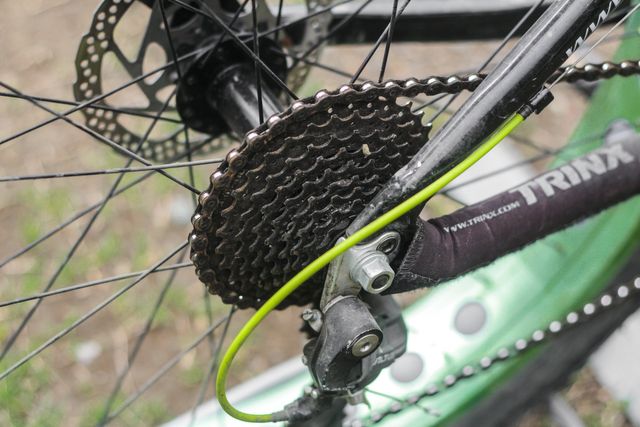
- Cassette: The set of cogs at the back wheel.
- Chainrings: The gears attached to the crank.
- Chain: Moves between gears as you shift.
You’ll use your thumb and sometimes your index finger to push or pull the shifters. It’s important to know which shifter controls which part. On most bikes:
- Right shifter = Rear gears (fine adjustments)
- Left shifter = Front gears (big changes)
Here’s a quick comparison of shifter types:
| Shifter Type | How It Works | Common On |
|---|---|---|
| Trigger | Push with thumb or finger | Modern mountain bikes |
| Twist | Rotate grip | Kids’ or entry-level bikes |
| Thumb | Push lever with thumb | Older bikes |
When To Shift Gears
Knowing when to shift is just as important as how to do it. Shifting at the wrong time can make pedaling harder or even damage your bike.
Key Moments To Shift
- Before a hill: Shift to an easier gear (lower) before you start climbing. If you wait until you’re already on the hill, it’s much harder to shift.
- Before a stop: Shift to a middle or easy gear so you can start smoothly.
- Before a turn: Lower gears help you accelerate out of a corner.
- When terrain changes: If the ground gets rough or steep, shift early.
Avoid Shifting Under Heavy Load
Don’t try to shift when you’re pedaling very hard. The chain and gears are under stress, and shifting can cause the chain to slip or make loud noises.
Pro tip: Ease up on the pedals just a bit when shifting. This helps the chain move smoothly.
How To Change Gears Step By Step
Let’s walk through the process. Whether your bike has one, two, or three chainrings, the basics are similar.
Step 1: Identify Your Shifters
Take a moment to look at your bike. Find the shifters. Practice moving them while stationary to see how they feel.
Step 2: Start Pedaling
Gears only shift when the pedals are moving. Never try to shift while stopped.
Step 3: Use The Right Shifter For Fine Tuning
The right shifter changes the rear gears. This lets you make small adjustments. If you want pedaling to be a bit easier or harder, use the right shifter.
- Push the lever forward or backward.
- Watch the chain move between cogs.
Step 4: Use The Left Shifter For Big Changes
The left shifter moves the chainrings at the front. This makes big changes in how hard it is to pedal.
- Use the left shifter if the trail changes a lot (for example, from flat to steep hill).
Step 5: Shift One Gear At A Time
Don’t jump multiple gears at once. Shift one step, pedal, then shift again if needed.
Step 6: Time Your Shifts
Shift before you need to. For example, if you see a hill coming, shift to a lower gear before you reach it.
Step 7: Combine Front And Rear Gears Wisely
If you have more than one chainring, combine them to match the terrain. For example:
- Flat terrain: Large chainring + small rear cog = fast speed.
- Steep hill: Small chainring + large rear cog = easy pedaling.
Here’s an example of how gear combinations affect your ride:
| Chainring | Rear Cog | Result |
|---|---|---|
| Large | Small | High speed, hard pedaling |
| Small | Large | Low speed, easy pedaling |

Credit: www.youtube.com
Common Mistakes Beginners Make
Many new riders struggle with shifting because they make avoidable mistakes. Here are some you should watch out for:
- Cross-chaining: This happens when you use the largest chainring and largest rear cog, or the smallest chainring and smallest rear cog, at the same time. It puts stress on the chain and can wear out parts quickly.
- Shifting under heavy load: If you shift while pedaling hard, the chain might skip or make loud noises. You could even break the chain.
- Not shifting early enough: Waiting too long to shift makes hills much harder and can damage your bike.
- Skipping gears: Jumping several gears at once can cause the chain to slip or derail.
- Ignoring gear maintenance: Dirty or dry chains make shifting rough. Clean and oil your chain regularly.
- Forgetting to use both shifters: On bikes with multiple chainrings, some beginners only use the rear gears. Learn to use both for the best performance.
Non-obvious insight: Many beginners think they should always use the highest gear for speed. But staying in high gears can tire you out quickly and strain your knees. Use lower gears to keep a steady rhythm and protect your joints.
Practical Tips For Smooth Shifting
Changing gears is easy with a few simple habits:
- Look ahead: Watch for hills, turns, or rough terrain and shift before you reach them.
- Pedal smoothly: Keep a steady pace; don’t stomp or spin too fast.
- Listen to your bike: If you hear grinding or clicking, check your gear combination. Shift to a better one.
- Practice: Try shifting on flat ground first, then on gentle hills.
- Keep your bike clean: Dirty gears make shifting harder. Clean your chain and cassette often.
Example: If you approach a steep hill, shift to a lower gear (smaller chainring, larger rear cog) before the slope. This makes climbing easier and prevents strain.

Credit: dgsupports.com.au
Understanding Gear Numbers And Ratios
Each gear combination on your mountain bike represents a gear ratio. This is the relationship between the number of teeth on the chainring and the cog. Lower ratios mean easier pedaling; higher ratios mean more speed.
A typical mountain bike might have:
- Front chainrings: 22, 32, 42 teeth
- Rear cogs: 11, 13, 15, 17, 20, 23, 26, 30, 34 teeth
Example: If you use a 22-tooth chainring and a 34-tooth rear cog, your gear ratio is 22/34 = 0.65. This is a low ratio, good for climbing hills.
How To Practice Gear Shifting
The best way to learn is to practice. Find a safe, flat area and try shifting through all the gears.
Practice Drills
- Start in a middle gear. Pedal and shift up or down one gear at a time.
- Try shifting both front and rear gears separately.
- Ride up and down small hills and pay attention to how shifting changes pedaling.
- Listen for any strange noises and adjust your shifting.
Non-obvious insight: Practice shifting while standing and sitting. Sometimes it feels different, especially on steep climbs. Standing puts more pressure on the pedals, which can make shifting harder.
Credit: www.dynamiccyclingadventures.com
How To Fix Gear Problems
If your gears don’t shift smoothly, there could be several reasons:
- Dirty chain or cassette: Clean them with bike degreaser.
- Loose cables: Tighten the shifter cables.
- Bent derailleur: Check if the derailleur is straight. If not, visit a bike shop.
- Worn out parts: Chains and cogs wear out over time. Replace them if you notice skipping or rough shifting.
Most problems are easy to fix with basic tools. If you’re unsure, ask a local bike shop for help. For detailed maintenance tips, you can visit the Sheldon Brown Gear Guide.
Comparing Mountain Bike Gear Systems
Some mountain bikes use single-speed setups, while others use complex multi-gear systems. Here’s a comparison to help you understand which is best for beginners:
| Type | Number of Gears | Ease of Use | Best For |
|---|---|---|---|
| Single-speed | 1 | Very easy | Smooth, flat trails |
| 1x (One front ring) | 10-12 | Easy | Beginner to advanced |
| 2x (Two front rings) | 16-20 | Moderate | Mixed terrain |
| 3x (Three front rings) | 21-27 | Harder | Varied terrain, touring |
For most beginners, a 1x system is easiest. You only need to think about one shifter and can focus on enjoying the ride.
How To Choose The Right Gear For The Terrain
Picking the right gear is about matching your effort to the trail.
- Flat trails: Use middle or high gears. You’ll go faster and use less energy.
- Steep climbs: Shift to low gears before the hill. Pedaling will be easier.
- Downhills: Use high gears to control your speed and avoid spinning out.
- Rough terrain: Use lower gears to keep control and balance.
Example: If you ride in a city with lots of hills, a bike with more gears (2x or 3x) gives you more options. For smoother trails, a 1x setup is simpler.
Safety Tips For Gear Shifting
Shifting gears can affect your balance and control, especially on difficult trails.
- Shift early: Don’t wait until you’re struggling or at high speed.
- Keep both hands on the handlebars: Always shift with your fingers, not your whole hand.
- Avoid sudden shifts: Smooth shifts prevent accidents and keep your chain safe.
- Check your gears before every ride: Make sure everything is working.
How To Maintain Your Mountain Bike Gears
Regular maintenance keeps your gears working well and prevents problems.
Basic Maintenance Steps
- Clean the chain and cassette: Use a brush and bike degreaser.
- Lubricate the chain: A little oil prevents rust and makes shifting smooth.
- Check cables: Make sure shifter cables are tight and not frayed.
- Inspect derailleurs: Look for bends or damage.
- Test shifting: Shift through all gears before every ride.
Tip: Even with good maintenance, chains and cogs wear out. Replace them every 1,000–2,000 miles for best performance.
Frequently Asked Questions
How Many Gears Do I Need On A Mountain Bike?
Most beginners do well with 10–12 gears (1x setup). This covers most terrain. If you ride hills often, more gears (2x or 3x setups) give you extra options, but they require more learning.
Why Does My Bike Make Noise When I Shift?
Grinding or clicking sounds often mean cross-chaining, dirty gears, or poor cable adjustment. Clean your bike, check cables, and try shifting to a different gear combination.
Can I Shift Gears While Stopped?
No. Gears only change when the pedals are moving. Shifting while stopped can damage your chain or derailleur.
What Is The Best Gear For Climbing Hills?
Use a low gear: the smallest chainring (front) and the largest rear cog. This makes pedaling easier, but you’ll move more slowly. Shift before you reach the hill.
How Often Should I Clean And Oil My Gears?
Clean your chain and cassette every 2–4 weeks if you ride often. Oil the chain after every cleaning or if it looks dry. Regular maintenance prevents problems and makes shifting smoother.
Mountain biking is all about enjoying the outdoors and challenging yourself. Learning to use your gears correctly will make every ride easier and more fun. Practice shifting, pay attention to your bike, and don’t be afraid to experiment. With time, changing gears will feel natural and you’ll be ready for any trail.

Hello Guys! I am John Reese, a professional biker and my hobby is biking! I have been biking for last 12 years and I love using bikes while outing as well. Based on my experiences with the different type of bikes (mountain bikes, road bikes and hybrid bikes); I am sharing my opinion about various bikes so that a beginner can get started right away. Happy reading!