
Mountain biking is more than just riding on rough trails. The real fun—and sometimes the main frustration—comes when you need to fix your mountain bike gears. Good gear function means smooth climbs, fast descents, and no sudden stops on the trail. But when your gears slip, click, or refuse to shift, riding gets difficult fast.
Many riders think fixing bike gears is a job for experts. In truth, with some patience, simple tools, and a basic understanding, most people can fix common gear problems at home or even on the trail. This guide will walk you through the process, from understanding your gear system to making repairs and adjustments with confidence.
Whether you’re new to bikes or have some experience, you’ll find practical advice and clear steps here.
Understanding Mountain Bike Gear Systems
Before fixing anything, you need to know what you’re working with. Mountain bikes use a combination of shifters, derailleurs, and cassettes to manage the gears. Each part must work together.
How Gears Work
- Shifters are on your handlebars. You use them to change gears.
- Derailleurs move the chain between sprockets. The front derailleur changes between chainrings; the rear derailleur moves the chain on the cassette.
- The cassette is a group of sprockets (small gears) on your rear wheel.
When you shift, the derailleur moves the chain to a different sprocket. Lower gears make pedaling easier (good for climbing), and higher gears make you go faster (good for flat or downhill).
Common Gear Problems
Riders often face these problems:
- Gears skip under pressure or when you pedal hard.
- Chain won’t shift to a bigger or smaller gear.
- Chain falls off when shifting.
- Noisy gears, like clicking or grinding.
These problems almost always come from poor adjustment, worn parts, or dirt.
Essential Tools And Preparation
Fixing your gears doesn’t require a whole workshop. You’ll get far with just a few tools and some preparation.
Basic Tools You Need
- Allen keys (usually 4, 5, and 6 mm sizes)
- Phillips and flat screwdrivers
- Bike chain lubricant
- Bike stand (optional but helpful)
- Clean rags
- Chain checker tool (for measuring chain wear)
Clean And Inspect First
Before adjusting anything, clean your drivetrain:
- Use a rag to wipe the chain, derailleurs, and cassette.
- Add a few drops of lube to the chain, then wipe off extra.
Non-obvious tip: Sometimes, cleaning alone solves minor shifting problems. Dirt or dried lube can block smooth gear changes.
Now, check for:
- Bent or broken derailleur hangers
- Frayed or rusty shifter cables
- Worn sprockets or chain (teeth look sharp or chain stretches)
If you see serious wear or damage, replace those parts before adjusting.
Diagnosing Gear Problems
You can’t fix gears if you don’t know what’s wrong. Here’s how to find the root of common issues.
Isolate The Problem
Shift through all gears while pedaling (you can do this with the bike upside down if you don’t have a stand).
- If the rear gears are the problem, focus on the rear derailleur.
- If the front gears are the problem, check the front derailleur.
Beginner insight: Many issues come from the rear derailleur, since it handles more gear changes and tension.
Table: Common Gear Problems And Likely Causes
| Problem | Most Likely Cause | Quick Check |
|---|---|---|
| Skipping gears | Cable tension, worn chain | Try tightening barrel adjuster |
| Chain drops off | Derailleur limit screws | Check end stops on derailleur |
| Slow or no shift | Sticky cables, dirty derailleur | Clean and lubricate |
| Noisy gears | Misalignment, chain wear | Check chain and gear alignment |
Write down what you see or hear. A clear description helps you (or a shop) fix it faster.
Adjusting Rear Derailleur Gears
Most shifting problems happen at the rear derailleur. Here’s how to adjust it step by step.
Step 1: Set The Barrel Adjuster
The barrel adjuster is a small knob where the cable enters the derailleur or shifter. It controls cable tension.
- Turn it clockwise to loosen (less tension)
- Turn it counterclockwise to tighten (more tension)
If the chain hesitates to move up to larger cogs, add tension (turn counterclockwise). If it hesitates going to smaller cogs, reduce tension (turn clockwise).
Step 2: Check Limit Screws
There are two small screws on the derailleur, usually marked H (high) and L (low).
- The H screw limits the smallest cog (hardest gear).
- The L screw limits the largest cog (easiest gear).
If the chain falls off the cassette, adjust these screws. Only turn a quarter turn at a time.
Step 3: Fine-tune The Shifting
Shift through each gear. If the chain won’t move smoothly, use the barrel adjuster in small steps.
Non-obvious insight: Make sure the derailleur hanger (the small part that attaches the derailleur to the frame) is straight. Even a small bend can cause poor shifting.
Table: Rear Derailleur Adjustments
| Symptom | Adjustment Needed | Where to Adjust |
|---|---|---|
| Chain won’t shift up | Add cable tension | Barrel adjuster |
| Chain won’t shift down | Reduce cable tension | Barrel adjuster |
| Chain falls off smallest cog | Tighten H screw | Limit screw |
| Chain falls off largest cog | Tighten L screw | Limit screw |
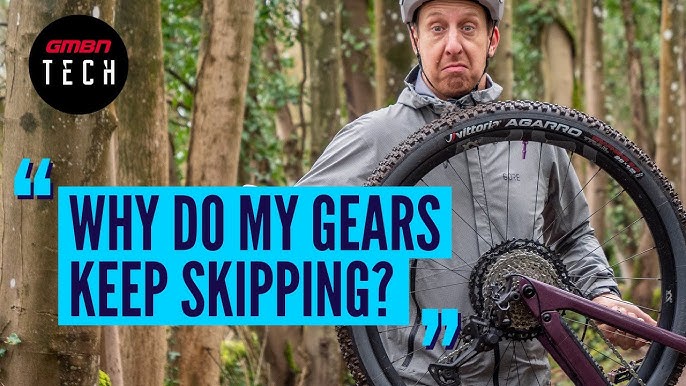
Credit: www.youtube.com
Adjusting Front Derailleur Gears
Front derailleurs are simpler but can still cause trouble, especially chain drops.
Step 1: Set Height And Angle
- The derailleur cage should sit 1-3 mm above the largest chainring.
- The cage should be parallel to the chainring.
If it’s too high or angled, loosen the clamp bolt and adjust.
Step 2: Adjust Limit Screws
Like the rear, there are two screws:
- L screw stops the derailleur from pushing the chain off the smallest ring.
- H screw stops it from going past the largest ring.
Shift to the smallest ring and adjust the L screw so the cage just misses the chain. Do the same for the H screw on the largest ring.
Step 3: Set Cable Tension
Shift to the smallest ring and largest rear cog. Use the barrel adjuster or cable clamp to add just enough tension for smooth shifting to the next ring.
Pro tip: Small changes make a big difference with front derailleurs. Move in tiny steps.
Replacing Worn Or Damaged Parts
Sometimes, no adjustment can fix your gears. Worn or damaged parts must be replaced.
When To Replace
- Chain: Replace when a chain checker tool shows more than 0.75% stretch.
- Cassette: If new chain skips, the cassette is likely worn.
- Cables and housing: Replace if frayed, rusty, or stiff.
How To Replace A Chain
- Use a chain tool to break the old chain.
- Lay the new chain next to the old one (or follow manufacturer’s guide for length).
- Install using a quick link or pin.
How To Replace A Cassette
- Remove rear wheel.
- Use a cassette tool and chain whip to loosen lockring.
- Slide off the old cassette, install the new one.
How To Replace Cables
- Shift to the smallest gear.
- Cut the cable end and loosen the anchor bolt.
- Pull the old cable out, then push the new one through.
- Lubricate if possible, then tighten.

Credit: www.liv-cycling.com
Fine-tuning Gear Performance
Once basic repairs are done, you can make your bike shift like new.
Lubrication And Cleaning
- Wipe chain after every ride if conditions are muddy or dusty.
- Re-lube every 100 miles or after wet rides.
- Clean derailleurs and cassette monthly.
Table: Lubrication Frequency
| Riding Conditions | Lubrication Needed | Cleaning Needed |
|---|---|---|
| Dry, dusty | Every 100 miles | Weekly |
| Wet, muddy | After each ride | After each ride |
| Mixed weather | Every 2 weeks | Every 2 weeks |
Indexing The Gears
Indexing means adjusting the system so each click of the shifter moves the chain exactly one gear. If your gears don’t “click” into place, fine-tune using the barrel adjusters.
Test Ride And Final Adjustments
After all changes, test ride your bike. Try shifting under light and heavy load. Make small tweaks as needed. If you’re unsure, watch a video or visit a professional for a quick check.
Preventing Future Gear Problems
Prevention keeps your bike running smoothly and saves money.
Simple Prevention Tips
- Keep the drivetrain clean.
- Replace cables every 1-2 years, or sooner in wet climates.
- Check derailleur hanger alignment every few months.
- Avoid cross-chaining (using the smallest front ring and the smallest rear cog together).
Watch For Early Signs
If you notice rough shifting, don’t wait. Early fixes are easier and cheaper.
Insight: Many beginners forget to check cable condition. Old, sticky cables are the hidden cause of many shifting issues.
When To Visit A Bike Shop
Most gear fixes are DIY, but sometimes you need help.
- If you crash and the derailleur is bent, let a shop check it.
- If the shifter is broken or doesn’t “click,” you may need a replacement.
- If adjustments don’t solve the problem, ask for help.
Shops can also do a full drivetrain tune-up for a reasonable price.
Extra Tips For Trailside Repairs
You won’t always be at home when gears fail. Here’s what to do on the trail.
- Carry a multi-tool with a chain breaker and screwdriver.
- If the chain jams, stop pedaling immediately to avoid damage.
- If the derailleur bends, gently bend it back or remove it and make the bike a single speed to ride home.
Pro tip: Practice fixing a dropped chain at home, so you’re ready in the wild.
Comparing Gear Types: Mechanical Vs Electronic
Modern mountain bikes sometimes use electronic shifting. Here’s how they compare to standard mechanical gears.
| Feature | Mechanical Gears | Electronic Gears |
|---|---|---|
| Shifting method | Cable and housing | Electric motor, buttons |
| Maintenance | Clean/lube, adjust cables | Charge battery, software updates |
| Common problems | Sticky cables, misalignment | Low battery, sensor errors |
| Trailside repairs | Simple tools fix most issues | Harder to fix without parts |
Advice: Mechanical gears are easier for most riders to fix and maintain. Electronic systems offer perfect shifting but need battery and special tools.
Resources For Learning More
If you want to dive deeper, many good guides and videos are online. For a technical deep dive, see the Wikipedia page on bicycle gears.

Credit: www.youtube.com
Frequently Asked Questions
Why Do My Mountain Bike Gears Keep Slipping?
Gears slip when the chain or cassette is worn, or when the cable tension is wrong. Make sure your chain isn’t stretched and adjust the barrel adjuster if needed. Old or sticky cables can also cause slipping.
How Often Should I Replace My Bike Chain?
For most riders, replace the chain every 1,500 to 2,000 miles. If you ride in muddy or wet conditions, check more often. Use a chain checker tool for accuracy.
What Can Cause My Bike Not To Shift Into The Highest Or Lowest Gear?
This often means the limit screws on the derailleur are set wrong, or the cable tension is off. Make small adjustments and check if the derailleur can move far enough in each direction.
Is It Ok To Ride With A Skipping Gear?
You can ride, but it’s not safe for long. A skipping gear can lead to a broken chain or more expensive damage. Fix it as soon as possible.
Can I Upgrade To Electronic Gears On My Mountain Bike?
Yes, if your bike supports it and you’re ready for the cost. Electronic systems offer smooth shifting but are harder for beginners to repair on the trail. Mechanical gears are easier for most DIY fixes.
Fixing mountain bike gears may sound complex, but it quickly becomes second nature with practice. By learning to diagnose problems, making simple adjustments, and keeping your bike clean, you’ll enjoy smoother rides and fewer surprises on the trail. With patience and the right tools, you’ll soon be shifting like a pro—wherever your next adventure takes you.

Hello Guys! I am John Reese, a professional biker and my hobby is biking! I have been biking for last 12 years and I love using bikes while outing as well. Based on my experiences with the different type of bikes (mountain bikes, road bikes and hybrid bikes); I am sharing my opinion about various bikes so that a beginner can get started right away. Happy reading!