
Changing a back tire on a mountain bike might look complicated, especially if you are new to cycling or have never worked with bike parts before. Yet, learning this skill can save you time, money, and trouble when you face a flat tire during a ride.
This guide will show you exactly how to change a back tire on a mountain bike, with clear steps, practical advice, and tips to avoid common mistakes. With some patience and the right tools, you can handle this task confidently—even if English is not your first language.
Understanding Your Mountain Bike’s Back Tire
Before jumping into the steps, it’s important to know a bit about your mountain bike’s back tire. The back tire is often larger or tougher than the front tire because it supports more weight and deals with extra stress from pedaling. On most mountain bikes, the back tire connects to the rear wheel, which is attached to the frame by a quick-release lever or axle nuts.
There are two main types of tire setups:
- Tubed tires: These have an inner tube inside the tire that holds air.
- Tubeless tires: These do not use an inner tube. The tire seals directly to the rim.
Most beginner mountain bikes use tubed tires, but tubeless systems are becoming more popular for their better puncture resistance and lower pressure options.
Tools And Materials You Need
Changing a back tire is much easier when you have the right tools. Here’s what you need:
- Tire levers (at least two)
- Spare tube or new tire (if replacing)
- Bicycle pump (floor pump or portable)
- Wrench or Allen key (if your bike uses axle nuts)
- Patch kit (optional, for fixing punctures)
- Gloves (optional, keeps hands clean)
- Chain holder (optional, helps keep chain tidy)
- Cleaning rag (helps remove dirt)
Not every tool is required for each job. For example, a quick-release lever doesn’t need a wrench, and tubeless systems don’t need a spare tube.
Getting Ready: Safety And Preparation
Safety comes first. Always change your tire in a safe place away from traffic. If you are outside, move your bike off the path. Set your bike upright using the kickstand, or flip it upside down resting on the saddle and handlebars.
This makes the rear wheel easier to reach.
Check your tire for damage before starting. If the tire has a big cut or is worn out, replace it. If only the tube is punctured, you can fix or replace the tube.
Step-by-step Guide: Removing The Back Wheel
Removing the back wheel is often the hardest part because it involves the chain and gears. Follow these steps:
- Shift gears: Put the chain in the smallest chainring and smallest rear cog. This reduces tension and makes the wheel easier to remove.
- Open the brake (if needed): On bikes with rim brakes, open the brake so the wheel can come out. Most mountain bikes use disc brakes, which don’t need this step.
- Release the axle: If you have a quick-release lever, open it and pull the wheel out. If your bike uses nuts, use a wrench or Allen key to loosen them.
- Lift the bike slightly: Hold the frame and gently pull the back wheel out. Guide the wheel clear of the chain and derailleur.
Tip: If your bike has a derailleur, push it back gently to free the wheel.
Removing The Old Tire
Once the wheel is out, you need to remove the tire. Here’s how:
- Deflate the tire: Release all air from the tire. Press the valve to let air escape.
- Use tire levers: Insert a tire lever under the edge (bead) of the tire. Pry it up and hook the lever onto a spoke.
- Work around the tire: Use a second lever a few inches away. Slide it along the rim to lift the tire bead off the rim.
- Remove one side: Once one side is off, pull out the tube (if you have one).
- Take off the tire completely: Remove the other bead if you are changing the whole tire.
Tip: Do not use metal tools like screwdrivers—they can damage the rim.
Inspecting And Preparing The Rim
Before installing the new tire or tube, check the rim and inside the tire for sharp objects. Sometimes small pieces of glass, thorns, or metal hide inside and cause repeat flats.
- Run your fingers gently inside the tire and around the rim.
- Look for damage or rough spots.
- Clean the rim and tire with a rag.
If you find sharp objects, remove them before proceeding.
Installing The New Tube Or Tire
This step depends on whether you are replacing just the tube or the whole tire.
For Tubed Tires:
- Place one bead of the tire onto the rim: Start at the valve area.
- Insert the tube: Push the tube inside the tire, starting with the valve stem through the hole in the rim.
- Tuck in the tube: Make sure the tube sits flat with no twists.
- Push the second bead onto the rim: Use your hands or tire levers to finish. Avoid pinching the tube.
Tip: Inflate the tube slightly before installing. It helps the tube keep its shape and reduces pinching.
For Tubeless Tires:
- Make sure the rim and tire are clean and dry.
- Install the tire bead onto the rim.
- Use a tubeless valve and sealant if needed.
- Inflate the tire quickly to seal.
Tubeless setups can be tricky for beginners. If you are unsure, ask for help or visit a bike shop.
Inflating The Tire
Once the tire is installed, inflate it to the recommended pressure. This is marked on the tire sidewall, usually in PSI (pounds per square inch).
- Use a pump with a pressure gauge for accuracy.
- Inflate slowly, checking for bulges or the tire popping off the rim.
- Stop if you hear air leaking or see the tire not seating correctly.
Mountain bike tires usually run between 30–50 PSI, but lower pressures offer better grip off-road.
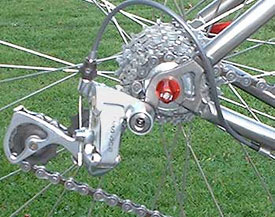
Credit: www.chainwheeldrive.com
Reinstalling The Back Wheel
Put the wheel back onto the bike, making sure it sits straight in the frame.
- Align the wheel with the dropouts: Guide the axle into place.
- Check the chain and derailleur: Make sure the chain sits on the smallest cog.
- Tighten the axle: Close the quick-release lever or tighten axle nuts.
- Check the brakes: If you opened rim brakes, close them now.
- Spin the wheel: Make sure it turns freely and is centered.
Tip: If the wheel wobbles, adjust it before riding.
Testing Your Bike After Tire Change
Before heading out for a ride, test your work:
- Spin the rear wheel and listen for strange noises.
- Check the tire pressure.
- Shift through gears to make sure the chain moves smoothly.
- Ride a short distance and check the brakes.
If anything feels wrong, stop and check again. It’s better to fix problems now than during a ride.
Common Mistakes And How To Avoid Them
Changing a tire is simple, but mistakes can cause trouble. Here are some common errors:
- Pinching the tube: When installing the tire, pinching the tube can cause a flat right away. Inflate the tube slightly before installation.
- Forgetting to check for sharp objects: If you skip checking the tire and rim, you may get repeat flats.
- Over-tightening the axle: This can damage the threads or make removal harder next time.
- Not checking the tire pressure: Riding with low or high pressure can lead to poor performance or another flat.
One non-obvious insight: Many beginners forget to check the directional arrows on their tire. Some tires are designed to roll a certain way. Look for arrows on the sidewall and install them in the right direction for best performance.
Another often-missed detail: When using tubeless tires, it’s important to shake and rotate the wheel after adding sealant. This helps spread the sealant evenly and improves puncture protection.
Comparing Tubed Vs. Tubeless Tires
Some riders wonder whether to switch from tubed to tubeless tires. Here’s a quick comparison:
| Feature | Tubed Tires | Tubeless Tires |
|---|---|---|
| Puncture Resistance | Lower | Higher |
| Weight | Heavier | Lighter |
| Setup Difficulty | Easy | Harder |
| Maintenance | Simple | Needs more care |
| Cost | Lower | Higher |
If you ride mostly on rough trails, tubeless tires can help prevent flats. For city riding or easy trails, tubed tires are fine.
How Long Does It Take To Change A Back Tire?
Time depends on your skill. Here’s a rough estimate:
| Experience Level | Average Time |
|---|---|
| Beginner | 30–45 minutes |
| Intermediate | 15–25 minutes |
| Expert | 10–15 minutes |
Practice makes the job easier. Set up your workspace and lay out tools before you start. This alone can save you several minutes.
Quick Tips For Success
- Keep your hands clean: Use gloves or wash hands before touching the tube.
- Carry a spare tube and pump: Always bring these on rides.
- Check tire pressure regularly: Under-inflated tires wear faster and can cause flats.
- Avoid sharp tools: Use plastic tire levers to protect your rim.
- Watch for tire bead alignment: Make sure the tire bead is seated evenly all around the rim.
If you have trouble seating the tire, try inflating and deflating it a few times. This helps the bead settle.
When To Replace The Entire Tire
Sometimes, changing the tube is not enough. Replace the whole tire if:
- The tire is worn out (little tread left)
- The sidewall is cracked or torn
- There are large cuts or holes
- The tire is older than 2–3 years (rubber can weaken)
Using an old or damaged tire increases the risk of flats and poor performance.
Example: Changing A Back Tire On A Trail Ride
Imagine you are biking on a forest trail and hear a sudden hiss. You stop and see your back tire is flat. Here’s what you do:
- Move off the trail for safety.
- Shift gears to the smallest cog.
- Remove the wheel using the quick-release lever.
- Take off the tire and check for thorns.
- Replace the tube and inflate.
- Reinstall the wheel and check alignment.
- Continue your ride.
This process takes about 20–30 minutes if you have practiced before.
Table: Essential Items For On-the-go Tire Change
| Item | Purpose | Recommended |
|---|---|---|
| Spare tube | Replace punctured tube | Yes |
| Tire levers | Remove tire from rim | Yes |
| Mini pump | Inflate tire | Yes |
| Patch kit | Fix small holes | Optional |
| Multi-tool | Adjust nuts/bolts | Optional |
| Gloves | Keep hands clean | Optional |
Having these items in your bag can make a big difference during a ride.
Advanced Tips For Experienced Riders
If you ride often or tackle tough trails, try these advanced tips:
- Use tubeless sealant: This seals small holes automatically.
- Upgrade to lightweight tires: Reduces rolling resistance.
- Carry CO2 cartridges: For fast inflation.
- Learn to fix a broken chain: Sometimes, changing the tire also disturbs the chain.
Many experienced riders also mark their tires with chalk to check for movement after hard rides.

Credit: www.youtube.com
Why Changing Your Own Tire Matters
Knowing how to change your own back tire gives you independence and confidence. You won’t be stuck waiting for help or paying for repairs every time you get a flat. It also lets you customize your bike with better tires or tubes, improving your riding experience.
A study from the National Bicycle Dealers Association found that over 60% of riders who learned basic maintenance skills felt more satisfied and rode more often. This shows the value of learning even simple tasks like changing a tire.
For more details about mountain bike maintenance, you can read guides on Bicycling.com.
Frequently Asked Questions
How Do I Know If My Back Tire Needs Changing?
If your tire is flat, cracked, or worn out, it’s time to change it. Check the tread pattern and sidewalls. If you see cords, cuts, or the tire is older than two years, replace it.
What Pressure Should I Use For Mountain Bike Tires?
Most mountain bike tires work best at 30–50 PSI. Lower pressure is better for off-road grip. Always check the sidewall for the recommended range.
Can I Use A Regular Pump For Mountain Bike Tires?
Yes, but a floor pump with a gauge is best. Small pumps work in emergencies, but they take longer and may not reach high pressures.
Is It Hard To Change A Tubeless Back Tire?
Changing a tubeless tire is harder than a tubed tire, especially for beginners. You need special sealant, a tubeless valve, and sometimes a compressor to seat the tire.
What Are The Signs Of A Bad Tube Installation?
Common signs include air leaks, bulges, or flat tires soon after installation. If you pinch the tube or install it twisted, it can fail quickly. Check for smooth, even seating before inflating fully.
Changing a back tire on a mountain bike is a skill every rider should learn. With good tools, careful steps, and regular practice, you can handle flats or tire changes easily and safely. This saves money, reduces stress, and lets you enjoy more rides without worry.

Credit: www.youtube.com

Hello Guys! I am John Reese, a professional biker and my hobby is biking! I have been biking for last 12 years and I love using bikes while outing as well. Based on my experiences with the different type of bikes (mountain bikes, road bikes and hybrid bikes); I am sharing my opinion about various bikes so that a beginner can get started right away. Happy reading!