
Finding the right mountain bike seat height can feel confusing, even for experienced riders. If your seat is too high or too low, you might get tired faster, lose control, or even risk injury. Many people just guess their seat height or copy someone else’s setup.
But your body, riding style, and the terrain you choose all matter. Getting it right can make a huge difference in comfort, power, and fun on the trails.
This article will guide you step by step, using simple words and clear examples. Whether you ride for adventure, fitness, or competition, you’ll learn how to set your seat at the perfect height. We’ll look at different methods, compare them, and explain what really matters.
You’ll also get practical tips and answers to common questions—all in language that’s easy to understand.
Why Seat Height Matters For Mountain Biking
Many riders underestimate the impact of seat height. Some think it only affects comfort, but it’s much more important.
Power and Efficiency: When your seat is at the right height, your legs can push more power into each pedal stroke. This means you climb hills more easily and ride longer without getting tired.
Comfort and Health: A seat that’s too low makes your knees bend too much, which can hurt your joints. Too high, and you might rock your hips or lose balance, leading to back pain or saddle sores.
Bike Control: On rough trails, you need to move your body for balance. The right seat height lets you stand up easily when you need to, but also sit down and pedal efficiently.
Injury Prevention: A poor seat position stresses your knees, hips, and lower back. Over time, this can lead to pain or injuries that keep you off your bike.
Surprisingly, even small changes—just a few millimeters—can make a big difference. Some professional riders adjust their seats by tiny amounts before a big race.
The Basics: How Seat Height Is Measured
Before you adjust your mountain bike seat, it helps to know how seat height is defined.
Seat height usually means the distance from the center of the bottom bracket (where the pedal arms connect) to the top of the seat, measured along the seat tube. Most bike shops use this method.
Some people measure from the ground to the top of the seat. This is less accurate because tire size or crank length can change the number.
Why does the measurement method matter? If you compare your seat height with someone else’s, always check how it’s measured.
Here’s a quick look at the two common methods:
| Measurement Method | Description | Best For |
|---|---|---|
| Bottom Bracket to Saddle | Center of crank axle to top of seat, along seat tube | Accurate, fits most bikes |
| Ground to Saddle | From the floor to the highest point of seat | Quick checks, less precise |
For most riders, it’s best to use the bottom bracket to saddle method. It’s more consistent, so you can repeat your setup or share it with a mechanic.
Credit: www.rei.com
Methods To Find The Right Seat Height
There’s no single “perfect” seat height for everyone. But several proven methods can help you find a good starting point. Let’s explore the most popular ones.
1. The Heel-to-pedal Method
This is a simple way to set your seat without any special tools.
Steps:
- Wear your regular riding shoes.
- Sit on your bike, holding onto a wall or a friend for balance.
- Place your heel on the pedal.
- Pedal backward until your leg is fully straight when the pedal is at the lowest point.
If your hips rock side to side, the seat is too high. If your knee is bent a lot, it’s too low. Adjust until your leg is straight with your heel on the pedal.
Pro tip: When you pedal normally (with the ball of your foot), your knee will stay slightly bent. This is usually a safe, comfortable starting point.
2. The Lemond Formula
Named after Greg LeMond, a famous cyclist, this method uses your inseam measurement (the length of your inner leg).
How to do it:
- Stand with your feet about 6 inches apart.
- Measure from the floor to your crotch (wearing shoes).
- Multiply this number by 0.883.
For example, if your inseam is 80 cm: 80 x 0.883 = 70.64 cm. This is your recommended seat height from the bottom bracket to the top of the saddle.
This formula works well for road bikes, but for mountain bikes, many riders lower the seat by 1-2 cm for better control on rough terrain.
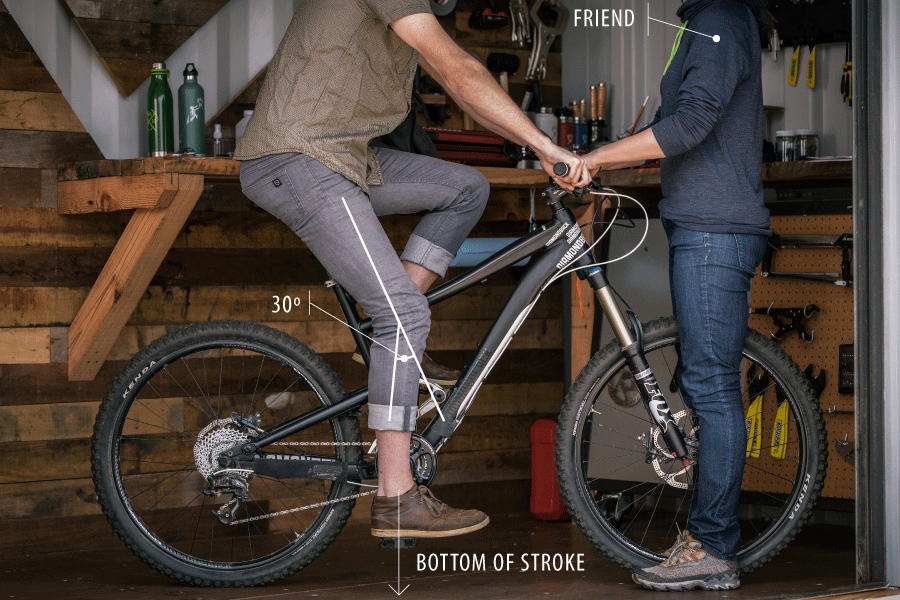
3. The Holmes Method (knee Angle)
This method uses a specific knee angle for efficiency and injury prevention.
Steps:
- Sit on your bike with your foot on the pedal at the lowest point (6 o’clock position).
- The ideal knee angle should be between 25 to 35 degrees when measured behind the knee.
You can use a simple angle-measuring app or ask a friend to check with a goniometer. This method is more precise, especially if you have knee problems.
4. Using A Bike Fit Professional
If you want the best setup, visit a bike shop for a professional bike fit. They use lasers, cameras, and your riding style to find the perfect position. It costs money, but serious riders often say it’s worth it.
Comparing The Methods
Here’s a quick side-by-side look at these common methods:
| Method | Accuracy | Tools Needed | Skill Level |
|---|---|---|---|
| Heel-to-Pedal | Good for beginners | None | Easy |
| LeMond Formula | Consistent | Tape measure, calculator | Easy |
| Holmes Method | Very accurate | Angle finder/app | Moderate |
| Professional Fit | Best | Special tools | Expert |
Step-by-step: Adjusting Your Mountain Bike Seat
Let’s walk through how to set your seat height at home. You don’t need fancy gear—just patience and a willingness to experiment.
Step 1: Measure Your Inseam
- Stand against a wall with your feet 6 inches apart.
- Place a book between your legs, pressing up gently to mimic the saddle.
- Measure from the floor to the top of the book. This is your inseam.
Step 2: Apply The Lemond Formula
Multiply your inseam by 0. 883. Write down this number.
Step 3: Adjust The Seat
- Use a tape measure to set the seat height from the bottom bracket to the top of the saddle.
- Tighten the seatpost clamp.
Step 4: Test The Heel-to-pedal Position
- Sit on your bike (with help if needed).
- Place your heel on the pedal at its lowest point.
- Your leg should be straight but not overstretched.
- Adjust up or down a few millimeters if needed.
Step 5: Fine-tune By Riding
- Go for a short ride on flat ground.
- Check for these signs:
- Hips rocking side to side: Seat too high.
- Knees bent too much: Seat too low.
- Pain in front of the knee: Seat too low.
- Pain behind the knee: Seat too high.
Step 6: Adjust For Terrain
On mountain trails, you may want to lower your seat by 1-2 cm from your road position. This makes it easier to move your body and handle rough sections.
Important: Always tighten your seatpost clamp firmly. A loose seat can slip and cause crashes.
Common Mistakes When Setting Seat Height
Even experienced riders make mistakes with seat height. Here are some pitfalls to avoid:
- Copying Others: Your friend’s setup might not fit your body.
- Ignoring Shoes: Thicker or thinner soles change your leg length.
- Not Checking After Changes: If you swap pedals or shoes, recheck your seat.
- Setting Too Low for “Safety”: Some riders lower their seat for stability but lose power and hurt their knees.
- Not Re-Checking Over Time: Saddles can slip or seatposts settle. Check your height every few months.
A common overlooked detail: the saddle itself. Some saddles are thicker or thinner, which changes the real height. Always measure from the bottom bracket, not just the seatpost numbers.
How Terrain And Riding Style Affect Seat Height
Mountain biking is different from road cycling. The trails change, and so does your position on the bike.
For Climbing
When you climb steep hills, a higher seat helps your legs push efficiently. Most riders use their full seat height here.
For Descending
On steep or technical descents, many riders lower their seat. This gives more room to move your body and keeps your center of gravity low. Some bikes have dropper seatposts, which let you move the seat up or down with a lever while you ride.
For Technical Riding
If you ride on rocks, roots, or jumps, you might keep your seat slightly lower. This helps you shift your weight quickly and avoid getting caught on the saddle.
Here’s a quick comparison:
| Riding Style | Recommended Seat Height | Why |
|---|---|---|
| Climbing | Full height | Maximum power, efficiency |
| Descending | Lowered seat | More control, safety |
| Technical Trails | Slightly lower | Body movement, balance |
Pro tip: If you do a lot of different riding, consider a dropper seatpost. It’s one of the most useful upgrades for mountain biking.

Credit: www.youtube.com
Signs Your Seat Height Is Wrong
You don’t need to be a pro to notice problems with your seat height. Here are some warning signs:
- Knee pain (front or back)
- Numbness or tingling in your legs or feet
- Hip rocking when you pedal
- Saddle sores (painful spots from rubbing)
- Feeling slow or tired after short rides
- Difficulty reaching the pedals or feeling cramped
If you notice any of these, try adjusting your seat a few millimeters at a time. Small changes can solve big problems.
Frequently Overlooked Details
Most guides skip some important factors. Here are two insights many beginners miss:
1. Leg Length Differences: Many people have one leg slightly longer than the other. If you always feel uneven, this might be why. Some riders use pedal spacers or custom insoles to even things out.
2. Seat Angle and Position: The angle and front-back position of the seat also affect comfort. If your seat tilts too far up or down, or is too far forward or back, it can cause pain even if the height is correct. Adjust the angle so the seat is almost level, and experiment with small changes.

Credit: www.reddit.com
Common Questions About Mountain Bike Seat Height
It’s normal to have questions, especially if you’re new to biking. Here are some of the most frequent ones, answered simply.
Frequently Asked Questions
How Do I Know If My Mountain Bike Seat Is Too High?
If your hips rock side to side when you pedal, your seat is probably too high. You might also feel pain at the back of your knees. Try lowering the seat a few millimeters and test again. An easy way to check: when your foot is at the bottom of the pedal stroke, your knee should be slightly bent.
Can A Seat That’s Too Low Cause Injury?
Yes, a low seat makes your knees bend more than they should. Over time, this can cause pain in the front of your knees and reduce your pedaling power. If you feel knee pain or get tired quickly, check your seat height.
How Often Should I Check My Seat Height?
It’s smart to check your seat height every few months, or any time you change parts (like pedals or shoes). Saddles can slip, and seatposts can move after crashes. Small changes in your body (weight, flexibility) can also affect your best height.
Is A Dropper Seatpost Necessary?
A dropper seatpost isn’t required, but it’s very helpful for mountain biking. It lets you lower or raise your seat with a lever, making it easy to adjust for climbing or descending. If you ride technical trails, it’s a great upgrade.
Where Can I Find More Detailed Bike Fit Advice?
For advanced fitting, visit a local bike shop or look at resources like Bicycling Magazine’s guide. A professional bike fit can help if you have pain or want to maximize your performance.
Finding the right mountain bike seat height is part science, part art. The methods here will get you close, but always listen to your body. Try small changes, and don’t be afraid to experiment. The right setup makes riding more fun, more comfortable, and much safer.
With a few careful adjustments, you’ll feel the difference on your next trail ride.

Hello Guys! I am John Reese, a professional biker and my hobby is biking! I have been biking for last 12 years and I love using bikes while outing as well. Based on my experiences with the different type of bikes (mountain bikes, road bikes and hybrid bikes); I am sharing my opinion about various bikes so that a beginner can get started right away. Happy reading!