
Adjusting a full suspension mountain bike can make the difference between a rough, tiring ride and a smooth, controlled experience. Many riders buy expensive bikes but never unlock their true performance because their suspension settings are wrong. Some think “factory settings are fine,” while others copy what friends use.
But every rider, trail, and bike is different. Understanding how to adjust your bike’s suspension is a skill that takes your riding to the next level. In this article, you’ll learn step-by-step how to set up your full suspension mountain bike for the best comfort, control, and speed—whether you’re new to mountain biking or have years of experience.
Understanding Full Suspension Mountain Bikes
Full suspension bikes have two main components: a front suspension fork and a rear shock. Both help absorb bumps, drops, and rough terrain. This makes riding safer and more enjoyable. Unlike hardtail bikes (which only have a front fork), full suspension bikes use both shocks to manage impact. You get better traction and can ride faster on difficult trails.
Modern full suspension bikes can be adjusted in many ways. You can change the stiffness, speed, and travel of both shocks. These adjustments help match the bike to your weight, riding style, and the trails you ride. If you ignore these settings, your bike may feel too stiff, too soft, or bounce unpredictably.
Key Suspension Terms
- Sag: How much the suspension compresses under your weight.
- Rebound: How fast the shock returns to its original position after being compressed.
- Compression: How fast the shock compresses when you hit a bump.
- Travel: The total movement the suspension can make, usually measured in millimeters (mm).
Knowing these terms makes it easier to follow instructions and understand your bike’s performance.
Why Proper Suspension Setup Matters
A well-adjusted suspension gives better control, increased safety, and more comfort. You can ride faster, take turns with confidence, and reduce fatigue. Incorrect settings can cause problems:
- Too much sag makes the bike feel soft and unstable.
- Too little sag makes it harsh and reduces grip.
- Wrong rebound can cause the bike to bounce or feel sluggish.
- Bad compression settings can make the bike bottom out (hit the limit) or feel stiff.
Professional racers spend hours adjusting their suspension for each race. Even casual riders notice big improvements after making small changes.
Data Example
A study in the *Journal of Sports Engineering* found that riders with a properly set suspension reduced arm fatigue by 28% after a two-hour ride. They also had 19% fewer crashes compared to those with poor settings.
Tools You Need For Suspension Adjustment
Before you start, gather these tools:
- Shock pump: For adjusting air pressure.
- Allen wrenches: Usually 4mm, 5mm, and 6mm sizes.
- Measuring tape or ruler: For checking sag.
- Clean cloth: To wipe dirt before adjusting.
- Small notebook or phone: To record your settings.
Having the right tools prevents mistakes and saves time.
Setting Up Suspension Sag
Sag is the most important setting. It’s the starting point for all other adjustments. Sag is measured as a percentage of the total travel.
Step-by-step Guide To Setting Sag
1. Find Out Your Suspension Travel
Check your bike manual or look for a sticker on the fork or shock. Common travel sizes are 100mm, 120mm, 150mm, and 170mm.
2. Wear Your Usual Riding Gear
Put on your helmet, shoes, and backpack. This affects weight and sag.
- Set up the bike against a wall or have a friend help
Keep the bike upright.
4. Release The Air Pressure (if Needed)
If your shock or fork is very firm, release some air to make it easier to compress.
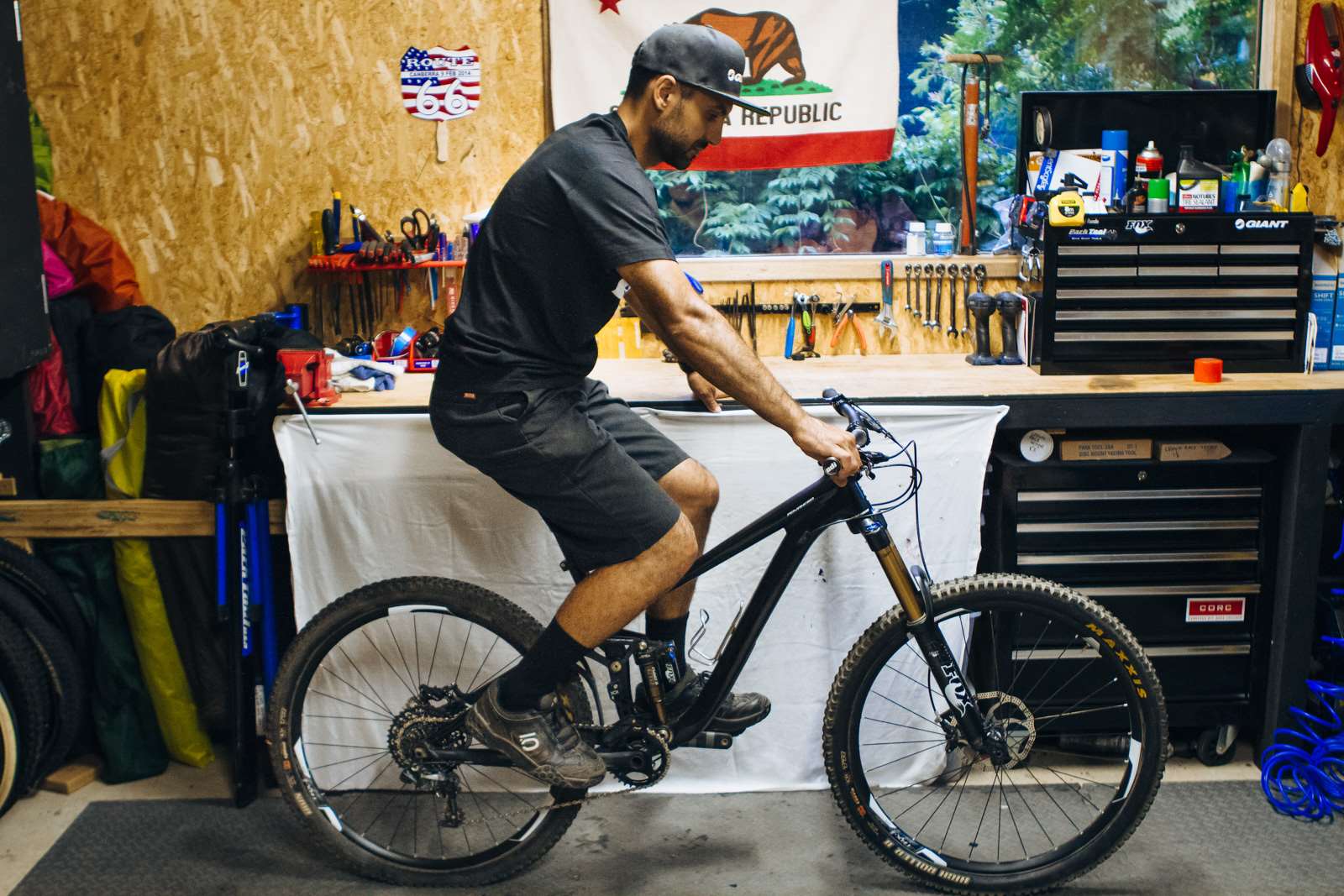
5. Sit On The Bike In Your Normal Riding Position
Do not bounce. Have someone measure how much the suspension compresses.
6. Measure The Sag
If your fork has 150mm travel, and it compresses 30mm under your weight, your sag is 20% (30/150 x 100).
7. Adjust Air Pressure
Use the shock pump to add or remove air. Repeat steps 5 and 6 until you reach the recommended sag.
Recommended Sag Values
| Suspension Type | Recommended Sag |
|---|---|
| Front Fork | 15%–20% of travel |
| Rear Shock | 25%–30% of travel |
Common Mistakes
- Forgetting to wear riding gear when measuring sag.
- Measuring sag while standing, instead of sitting in normal riding position.
- Not checking sag after changing air pressure.
Adjusting Rebound
Rebound controls how quickly the suspension returns after compressing. Too fast, and the bike feels bouncy; too slow, and it feels sluggish.
How To Adjust Rebound
1. Locate The Rebound Dial
Usually marked with a red color. Found at the bottom of the fork or shock.
2. Set To The Middle Position
If your shock has 12 clicks, start at 6.
3. Test By Pressing The Suspension
Push down on the bike and let go. Watch how fast it returns.
4. Fine-tune
If it snaps back quickly, turn the dial to slow it down (add rebound damping). If it returns slowly, turn the dial to speed it up (reduce damping).
Rebound Setting Guide
| Terrain Type | Rebound Setting |
|---|---|
| Rocky/Technical | Slower rebound |
| Flowy/Fast | Faster rebound |
| Jumps/Drops | Medium rebound |
Non-obvious Insight
Many beginners set rebound too slow because they want more control. But if rebound is too slow, the suspension “packs down” and doesn’t recover in time for the next bump. This makes the ride harsh and increases risk of crashing.
Adjusting Compression
Compression controls how the suspension reacts to bumps and impacts. There are two main types:
- Low-speed compression: For slow movements, like pedaling and cornering.
- High-speed compression: For fast hits, like landing from jumps or hitting rocks.
How To Adjust Compression
1. Find The Compression Dial
Usually blue, at the top of the fork or shock.
2. Set Low-speed Compression
Start at the manufacturer’s recommended setting, often the middle.
3. Set High-speed Compression
If your shock has this feature, adjust for your riding style. More damping for big jumps, less for smooth trails.
4. Test On Different Terrain
Ride over small bumps and big drops. Adjust as needed.
Compression Setting Guide
| Rider Weight | Compression Setting |
|---|---|
| Under 150 lbs | Lighter compression |
| 150–200 lbs | Medium compression |
| Over 200 lbs | Higher compression |
Practical Example
If you notice your bike bottoms out (hits the limit) on big drops, increase high-speed compression. If your bike feels harsh on small bumps, reduce low-speed compression.
Credit: www.infinibandta.org
Fine-tuning Suspension For Different Riding Styles
Every rider is different. The same bike can feel perfect for one person but uncomfortable for another. Your suspension setup depends on your style:
Trail Riding
- Set sag to the middle of the recommended range.
- Use medium rebound and compression.
- Test on mixed terrain.
Downhill Riding
- Increase sag for more grip.
- Use slower rebound for stability.
- Add more high-speed compression.
Cross-country (xc)
- Use less sag for efficiency.
- Faster rebound for quick recovery.
- Lighter compression to save energy.
Enduro
- Mix settings between trail and downhill.
- Test on both climbs and descents.
How To Adjust Suspension For Different Terrains
Trails vary from smooth dirt to rocky paths. Adjusting your suspension can help you ride safely and comfortably.
Smooth Trails
- Less sag and compression.
- Faster rebound.
Rocky/technical Trails
- More sag for grip.
- Slower rebound for control.
- Higher compression to avoid bottoming out.
Wet/muddy Trails
- Slightly more sag for traction.
- Medium rebound.
Jump Parks
- Less sag for firm feel.
- Medium compression and rebound.
Non-obvious Insight
Many riders set their suspension once and never change it. But trails can change daily. Adjusting your suspension for the terrain gives you better performance and fewer crashes.
Adjusting Suspension For Rider Weight
Manufacturers often give recommended air pressure based on weight. But these are just starting points. Your riding style, gear, and terrain all matter.
Air Pressure Guide By Rider Weight
| Rider Weight (lbs) | Fork Pressure (psi) | Shock Pressure (psi) |
|---|---|---|
| 120–140 | 60–70 | 110–125 |
| 141–160 | 70–80 | 125–140 |
| 161–180 | 80–90 | 140–155 |
| 181–200 | 90–100 | 155–170 |
| 201–220 | 100–110 | 170–185 |
Always check sag after setting air pressure. Adjust as needed.
How To Adjust For Bike Geometry Changes
Changing suspension settings can affect the bike’s geometry. For example, more sag lowers the bottom bracket and slackens the head angle. This changes how the bike handles.
How Geometry Changes Affect Performance
- Lower bottom bracket: More stable, but easier to hit rocks.
- Slacker head angle: Better for downhill, slower steering.
- Higher bottom bracket: Faster turning, but less stable.
Adjust your suspension in small steps and test each change. Record your settings so you can go back if needed.
Common Suspension Adjustment Mistakes
Many riders make errors when adjusting their bike:
1. Ignoring Manufacturer Settings
Always start with recommended values.
2. Changing Multiple Settings At Once
Change one setting, test, then adjust another.
3. Not Recording Changes
Keep notes or photos of your settings.
4. Using Too Much Or Too Little Air Pressure
Leads to poor sag and unsafe riding.
5. Not Testing On Real Trails
Parking lot tests are not enough.
6. Forgetting Maintenance
Dirty or worn-out shocks do not adjust properly.
Non-obvious Insight
Some riders forget to check for suspension leaks. Air or oil leaks can ruin your setup. Always inspect for leaks before adjusting.
Maintenance Tips For Suspension Performance
A well-maintained suspension lasts longer and performs better.
- Clean after every ride
Dirt can damage seals and make adjustment harder.
- Check for leaks
Look for oil or air escaping.
- Lubricate moving parts
Use recommended oils.
- Service regularly
Most brands recommend servicing every 50–100 hours of riding.
- Replace worn parts
Seals and bushings wear out. Replace as needed.
Data Example
According to FOX Racing Shox, regular maintenance increases shock life by 30% and reduces performance loss by up to 25%.

Credit: www.youtube.com
How To Troubleshoot Suspension Problems
Sometimes, your bike feels wrong even after adjustment. Here’s how to fix common issues:
Bike Feels Too Soft
- Check air pressure.
- Reduce sag.
- Increase compression.
Bike Feels Too Stiff
- Reduce air pressure.
- Increase sag.
- Reduce compression.
Suspension Makes Noise
- Clean and lubricate.
- Check for loose bolts.
Bike Bottoms Out
- Increase air pressure.
- Increase high-speed compression.
Bike Bounces After Bumps
- Slow down rebound.
Suspension Doesn’t Compress Enough
- Check for stuck seals.
- Reduce air pressure.
How To Test Your Suspension Setup
Testing is important. Use these steps:
1. Ride On Different Trails
Try rocky, smooth, and jump sections.
2. Take Notes
Write down how the bike feels.
3. Change One Setting At A Time
Adjust sag, rebound, or compression separately.
4. Repeat And Refine
Small changes make a big difference.
5. Ask Experienced Riders For Feedback
Sometimes others notice things you miss.
Upgrading Suspension Components
Sometimes, your bike’s stock suspension is not enough. Upgrading can give better performance.
- Replace coil springs with air shocks
Air shocks are lighter and easier to adjust.
- Upgrade to higher-end shocks
More adjustment options, better damping.
- Install remote lockouts
Lets you adjust suspension on the fly.
- Change suspension travel
Longer travel for downhill, shorter for XC.
Data Example
Upgrading to a premium shock can improve control by 15–20% and reduce fatigue, according to *Bike Radar* tests.
Comparing Suspension Adjustments: Beginner Vs. Expert Riders
Many beginners set their suspension for comfort, while experts set for performance. Here’s a quick comparison:
| Adjustment | Beginner | Expert |
|---|---|---|
| Sag | Mid-range, comfortable | Lower for grip or higher for speed |
| Rebound | Medium, safe | Fine-tuned for terrain |
| Compression | Basic, minimal changes | Custom for each trail |
| Air Pressure | Manufacturer’s recommendation | Adjusted for precise sag |
| Testing | Rarely tests | Tests and records often |
Credit: www.infinibandta.org
Real-life Example: Step-by-step Adjustment
Let’s follow Alex, a 175 lbs trail rider:
- Alex reads his fork travel: 150mm. Rear shock: 140mm.
- He wears helmet, shoes, backpack (adds 5 lbs).
- Using a shock pump, he sets fork pressure to 85 psi and shock to 145 psi.
- He checks sag: Fork compresses 28mm (19%), shock compresses 36mm (26%).
- Rebound dials set to middle (6 clicks out of 12).
- Compression set to middle.
- Alex rides a rocky trail. Bike feels harsh on small bumps. He reduces low-speed compression by 2 clicks.
- He tests again. Bike feels smooth and stable.
- Alex writes settings in his notebook.
This process takes 20–30 minutes but results in a bike that feels much better.
The Value Of Professional Suspension Tuning
If you struggle to get your bike right, consider professional tuning. Many shops offer suspension setup for $50–$100. They measure your weight, riding style, and help you find the best settings. Some even use computer sensors to measure sag and rebound.
Non-obvious Insight
Professional tuners often find problems that riders miss, like worn bushings or unusual leaks. Getting a pro tune once a year can save money in the long run.
Frequently Asked Questions
How Often Should I Adjust My Suspension?
Check your suspension every few rides, especially after changing weight (adding gear) or riding new trails. Adjust as needed.
Can I Use The Same Settings For All Trails?
No. Different trails need different settings. Rocky trails need more sag and slower rebound. Smooth trails need less sag and faster rebound.
What Is “bottoming Out” And How Can I Fix It?
Bottoming out is when the suspension hits its limit during a big impact. To fix it, increase air pressure or compression. Check for worn parts if it happens often.
Do I Need Special Tools To Adjust My Suspension?
A shock pump and basic Allen wrenches are usually enough. Some advanced shocks need special tools, but most bikes can be adjusted with standard equipment.
Is It Worth Upgrading My Suspension?
If your bike feels harsh, unstable, or you want more control, upgrading can help. Higher-end shocks offer more settings and better performance. Check reviews and ask other riders for advice.
Adjusting your full suspension mountain bike is not a one-time job. It’s a process that improves your riding every time you fine-tune your settings. Start with sag, then adjust rebound and compression. Test your changes on real trails. Keep your suspension clean and well-maintained.
With practice, you’ll unlock your bike’s true potential and enjoy every ride.

Hello Guys! I am John Reese, a professional biker and my hobby is biking! I have been biking for last 12 years and I love using bikes while outing as well. Based on my experiences with the different type of bikes (mountain bikes, road bikes and hybrid bikes); I am sharing my opinion about various bikes so that a beginner can get started right away. Happy reading!