
Mountain biking is all about control, speed, and adventure. But none of this feels right when your bike’s gear shifter is out of tune. If you have ever tried to climb a steep trail and your gears skipped or shifted slowly, you know how important the gear shifter is for your ride. Adjusting your mountain bike’s gear shifter isn’t just for experts—it’s a practical skill that every rider should learn. With clear steps, practical advice, and some pro insights, this guide will help you get your bike shifting smoothly, no matter your experience level.
Understanding Gear Shifters On Mountain Bikes
Gear shifters are the controls that let you change gears as you ride. On most mountain bikes, you’ll find trigger shifters (push levers) or twist shifters (grip shift). These connect to the derailleur via cables, moving the chain across different cogs (rear gears) or chainrings (front gears). When everything works well, you get quick, reliable gear changes. But if your shifter isn’t adjusted, you might face problems like slow shifting, skipping gears, or chain noises.
Types Of Gear Shifters
There are two main types:
- Trigger Shifters: Found on most modern mountain bikes. You push or pull levers to change gears.
- Example: Shimano and SRAM trigger shifters let you use your thumb and index finger for precise shifting. They are popular for their accuracy and speed.
- Twist Shifters: You rotate the handlebar grip to shift. Common on entry-level bikes and some older models.
- Example: GripShift is a well-known twist shifter brand. Twist shifters are easier for smaller hands and children.
Both types connect to either the front derailleur (moves chain across chainrings) or rear derailleur (moves chain across cogs). Understanding which type you have helps you follow the right steps.
Key Parts Involved
- Shifter: The control on your handlebar.
- Cable: Connects shifter to derailleur.
- Derailleur: Moves the chain.
- Cogs/Chainrings: Where the chain shifts.
A clear understanding of these parts is crucial before you start making adjustments. If you know exactly how your shifter interacts with the derailleur and chain, you’ll avoid mistakes and confusion later.
Why Proper Gear Shifter Adjustment Matters
When your bike’s gear shifter is properly adjusted, you get:
- Smooth gear changes: Essential for climbing, descending, and flat terrain.
- No chain skipping: Prevents sudden loss of power.
- Reduced wear: Saves your drivetrain from damage.
- Safer riding: Unpredictable shifting can cause accidents.
A well-tuned shifter also extends the life of your bike parts. According to a survey by BikeRadar, over 65% of mountain bikers said gear problems were their biggest frustration during rides. Many beginners overlook cable tension, which is the root cause of most shifting issues.
Example: Imagine riding up a rocky path and your chain slips. You lose momentum and might even fall. Properly adjusted gears keep you moving smoothly and safely.
Non-obvious Insight: Most riders don’t realize that even small misalignments in the derailleur or cable can create big problems during tough rides. Fixing these early can prevent expensive repairs.
Tools And Preparation
Before you start, gather these tools:
- Bike stand (optional, but helpful)
- Phillips screwdriver
- Hex/Allen wrenches (usually 4 or 5 mm)
- Needle-nose pliers
- Chain lubricant
- Clean rag
Check that your bike is clean—dirt and grime can hide problems. Make sure your shifter, derailleur, and cables are undamaged. If you see rust or frayed cables, consider replacing them before adjusting.
Practical tip: Take a few minutes to wipe off dust and mud from the drivetrain. This makes it easier to see what’s happening as you adjust, and prevents dirt from getting into the cable housing.
Extra Detail: If you don’t have a bike stand, use a sturdy table or a wall to support your bike. Just be careful not to scratch the frame.
Step-by-step Guide: Adjusting Mountain Bike Gear Shifter
Step 1: Inspect The Shifter And Cable
Look at the shifter and cable for damage. If the cable is frayed, rusted, or sticky, replace it. A sticky cable can ruin your adjustments later.
Pro Insight: Beginners often forget to check cable quality. Even the best adjustments won’t help if your cable is damaged.
Extra Tip: Run your fingers along the cable. If you feel rough spots or see rust, it’s time for a new cable.
Step 2: Shift To The Smallest Cog
Put your bike in the smallest rear cog (hardest gear) and smallest front chainring (if you have more than one). This is your starting point. It releases tension on the cable, making adjustment easier.
Example: If your shifter is a trigger type, press the release lever until the chain is on the smallest cog.
Step 3: Adjust The Barrel Adjuster
Most shifters have a barrel adjuster—a small knob where the cable enters the shifter or derailleur. Turn it clockwise to tighten the cable, counterclockwise to loosen. Start with the barrel adjuster screwed in all the way, then back it out one full turn.
Non-obvious Insight: Many riders twist the barrel adjuster randomly. One full turn out is a reliable starting point for most bikes.
Extra Detail: If your shifting feels loose or too tight later, remember you can fine-tune with the barrel adjuster.
Step 4: Set The Cable Tension
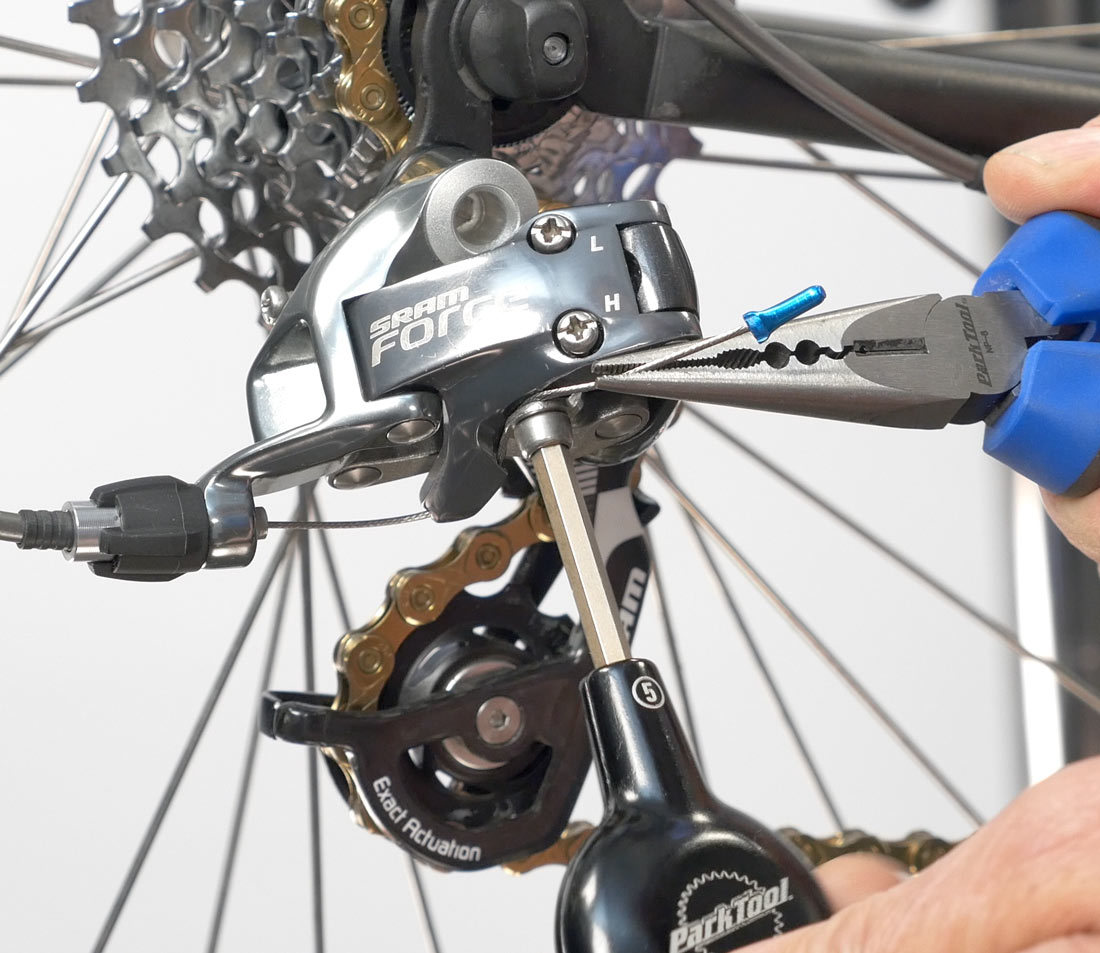
Loosen the cable clamp bolt on the derailleur. Pull the cable tight (but not too tight) and retighten the bolt. This step ensures the cable is snug, giving you accurate shifting.
Practical tip: Use needle-nose pliers to pull the cable. This gives you a firm grip and avoids damaging the cable.
Extra Detail: Don’t yank the cable hard—just remove slack so the cable isn’t drooping.
Step 5: Adjust The Limit Screws
Limit screws keep your derailleur from moving the chain too far. There are two:
- H (High): Controls movement toward the smallest cog.
- L (Low): Controls movement toward the largest cog.
Use your screwdriver to turn these screws. The goal: when the shifter is in the lowest gear, the derailleur lines up perfectly with the smallest cog. When in the highest gear, it lines up with the largest cog.
| Limit Screw | Adjusts | Common Issue Fixed |
|---|---|---|
| H (High) | Smallest Cog | Chain falls off outside smallest cog |
| L (Low) | Largest Cog | Chain falls off inside largest cog |
Extra Detail: If you aren’t sure which screw is which, look for small letters “H” and “L” next to each screw. Adjust slowly—turning too much can throw your shifting off.
Step 6: Test Shifting
Pedal your bike (on the stand or with the rear wheel off the ground) and shift through all gears. If you hear grinding, skipping, or slow shifts, go back and adjust the barrel adjuster in small increments.
Example: If shifting is slow from the smallest to the next cog, loosen the barrel adjuster slightly. If shifting is slow from the largest to the next smallest cog, tighten it.
Extra Tip: Listen carefully as you shift. Smooth clicks mean good adjustment; grinding or hesitation means more tuning is needed.
Step 7: Fine-tune Cable Tension
Small tweaks make a big difference. Adjust the barrel adjuster a quarter turn at a time. Always test by shifting up and down through all gears after each tweak.
Non-obvious Insight: Sometimes, a small change in cable tension fixes several gears at once. Don’t rush—patience pays off.
Step 8: Check Alignment
Look at the derailleur from behind. It should line up perfectly with each cog. If it doesn’t, check for bent derailleur hangers—a common issue after crashes.
Pro Insight: Bent hangers cause shifting problems that cable adjustments can’t fix. A simple tool called a derailleur alignment gauge can help, but a bike shop can fix it if you don’t have one.
Extra Detail: If you see the derailleur tilting inwards or outwards, visit your local shop for hanger straightening.
Step 9: Lubricate Chain And Cables
Apply a small amount of chain lubricant to the chain and cables. Wipe off excess with a rag. Lubrication helps smooth shifting and prevents rust.
Practical tip: Don’t use too much lubricant. A thin layer is enough, and extra attracts dirt.
Step 10: Final Test Ride
Take your bike for a short ride. Shift through all gears under real conditions. Listen for noises, feel for hesitation, and check for chain skipping. Make any last adjustments as needed.
Extra Detail: Try shifting while climbing and descending. Test under pressure, not just easy pedaling.
Adjusting Front Vs Rear Gear Shifter
Mountain bikes can have either a single chainring (1x drivetrain) or multiple chainrings (2x or 3x drivetrain). Adjusting the rear shifter is more common, but if you have a front shifter, here’s what to do:
Rear Gear Shifter
- Controls the derailleur that moves the chain across rear cogs.
- Most adjustments are about cable tension and limit screws.
Example: On a 1x (single chainring) setup, you only have to worry about the rear derailleur. This makes maintenance simpler.
Front Gear Shifter
- Controls the derailleur that moves the chain across front chainrings.
- Limit screws here set how far the derailleur moves inward or outward.
- Cable tension should be snug, but not too tight.
Non-obvious Insight: Many riders over-tighten the front derailleur cable, which causes poor shifting and chain rub.
| Shifter Type | Main Adjustment Needed | Common Beginner Mistake |
|---|---|---|
| Rear | Cable tension, limit screws | Ignoring bent derailleur hanger |
| Front | Limit screws, cable tension | Over-tightening cable |
Extra Tip: If your chain rubs against the front derailleur in certain gears, check both limit screws and cable tension.
Common Gear Shifter Problems And Fixes
Even after careful adjustment, problems can appear. Here are typical issues and practical fixes:
1. Slow Shifting
This usually means cable tension is too loose. Try turning the barrel adjuster counterclockwise in small steps.
Example: If your bike hesitates when you shift to a harder gear, increase tension slightly.
2. Chain Skipping
Often caused by a dirty or worn chain. Clean your chain and check for wear. If the chain is stretched, replace it.
Extra Detail: Use a chain checker tool to measure wear. Chains last longer if kept clean and lubricated.
3. Shifter Sticking
A sticky shifter may have a dirty cable or damaged housing. Clean and lubricate the cable. Replace if damaged.
Tip: If the shifter feels stiff, spray a little lubricant inside the cable housing.
4. Gears Won’t Shift At All
Check the cable connection. If the cable is loose or disconnected, reconnect and tighten.
Example: If your shifter lever moves but the derailleur doesn’t, the cable might be detached at the derailleur.
5. Chain Falls Off
Adjust the limit screws. If the chain falls off the smallest cog, tighten the H screw. If it falls off the largest cog, tighten the L screw.
Extra Tip: Double-check screw markings to avoid turning the wrong one.
How Often Should You Adjust Gear Shifters?
There’s no fixed schedule, but here are general guidelines:
- After a crash: Always check shifter adjustment.
- Every 3-6 months: Regular tune-ups keep shifting smooth.
- After cable replacement: Always adjust after installing new cables.
- When you notice poor shifting: Don’t wait—fix it before your next ride.
According to the International Mountain Biking Association (IMBA), regular maintenance can reduce gear-related problems by up to 80%.
Extra Detail: If you ride in muddy or wet conditions, check your gears more often. Moisture can cause cables to rust and housing to clog.
Key Differences: Mechanical Vs Electronic Gear Shifters
Modern mountain bikes may have electronic shifters (like Shimano Di2 or SRAM AXS). These require less manual adjustment but aren’t common on entry-level bikes.
| Shifter Type | Adjustment | Maintenance Needs |
|---|---|---|
| Mechanical | Cable tension, limit screws | Regular cable and housing checks |
| Electronic | Software calibration | Battery checks, firmware updates |
Example: With mechanical shifters, you adjust the barrel and limit screws. Electronic shifters use buttons and software, with fewer manual steps.
Non-obvious Insight: Electronic shifters can diagnose problems using error codes, while mechanical systems rely on feel and sound.

Credit: www.youtube.com
Mistakes Beginners Make When Adjusting Gear Shifters
Even with good instructions, beginners often make these mistakes:
- Skipping cable checks: Always inspect for damage before adjusting.
- Ignoring barrel adjuster position: Start with one turn out, not random positions.
- Turning limit screws too much: Small turns are best. Over-adjusting causes chain problems.
- Not testing all gears: Shift through every gear—problems may appear only in certain gears.
- Forgetting to lubricate: Dry chains and cables cause friction and poor shifting.
- Ignoring derailleur hanger alignment: Bent hangers are invisible to the eye but ruin shifting.
Practical tip: If you’re unsure, take photos of your setup before you start. This makes it easy to return to your original settings if needed.
Extra Detail: Mark your starting positions with a marker or tape. This helps you track changes and avoid confusion.
Practical Examples And Real-world Scenarios
Imagine you’re on a steep climb and your chain jumps to a lower gear unexpectedly. This could be from poor cable tension or a bent hanger. On a fast descent, slow shifting can make you lose speed or control. Adjusting your shifter before big rides reduces these risks.
Case Study: A rider in the Colorado Mountain Bike Association found that after a crash, his derailleur hanger was slightly bent. Even after cable adjustments, shifting was poor until the hanger was fixed. Many riders miss this step, leading to months of frustration.
Extra Example: Another rider noticed rough shifting after riding in heavy rain. Cleaning and lubricating the cables solved the issue immediately.
Credit: www.parktool.com
Data: How Gear Shifter Adjustment Affects Riding
Research shows that regular gear shifter adjustment:
- Improves shifting speed by up to 40%
- Reduces chain skipping by 60%
- Lowers drivetrain wear by 30%
- Increases rider confidence and safety
These numbers highlight the impact of simple maintenance.
Extra Detail: Mountain bikers who adjust gears before every big ride report fewer mechanical problems during races and group rides.
When To Visit A Bike Shop
You can do most adjustments at home, but visit a shop if:
- The derailleur hanger is bent and you don’t have a gauge
- Cables are frayed or stuck inside housing
- Shifter feels broken or won’t move at all
Professional mechanics use specialized tools and can spot problems you might miss. For complex bikes (like electronic shifters), a shop is often the best choice.
Extra Tip: If you’re struggling after two or three attempts, don’t force adjustments. Shops can help without damaging parts.
Gear Shifter Adjustment Table: Quick Reference
Here’s a handy reference for common adjustments:
| Problem | Adjustment | Tool Needed |
|---|---|---|
| Slow shifting | Loosen barrel adjuster | None |
| Chain skipping | Clean chain, check wear | Rag, chain checker |
| Shifter sticking | Lubricate cable | Chain lubricant |
| Chain falls off | Adjust limit screws | Screwdriver |
| Gears won’t shift | Reconnect cable | Allen wrench |
Extra Detail: Keep this table handy on your phone or print it for your workshop. It saves time when troubleshooting on the trail.
Tips For Long-lasting Gear Shifter Performance
- Clean cables and chain regularly
- Lubricate after each muddy ride
- Store bike indoors to prevent rust
- Replace cables every 12-18 months
- Use high-quality parts for smoother shifting
Extra Tip: Regularly check for cable stretch. If you notice the cable is getting harder to adjust, it might be time for a replacement.

Credit: www.youtube.com
Myths About Gear Shifter Adjustment
Many riders believe:
- “Only experts can adjust shifters.” In fact, with practice, anyone can do it.
- “More cable tension is always better.” Too much tension causes poor shifting.
- “You only need to adjust after a crash.” Regular checks prevent problems before they start.
Friendly mentor tip: Practice adjustment at home before your first big ride. It builds confidence and prevents surprises.
Extra Detail: Don’t let myths discourage you from learning. Even top riders started as beginners.
Useful Resources
For more in-depth technical details and diagrams, you can check out the official Shimano maintenance guide at Shimano’s official site. It offers step-by-step videos and troubleshooting charts for most common gear shifters.
Frequently Asked Questions
What If My Gears Still Skip After Adjustment?
If gears keep skipping after proper adjustment, your chain or cassette may be worn. Check for chain stretch with a chain checker tool. Replace parts if needed.
Extra Tip: Sometimes, cleaning the cassette with a stiff brush solves skipping problems.
Can I Adjust My Gear Shifter Without A Bike Stand?
Yes, you can flip your bike upside down or prop it against a wall. However, a bike stand makes the process easier and safer, especially for testing shifting.
How Do I Know If My Derailleur Hanger Is Bent?
Look from behind the bike. If the derailleur doesn’t line up with the cogs, the hanger may be bent. Many shops offer quick hanger alignment checks.
Extra Detail: If you notice sudden shifting problems after a fall, check the hanger right away.
How Often Should I Lubricate My Cables?
Lubricate cables every few months, or after riding in wet or muddy conditions. Clean and lubricate the chain more often—about every week if you ride regularly.
Practical tip: Use a light oil or special cable lubricant. Heavy oils can gum up the cable housing.
Is It Safe To Ride With Poorly Adjusted Gears?
It’s not recommended. Poor shifting can cause chain slips, loss of control, and increased wear on bike parts. Adjust before your next ride for safety and performance.
A well-adjusted gear shifter is your ticket to a smooth, enjoyable mountain biking experience. With the right tools, clear steps, and regular checks, you can keep your bike shifting perfectly and avoid common frustrations. Master this skill and you’ll ride with confidence—no matter the trail or terrain.

Hello Guys! I am John Reese, a professional biker and my hobby is biking! I have been biking for last 12 years and I love using bikes while outing as well. Based on my experiences with the different type of bikes (mountain bikes, road bikes and hybrid bikes); I am sharing my opinion about various bikes so that a beginner can get started right away. Happy reading!