
Mountain biking offers a unique combination of adventure, exercise, and connection with nature. But if your ride feels harsh, bouncy, or unstable, the problem often lies in your rear shock adjustment. Properly tuned rear shocks make your bike safer, faster, and much more comfortable. Many riders, especially beginners, overlook this crucial step or feel unsure about where to start. This guide walks you through everything you need to know to adjust your rear shock, even if you have never done it before.
Why Rear Shock Adjustment Matters
A well-adjusted rear shock is not just for pros. It affects every mountain bike ride, from smooth trails to rocky descents. When your shock is set right, you get:
- Better traction: The rear wheel stays glued to the ground, reducing slips.
- More comfort: Bumps and drops feel smoother.
- Higher speed: You roll faster over rough sections and corners.
- Less fatigue: Your body absorbs fewer impacts, so you ride longer.
Poorly adjusted shocks lead to common problems. You may notice your bike bouncing, bottoming out, or feeling sluggish. Sometimes, your back and arms get sore quickly. All these issues link back to shock setup.
Understanding Rear Shock Types
Before adjusting anything, you need to know what type of rear shock your mountain bike uses. Most bikes have either air shocks or coil shocks.
| Shock Type | Main Features | Typical Use |
|---|---|---|
| Air Shock | Lightweight, adjustable by air pressure | Cross-country, trail, all-mountain |
| Coil Shock | Steel spring, less adjustable, heavier | Downhill, enduro, aggressive riding |
Air shocks are found on most modern bikes. They use a sealed chamber where air pressure provides resistance. You adjust them with a shock pump. Coil shocks use a metal spring and are usually tuned by swapping springs, which makes them less flexible for quick changes.
If your bike is newer or aimed at trail riding, it likely has an air shock. Downhill bikes often use coil shocks for their durability and smooth action.
Key Rear Shock Settings
Rear shocks have several settings. The main ones are:
- Sag: How much the shock compresses when you sit on the bike. Sag sets the shock for your weight.
- Rebound: Speed at which the shock returns to its original position after compressing.
- Compression: Resistance to shock movement when hitting bumps.
- Air pressure or spring preload: Directly affects sag.
- Volume spacers: Fine-tune air shock progression (advanced).
Each setting changes how your bike feels. Beginners often focus on sag and rebound, but compression becomes important as you gain experience.
Tools Needed For Rear Shock Adjustment
You don’t need a full workshop. Basic tools cover most adjustments:
- Shock pump: For air shocks, lets you add or remove air pressure.
- Allen wrenches: Adjust mounting bolts and some rebound/compression knobs.
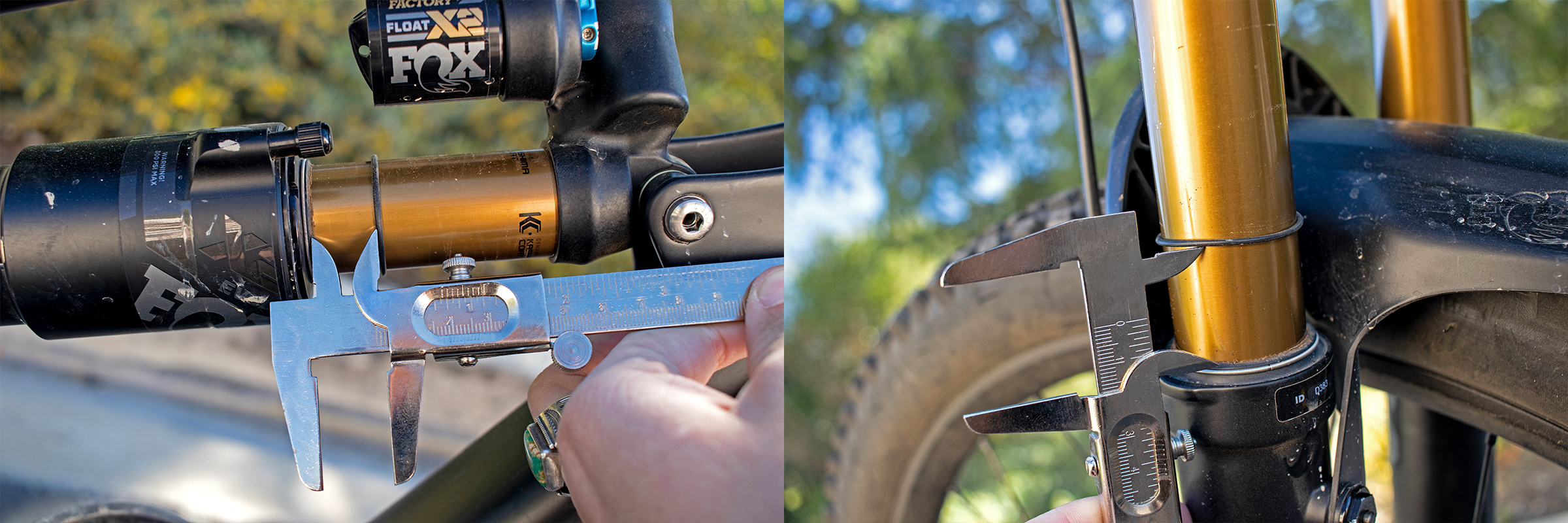
- Zip ties or o-rings: Used to measure sag.
- Bike stand (optional): Makes adjustments easier.
- Tape measure: For precise sag measurement.
Some shocks require special tools for advanced adjustments, but most riders never need them.
Step-by-step: Setting Rear Shock Sag
Sag is the most important starting point. It ensures your shock fits your weight and riding style. Here’s how to set it:
1. Prepare Your Bike
- Wear your usual riding gear (shoes, backpack, helmet).
- Put your bike on level ground.
- If possible, ask a friend to help you balance.
2. Locate The Shock
Find the sag indicator. Many air shocks have a rubber o-ring on the shaft. If not, use a zip tie as a marker.
3. Get On The Bike
- Sit on the bike in your normal riding position.
- Keep your feet on the pedals.
- Have someone hold the bike upright, or use a wall for balance.
4. Measure Sag
- Slide the o-ring to the base of the shock.
- Carefully get off the bike.
- Measure how far the o-ring has moved.
Typical recommended sag:
- Cross-country: 20–25% of shock travel
- Trail/All-mountain: 25–30% of shock travel
- Downhill/Enduro: 30–35% of shock travel
For example, if your shock has 50mm travel, and you want 25% sag:
25% X 50mm = 12.5mm Sag
5. Adjust Air Pressure Or Spring Preload
- For air shocks: Use a shock pump to add or release air.
- For coil shocks: Adjust the preload collar. If sag is far off, consider a different spring rate.
Repeat steps 3 and 4 until you hit the target sag. Beginners often miss this: always measure with full riding gear, as weight makes a big difference.
Setting Rebound
Rebound controls how quickly the shock returns after compressing. Too fast and your bike feels like a pogo stick. Too slow and it feels stuck or heavy.
Rebound settings use a dial, usually marked with a “+” (faster) and “-” (slower) or with clicks.
How To Set Rebound
- Start with the factory recommended setting (usually in the manual).
- Push down hard on the saddle. Watch how the shock rebounds.
- Aim for a speed where the shock returns smoothly—not too fast, not too slow.
- Fine-tune on the trail:
- If your bike “kicks” back after bumps, slow the rebound.
- If it feels sluggish over multiple bumps, speed it up.
A common beginner mistake is setting rebound too slow, thinking it’s safer. But this can reduce control and make the bike feel harsh.

Credit: www.youtube.com
Adjusting Compression
Compression is more advanced but useful for riders tackling rough terrain. It controls how much force is needed to compress the shock.
There are often two types:
- Low-speed compression: For small, slow movements (pedaling, cornering).
- High-speed compression: For big hits (jumps, rocks).
Compression Adjustment Steps
- Find the compression knob (often blue, marked with “+” and “-“).
- Set to factory default or “open” (least resistance).
- Ride over bumps:
- If you bottom out (shock fully compresses), increase compression.
- If your bike feels stiff, decrease compression.
- For most riders, low-speed compression helps with pedaling efficiency, while high-speed compression is about absorbing big impacts.
Don’t over-tighten compression. If unsure, start with a softer setting and increase as you gain confidence.
Fine-tuning With Volume Spacers
For air shocks, volume spacers change how the shock behaves near the end of its travel. Adding spacers makes the shock more progressive—firmer at the end, less likely to bottom out. Removing spacers makes it more linear—softer throughout.
Only use volume spacers if you:
- Regularly bottom out your shock despite proper sag and compression.
- Want a firmer feel for jumps or aggressive riding.
Volume spacer installation usually requires removing the shock’s air canister. Check your shock’s manual for details.
Common Mistakes And How To Avoid Them
Many riders, even experienced ones, make simple mistakes:
- Ignoring sag: Riding without setting sag makes every other adjustment useless.
- Setting rebound too slow: Leads to harsh feeling and poor traction.
- Over-inflating air shocks: Creates a stiff, uncomfortable ride.
- Failing to re-check settings: Sag, rebound, and compression change as shocks age or after maintenance.
- Not using riding gear during setup: Weight from gear changes sag.
Always re-check your settings every few months, after service, or if your riding style changes.
Real-world Example: Trail Rider Setup
Let’s look at how a typical trail rider sets up their rear shock:
- Bike: Mid-range trail bike with 140mm air shock.
- Rider weight (with gear): 170 lbs.
- Target sag: 30% x 140mm = 42mm
- Air pressure: Start at manufacturer’s recommended pressure for weight, then fine-tune.
- Rebound: Set to middle position, adjust after test ride.
- Compression: Start open, add clicks if bottoming out.
After two test rides, the rider noticed harshness over roots. They slowed rebound by 2 clicks, which improved comfort and control.
Comparing Air And Coil Shock Adjustments
Not all shocks adjust the same way. Here’s a quick comparison for clarity:
| Adjustment | Air Shock | Coil Shock |
|---|---|---|
| Sag | Shock pump (air pressure) | Spring preload or swap spring |
| Rebound | Dial (clicks) | Dial (clicks) |
| Compression | Knob (low/high speed) | Knob (often only low speed) |
| Volume spacers | Available | Not available |
Air shocks are easier to adjust for most riders. Coil shocks need a new spring for large changes, which costs more and takes extra time.
How Often Should You Adjust Your Rear Shock?
Adjustment frequency depends on your riding:
- Regular riding: Check settings monthly or after a big crash.
- Changing terrain: Adjust sag and compression for different trails.
- Bike maintenance: Re-check after shock service.
Riders often forget to adjust after changing gear (for example, carrying more water or tools). Even small weight changes can affect sag.
Credit: www.fondation-enovos.lu
Signs Your Rear Shock Needs Adjustment
Don’t wait for problems. Look for these signs:
- Bottoming out: Shock fully compresses often.
- Bike feels harsh: Bumps and roots are uncomfortable.
- Poor traction: Rear wheel slips easily.
- Pedal bob: Bike moves up and down while pedaling.
- Unstable handling: Bike wobbles in corners.
If you notice these, check sag first, then rebound and compression.
Data: Typical Shock Settings By Rider Weight
Manufacturers offer starting points for air pressure. Here’s an example table for a common air shock:
| Rider Weight (lbs) | Recommended Air Pressure (psi) | Target Sag (%) |
|---|---|---|
| 120–140 | 90–110 | 25–30 |
| 140–160 | 110–130 | 25–30 |
| 160–180 | 130–150 | 25–30 |
| 180–200 | 150–170 | 25–30 |
Always start with these numbers, but fine-tune for your riding style.

Credit: www.infinibandta.org
Practical Tips For Better Rear Shock Adjustment
Many riders skip practical details. Here are tips for a smoother process:
- Test on real trails: Parking lot tests are useful, but trail feedback is better.
- Record your settings: Write down air pressure, rebound, compression. Makes future adjustments easier.
- Adjust one thing at a time: Changing multiple settings at once confuses results.
- Use slow-motion video: Ask a friend to film you over bumps. Helps spot suspension problems.
- Listen for noise: Squeaks or knocks mean something may be loose or wrong.
- Don’t chase perfection: Aim for comfort and control, not textbook numbers.
Beginners often ignore the impact of tire pressure. It works with suspension, so adjust both for best results.
Advanced Tuning: For Experienced Riders
If you ride aggressively or race, advanced tuning helps:
- Track conditions: Adjust compression for muddy or dry trails.
- Jump frequency: Add volume spacers for frequent jumps.
- Fine-tune rebound for big descents: Faster rebound for smoother rock gardens, slower for drops.
Professional riders use telemetry and data loggers. For most people, careful test rides and notes are enough.
Safety Warning: When To Seek Expert Help
Some adjustments go beyond DIY. If you notice:
- Oil leaks: Shock needs professional servicing.
- Unusual noises: Internal damage is possible.
- Shock feels stuck: Internal parts may be broken.
- Bike geometry changes: Frame could be damaged.
Always consult your local bike shop or a certified technician for major issues. Never open a shock if you don’t know how—it can be dangerous.
Frequently Asked Questions
How Do I Know If My Rear Shock Is Set Up Correctly?
You should feel smooth control over bumps, good traction, and no bottoming out. The bike feels comfortable, not harsh or bouncy. If you notice instability or discomfort, re-check sag and rebound.
What Is “bottoming Out” And Why Is It Bad?
Bottoming out means the shock fully compresses, hitting its limit. This can damage the shock or frame and feels harsh. If you bottom out often, increase air pressure or compression.
Can I Adjust My Coil Shock As Easily As An Air Shock?
No, coil shocks need a new spring for big changes. You can adjust preload and rebound, but sag adjustment is limited. Air shocks are easier for quick tuning.
How Often Should I Check My Rear Shock Settings?
Check monthly or after big rides, crashes, or maintenance. Also, re-check if you change your gear weight or riding style.
What If I Can’t Get The Right Sag With My Air Shock?
If your air shock won’t reach the correct sag, it may be faulty or need servicing. Sometimes, the air chamber is too small. Check your manual or visit a shop for help. For more details, see Pinkbike’s guide.
Mountain biking is about enjoying the ride, not wrestling with your equipment. Proper rear shock adjustment transforms your experience, making every trail smoother and more fun. Whether you’re a casual rider or aiming for race speed, taking time to set up your shock pays off with safety, comfort, and confidence.
Always start with sag, fine-tune rebound and compression, and don’t hesitate to seek expert advice for tricky problems. Your bike—and your body—will thank you for it.

Hello Guys! I am John Reese, a professional biker and my hobby is biking! I have been biking for last 12 years and I love using bikes while outing as well. Based on my experiences with the different type of bikes (mountain bikes, road bikes and hybrid bikes); I am sharing my opinion about various bikes so that a beginner can get started right away. Happy reading!