
Getting your mountain bike’s gears working smoothly can make your rides much more enjoyable. If you notice your shifting is slow, rough, or noisy, your shifter cable may need adjustment. Many riders think this is complicated, but you can do it yourself with a bit of patience and the right steps. Learning to adjust your shifter cable will improve your bike’s performance, reduce wear, and help you understand your bike better. This guide will walk you through everything, from basic tools to detailed instructions, common mistakes, practical tips, and how to keep your shifting crisp for every ride.
Why Shifter Cable Adjustment Matters
Your bike’s shifter cable connects your shift lever to the derailleur. When you press the lever, the cable moves the derailleur, which shifts the chain from one gear to another. Over time, cables stretch, housing gets dirty, and the system loses accuracy.
If your gears skip, hesitate, or make strange noises, poor cable adjustment is often the cause.
A well-adjusted shifter cable means:
- Smooth gear changes
- Less chain wear
- Better power transfer
- Safer riding
Ignoring cable problems can lead to more expensive repairs or even dangerous situations, like losing control on a tricky trail.
Tools And Materials You Need
Before you start, gather these items to make the job easier:
- Bike stand – optional but helpful for stability.
- Phillips screwdriver or flat-head, depending on your derailleur.
- 5mm Allen wrench – most cable bolts use this size.
- Needle-nose pliers – for pulling cables tight.
- Cable cutters – for trimming cable ends cleanly.
- New shifter cable and housing – if replacing.
- Lubricant – for smooth cable movement.
- Clean rag – to wipe off dirt.
Having everything ready saves time and avoids frustration.

Credit: www.youtube.com
Understanding Your Bike’s Shifting System
Mountain bikes usually have either:
- Rear derailleur only (single front chainring)
- Front and rear derailleurs (multiple front chainrings)
The process is similar for both, but most riders focus on the rear derailleur because it’s used more often and is more sensitive to cable tension.
How The Shifter Cable Works
The shifter cable runs from your handlebar lever through the frame to the derailleur. When you shift, the cable pulls or releases, moving the derailleur and changing gears. If the cable is too loose or too tight, the derailleur won’t move correctly.
Signs Your Cable Needs Adjustment
- Chain skips when shifting
- Gear changes feel delayed
- Clicking or grinding sounds
- Cannot shift into highest or lowest gear
- Visible cable slack or fraying
Most problems come from cable stretch or dirt in the housing.
Step-by-step Guide To Adjusting The Shifter Cable
Let’s go through the process, starting from basic checks to fine-tuning. These steps apply to most mountain bikes, whether you have Shimano, SRAM, or other brands.
1. Inspect The Cable And Housing
Before adjusting, check the cable and housing for damage.
- Look for frayed cable ends.
- Check for kinks or bends in the housing.
- See if there’s dirt or rust.
- Gently pull the cable—does it move smoothly?
If you see damage, replace the cable and housing before adjusting.
2. Shift To The Smallest Cog
Put your bike in the smallest rear cog (hardest gear) and smallest front chainring (if you have more than one). This relieves tension and makes adjustment easier.
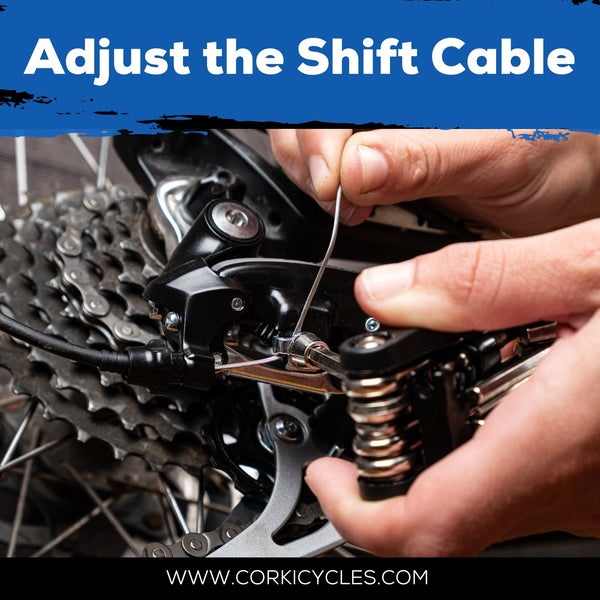
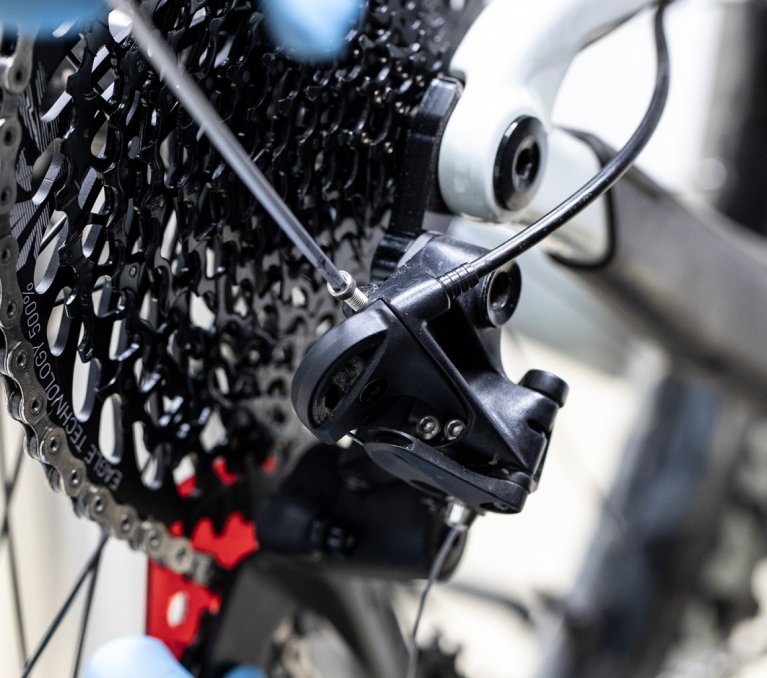
3. Loosen The Cable Clamp
Find the cable clamp bolt on your derailleur. Use the 5mm Allen wrench to loosen it just enough to free the cable. Don’t remove the bolt fully.
4. Set Barrel Adjuster To Neutral
Most derailleurs have a barrel adjuster near the shifter or derailleur. Turn it all the way in (clockwise), then back it out one full turn. This gives you room for fine-tuning later.
5. Pull The Cable Tight
Using needle-nose pliers, pull the cable tight (not too hard). Hold it in place and retighten the clamp bolt. Make sure the cable is straight and seated in the housing.
6. Test The Shifting
Pedal the bike and shift through all gears. Watch the derailleur and listen for noises.
- If the chain struggles to move up to larger cogs, the cable is too loose.
- If the chain won’t move down to smaller cogs, the cable is too tight.
Use the barrel adjuster to fine-tune:
- Turn counterclockwise to add tension (helps the chain move up).
- Turn clockwise to reduce tension (helps the chain move down).
7. Fine-tune Limit Screws
Limit screws set the range of derailleur movement. They don’t adjust cable tension but stop the derailleur from moving too far.
- Find the H (high) and L (low) screws on your derailleur.
- Use a screwdriver to adjust:
- H screw – controls smallest cog (hardest gear).
- L screw – controls largest cog (easiest gear).
Adjust so the derailleur lines up with the cogs at both ends.
8. Trim And Cap The Cable End
If you replaced the cable or cut it, use cable cutters to trim the end. Add a cable cap to prevent fraying. This step is often missed by beginners and leads to messy cables.
9. Lubricate The Cable
Apply a small amount of bike-specific lubricant to the cable and housing. Wipe off excess. This keeps shifting smooth and prevents rust.
Common Mistakes Beginners Make
Learning to adjust your shifter cable takes practice. Here are mistakes to avoid:
- Over-tightening the cable clamp – This can crush the cable and make shifting worse.
- Ignoring barrel adjuster settings – Not starting at neutral means less room for fine-tuning.
- Skipping cable inspection – Adjusting a damaged cable won’t fix shifting.
- Misunderstanding limit screws – They are for setting derailleur range, not cable tension.
- Leaving cable ends uncapped – Leads to fraying and poor shifting over time.
Many beginners also forget to check the derailleur hanger. If it’s bent, even perfect cable adjustment won’t help. For best results, use a derailleur hanger alignment tool or ask a bike shop to check.
Comparing Shifter Cable Types And Housing
Choosing the right cable and housing makes a big difference in shifting quality. Here’s a comparison of common types:
| Type | Material | Durability | Price Range |
|---|---|---|---|
| Standard steel cable | Steel | Low | $3-$6 |
| Stainless steel cable | Stainless steel | Medium | $6-$12 |
| Coated cable (PTFE/Teflon) | Steel + coating | High | $10-$20 |
| Compressionless housing | Plastic + steel wire | High | $10-$25 |
Stainless steel and coated cables resist rust and friction better, making them ideal for mountain biking. Compressionless housing is best for precise shifting but costs more.
Cable Tension Vs Limit Screws: What’s The Difference?
Many riders confuse cable tension with limit screws. Here’s a quick comparison:
| Feature | Cable Tension | Limit Screws |
|---|---|---|
| Purpose | Controls shifting accuracy | Sets derailleur range |
| Adjusts | Barrel adjuster, cable clamp | H and L screws |
| Common symptoms | Slow or missed shifts | Chain falls off or can’t reach gear |
| Frequency | Needs regular adjustment | Rarely changes |
Cable tension is what you adjust most often. Limit screws are “set and forget” unless you change components.
How Often Should You Adjust Shifter Cable?
- New bikes: Cables stretch quickly. Adjust after the first few rides.
- Regular use: Check cable tension every month or after muddy rides.
- After crashes: Inspect cables and derailleurs if you’ve dropped the bike.
If you ride in wet or muddy conditions, adjust more often. Dirt and water speed up cable wear.
Real-world Example: Fixing Slow Shifting
Let’s look at a practical example.
Sarah rides a mountain bike with Shimano Deore gears. After a few weeks, she notices shifting is slow and sometimes skips gears. She inspects the cable and finds some dirt in the housing. Following the steps above, she:
- Cleans the housing with a rag.
- Loosens the cable clamp and pulls the cable tight.
- Sets the barrel adjuster to neutral.
- Fine-tunes tension with the barrel adjuster.
- Lubricates the cable.
After this, her shifting is smooth again. She learned the importance of cleaning and checking tension, not just adjusting screws.
Advanced Tips For Perfect Shifting
Some extra tips can take your shifting from “good” to “great”:
- Upgrade to compressionless housing: Reduces flex and gives precise shifting.
- Use a torque wrench: Avoids overtightening bolts.
- Shorten cable housing: Too much housing adds friction. Keep lengths as short as possible without causing bends.
- Check shifter alignment: Make sure the shifter lever is correctly positioned on the handlebar.
- Replace cables yearly: Even if they look fine, regular replacement keeps shifting sharp.
A little extra care goes a long way, especially if you ride often or in tough conditions.
Data: How Cable Adjustment Affects Shifting Performance
Studies show that proper cable adjustment can improve shifting speed and reduce chain wear. According to a survey from BikeRadar, riders who adjust cables regularly experience 25% fewer missed shifts and 15% longer drivetrain life.
Here’s a summary:
| Adjustment Frequency | Missed Shifts (per 100 miles) | Drivetrain Lifespan (miles) |
|---|---|---|
| Monthly | 2 | 3000 |
| Quarterly | 5 | 2600 |
| Rarely | 9 | 2000 |
Regular adjustment saves money and makes your rides more enjoyable.
Troubleshooting Common Problems
If your gears still don’t shift well after adjustment, check these issues:
- Bent derailleur hanger: Causes misalignment. Get it checked at a bike shop.
- Dirty or rusty cable/housing: Clean or replace as needed.
- Worn derailleur or shifter: May need new parts.
- Wrong cable routing: Make sure cables aren’t twisted or pinched.
Sometimes, shifting problems come from chain or cassette wear. If parts look worn, replace them for best performance.
Credit: www.bhsaviation.com.br
How To Replace Shifter Cable (if Needed)
If your cable is damaged, here’s how to replace it:
- Shift to the smallest cog.
- Loosen the cable clamp.
- Remove the old cable from the shifter.
- Cut new cable to length (match the old one).
- Insert new cable into shifter and housing.
- Pull tight and clamp at the derailleur.
- Adjust tension and limit screws as above.
- Trim and cap the end.
Replacing cables takes about 30 minutes. Use bike-specific cables for best results.
Keeping Your Shifter Cable In Top Shape
To avoid frequent adjustments, follow these care tips:
- Wipe cables and housing after muddy rides
- Lubricate monthly
- Check for fraying or rust
- Store bike indoors
Regular care prevents most shifting problems and helps your bike last longer.
Credit: www.bike-components.de
When To Seek Professional Help
If you’ve tried everything and your shifting is still poor, visit a bike shop. Professionals have tools and experience to fix tough issues, like bent hangers or worn parts. It’s better to spend a little for expert help than risk damage by guessing.
Frequently Asked Questions
How Do I Know If My Shifter Cable Needs Replacing?
Check for fraying, rust, or stiffness. If the cable doesn’t move smoothly or is visibly damaged, replace it. If shifting doesn’t improve after adjustment, a new cable may be needed.
Can I Adjust Shifter Cables Without A Bike Stand?
Yes, but a stand makes it easier. If you don’t have one, flip your bike upside down or lean it against a wall. Make sure it’s stable before working.
How Tight Should The Shifter Cable Be?
The cable should be firm but not overly tight. Too much tension causes poor shifting. After clamping, use the barrel adjuster for fine-tuning.
What Happens If I Mix Up Limit Screw And Cable Tension Adjustments?
Mixing them up can cause chain drop or missed gears. Limit screws set derailleur range. Cable tension controls shifting accuracy. Adjust each for its specific purpose.
Is It Worth Upgrading To Compressionless Housing?
Yes, especially for mountain bikes. Compressionless housing gives more precise shifting and lasts longer. It’s a good upgrade if you ride often or on rough trails.
Mastering shifter cable adjustment is a valuable skill for every mountain biker. It keeps your gear changes crisp, your rides smooth, and your maintenance costs low. With practice, you’ll be able to fix shifting problems quickly and confidently. Remember to check cables regularly, keep them clean, and upgrade components when needed. For more detailed information on bike maintenance, you can visit Sheldon Brown, a trusted resource for cyclists worldwide. Enjoy your next ride with perfectly tuned gears!

Hello Guys! I am John Reese, a professional biker and my hobby is biking! I have been biking for last 12 years and I love using bikes while outing as well. Based on my experiences with the different type of bikes (mountain bikes, road bikes and hybrid bikes); I am sharing my opinion about various bikes so that a beginner can get started right away. Happy reading!