
Learning how to do a 360 on a mountain bike is a thrilling challenge. Spinning your bike a full circle in the air takes skill, courage, and practice. For many riders, landing a clean 360 feels like unlocking a new level in mountain biking. It’s a trick that combines balance, timing, power, and mental focus. Whether you want to impress your friends, push your limits, or just enjoy the pure fun of mountain biking, mastering the 360 will make you a more confident rider.
The 360 is not just about turning your bike. It’s about controlling your body, using your bike’s features, and understanding the terrain. Many beginners think it’s all about jumping high, but that’s only part of the story. The real secret is in the setup, the takeoff, the spin, and the landing.
This article will break down every step, show you common mistakes, and share tips that help you succeed. By the end, you’ll know exactly how to start practicing safely, what to watch out for, and how to build up to a clean 360.
What Is A 360?
A 360 on a mountain bike means spinning the bike and your body a full circle (360 degrees) in the air. You start facing forward, jump off a ramp or obstacle, rotate completely, and land facing the same way you started. It’s a popular trick in freestyle mountain biking and BMX.
The 360 is different from a 180. A 180 turns you halfway, so you land facing backward. With a 360, you keep spinning until you’re back to your original direction. The trick requires speed, a proper jump, and the right technique.
For most riders, the 360 is the first big spin trick learned after basic jumps and 180s. It’s a milestone because it tests your air control. You must be comfortable leaving the ground, spinning your body, and landing while still moving fast.
Unlike tricks that only involve the bike, the 360 uses your whole body. You have to coordinate your eyes, arms, shoulders, hips, and legs to make the rotation happen smoothly.
Many pros use the 360 as a base for even more complex moves. For example, a “360 tailwhip” or “360 barspin” builds on the standard spin. Learning the basic 360 opens doors to these advanced tricks.
Why Learn The 360?
The 360 is more than just a cool trick. Here are some reasons riders practice it:
- Improves bike control: You learn to manage your balance and handle the bike in the air. This skill transfers to other jumps and tricks.
- Builds confidence: Landing a 360 makes you feel more comfortable with jumps and tricks. It shows you can handle your bike in the air and land safely.
- Expands your skills: Once you master the 360, you can try harder tricks like tailwhips or barspins. The spin is a foundation for many advanced moves.
- Fun and creativity: It’s a stylish move, and you can use it in different spots—dirt jumps, skate parks, or trails. Riders often add their own flair by tucking knees, twisting bars, or spinning both ways.
- Boosts progression: The challenge of learning a 360 motivates you to improve your jumping, spinning, and landing skills, which helps you progress faster in mountain biking.
Many riders find that after learning the 360, their overall riding improves. They become more aware of their body position, learn to trust their instincts, and react quickly in the air. This confidence helps in other parts of mountain biking, like tackling technical trails or trying new tricks.
Equipment You Need
You don’t need special gear for a 360, but having the right setup makes learning easier and safer.
- Mountain bike: A hardtail or dirt jump bike is best. It’s lighter and easier to control. Full suspension bikes can work, but they are heavier and absorb some energy needed for spinning.
- Helmet: Always wear a helmet. A full-face helmet offers more protection, especially for your chin and jaw.
- Pads: Knee, elbow, and wrist pads help prevent injuries. Sometimes a chest or back protector is useful for bigger jumps.
- Flat pedals: They make it easier to bail if you lose control. Clipless pedals are not recommended for learning spins.
- Proper shoes: Grippy shoes keep your feet secure. Avoid shoes with slippery soles.
Bike setup matters too. Lower your seat so you have more room to move. Check your tires for good grip—low pressure helps with landing but too soft can make takeoff harder. Make sure the bike is in good condition: tight bolts, working brakes, no cracks.
Some riders also use gloves for better grip and to prevent scrapes. If you plan to practice on bigger jumps, consider adding extra padding or using a neck brace for extra safety.
How To Prepare For A 360
Before trying a 360, you need a strong foundation.
Basic Skills
You should be comfortable with these:
- Jumping: Practice bunny hops and jumping off ramps. Good jumping makes the takeoff smooth and gives you time in the air.
- Manuals: Balancing on your back wheel helps with takeoff. Manuals teach you to shift weight and control the bike before leaving the ramp.
- 180s: Learn to spin halfway before trying a full 360. Landing a 180 builds confidence and teaches you how your body moves in the air.
- Air awareness: Know how your bike moves in the air. Try simple jumps and practice moving your body around.
Another helpful skill is “tabletop” jumps, where you tilt the bike sideways. This teaches you to control the bike in the air and prepares you for spinning. Practicing “lookbacks”—turning your head and shoulders as you jump—helps you understand how body movement affects bike rotation.
Finding The Right Spot
Choose a safe place to practice:
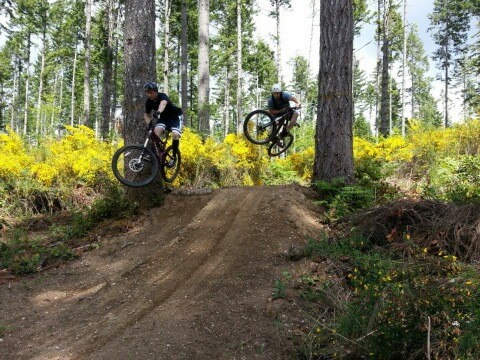
- Dirt jump: A smooth ramp with a soft landing. Dirt is forgiving if you fall, and shaped jumps help you get enough air.
- Foam pit: For safe learning. You land in soft foam. Foam pits let you try spins without worrying about injuries.
- Resi ramp: A ramp with a padded landing. Resi ramps are popular in skate parks and bike parks; they have a plastic surface over foam for softer landings.
Avoid hard or rough landings. Soft dirt or foam helps you learn without getting hurt. If you practice in a bike park, choose beginner-friendly jumps first. Make sure there’s enough space to ride away after landing.
If you can’t find a foam pit, look for a jump with a long, smooth landing. This gives you time to recover if the spin isn’t perfect.
Credit: www.evergreenmtb.org
Step-by-step Guide To The 360
Mastering the 360 takes patience. Here’s how to break it down:
1. Approach
Ride toward the jump at a steady speed. Too slow, and you won’t get enough air. Too fast, and you’ll lose control. Keep your body relaxed, with arms and legs slightly bent.
Pick a speed you’re comfortable with from previous jumps. If you’re nervous, do a few practice jumps at the same ramp to warm up. Keep your eyes focused on the lip of the ramp, not the ground. Relax your grip on the bars—tight hands make it harder to spin.
2. Preload And Pop
As you reach the base of the ramp, crouch down to preload your suspension. Push down, then spring up as you leave the lip. This gives you height and power.
Use your legs to push into the bike, then extend as you leave the ramp. This “pop” gets you airborne. The harder you push, the higher you go, but control matters more than height. Try to time your pop so you’re still balanced.
Beginners often forget to preload, which results in low jumps and rushed spins.
3. Initiate The Spin
Turn your head and shoulders in the direction you want to spin (usually to the left or right). Your bike will follow your body. Use your arms to pull the bars in the spinning direction.
Start the spin just as you leave the lip. Look over your shoulder, then twist your hips and shoulders. Pull the handlebars gently in the spin direction. Don’t jerk—smooth movements keep the bike stable. If you spin left, your right arm pushes and your left arm pulls.
Some riders stomp their outside foot as they pop to add extra spin. Practice this motion on flat ground before trying it on jumps.
4. Mid-air Control
Keep looking over your shoulder. Spot your landing. Stay centered over the bike. Pull your knees up to help the bike rotate.
Try not to lean too far forward or back. Stay loose but aware. Mid-air, your body acts like a “gyro”—the more you tuck and twist, the faster you spin. If you feel off-balance, use your arms to adjust the bike’s angle.
Small corrections make a big difference.
Avoid locking your gaze on your handlebars. Keep your eyes on where you want to land. Beginners often stare at the ground, which slows the spin.
5. Spot And Prepare For Landing
As you complete the spin, spot the landing. Straighten your bike, get ready to absorb the impact.
Extend your arms and legs as you approach the landing. Try to level the bike so both wheels touch down together. If you’re spinning too fast, use your arms and knees to slow the rotation. If you’re under-rotated, shift your weight to finish the spin.
Spotting the landing early gives you more time to adjust. Practice this on jumps without spinning to build muscle memory.
6. Land Smoothly
Touch down with both wheels. Bend your knees to absorb shock. Keep your arms loose. Ride away cleanly.
Don’t lock your arms or legs—flexing absorbs the impact. If you land sideways, turn your bars to straighten out. Stay relaxed and let the bike roll forward. The smoother your landing, the easier it is to keep riding.
After landing, check your position. If you’re off-balance, use your legs and arms to recover. With practice, you’ll land more smoothly and consistently.
Common Mistakes And How To Avoid Them
Learning the 360 comes with challenges. Here are some mistakes riders make:
- Not committing: If you hesitate, you won’t spin fully. Confidence is key—commit to the motion.
- Looking down: Always look over your shoulder to guide the spin. Looking down slows rotation and makes landing harder.
- Too slow: Without enough speed, you won’t get airtime. Practice finding the right speed for each jump.
- Wrong body position: Stay centered; don’t lean too far forward or back. Off-balance spins lead to crashes.
- Over-rotating: Spin only as fast as needed; don’t rush. Too much spin can make you miss the landing.
Fix these by practicing each step slowly. Use foam pits or padded ramps to build confidence. Watch videos of your attempts and compare them to pro riders. Try visualizing the trick before each run—mental practice helps fix mistakes.
Another common mistake is “pulling only with arms” and forgetting to use hips. This leads to weak spins. Remember to rotate your hips and shoulders together.
Progression Tips
Build up to the 360 with smaller tricks:
- Start with 180s: Get used to spinning halfway. Practice landing backward and riding away.
- Try on small jumps: Practice spinning on smaller ramps before big ones. Gradually increase jump size as you gain confidence.
- Use a foam pit: Practice full spins without worrying about hard landings. Foam pits let you focus on spinning and technique.
- Film yourself: Watch videos to see what you’re doing right or wrong. Compare your form to experienced riders.
- Ride with friends: Get feedback and support. Friends can spot mistakes and encourage you to try again.
Another tip is to break the trick into parts: jump, spin, land. Practice each part separately if needed. For example, do “spin drills” on flat ground or “jump drills” on ramps.
Key Factors For Success
There are a few non-obvious tips most beginners miss:
- Head movement is key: Your body follows your head. If you look where you want to spin, the bike will rotate. This is true for almost every spin trick.
- Pull with your arms: Don’t just turn; pull the handlebars in the spin direction. The motion should be smooth, not forced.
- Stay loose: Tensing up makes it harder to control the bike. Relax your muscles, especially in the air.
Another overlooked factor is “timing. ” Initiate the spin right as you leave the ramp—not before, and not after. Perfect timing keeps the spin smooth and controlled.
Safety Tips
Always think about safety:
- Wear protective gear.
- Start small and build up.
- Use foam pits or soft landings.
- Don’t practice alone if you’re new.
- Check your bike for damage before each session.
If you crash, take a break and check for injuries. Don’t rush learning—slow progress is safer. If you feel tired or nervous, stop and rest. Hydrate and warm up before every session.
Learning with friends is safer because they can help if you fall. If possible, practice where there are first aid kits or medical staff.
How To Practice 360s
Practicing is the only way to get better. Here’s a sample progression plan:
- Perfect your jumping technique: Spend a few sessions just jumping. Focus on height and landing smoothly.
- Practice 180s: Try on flat ground, then small ramps. Learn to spin and land backward.
- Try spinning in a foam pit: Focus on spinning and landing. Don’t worry about style yet—just complete the rotation.
- Move to resi ramps or soft dirt jumps: Practice spinning and landing cleanly. Aim for smooth takeoffs and controlled spins.
- Increase speed and height: As you improve, use bigger jumps. Challenge yourself, but stay safe.
Keep a log of your progress. Note what works and what doesn’t. Watch videos of yourself and compare with pro riders. Ask friends for tips.

Credit: www.youtube.com
Data And Comparison Tables
Here are some useful comparisons to help understand the 360:
| Skill | Required for 360? | Difficulty (1-5) |
|---|---|---|
| Bunny Hop | Yes | 2 |
| Manual | Yes | 3 |
| 180 Spin | Yes | 4 |
| Jumping | Yes | 3 |
| 360 Spin | Yes | 5 |
The 360 is the hardest of these, so be patient as you progress.
Comparison: Foam Pit Vs Dirt Jump For Learning 360
| Practice Spot | Safety Level | Feedback | Progress Speed |
|---|---|---|---|
| Foam Pit | High | Excellent | Fast |
| Dirt Jump | Medium | Good | Medium |
| Resi Ramp | High | Excellent | Fast |
Using a foam pit or resi ramp is safer and helps you learn faster.
Example: Session Progression Table
| Session | Trick Practiced | Success Rate | Confidence Level |
|---|---|---|---|
| 1 | Jump | 80% | High |
| 2 | 180 Spin | 60% | Medium |
| 3 | 360 Spin (Foam Pit) | 30% | Low |
| 4 | 360 Spin (Dirt Jump) | 10% | Low |
You can see that confidence and success drop as the trick gets harder. It takes time to improve.
Advanced Tips
Once you can land a basic 360, try these:
- Add style: Tuck your knees, twist your bars, or add a table top. Style makes your tricks stand out and helps with control.
- Try different jumps: Practice on bigger ramps or gaps. Each jump feels different; learning on various ramps improves your skills.
- Spin both ways: Learn to spin left and right for versatility. This helps on trails with different jump directions.
- Combine tricks: Try barspins or tailwhips after the 360. Advanced combos challenge your balance and timing.
Some pros practice “slow spins” on mellow jumps to refine control. Others add tricks like “no handers” or “toboggans” for extra flair. Experiment with your own combinations.
Example: Real Rider Story
Jake, a mountain biker from Colorado, spent weeks learning 180s before attempting his first 360. He started in a foam pit, landed sideways many times, and almost gave up. Then he realized he was not looking over his shoulder enough. After adjusting, his spins improved. In three sessions, he landed his first 360 on dirt. Jake’s advice: “Focus on your head movement and stay relaxed. It makes all the difference.”
Jake also learned that practicing visualization helped him. He pictured each spin before trying it, which boosted his confidence. He recommends watching slow-motion videos of pros to understand timing and body movements.
Non-obvious Insights
- Use your hips: Most beginners focus on arms and shoulders, but rotating your hips helps start the spin smoothly. This motion creates a “twist” effect that makes the spin faster and more controlled.
- Practice visualization: Before each attempt, picture yourself spinning and landing. This mental rehearsal increases success. Visualization is proven to help athletes in all sports.
- Incremental speed increases: Small changes in approach speed can make a big difference. Try increasing speed in tiny steps instead of big jumps.
Another insight: Try “dry runs” without spinning—jump, tuck, and land. This builds air comfort and prepares you for adding spin.
Where To Watch And Learn
Watching pros helps. Check out mountain biking videos on YouTube or at events. Look for riders like Brandon Semenuk or Brett Rheeder, who are known for clean 360s.
For more technical advice, visit Pinkbike, a trusted site in the mountain biking world.
Local bike parks often have coaching sessions or clinics for jump tricks. Attending these can give you hands-on tips and meet other riders learning spins.
Frequently Asked Questions
How Long Does It Take To Learn A 360?
It depends on your experience. Most riders need several weeks to months. Practice, confidence, and good technique speed up learning. If you already jump well, you may learn faster. Beginners should expect longer.
Can I Do A 360 On Any Mountain Bike?
You can, but a dirt jump bike or hardtail is best. Full suspension bikes are heavier and harder to control. Lightweight bikes make spinning easier and safer.
Is A Foam Pit Necessary?
It’s not required, but foam pits help you learn safely. You can practice on soft dirt jumps if foam pits aren’t available. Foam pits are found in some skate parks and bike parks.
What Is The Most Common Injury?
The most common injuries are wrist sprains and ankle twists. Wearing pads and practicing safely reduces risk. Crashing often happens when landing sideways or coming up short.
Should I Practice Alone?
It’s safer to ride with friends or in supervised spots. They can help if you crash or need advice. Riding with others also makes practice more enjoyable.
Mastering the 360 on a mountain bike is a journey. Take your time, use the right gear, and enjoy the process. Remember, every rider improves with practice and patience. If you stay positive and keep learning, you’ll soon be spinning smoothly and landing clean 360s.
Credit: bikerumor.com

Hello Guys! I am John Reese, a professional biker and my hobby is biking! I have been biking for last 12 years and I love using bikes while outing as well. Based on my experiences with the different type of bikes (mountain bikes, road bikes and hybrid bikes); I am sharing my opinion about various bikes so that a beginner can get started right away. Happy reading!