
Finding the right mountain bike fit is like finding a perfect pair of shoes. If the size is wrong, every ride feels uncomfortable, and you risk injury. A well-fitted mountain bike makes your rides smoother, safer, and more fun. Many beginners think “medium” or “large” is enough, but every body is different.
The ideal mountain bike fit considers height, leg length, arm reach, and riding style. This guide will show you how a mountain bike should fit, what mistakes to avoid, and how to adjust your bike for the best comfort and performance.
Whether you’re buying your first bike or improving your current setup, understanding fit is essential.
Why Mountain Bike Fit Matters
A mountain bike that fits you properly helps you ride longer and safer. When your bike matches your body, you can control it better. The right fit lowers the risk of joint pain, back aches, and fatigue. It also makes technical trails easier and reduces crashes.
Poor fit can cause numb hands, sore knees, and even neck strain. Many riders don’t realize that a small change in saddle height or handlebar position can make a big difference. Bike fit is not just about comfort—it affects your riding skills and confidence.
Key Measurements For Mountain Bike Fit
Getting your fit right starts with knowing your own measurements and how they relate to the bike. Here are the main measurements to consider:
Rider Height And Bike Frame Size
Most bike brands use rider height to suggest a frame size. But height alone isn’t enough. Leg length and torso length also matter. Frame sizes are usually listed in inches (for mountain bikes) or as S, M, L, XL.
| Rider Height (inches) | Frame Size (inches) | Frame Size (Label) |
|---|---|---|
| 5’0″–5’4″ | 13–15 | Small |
| 5’4″–5’8″ | 15–17 | Medium |
| 5’8″–5’10” | 17–19 | Large |
| 5’10″–6’2″ | 19–21 | X-Large |
This is a starting point. Some people with long legs or short arms might need a different size.
Inseam Length
Your inseam length is the distance from your crotch to the floor. This helps set standover height—the gap between your body and the top tube when standing over the bike.
To measure your inseam:
- Stand with your feet about 6 inches apart.
- Place a book between your legs, snug against your crotch.
- Measure from the top of the book to the floor.
For mountain bikes, you want at least 1–2 inches of clearance between the top tube and your crotch.
Reach And Stack
Reach is how far you stretch forward to the handlebars.
Stack is how high the handlebars are from the bottom bracket.
Modern mountain bikes often have longer reach for stability. But too much reach makes you lean too far forward, causing back pain. Stack height affects how upright or aggressive your riding position is.
| Frame Size | Typical Reach (mm) | Typical Stack (mm) |
|---|---|---|
| Small | 420–440 | 590–610 |
| Medium | 440–460 | 610–630 |
| Large | 460–480 | 630–650 |
| X-Large | 480–500 | 650–670 |
Most brands list these numbers on their website. Compare these with your own measurements for a better fit.
How Should A Mountain Bike Fit: Step-by-step
A good fit is more than just frame size. Follow these steps to check your mountain bike fit:
1. Standover Height
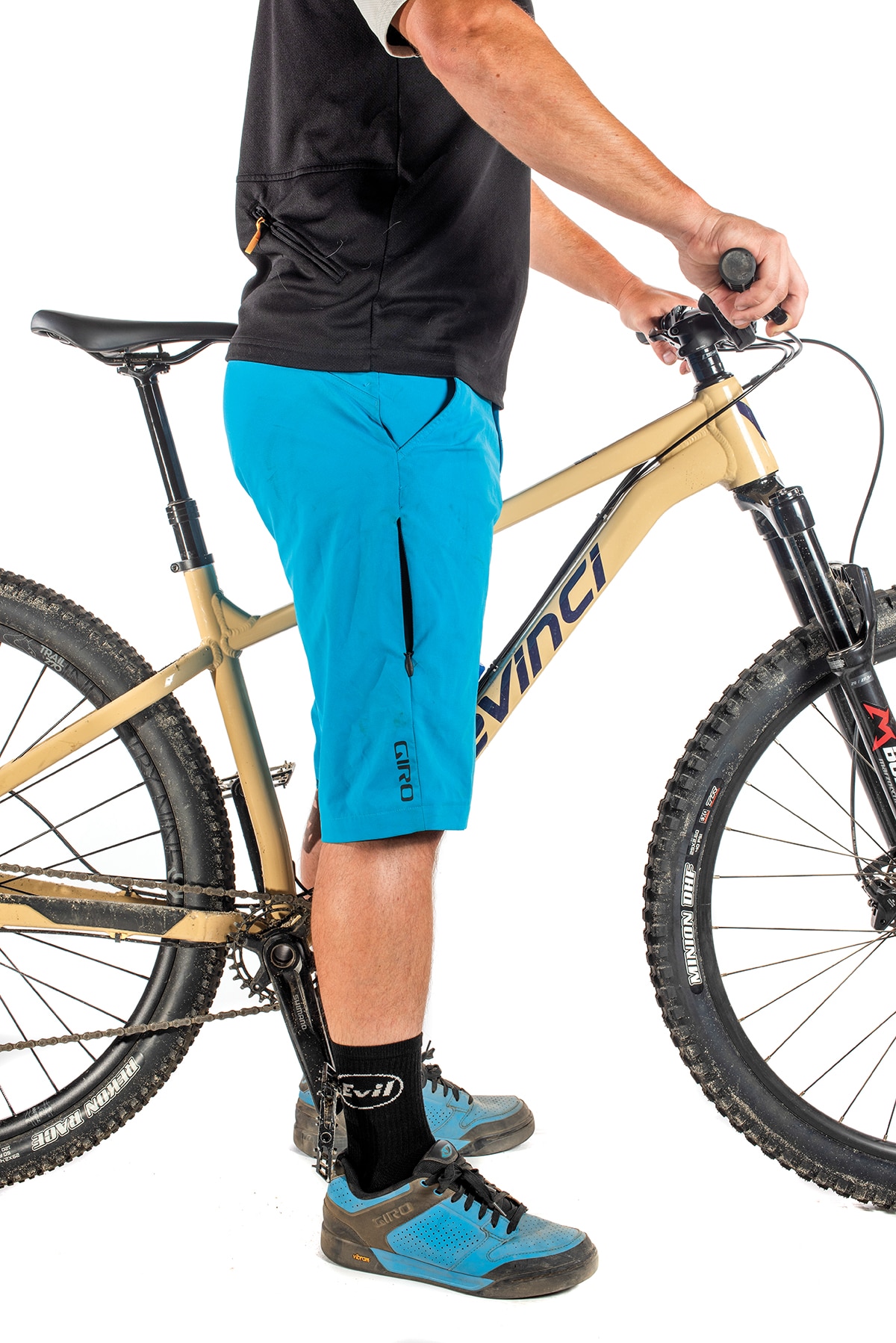
When you stand over your bike, there should be 1–2 inches of space between the top tube and your body. This lets you jump off quickly if you need to. Too little clearance can be dangerous.
2. Saddle Height
The right saddle height lets you pedal efficiently and prevents knee pain. Here’s how to set it:
- Sit on the bike with your heel on the pedal at its lowest position.
- Your leg should be straight, not bent.
- When you pedal normally, your knee should have a slight bend.
If your saddle is too low, your knees will hurt. Too high, and your hips will rock side to side.
3. Saddle Position (fore/aft)
The saddle fore/aft position is how far forward or backward your saddle sits. A quick check:
- Put the pedals horizontal (3 and 9 o’clock).
- Your front knee should be directly above the pedal axle.
If your knee is too far forward or back, adjust the saddle. This helps balance your weight and improve control.
4. Handlebar Height And Reach
Handlebar height affects your riding posture. For most riders:
- A higher handlebar is more comfortable and upright.
- A lower handlebar is more aggressive for racing.
Reach is the distance to the bars. If you feel stretched or cramped, change the stem length or handlebar sweep.
5. Handlebar Width
Mountain bike handlebars are wider than road bikes. Wider bars give more control and stability. Most bikes have handlebars between 720mm and 800mm. Try different widths to see what feels best.
6. Crank Length
Crank length affects pedaling. Most mountain bikes use 170mm or 175mm cranks. Shorter cranks suit smaller riders and help with knee problems. Longer cranks give more leverage but can cause foot strikes on rough trails.
7. Pedal And Cleat Position
If you use clipless pedals, make sure your cleat position matches your natural foot angle. Misaligned cleats cause knee pain and reduce power.
8. Suspension Setup
Mountain bikes have front (and sometimes rear) suspension. Adjusting air pressure and rebound settings affects comfort and fit. If the bike sits too low (sag), it changes your posture and can cause pain.
Common Mountain Bike Fit Mistakes
It’s easy to make mistakes when setting up your bike. Here are some common errors:
- Ignoring standover height. Buying a bike because it’s “your size” but not checking clearance.
- Setting the saddle too low. This feels safe but tires your legs quickly.
- Wrong saddle tilt. A nose-up or nose-down saddle leads to discomfort.
- Overly wide handlebars. Wide bars are stable, but too wide can cause shoulder pain.
- Wrong stem length. A long stem stretches you too far; a short stem makes steering twitchy.
- Neglecting reach and stack. Most people focus only on frame size, not on how the bike fits their arms and torso.
Many riders don’t realize that a poor fit can cause numb hands, back pain, or even make the bike harder to control. Always check these points before and after buying.
Credit: mbaction.com
Adjusting Fit After Purchase
Even if your bike is the right size, you may need to adjust it. Here’s how:
Adjusting Saddle Height
Loosen the seat post clamp, raise or lower the saddle, and tighten again. Small changes (5–10mm) can make a big difference.
Changing Saddle Position
Move the saddle forward or back on the rails. Use a tape measure to check your knee position relative to the pedal axle.
Changing Handlebar Height
Add or remove spacers below the stem, or flip the stem for more height. If needed, buy a new stem with a different rise.
Changing Handlebar Width
You can cut down wide handlebars with a pipe cutter or buy narrower bars. Try riding with your hands closer together before cutting.
Adjusting Stem Length
Replace the stem with a longer or shorter one. A shorter stem is more agile; a longer stem is more stable.
Setting Suspension
Use a shock pump to set air pressure for your weight. Adjust rebound so the bike feels comfortable and responsive.
Cleat Adjustment
Use a multi-tool to adjust cleats. Stand naturally, mark your foot position, and align the cleat accordingly.
Most shops can help with these adjustments. Many riders make small changes over time as their skills improve.
Mountain Bike Fit For Different Riding Styles
Mountain bike fit can change depending on your riding style. Here are some examples:
Cross-country (xc)
XC bikes are built for speed and efficiency. A more aggressive, stretched-out fit is common. Saddles are higher for maximum power, handlebars are lower.
Trail Riding
Trail bikes are versatile. The fit is more balanced—slightly upright for comfort, but still efficient. Handlebar width and stem length give stability without feeling too aggressive.
Enduro/all-mountain
Enduro bikes are for technical descents and tough climbs. Fit is more upright, with wide handlebars and shorter stems for better control.
Downhill
Downhill bikes have very slack angles. The fit is upright, with low saddles and wide bars for maximum stability.
| Style | Saddle Height | Handlebar Height | Handlebar Width | Stem Length |
|---|---|---|---|---|
| XC | High | Low | 700–740mm | 80–100mm |
| Trail | Medium | Medium | 740–760mm | 60–80mm |
| Enduro | Medium | High | 760–800mm | 35–50mm |
| Downhill | Low | High | 780–800mm | 30–50mm |
Adjust your fit based on your main riding style for the best results.
Fit For Women And Youth Riders
Women and youth often need special fit considerations. Women usually have shorter torso and arms compared to men of the same height. Youth riders grow quickly, so adjustable parts are important.
Women’s Fit
Many brands offer women-specific mountain bikes. These bikes have shorter reach, narrower handlebars, and women’s saddles. If you can’t find a women’s bike, adjust stem length and handlebar width.
Youth Fit
For young riders, choose a bike with a low standover height and adjustable seat post. Avoid buying a “big” bike for them to grow into. This makes riding harder and less fun.
Signs Your Mountain Bike Doesn’t Fit
How do you know if your mountain bike doesn’t fit? Here are signs to watch for:
- Knee pain after riding
- Back or neck pain
- Numb hands or fingers
- Sore shoulders
- Feeling stretched or cramped
- Difficulty controlling the bike on rough trails
- Hips moving side to side while pedaling
If you notice these problems, review your bike fit and make changes. Even small adjustments can fix most issues.

Credit: leelikesbikes.com
Two Non-obvious Fit Insights
Many beginners miss these points:
- Fit changes as your skills improve. As you gain confidence, you may want a lower handlebar or wider bars for technical riding. It’s normal to adjust your fit over time.
- Proper fit improves handling. A well-fitted bike lets you corner faster, brake harder, and ride longer. It’s not just about comfort—it boosts performance.
How To Test Your Fit
To test your mountain bike fit:
- Go for a short ride (30–60 minutes).
- Try different positions: Stand, sit, climb, descend.
- Notice any discomfort or pain.
- Adjust one thing at a time (saddle height, handlebar position).
- Repeat until you feel comfortable and balanced.
Fit is personal. What works for someone else may not work for you.

Credit: www.singletracks.com
Professional Bike Fit Vs Diy
Should you get a professional bike fit? If you have pain or want maximum performance, a pro fit helps. Experts use tools and video analysis to fine-tune your position. Prices range from $50 to $300.
DIY fit works for most people. Use the steps in this guide and test your changes. If problems continue, try a professional fit.
For more detailed info, check resources like Bicycling Magazine.
Frequently Asked Questions
What Is The Most Important Measurement For Mountain Bike Fit?
Rider height and inseam length are the most important. They decide your frame size and standover height. But don’t ignore reach and stack—they affect comfort and control.
How Can I Tell If My Saddle Is The Right Height?
When sitting on the bike, your leg should be almost straight at the bottom of the pedal stroke. If your knee is bent too much, raise the saddle. If you can’t reach the pedal, lower it.
Should I Cut My Handlebars To Make Them Narrower?
Only cut handlebars if you feel shoulder pain or have trouble steering in tight trails. Try riding with your hands closer together first. Once you cut, you can’t go back.
Is It Okay To Use A Longer Or Shorter Stem?
Yes, changing stem length is a common way to adjust reach. A shorter stem makes steering faster; a longer stem makes the bike more stable. Choose based on your riding style.
What Should I Do If I Still Feel Uncomfortable After Adjusting My Bike?
Try changing one thing at a time. If discomfort continues, visit a bike shop for a professional fit. Sometimes a small part, like a different saddle or handlebar, solves the issue.
A mountain bike that fits you well transforms your ride. It helps you ride farther, faster, and with more confidence. Fit is not just about numbers; it’s about how you feel on the bike. Take time to adjust, test, and enjoy the process.
With the right fit, every trail feels easier, and every ride is more fun.

Hello Guys! I am John Reese, a professional biker and my hobby is biking! I have been biking for last 12 years and I love using bikes while outing as well. Based on my experiences with the different type of bikes (mountain bikes, road bikes and hybrid bikes); I am sharing my opinion about various bikes so that a beginner can get started right away. Happy reading!